Map of Netherlands showing where the Lemons arms are recorded
The Lemons arms were recorded in Netherlands, c. 1815.
Arms such as these were typically recorded in Friesland.
Friesland was low, wet country on the northern coast of the Netherlands, farmed by families who had held the same land for centuries. Free landholders were unusually common there, and a free landholder could carry arms.
This is where the arms were entered in the register. Families often moved to other parts of the country, so the same name can turn up in more than one region.
Region
Friesland
First recorded
1815
Granting Authority for the Lemons Arms
Hoge Raad van Adel
Photograph made by me · CC BY-SA 3.0
The body that granted and recorded arms in Netherlands in this period.
William I of the Netherlands
Sovereign of the period
William I of the Netherlands
1815–1840
Reigning in Netherlands when the Lemons arms are first recorded.
How Arms Worked in Netherlands
In the Netherlands, coats of arms were often used by noble families and those who held specific public offices. These arms were passed down through the generations to legitimate descendants. Younger branches of a family usually kept the original design without needing to add special marks. This system ensured that the family identity remained clear and consistent over many years.
Granting authority
The Hoge Raad van Adel is the official body that regulates and manages noble titles and coats of arms in the Netherlands.
How they got arms
Families typically obtained their coats of arms through official royal grants or by proving their long-standing historical use of the symbols.
Where arms were recorded
Coats of arms are officially recorded in the registers held by the Hoge Raad van Adel, which began its work in 1814.
The family's standing
Recorded among the armigerous families of Netherlands.
Origin & History of the Lemons Family in Netherlands
The family name Lemons, as it appears in the Netherlands, is deeply connected to the distinct cultural landscape of the northern province of Friesland. By the early 19th century, the region was undergoing significant administrative changes, particularly following the Napoleonic era when the Dutch government mandated that all citizens adopt formal, fixed surnames for tax and census purposes. Records from 1815 indicate that the Lemons family was already established within this Frisian community, living in a region known for its unique language and seafaring traditions. During this period, the name likely evolved from local naming customs where individuals were identified by their father’s name or their specific occupation. As the family integrated into the formal Dutch civil registry, they became part of a society that valued agricultural stability and trade. The presence of the name in Friesland suggests that these early ancestors were likely farmers or skilled laborers who contributed to the local economy during a time of great transition for the Netherlands.
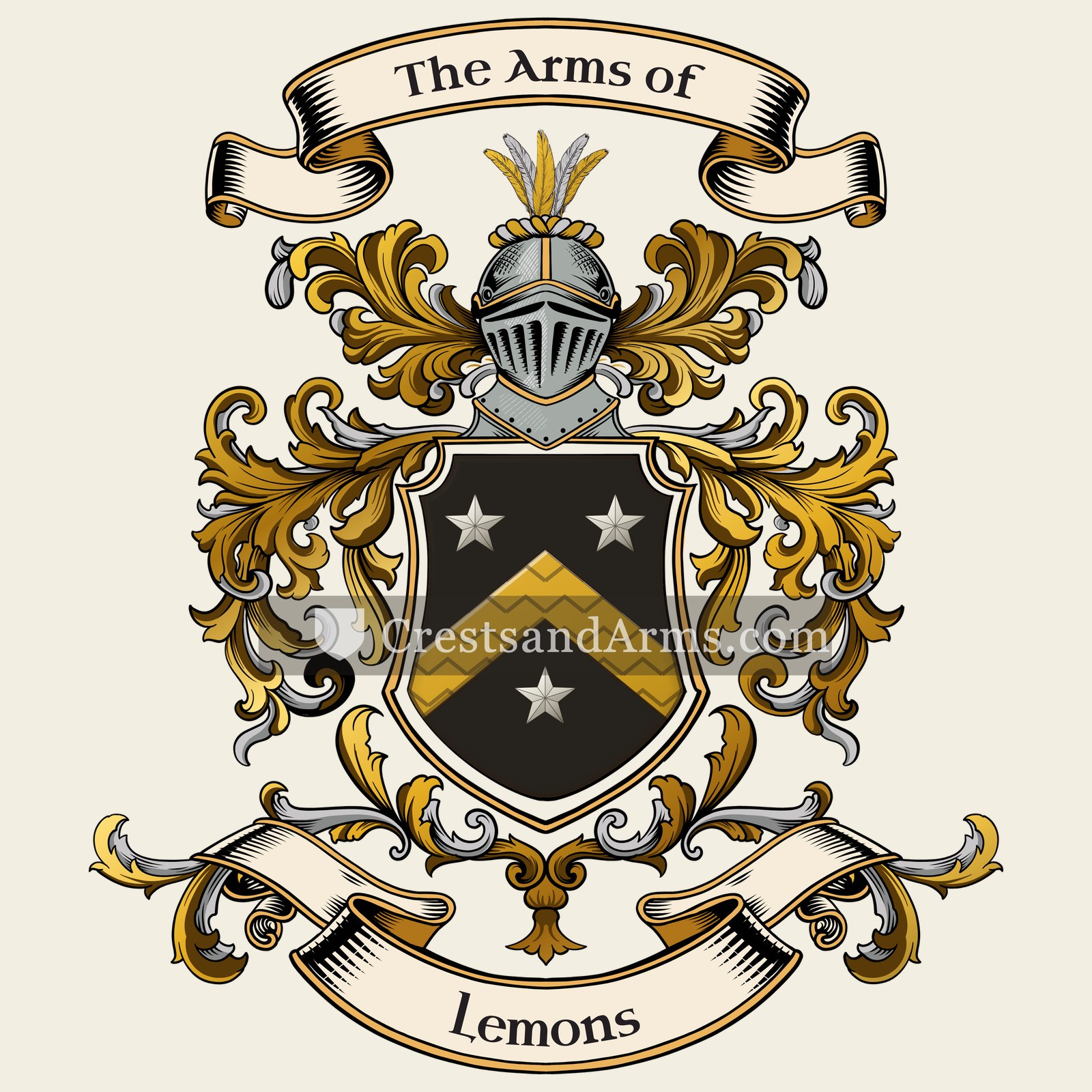
Coat of Arms & Family Crest Details
Symbols on this shield
chevronProtection, and faithful service completed
mulletThe third son, and a divine quality from above
Colours
Black (Sable)Means: Constancy
Gold (Or)Means: Generosity
Silver (Argent)Means: Peace and sincerity
Historical info
Source
J. B. Rietstap, Armorial Général, Gouda: G. B. van Goor Zonen, 1884–87
Blazon (the actual original written record)
“De sa. au chev. d'or, acc. de trois étoiles d'arg. Brl. d'or et de sa. C.: une étoile d'arg.; entre un vol, d'or et de sa. L. d'or et de sa.”
BelgiumAnvers, c. 1658
Digital archive packCoat of arms PNG, gold border print PDF, vector SVG and the certificate of authenticity. Sent to your email in minutes.
Map of Belgium showing where the Lemons arms are recorded
The Lemons arms were recorded in Anvers, c. 1658.
This is where the arms were entered in the register. Families often moved to other parts of the country, so the same name can turn up in more than one region.
The body that granted and recorded arms in Belgium in this period.
Philip IV of Spain
Sovereign of the period
Philip IV of Spain
1621–1665
Reigning in Netherlands when the Lemons arms are first recorded.
How Arms Worked in Belgium
In Belgium, a coat of arms is considered personal property that is passed down through the male line to legitimate descendants. Families often use the same shield design across generations to show their shared heritage. If a branch of the family wants to change the design, they must apply for an official update to their specific version of the arms.
Granting authority
The Conseil héraldique is the official body that regulates and approves all coats of arms in Belgium.
How they got arms
Families obtain their coats of arms through formal royal grants or by confirming their historical right to use existing designs.
Where arms were recorded
All approved coats of arms are officially recorded in the public registers of the Conseil héraldique since 1844.
The family's standing
Recorded among the armigerous families of Belgium.
Origin & History of the Lemons Family in Belgium
The history of the Lemons family in Belgium is rooted in the vibrant urban landscape of the seventeenth century. By 1658, records confirm that members of the family were established in the city of Anvers, which was a major center for international trade and culture at the time. During this period, the name likely functioned as a descriptive identifier for individuals living within the bustling port city. As residents of Anvers, these early family members were part of a society shaped by the complex economic shifts and religious changes occurring in the Southern Netherlands. Their presence in such a significant commercial hub suggests that they were likely involved in the active trade networks that defined the region. Over time, the family name became a permanent part of the local demographic, reflecting the movement and settlement patterns of people living in the Low Countries during the mid-1600s.
Related Branches & Arms
Root word
Lambert
Derived from Germanic elements meaning land and bright or famous.
This name
LemonsA patronymic surname indicating descent from a person named Lambert.
also spelled
Lemmen
Lemmenss
Lemmense
Lemens
Documented Sources
J. B. Rietstap, Armorial Général, Gouda: G. B. van Goor Zonen, 1884–87
AlleFriezen, Burgerlijke Stand (Civil Registration) records for the province of Friesland, 1811–1950
Nationaal Archief, Bevolkingsregisters (Population Registers) of the Netherlands
Meertens, P.J., De betekenis van de Nederlandse familienamen, 1959
Van Berkel, G. and Samplonius, K., Nederlandse plaatsnamen verklaard, 2018
Digital archive packCoat of arms PNG, gold border print PDF, vector SVG and the certificate of authenticity. Sent to your email in minutes.


 swordJustice, and military honour
 trefoilPerpetuity, and the Trinity
 swordJustice, and military honour
 trefoilPerpetuity, and the Trinity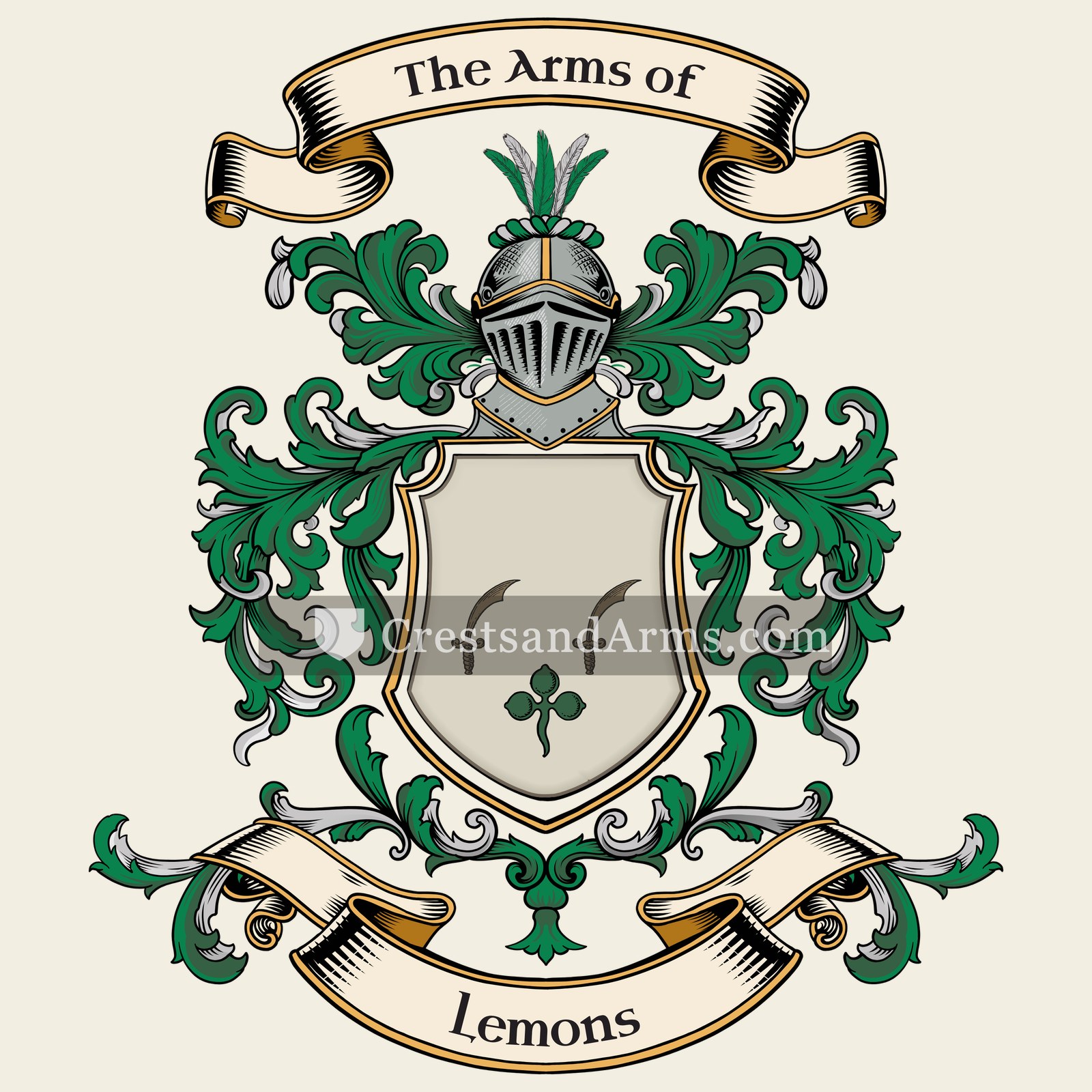


 chevronProtection, and faithful service completed
 mulletThe third son, and a divine quality from above