Map of Spain showing where the Lemos arms are recorded
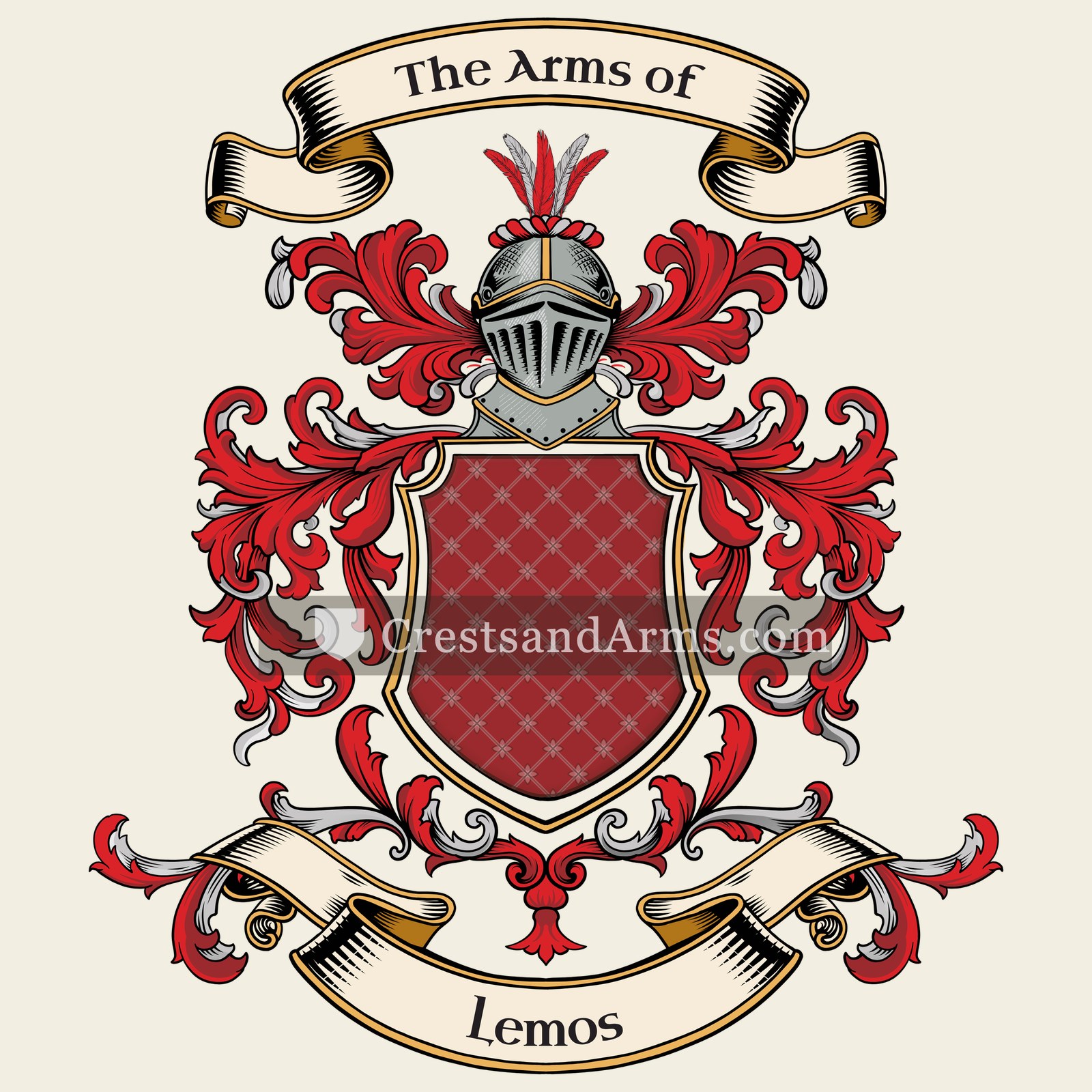
The Lemos arms were recorded in Galicia, c. 1722.
Galicia was eastern country of large estates and small farming villages, held by families who had been there for a very long time. Land was what entitled a family to arms, and land there rarely changed hands.
This is where the arms were entered in the register. Families often moved to other parts of the country, so the same name can turn up in more than one region.
The body that granted and recorded arms in Spain in this period.
Philip V of Spain
Sovereign of the period
Philip V of Spain
1714–1724
Reigning in Spain when the Lemos arms are first recorded.
How Arms Worked in Spain
In Spain, a coat of arms was considered a form of property that belonged to the entire family line. These arms were passed down from a father to all his children equally. Younger branches of the family usually kept the original design without needing to add any special marks to distinguish their specific line.
Granting authority
The Cronista Rey de Armas was the official body that regulated and granted coats of arms throughout Spain.
How they got arms
Families often obtained their arms through royal grants or by proving their noble status to the official heraldic authority.
Where arms were recorded
Coats of arms were officially recorded in the registers of the Cronista Rey de Armas starting in 1496.
The family's standing
Recorded among the armigerous families of Galicia.
Origin & History of the Lemos Family in Spain
The surname Lemos traces its roots to the rugged landscape of Galicia in northwestern Spain. The name is topographic, meaning it was likely taken from the geographical region known as the Comarca de Lemos. By the early 18th century, families bearing this name were well-established in the area, often tied to the local land and the distinct cultural traditions of the Galician people. During this period, members of the Lemos family were frequently recorded in parish registers and local administrative documents as they navigated the social and economic changes of the time. Because Galicia served as a crossroads for trade and migration, the family name became deeply woven into the regional history, reflecting a long-standing connection to the hills and valleys of their ancestral home.
Related Branches & Arms
Root word
limus
Latin term meaning mud, slime, or silt.
This name
LemosA topographic surname referring to someone who lived near a muddy area or riverbank.
also spelled
Lemosse
Lemoos
Lemosh
Documented Sources
J. B. Rietstap, Armorial Général, Gouda: G. B. van Goor Zonen, 1884–87
Pardo de Guevara y Valdés, Eduardo. Los señores de Galicia: Poder y aristocracia en la Edad Media. 2000
Archivo Histórico Nacional. Sección Nobleza, Archivo de los Condes de Lemos
Digital archive packCoat of arms PNG, gold border print PDF, vector SVG and the certificate of authenticity. Sent to your email in minutes.


 saltireResolution, and St Andrew's cross
 saltireResolution, and St Andrew's cross