Map of Belgium showing where the Léonard arms are recorded
The Léonard arms were recorded in Liege, c. 1737.
Liege was a prosperous town and its surrounding country, living on metalworking and trade. Merchant families grew rich, bought land outside the walls, and took arms as landowners rather than tradesmen.
This is where the arms were entered in the register. Families often moved to other parts of the country, so the same name can turn up in more than one region.
The body that granted and recorded arms in Belgium in this period.
Charles VI, Holy Roman Emperor
Sovereign of the period
Charles VI, Holy Roman Emperor
1711–1740
Reigning in Belgium when the Léonard arms are first recorded.
How Arms Worked in Belgium
In Belgium, a coat of arms is considered personal property that is passed down through the male line to legitimate descendants. Families often use the same shield design across generations to show their shared heritage. If a branch of the family wants to change the design, they must apply for an official update to their specific version of the arms.
Granting authority
The Conseil héraldique is the official body that regulates and approves all coats of arms in Belgium.
How they got arms
Families obtain their coats of arms through formal royal grants or by confirming their historical right to use existing designs.
Where arms were recorded
All approved coats of arms are officially recorded in the public registers of the Conseil héraldique since 1844.
The family's standing
Recorded among the armigerous families of Liege.
Origin & History of the Léonard Family in Belgium
The surname Léonard traces its roots to the ancient Germanic name Leonhard, which combines the words for lion and brave. By the early eighteenth century, the family was firmly established in the city of Liège, a region then known for its intense industrial growth and independent spirit. In 1737, records confirm that members of the Léonard family were active participants in the local community of this prince-bishopric. During this era, Liège served as a major hub for metalworking and coal mining, which likely influenced the daily lives and trades of the family members living there. As the name spread through the Meuse valley, it became deeply connected to the linguistic and cultural shifts of the region. The family history reflects the broader story of the Walloon people who navigated the complex political changes of the Low Countries while maintaining strong ties to their ancestral home.
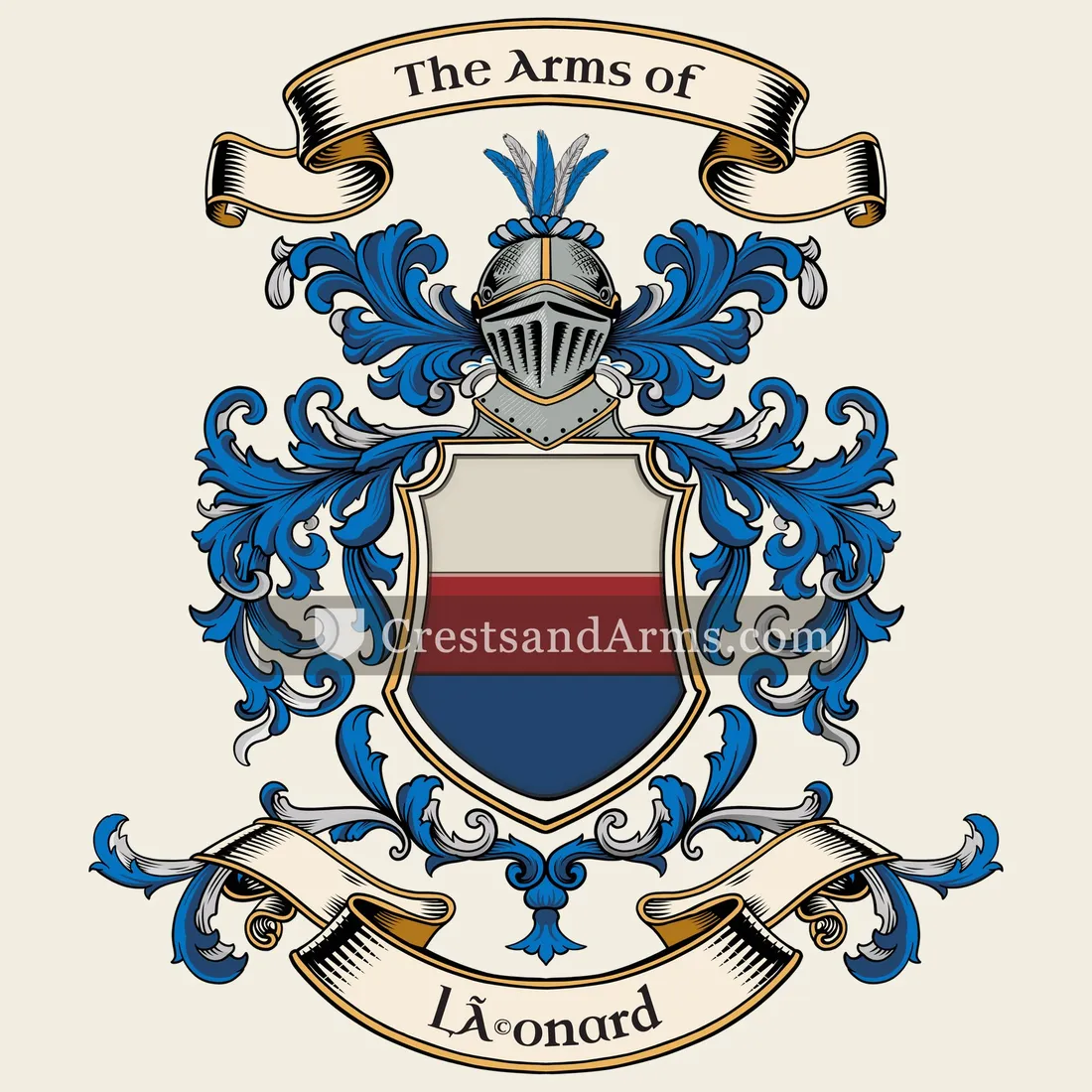
Meaning of the Léonard family crest colors & symbols
Symbols on this shield
fessThe military belt, and readiness to serve
Colours
Silver (Argent)Means: Peace and sincerity
Blue (Azure)Means: Loyalty and truth
Red (Gules)Means: Military strength
Historical info
Source
Sir Bernard Burke, The General Armory of England, Scotland, Ireland and Wales, London: Harrison & Sons, 1884
Blazon (the actual original written record)
“Per fess dancettée ar. and az. a fess gu”
Irelandc. 1645
Digital archive packCoat of arms PNG, gold border print PDF, vector SVG and the certificate of authenticity. Sent to your email in minutes.
Map of Ireland showing where the Léonard arms are recorded
The Léonard arms were recorded in Ireland, c. 1645.
Arms such as these were typically recorded in Dublin.
Dublin was the seat of government in Ireland and the place where grants were sought and recorded. Families with business at the castle or the courts settled nearby, and settling there put their arms on record.
This is where the arms were entered in the register. Families often moved to other parts of the country, so the same name can turn up in more than one region.
The body that granted and recorded arms in Ireland in this period.
Charles I of England
Sovereign of the period
Charles I of England
1625–1649
Reigning in Belgium when the Léonard arms are first recorded.
How Arms Worked in Ireland
The Ulster King of Arms granted coats of arms to individuals who proved their social standing and good character. These symbols were typically inherited by all legitimate descendants of the original holder. If a family branch wanted a unique look, they could apply for a specific change to their design through the office to ensure their identity remained distinct.
Granting authority
The Ulster King of Arms acted as the official body that regulated and issued all coats of arms throughout Ireland.
How they got arms
Families obtained their arms through formal grants issued by the office after proving their eligibility and paying the required fees.
Where arms were recorded
All official grants were recorded in the registers held by the Ulster King of Arms starting from the year 1552.
The family's standing
Recorded among the armigerous families of Ireland.
Origin & History of the Léonard Family in Ireland
The name Léonard first arrived in Ireland through the movement of continental European families during the seventeenth century. By 1645, records confirm that members of the family were established in Dublin, a city that served as a bustling hub for trade and migration at the time. These early settlers were often part of a network of merchants and skilled professionals who moved between Ireland and France. Because the name has roots in the Germanic language, it likely entered the country as a result of these cross-channel connections rather than through indigenous Gaelic origins. Once in Dublin, the family integrated into the urban landscape, contributing to the city's growing commercial life during a period of significant political and social change. Over the following decades, the name became a permanent fixture in the local population as the family adapted to life in their new Irish home.
Léonard Meaning & Related Branches
Root word
Leonhard
Derived from the Germanic elements for lion and hardy or brave.
This name
LéonardA name signifying a person with the strength, courage, and ferocity of a lion.
also spelled
Leonhard
Lenard
Lennard
Related arms
Champlivautsimilar arms
du Trembloysimilar arms
Schuyl de Walhornsimilar arms
Leonhardvariant spelling
Documented Sources
J. B. Rietstap, Armorial Général, Gouda: G. B. van Goor Zonen, 1884–87
Herbillon, Jules and Germain, Jean. Dictionnaire des noms de famille en Belgique romane et dans les régions limitrophes. 1996
Mary, Jean-Pierre. Les noms de famille en Belgique. 1998
Archives de l'État à Liège, Registres paroissiaux de la ville de Liège
Digital archive packCoat of arms PNG, gold border print PDF, vector SVG and the certificate of authenticity. Sent to your email in minutes.


 bendDefence, and the scarf of a commander
 martletA younger son, who must win his own land
 bendDefence, and the scarf of a commander
 martletA younger son, who must win his own land
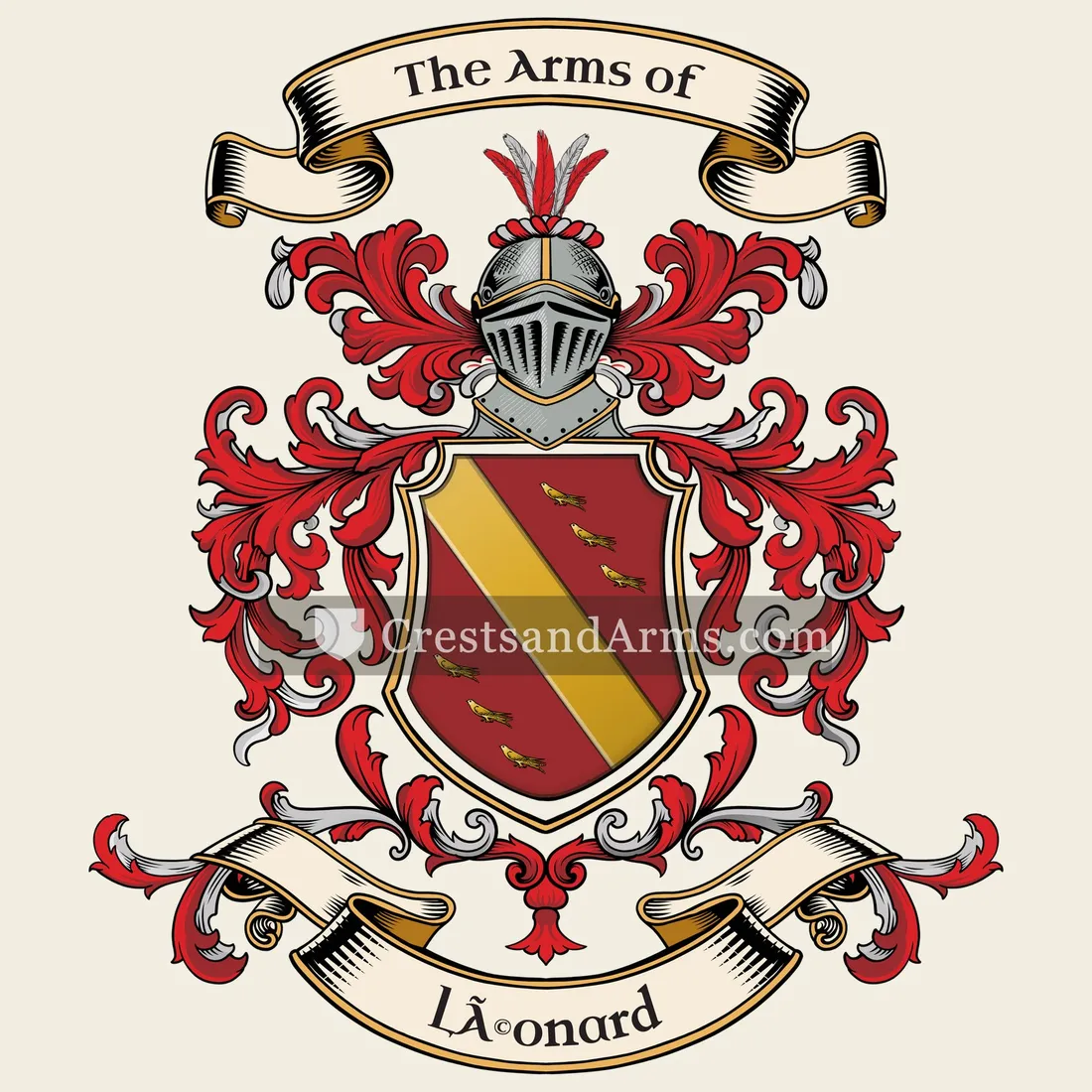


 fessThe military belt, and readiness to serve