Map of Belgium showing where the Leonardo arms are recorded
The Leonardo arms were recorded in Liege, c. 1737.
Liege was a prosperous town and its surrounding country, living on metalworking and trade. Merchant families grew rich, bought land outside the walls, and took arms as landowners rather than tradesmen.
This is where the arms were entered in the register. Families often moved to other parts of the country, so the same name can turn up in more than one region.
The body that granted and recorded arms in Belgium in this period.
Charles VI, Holy Roman Emperor
Sovereign of the period
Charles VI, Holy Roman Emperor
1711–1740
Reigning in Belgium when the Leonardo arms are first recorded.
How Arms Worked in Belgium
In Belgium, a coat of arms is considered personal property that is passed down through the male line to legitimate descendants. Families often use the same shield design across generations to show their shared heritage. If a branch of the family wants to change the design, they must apply for an official update to their specific version of the arms.
Granting authority
The Conseil héraldique is the official body that regulates and approves all coats of arms in Belgium.
How they got arms
Families obtain their coats of arms through formal royal grants or by confirming their historical right to use existing designs.
Where arms were recorded
All approved coats of arms are officially recorded in the public registers of the Conseil héraldique since 1844.
The family's standing
Recorded among the armigerous families of Liege.
Origin & History of the Leonardo Family in Belgium
The family name Leonardo has a distinct history in Belgium that traces back to the early eighteenth century. Records confirm that members of the family were established in the city of Liège by 1737. During this period, Liège was a major industrial hub known for its metalworking and coal mining industries. Families living in the region often adapted their surnames to fit the local linguistic blend of French and Walloon. The presence of the Leonardo name in this specific area suggests that these early ancestors were likely involved in the vibrant trade networks that connected the Prince-Bishopric of Liège to the rest of Europe. As the family settled into the urban landscape of the city, they became part of the growing middle class that helped shape the social and economic life of the region during the Enlightenment.
Meaning of the Leonardo family crest colors & symbols
Symbols on this shield
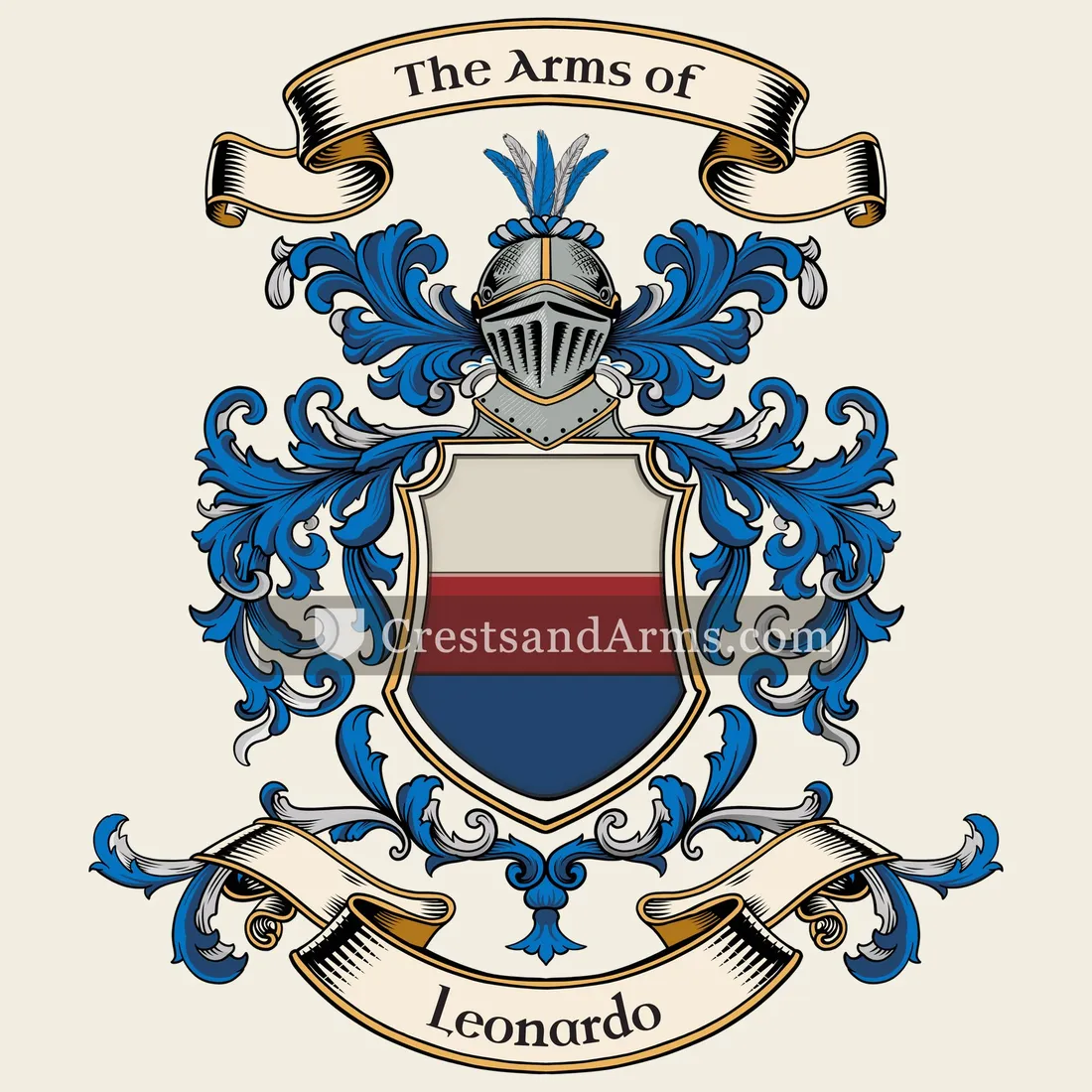
fessThe military belt, and readiness to serve
Colours
Silver (Argent)Means: Peace and sincerity
Blue (Azure)Means: Loyalty and truth
Red (Gules)Means: Military strength
Historical info
Source
Sir Bernard Burke, The General Armory of England, Scotland, Ireland and Wales, London: Harrison & Sons, 1884
Blazon (the actual original written record)
“Per fess dancettée ar. and az. a fess gu”
Irelandc. 1645
Digital archive packCoat of arms PNG, gold border print PDF, vector SVG and the certificate of authenticity. Sent to your email in minutes.
Map of Ireland showing where the Leonardo arms are recorded
The Leonardo arms were recorded in Ireland, c. 1645.
Arms such as these were typically recorded in Dublin.
Dublin was the seat of government in Ireland and the place where grants were sought and recorded. Families with business at the castle or the courts settled nearby, and settling there put their arms on record.
This is where the arms were entered in the register. Families often moved to other parts of the country, so the same name can turn up in more than one region.
The body that granted and recorded arms in Ireland in this period.
Charles I of England
Sovereign of the period
Charles I of England
1625–1649
Reigning in Belgium when the Leonardo arms are first recorded.
How Arms Worked in Ireland
The Ulster King of Arms granted coats of arms to individuals who proved their social standing and good character. These symbols were typically inherited by all legitimate descendants of the original holder. If a family branch wanted a unique look, they could apply for a specific change to their design through the office to ensure their identity remained distinct.
Granting authority
The Ulster King of Arms acted as the official body that regulated and issued all coats of arms throughout Ireland.
How they got arms
Families obtained their arms through formal grants issued by the office after proving their eligibility and paying the required fees.
Where arms were recorded
All official grants were recorded in the registers held by the Ulster King of Arms starting from the year 1552.
The family's standing
Recorded among the armigerous families of Ireland.
Origin & History of the Leonardo Family in Ireland
The history of the Leonardo family in Ireland is rooted in the vibrant urban landscape of seventeenth-century Dublin. While the name is often associated with Mediterranean origins, records confirm that members of the family were firmly established in the city by 1645. During this period, Dublin was a bustling center of trade and political transition, and families like the Leonardos likely integrated into the local merchant class or skilled trades. Their presence in the capital suggests they were part of the diverse population that navigated the complex social and religious shifts occurring in Ireland at the time. By settling in a major port city, the family gained access to international connections and economic opportunities that helped them maintain a foothold in the region for generations. This early history reflects the broader story of families who moved across borders to build new lives in the heart of Ireland’s most important city.
Leonardo Meaning & Related Branches
Root word
Leonhard
Derived from the Germanic elements for lion and hardy or brave.
This name
LeonardoA name signifying a person who possesses the strength and courage of a lion.
also spelled
Leonhard
Lenard
Lennard
Documented Sources
J. B. Rietstap, Armorial Général, Gouda: G. B. van Goor Zonen, 1884–87
Archives de l'État à Liège, Registres paroissiaux de la ville de Liège, 1737
Kupper, Jean-Louis, Liège et l'Église impériale aux XIe-XIIe siècles, 1981
Stiennon, Jacques, Histoire de Liège, 1991
Digital archive packCoat of arms PNG, gold border print PDF, vector SVG and the certificate of authenticity. Sent to your email in minutes.


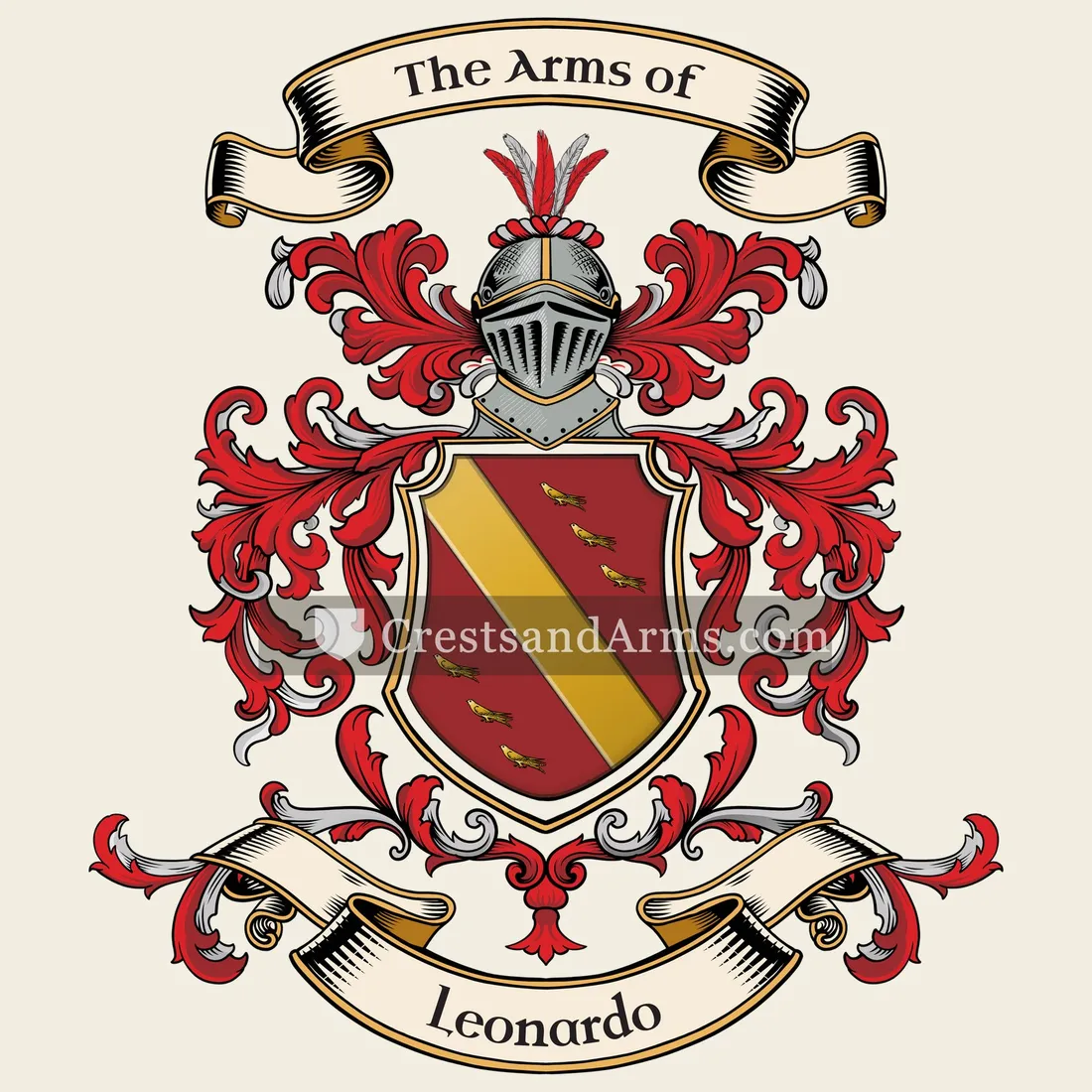
 bendDefence, and the scarf of a commander
 martletA younger son, who must win his own land
 bendDefence, and the scarf of a commander
 martletA younger son, who must win his own land


 fessThe military belt, and readiness to serve