Map of Denmark showing where the Leopard arms are recorded
The Leopard arms were recorded in Denmark, c. 1722.
Arms such as these were typically recorded in Sjaælland.
Zealand held the Danish court, the crown's offices and Copenhagen itself. Families who served the king kept estates within reach of it, and royal service was the ordinary route to a coat of arms.
This is where the arms were entered in the register. Families often moved to other parts of the country, so the same name can turn up in more than one region.
The body that granted and recorded arms in Denmark in this period.
Frederik IV of Denmark
Sovereign of the period
Frederik IV of Denmark
1699–1730
Reigning in Denmark when the Leopard arms are first recorded.
How Arms Worked in Denmark
Danish heraldry during this period was closely tied to noble status and royal favor rather than being open to all citizens. Arms were typically granted by the monarch to individuals, and these symbols were then shared by all members of the noble house. If a family line died out, the right to use those specific arms ended with them.
Granting authority
The Danish royal chancery held the power to issue and regulate official coats of arms for the kingdom.
How they got arms
Families usually received their arms through a formal royal grant that confirmed their noble status and rights.
Where arms were recorded
These grants were officially recorded in the Danish Royal Chancery records starting in the sixteenth century.
The family's standing
Recorded among the armigerous families of Denmark.
Origin & History of the Leopard Family in Denmark
The history of the Leopard family in Denmark is rooted in the landscape of Sjælland, where records confirm their presence as early as 1722. During this period, the name likely emerged as a descriptive surname or a nickname, reflecting the naming customs common among families living in rural or developing urban centers. While the name carries a bold connotation, families in eighteenth-century Denmark often acquired such titles through their specific trade, a notable physical trait, or their connection to a particular local landmark. As the family established themselves on the island, they integrated into the local social fabric, participating in the agricultural and community life that defined the region. Over time, the name became a permanent marker of their lineage, serving as a link to their ancestors who first settled in the Danish heartland centuries ago.
Coat of Arms & Family Crest Details
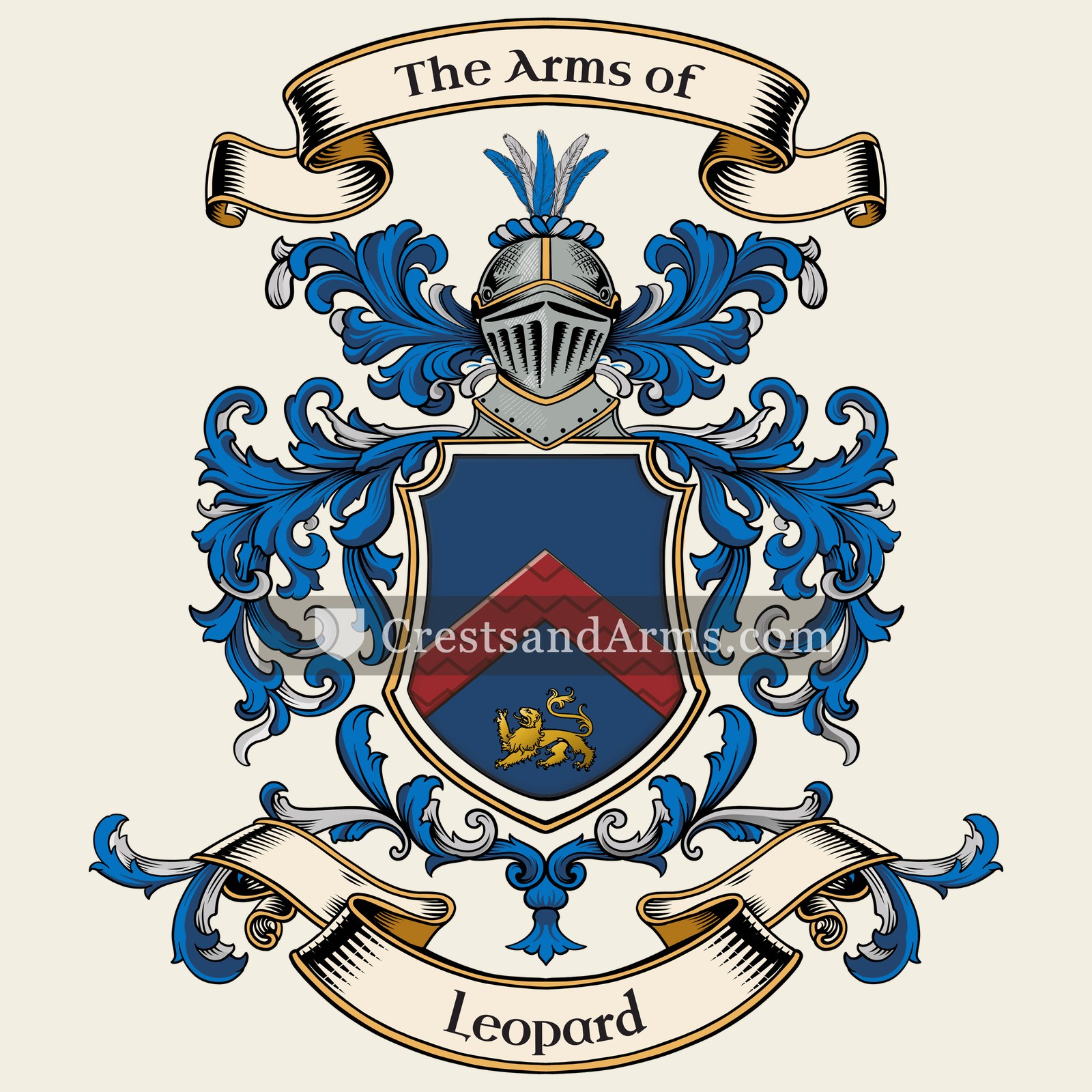
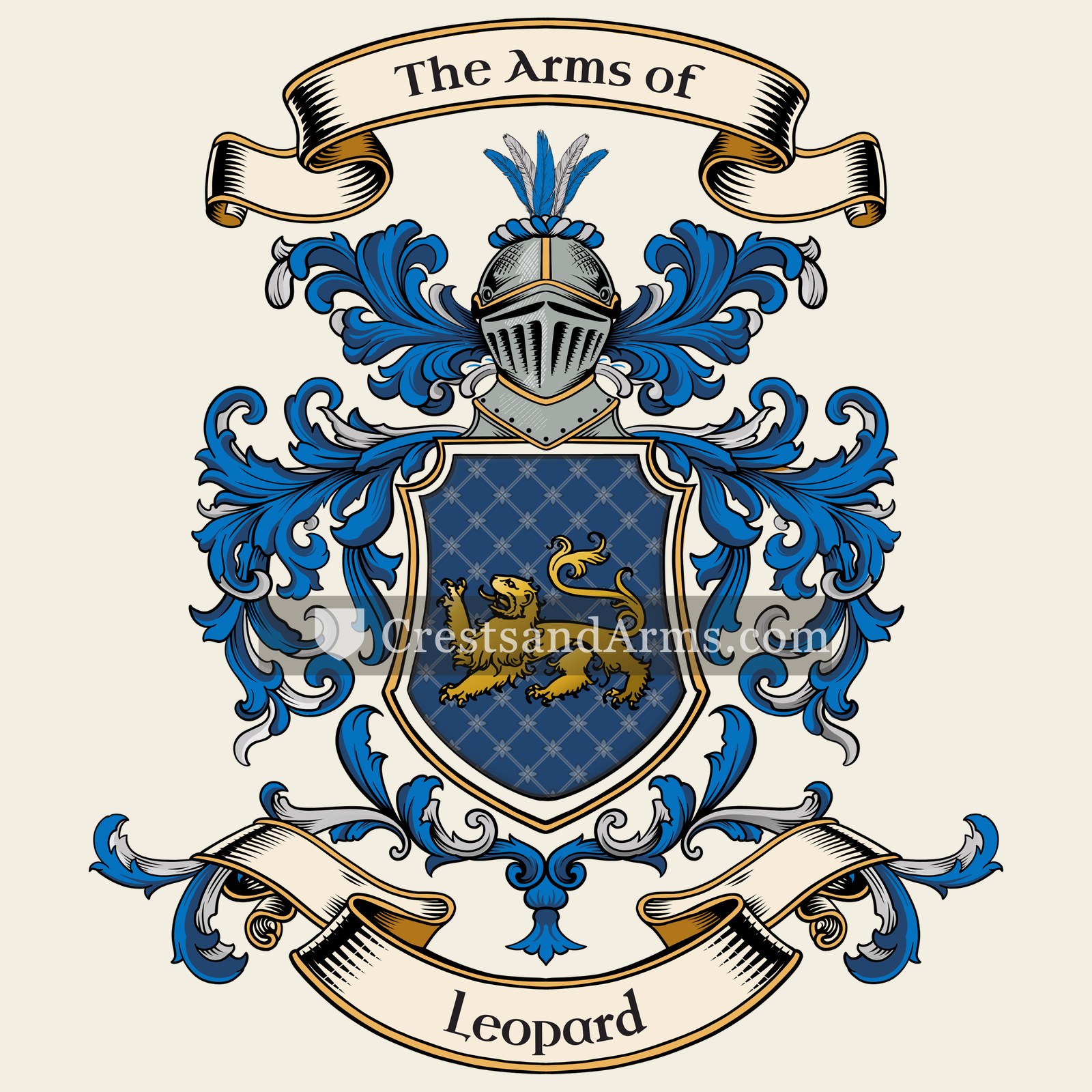
Symbols on this shield
lionCourage, strength and royalty
Colours
Blue (Azure)Means: Loyalty and truth
Gold (Or)Means: Generosity
Historical info
Source
J. B. Rietstap, Armorial Général, Gouda: G. B. van Goor Zonen, 1884–87
Blazon (the actual original written record)
“D'azur au léopard d'or. C.: le léopard, assis sur un chapeau de tournoi d'azur.”
WestphaliaWestphalia, c. 1765
Digital archive packCoat of arms PNG, gold border print PDF, vector SVG and the certificate of authenticity. Sent to your email in minutes.
Map of Germany showing where the Leopard arms are recorded
The Leopard arms were recorded in Westphalia, c. 1765.
Westphalia was a land of small estates and fortified farmhouses in western Germany. Its families were numerous and not especially rich, but each held its own ground, and holding ground was what brought arms.
This is where the arms were entered in the register. Families often moved to other parts of the country, so the same name can turn up in more than one region.
The body that granted and recorded arms in Germany in this period.
Francis I, Holy Roman Emperor
Sovereign of the period
Francis I, Holy Roman Emperor
1745–1765
Reigning in Denmark when the Leopard arms are first recorded.
How Arms Worked in Germany
In the Holy Roman Empire, coats of arms were often granted to individuals by the Emperor or his representatives. These arms were then passed down through the generations to all legitimate descendants of the original holder. Younger branches of a family usually kept the same shield design without needing to change it, as the arms belonged to the entire lineage.
Granting authority
The Holy Roman Emperor held the sole power to grant new coats of arms throughout his vast imperial territories.
How they got arms
Families typically obtained their coats of arms through a formal imperial grant or by proving their noble status to the authorities.
Where arms were recorded
These grants were officially recorded in the Imperial Chancery registers, which began keeping formal records of such honors during the Middle Ages.
The family's standing
Recorded among the armigerous families of Westphalia.
Origin & History of the Leopard Family in Germany
The family name Leopard finds its roots in the historical region of Westphalia, where records confirm the presence of family members as early as 1765. During this period, the name likely functioned as a descriptive nickname or a topographic identifier, a common practice in German naming conventions before the widespread use of formal surnames. In the rural landscapes of Westphalia, families were often tied closely to the land and local trade guilds, which helped shape their social standing and community identity. As the region underwent significant shifts in administration and population movement during the late 18th century, the Leopard family established themselves within the local social fabric. This early history reflects the broader patterns of German migration and settlement, where families developed deep connections to their home provinces through agricultural labor and local craftsmanship.
Related Branches & Arms
Root word
Leo
Latin word meaning lion, a large predatory feline.
This name
LeopardA habitational or descriptive surname referring to someone associated with a lion or leopard.
also spelled
Leopart
Documented Sources
J. B. Rietstap, Armorial Général, Gouda: G. B. van Goor Zonen, 1884–87
Rigsarkivet (Danish National Archives), Kirkebøger for Sjællands Stift (Parish registers for the Diocese of Sjælland), 1722
Jørgensen, Bent, Dansk Stednavneleksikon, 2008
Kousgård Sørensen, John, Danske familienavne, 1991
Digital archive packCoat of arms PNG, gold border print PDF, vector SVG and the certificate of authenticity. Sent to your email in minutes.


 chevronProtection, and faithful service completed
 lionCourage, strength and royalty
 chevronProtection, and faithful service completed
 lionCourage, strength and royalty