Map of Denmark showing where the Leppard arms are recorded
The Leppard arms were recorded in Denmark, c. 1722.
Arms such as these were typically recorded in Sjaælland.
Zealand held the Danish court, the crown's offices and Copenhagen itself. Families who served the king kept estates within reach of it, and royal service was the ordinary route to a coat of arms.
This is where the arms were entered in the register. Families often moved to other parts of the country, so the same name can turn up in more than one region.
The body that granted and recorded arms in Denmark in this period.
Frederik IV of Denmark
Sovereign of the period
Frederik IV of Denmark
1699–1730
Reigning in Denmark when the Leppard arms are first recorded.
How Arms Worked in Denmark
Danish heraldry during this period was closely tied to noble status and royal favor rather than being open to all citizens. Arms were typically granted by the monarch to individuals, and these symbols were then shared by all members of the noble house. If a family line died out, the right to use those specific arms ended with them.
Granting authority
The Danish royal chancery held the power to issue and regulate official coats of arms for the kingdom.
How they got arms
Families usually received their arms through a formal royal grant that confirmed their noble status and rights.
Where arms were recorded
These grants were officially recorded in the Danish Royal Chancery records starting in the sixteenth century.
The family's standing
Recorded among the armigerous families of Denmark.
Origin & History of the Leppard Family in Denmark
The history of the Leppard family in Denmark begins with documented records of members living on the island of Sjælland as early as 1722. During this period, the name was likely associated with individuals working in rural agricultural communities or local trade centers near Copenhagen. Because Sjælland served as the political and economic heart of the Danish kingdom, families living there often moved between small villages to find work on large estates or in growing merchant towns. The name itself suggests a connection to the natural environment or perhaps a descriptive nickname that became fixed as a permanent surname during a time when Danish naming customs were shifting toward hereditary patterns. By establishing roots in Sjælland during the early 18th century, the family became part of the transition toward modern record-keeping, which allows us to track their presence through parish registers and local census data from that era.
Meaning of the Leppard family crest colors & symbols
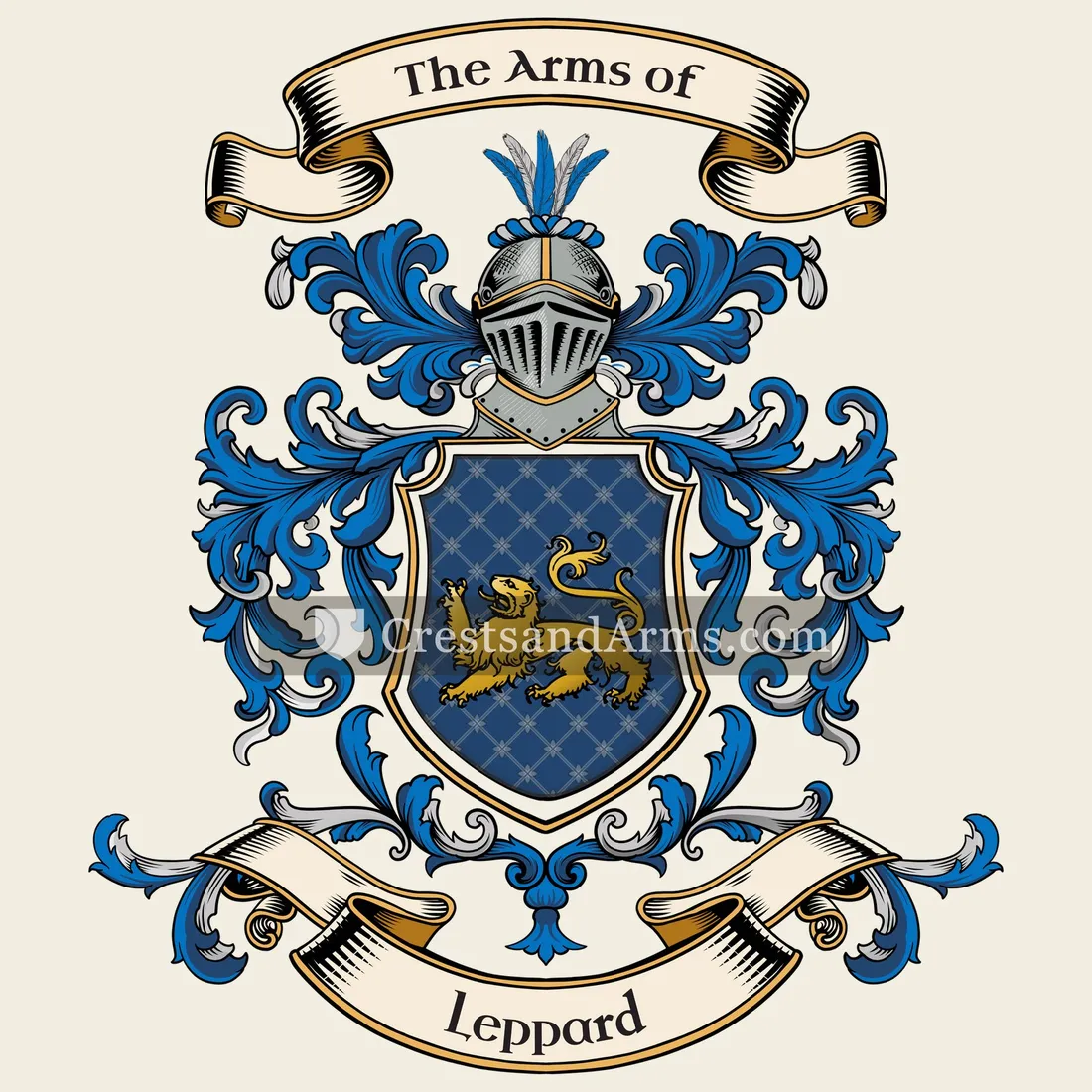
Symbols on this shield
lionCourage, strength and royalty
Colours
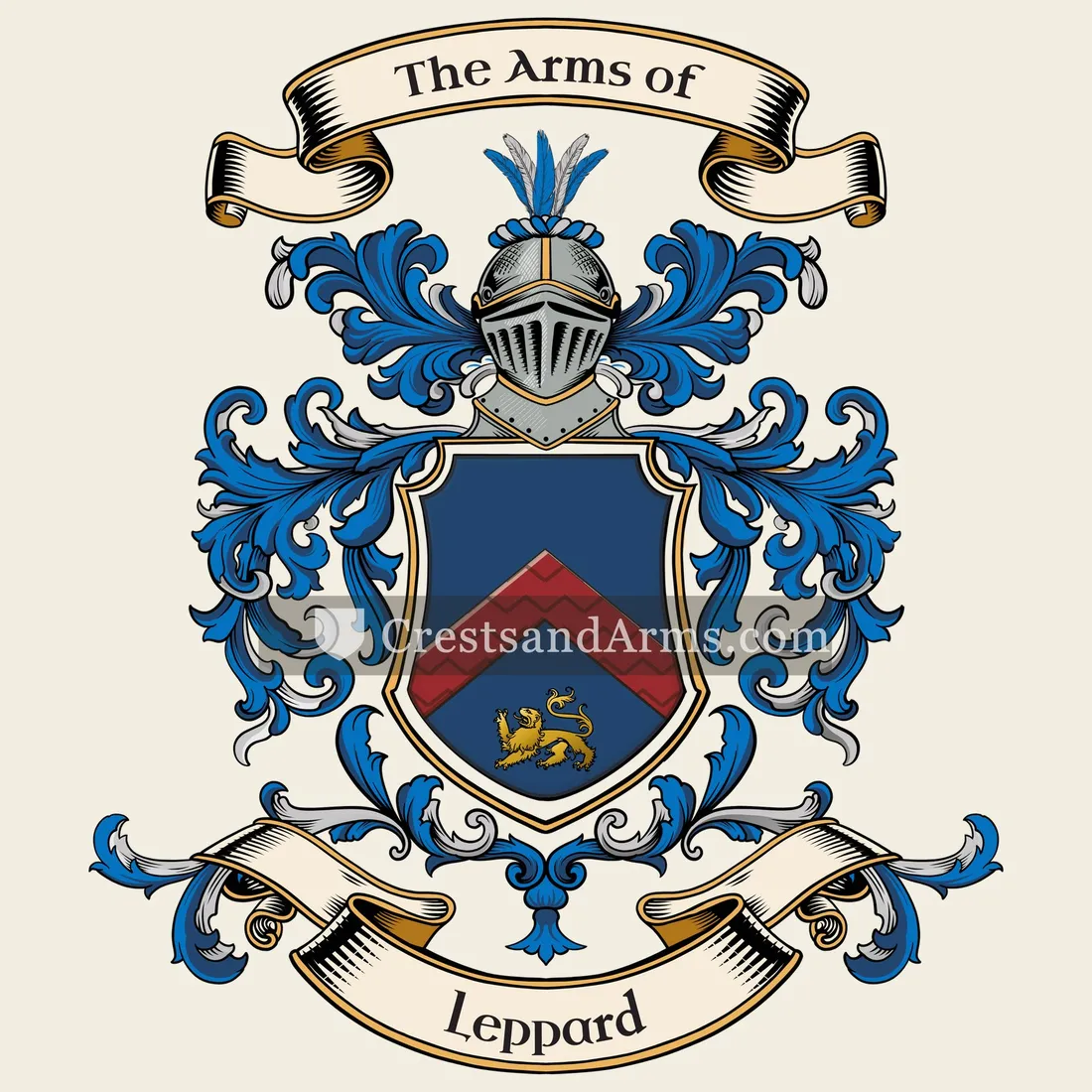
Blue (Azure)Means: Loyalty and truth
Gold (Or)Means: Generosity
Historical info
Source
J. B. Rietstap, Armorial Général, Gouda: G. B. van Goor Zonen, 1884–87
Blazon (the actual original written record)
“D'azur au léopard d'or. C.: le léopard, assis sur un chapeau de tournoi d'azur.”
WestphaliaWestphalia, c. 1765
Digital archive packCoat of arms PNG, gold border print PDF, vector SVG and the certificate of authenticity. Sent to your email in minutes.
Map of Germany showing where the Leppard arms are recorded
The Leppard arms were recorded in Westphalia, c. 1765.
Westphalia was a land of small estates and fortified farmhouses in western Germany. Its families were numerous and not especially rich, but each held its own ground, and holding ground was what brought arms.
This is where the arms were entered in the register. Families often moved to other parts of the country, so the same name can turn up in more than one region.
The body that granted and recorded arms in Germany in this period.
Francis I, Holy Roman Emperor
Sovereign of the period
Francis I, Holy Roman Emperor
1745–1765
Reigning in Denmark when the Leppard arms are first recorded.
How Arms Worked in Germany
In the Holy Roman Empire, coats of arms were often granted to individuals by the Emperor or his representatives. These arms were then passed down through the generations to all legitimate descendants of the original holder. Younger branches of a family usually kept the same shield design without needing to change it, as the arms belonged to the entire lineage.
Granting authority
The Holy Roman Emperor held the sole power to grant new coats of arms throughout his vast imperial territories.
How they got arms
Families typically obtained their coats of arms through a formal imperial grant or by proving their noble status to the authorities.
Where arms were recorded
These grants were officially recorded in the Imperial Chancery registers, which began keeping formal records of such honors during the Middle Ages.
The family's standing
Recorded among the armigerous families of Westphalia.
Origin & History of the Leppard Family in Germany
The family name Leppard has deep roots in the Westphalia region of Germany, where records confirm the presence of family members as early as 1765. During this period, Westphalia was a landscape defined by small farming communities and a growing network of local trade. The name itself likely originated as a descriptive term or a nickname, which was a common practice for families living in rural German provinces at the time. Families in this area were often tied closely to the land, and their surnames frequently reflected their occupation, their physical traits, or the specific village where they resided. By the mid-18th century, the Leppard family was part of the social fabric of Westphalian society, navigating the challenges of agricultural life and the shifting political boundaries of the Holy Roman Empire. As the family grew, they contributed to the local culture and economy of the region, establishing a legacy that remained anchored in the traditions of their Westphalian home.
Leppard Meaning & Related Branches
Root word
Leopardus
A spotted predatory cat of the genus Panthera.
This name
LeppardA nickname or occupational name for a person with a fierce or spotted appearance.
also spelled
Leopart
Documented Sources
J. B. Rietstap, Armorial Général, Gouda: G. B. van Goor Zonen, 1884–87
Rigsarkivet (Danish National Archives), Kirkebøger (Parish Registers), Sjælland diocese
Rigsarkivet (Danish National Archives), Folketællinger (Census Records), 1787
Stig Jensen, Danske efternavne: Oprindelse og udbredelse, 1998
Knud Søndergaard, Navne i Danmark, 2005
Digital archive packCoat of arms PNG, gold border print PDF, vector SVG and the certificate of authenticity. Sent to your email in minutes.


 chevronProtection, and faithful service completed
 lionCourage, strength and royalty
 chevronProtection, and faithful service completed
 lionCourage, strength and royalty