Map of Netherlands showing where the Leppla arms are recorded
The Leppla arms were recorded in Leyde, c. 1815.
This is where the arms were entered in the register. Families often moved to other parts of the country, so the same name can turn up in more than one region.
Region
Leyde
Town
Leyde
First recorded
1815
Granting Authority for the Leppla Arms
Hoge Raad van Adel
Photograph made by me · CC BY-SA 3.0
The body that granted and recorded arms in Netherlands in this period.
William I of the Netherlands
Sovereign of the period
William I of the Netherlands
1815–1840
Reigning in Netherlands when the Leppla arms are first recorded.
How Arms Worked in Netherlands
In the Netherlands, coats of arms were often used by noble families and those who held specific public offices. These arms were passed down through the generations to legitimate descendants. Younger branches of a family usually kept the original design without needing to add special marks. This system ensured that the family identity remained clear and consistent over many years.
Granting authority
The Hoge Raad van Adel is the official body that regulates and manages noble titles and coats of arms in the Netherlands.
How they got arms
Families typically obtained their coats of arms through official royal grants or by proving their long-standing historical use of the symbols.
Where arms were recorded
Coats of arms are officially recorded in the registers held by the Hoge Raad van Adel, which began its work in 1814.
The family's standing
Recorded among the armigerous families of Netherlands.
Origin & History of the Leppla Family in Netherlands
The history of the Leppla family name within the Netherlands is deeply connected to the city of Leiden during the early nineteenth century. By 1815, records confirm that members of the family were established residents in this historic university town. During this era, Leiden was transitioning from a period of economic stagnation toward a new phase of industrial growth, and families like the Lepplas were often part of the skilled workforce or merchant classes that helped shape the local community. The name itself is thought to have roots in Germanic linguistic traditions, likely migrating into the Dutch provinces through trade routes or regional movement across borders. As these individuals settled in Leiden, they integrated into the local social fabric, participating in the civic life and administrative systems that defined the post-Napoleonic Dutch state. Their presence in the city archives during this time serves as a vital marker of their transition into Dutch society, reflecting the broader patterns of migration and family settlement that characterized the region during the nineteenth century.
Meaning of the Leppla family crest colors & symbols
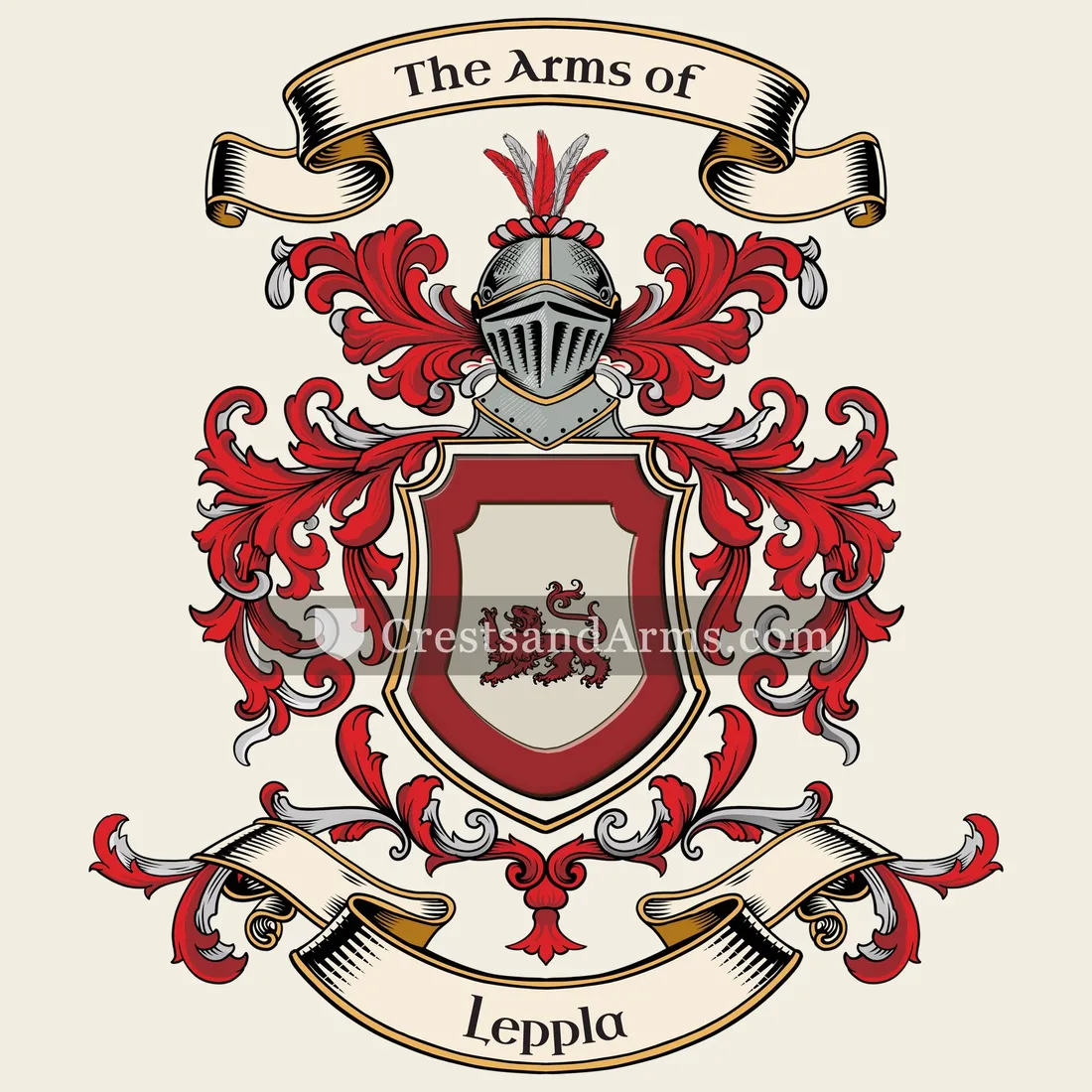
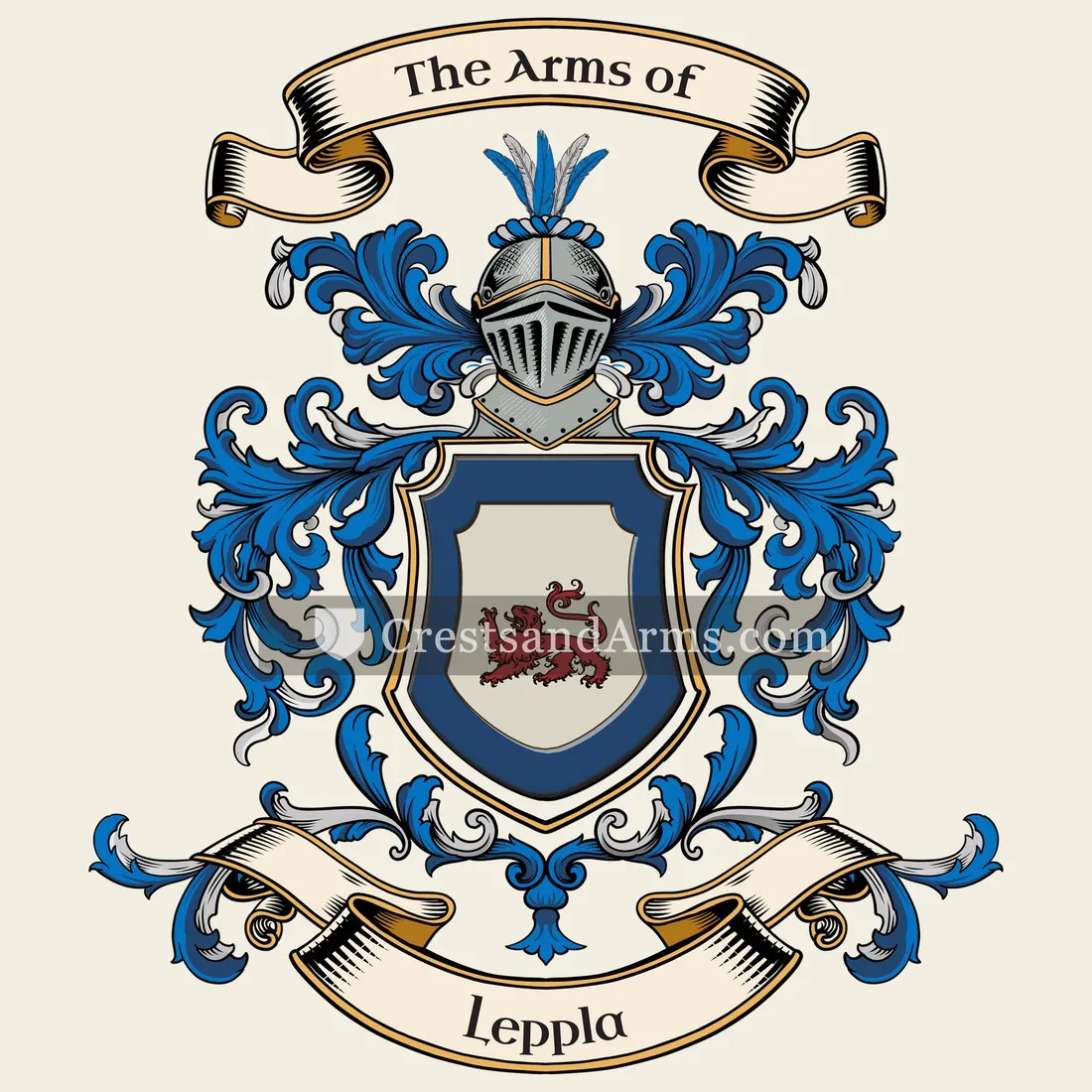
Symbols on this shield
bordureA difference between branches of one family
lionCourage, strength and royalty
Colours
Silver (Argent)Means: Peace and sincerity
Red (Gules)Means: Military strength
Historical info
Source
Sir Bernard Burke, The General Armory of England, Scotland, Ireland and Wales, London: Harrison & Sons, 1884
Blazon (the actual original written record)
“Ar. a lion ramp. gu. a bordure componée or and vert”
CambridgeIsle · Cambridge, c. 1620
Digital archive packCoat of arms PNG, gold border print PDF, vector SVG and the certificate of authenticity. Sent to your email in minutes.
Map of England showing where the Leppla arms are recorded
The Leppla arms were recorded in Cambridge, c. 1620.
Cambridgeshire was flat, rich farming country with the university at its centre. Fen drainage made new land and new fortunes, and families who gained by it bought manors and took arms to match.
This is where the arms were entered in the register. Families often moved to other parts of the country, so the same name can turn up in more than one region.
The body that granted and recorded arms in England in this period.
James VI and I
Sovereign of the period
James VI and I
1603–1625
Reigning in Netherlands when the Leppla arms are first recorded.
How Arms Worked in England
English heraldry allowed arms to be shared by all legitimate descendants of the original owner. These symbols were treated as personal property that moved through the generations to all children. While the eldest son kept the original design, other family members could use the same shield without needing to change it or register their own unique versions.
Granting authority
The College of Arms in London has regulated the use of coats of arms throughout England and Wales since 1484.
How they got arms
Families typically obtained their coats of arms through a formal grant from the Crown or by proving their ancient right to them.
Where arms were recorded
All official coats of arms are recorded in the registers kept at the College of Arms, which date back to the fifteenth century.
The family's standing
Recorded among the armigerous families of Cambridge.
Origin & History of the Leppla Family in England
The Leppla family name carries a distinct history that traces back to the academic and social landscape of seventeenth-century England. By the year 1620, records confirm that members of the family were already established in Cambridge, a city defined by its prestigious university and its role as a hub for intellectual life. During this era, Cambridge was a center for religious and political debate, and families living there were often connected to the scholarly guilds or the local merchant class that supported the university. While the name itself suggests roots that may have migrated from continental Europe, its early presence in Cambridge indicates that the family was integrated into the local English community long before the major waves of industrial migration. By settling in such a prominent town, these early Lepplas likely participated in the daily life of a growing urban center, contributing to the local workforce and the evolving social fabric of the region during a time of significant national change.
Leppla Meaning & Related Branches
Root word
Leopold
Derived from Germanic elements meaning bold or brave people.
This name
LepplaA diminutive or regional variant referring to a descendant of someone named Leopold.
also spelled
Plat
Plah
Plaa
le Plah
Pla
Documented Sources
J. B. Rietstap, Armorial Général, Gouda: G. B. van Goor Zonen, 1884–87
Erfgoed Leiden en Omstreken, Bevolkingsregister van Leiden (1815)
Nationaal Archief, Burgerlijke Stand van de provincie Zuid-Holland
Digital archive packCoat of arms PNG, gold border print PDF, vector SVG and the certificate of authenticity. Sent to your email in minutes.


 lionCourage, strength and royalty
 lionCourage, strength and royalty


 bordureA difference between branches of one family