Map of Germany showing where the Lequire arms are recorded
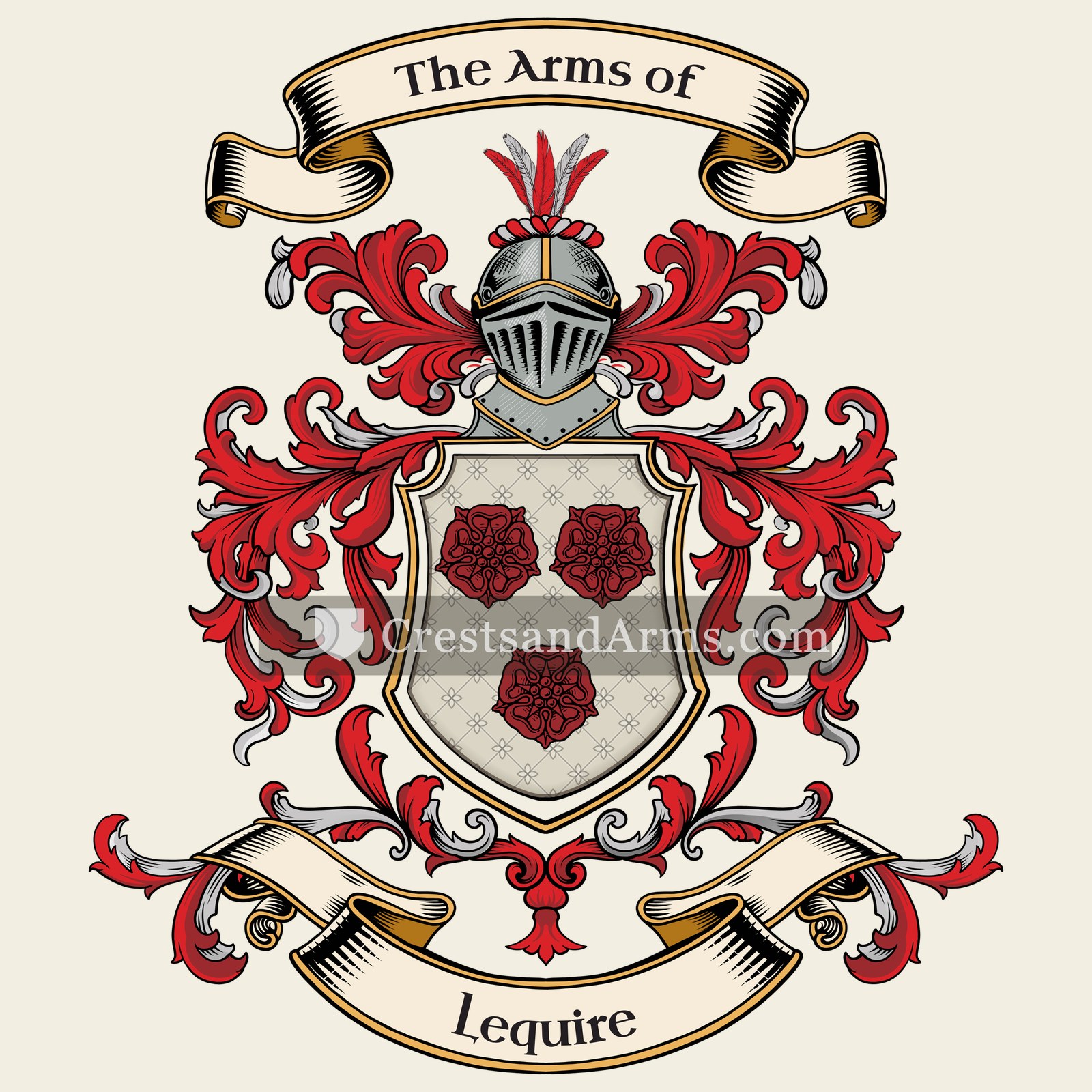
The Lequire arms were recorded in Bavaria, c. 1820.
Bavaria was a country of old landed families and walled market towns. Estates passed down the same line for centuries, and both the landowners and the leading townsmen kept arms, which is why so many Bavarian names sit in the registers.
This is where the arms were entered in the register. Families often moved to other parts of the country, so the same name can turn up in more than one region.
The body that granted and recorded arms in Germany in this period.
Frederick William III of Prussia
Sovereign of the period
Frederick William III of Prussia
1797–1840
Reigning in Germany when the Lequire arms are first recorded.
How Arms Worked in Germany
Prussian heraldry was strictly tied to social rank and noble status rather than being a free choice for every citizen. These symbols were treated as permanent family property that moved through the generations to all legitimate heirs. If a family branch wanted to change their design to stand out, they had to apply for official permission to alter their specific version of the shield.
Granting authority
The Prussian Heroldsamt acted as the central state office that managed and strictly controlled all noble titles and coats of arms.
How they got arms
Families usually obtained their arms through formal royal grants or by proving their long-standing noble status to the state authorities.
Where arms were recorded
All official coats of arms were kept in the rolls of the Prussian Heroldsamt, which functioned from 1706 until 1918.
The family's standing
Recorded among the armigerous families of Bavaria.
Origin & History of the Lequire Family in Germany
The family name Lequire likely traces its roots to the cultural landscape of early nineteenth-century Bavaria. During the year 1820, individuals bearing this name were documented as residents within the Bavarian region, a time when the area was undergoing significant social and political transitions following the Napoleonic Wars. The name itself suggests a linguistic connection to the French term "le quire," which historically referred to a worker who prepared leather or parchment. This indicates that the earliest ancestors of the family were likely skilled artisans or tradespeople who played a vital role in the local economy. As these families lived in a region known for its strong traditions in craftsmanship and guild systems, they were likely integrated into the professional life of their towns. Over time, the movement of these families across borders helped the name evolve as it adapted to the phonetic patterns of new regions and languages.
Related Branches & Arms
Root word
Lecuyer
Old French term for a leather worker or saddler.
This name
LequireAn occupational surname derived from the French word for a maker of leather goods.
also spelled
Lesuires
Lesweer
Documented Sources
J. B. Rietstap, Armorial Général, Gouda: G. B. van Goor Zonen, 1884–87
Bavarian State Archives, Historischer Atlas von Bayern, 1950
Kohlhammer, W., Die bayerische Verwaltung im 19. Jahrhundert, 1984
Bayerisches Hauptstaatsarchiv, Generalakten des Staatsministeriums des Innern
Staatsarchiv München, Personenstandsregister der bayerischen Gemeinden
Digital archive packCoat of arms PNG, gold border print PDF, vector SVG and the certificate of authenticity. Sent to your email in minutes.


 roseThe seventh son, and beauty with grace
 roseThe seventh son, and beauty with grace