Map of France showing where the Leroy arms are recorded
The Leroy arms were recorded in France, c. 1565.
Arms such as these were typically recorded in Bretagne.
More families held coats of arms in Bretagne than anywhere else in France. The land was divided into many small estates rather than a few large ones, so far more households counted as gentry, and each needed a shield of its own to be told apart.
This is where the arms were entered in the register. Families often moved to other parts of the country, so the same name can turn up in more than one region.
The body that granted and recorded arms in France in this period.
Charles IX of France
Sovereign of the period
Charles IX of France
1560–1574
Reigning in France when the Leroy arms are first recorded.
How Arms Worked in France
In France, a coat of arms was a mark of honor that passed down through the male line to all legitimate descendants. Families often used the same shield without changes to show their shared heritage. If a branch wanted to stand out, they could add a small mark to their shield to show their specific place in the family tree.
Granting authority
The Juge d'armes de France acted as the official authority that regulated and verified coats of arms across the country.
How they got arms
Families typically inherited their arms from ancestors, though they could also receive them through royal grants or by proving their noble status.
Where arms were recorded
Coats of arms were officially recorded in the Armorial Général de France, which began its main collection in the year 1696.
The family's standing
Recorded among the armigerous families of France.
Origin & History of the Leroy Family in France
The surname Leroy originates from the French phrase "le roi," which translates to "the king." During the Middle Ages, this name was often given as a nickname to someone who played the role of a king in local festivals or to someone who acted with a regal or commanding personality. By the time members of the family were documented in the Brittany region in 1565, the name had become a stable hereditary surname rather than just a descriptive title. Living in Brittany during the sixteenth century meant the family existed within a unique cultural landscape that was only recently united with the French Crown. As the name spread across the country, it became one of the most common surnames in France because it reflected the deep social importance of the monarchy in daily life. The family members in Brittany likely worked as farmers, merchants, or local officials who helped shape the administrative growth of the province during the Renaissance.
Coat of Arms & Family Crest Details
Symbols on this shield
fessThe military belt, and readiness to serve
roseThe seventh son, and beauty with grace
Colours
Gold (Or)Means: Generosity
Red (Gules)Means: Military strength
Historical info
Source
J. B. Rietstap, Armorial Général, Gouda: G. B. van Goor Zonen, 1884–87
Blazon (the actual original written record)
“D'or à la fasce de gu., ch. d'une force d'arg., posée dans le sens de la fasce, les bouts à dextre; la fasce acc. de trois roses du sec., 1 en chef et 2 en p.”
BelgiumAnvers, c. 1737
Digital archive packCoat of arms PNG, gold border print PDF, vector SVG and the certificate of authenticity. Sent to your email in minutes.
Map of Belgium showing where the Leroy arms are recorded
The Leroy arms were recorded in Anvers, c. 1737.
This is where the arms were entered in the register. Families often moved to other parts of the country, so the same name can turn up in more than one region.
The body that granted and recorded arms in Belgium in this period.
Charles VI, Holy Roman Emperor
Sovereign of the period
Charles VI, Holy Roman Emperor
1711–1740
Reigning in France when the Leroy arms are first recorded.
How Arms Worked in Belgium
In Belgium, a coat of arms is considered personal property that is passed down through the male line to legitimate descendants. Families often use the same shield design across generations to show their shared heritage. If a branch of the family wants to change the design, they must apply for an official update to their specific version of the arms.
Granting authority
The Conseil héraldique is the official body that regulates and approves all coats of arms in Belgium.
How they got arms
Families obtain their coats of arms through formal royal grants or by confirming their historical right to use existing designs.
Where arms were recorded
All approved coats of arms are officially recorded in the public registers of the Conseil héraldique since 1844.
The family's standing
Recorded among the armigerous families of Belgium.
Origin & History of the Leroy Family in Belgium
The family name Leroy originates from the French phrase "le roi," which translates to "the king." In the context of Belgium, this name often served as a descriptive nickname for a person who acted in a regal manner or perhaps played the role of a king in local community festivals. By the year 1737, records confirm that members of the Leroy family were firmly established in the bustling port city of Anvers. During this period, Anvers was a major center for international trade and commerce, which likely provided the family with opportunities to work as merchants or skilled craftsmen. As the family grew, they became integrated into the urban fabric of the city, contributing to the social and economic life of the region long before the modern borders of Belgium were formally defined. Their presence in such a prominent trade hub suggests that the early Leroys were part of a mobile and industrious population that helped shape the character of the Low Countries.
Coat of Arms & Family Crest Details
Symbols on this shield
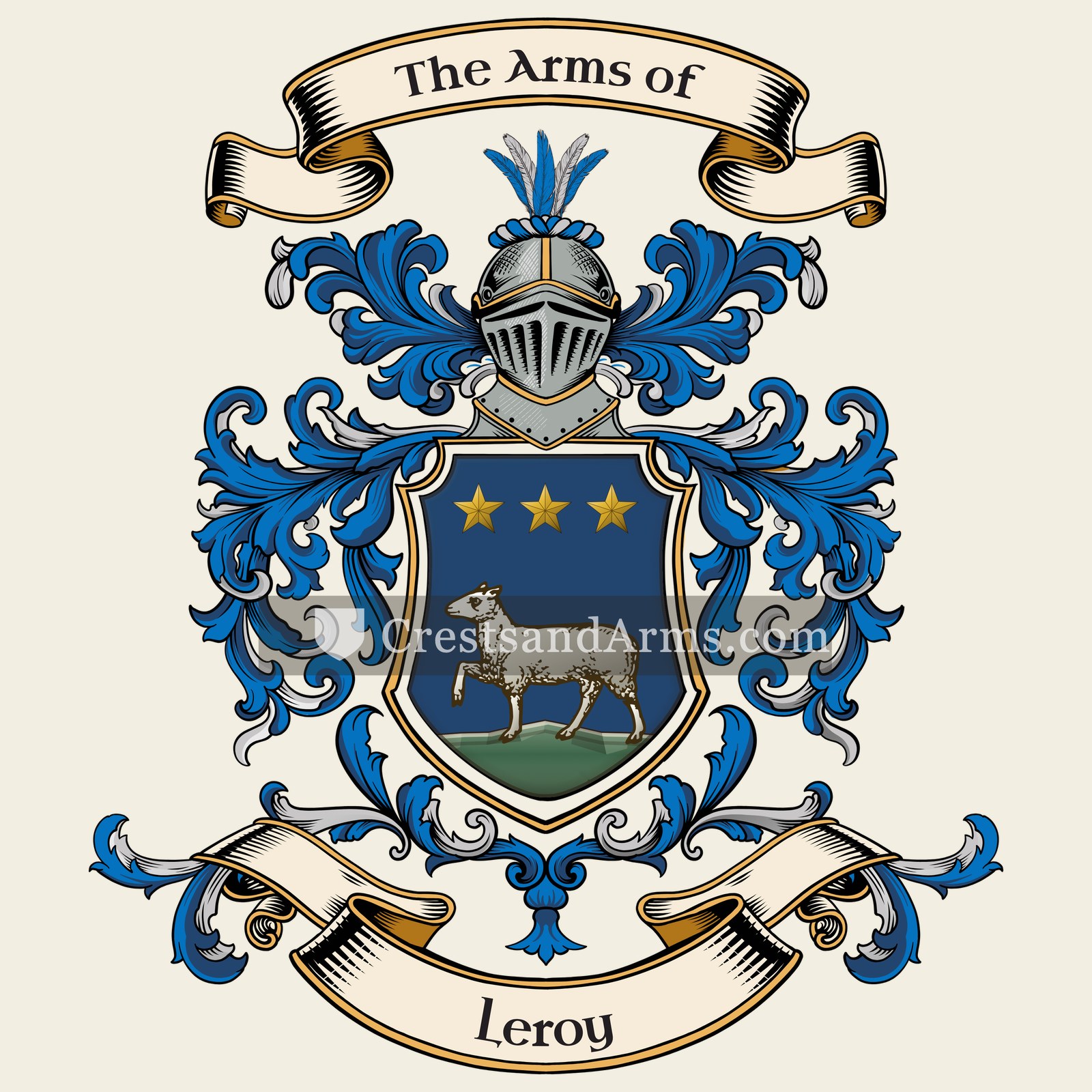
mountThe ground held, and steadfastness upon it
lambGentleness, patience and faith
mulletThe third son, and a divine quality from above
Colours
Blue (Azure)Means: Loyalty and truth
Green (Vert)Means: Hope
Gold (Or)Means: Generosity
Historical info
Source
J. B. Rietstap, Armorial Général, Gouda: G. B. van Goor Zonen, 1884–87
Blazon (the actual original written record)
“D'azur à une brebis paissante au nat. sur une terrasse de sin., couronnée d'or, le corps surm. d'une autre couronne aussi d'or, le tout acc de trois étoiles (5) du même, rangées en chef.”
NetherlandsAmsterdam, c. 1815
Digital archive packCoat of arms PNG, gold border print PDF, vector SVG and the certificate of authenticity. Sent to your email in minutes.
Map of Netherlands showing where the Leroy arms are recorded
The Leroy arms were recorded in Amsterdam, c. 1815.
This is where the arms were entered in the register. Families often moved to other parts of the country, so the same name can turn up in more than one region.
Region
Amsterdam
Town
Amsterdam
First recorded
1815
Granting Authority for the Leroy Arms
Hoge Raad van Adel
Photograph made by me · CC BY-SA 3.0
The body that granted and recorded arms in Netherlands in this period.
William I of the Netherlands
Sovereign of the period
William I of the Netherlands
1815–1840
Reigning in France when the Leroy arms are first recorded.
How Arms Worked in Netherlands
In the Netherlands, coats of arms were often used by noble families and those who held specific public offices. These arms were passed down through the generations to legitimate descendants. Younger branches of a family usually kept the original design without needing to add special marks. This system ensured that the family identity remained clear and consistent over many years.
Granting authority
The Hoge Raad van Adel is the official body that regulates and manages noble titles and coats of arms in the Netherlands.
How they got arms
Families typically obtained their coats of arms through official royal grants or by proving their long-standing historical use of the symbols.
Where arms were recorded
Coats of arms are officially recorded in the registers held by the Hoge Raad van Adel, which began its work in 1814.
The family's standing
Recorded among the armigerous families of Netherlands.
Origin & History of the Leroy Family in Netherlands
The family name Leroy originates from the French phrase le roi, which translates to the king. While the name is French in origin, it became established in the Netherlands during a time of significant movement and change across Europe. By 1815, records confirm that members of the Leroy family were living in Amsterdam. During this era, Amsterdam was a bustling center of trade and recovery following the end of the Napoleonic Wars. Families with this name often settled in urban hubs where they could participate in the growing merchant economy. Over time, the name integrated into the local Dutch population, shifting from its foreign roots to become a recognized part of the diverse social fabric of the city. As these early residents built their lives in the Netherlands, they contributed to the professional and cultural growth of Amsterdam during the nineteenth century.
Related Branches & Arms
Root word
le roi
The king, derived from the Old French word for a monarch.
This name
LeroyA nickname or occupational name for someone who acted in a kingly manner or served the king.
also spelled
Leroi
King
Related arms
Gasparisame arms
Boullet d'Ouchampssimilar arms
Brillonsimilar arms
le Roivariant spelling
Documented Sources
J. B. Rietstap, Armorial Général, Gouda: G. B. van Goor Zonen, 1884–87
Dauzat, Albert. Dictionnaire étymologique des noms de famille et prénoms de France. 1951
Morlet, Marie-Thérèse. Dictionnaire étymologique des noms de famille. 1991
Archives départementales d'Ille-et-Vilaine, Série E: Familles et seigneuries
Digital archive packCoat of arms PNG, gold border print PDF, vector SVG and the certificate of authenticity. Sent to your email in minutes.


 bendDefence, and the scarf of a commander
 chequyConstancy, and the counting-board
 bendDefence, and the scarf of a commander
 chequyConstancy, and the counting-board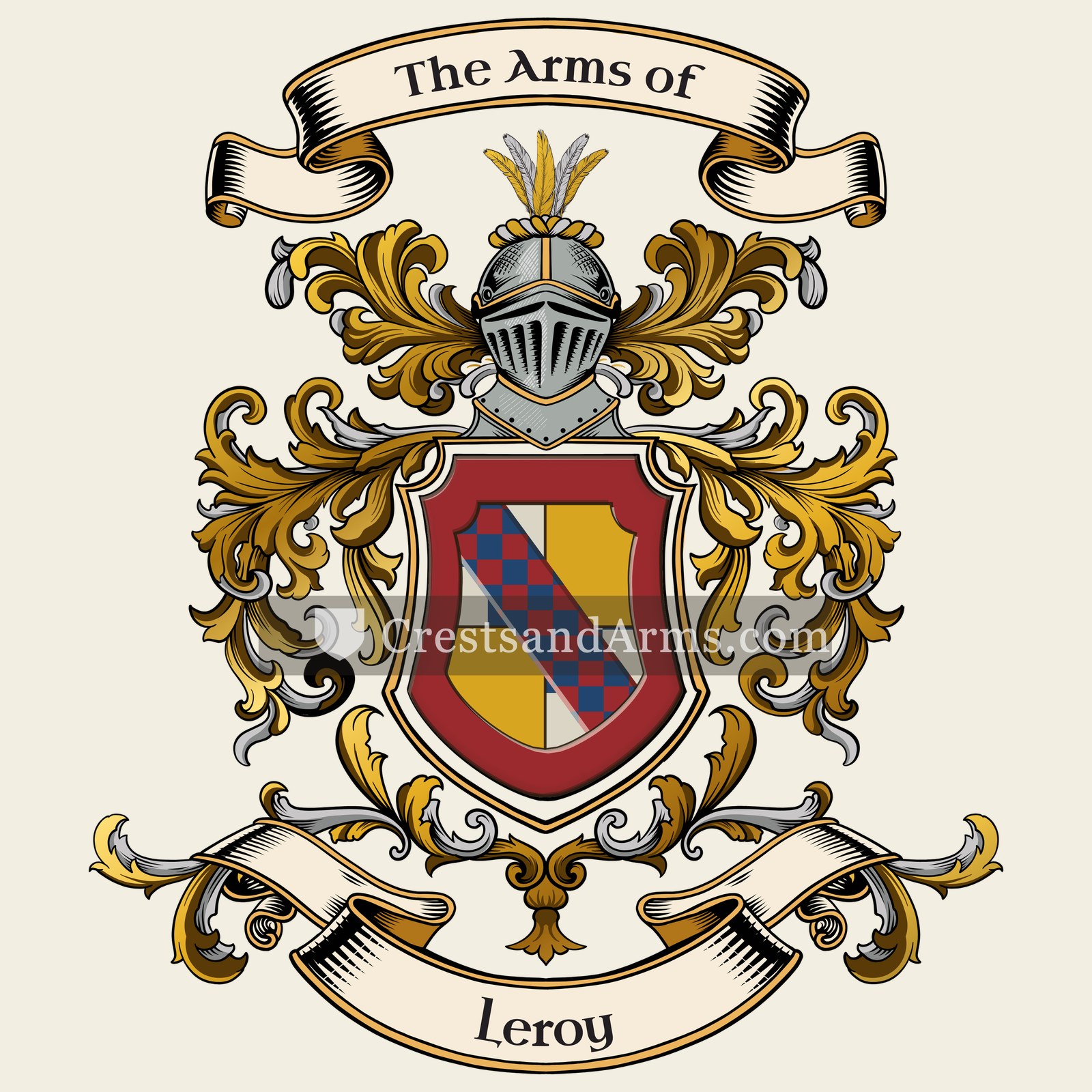


 fessThe military belt, and readiness to serve
 roseThe seventh son, and beauty with grace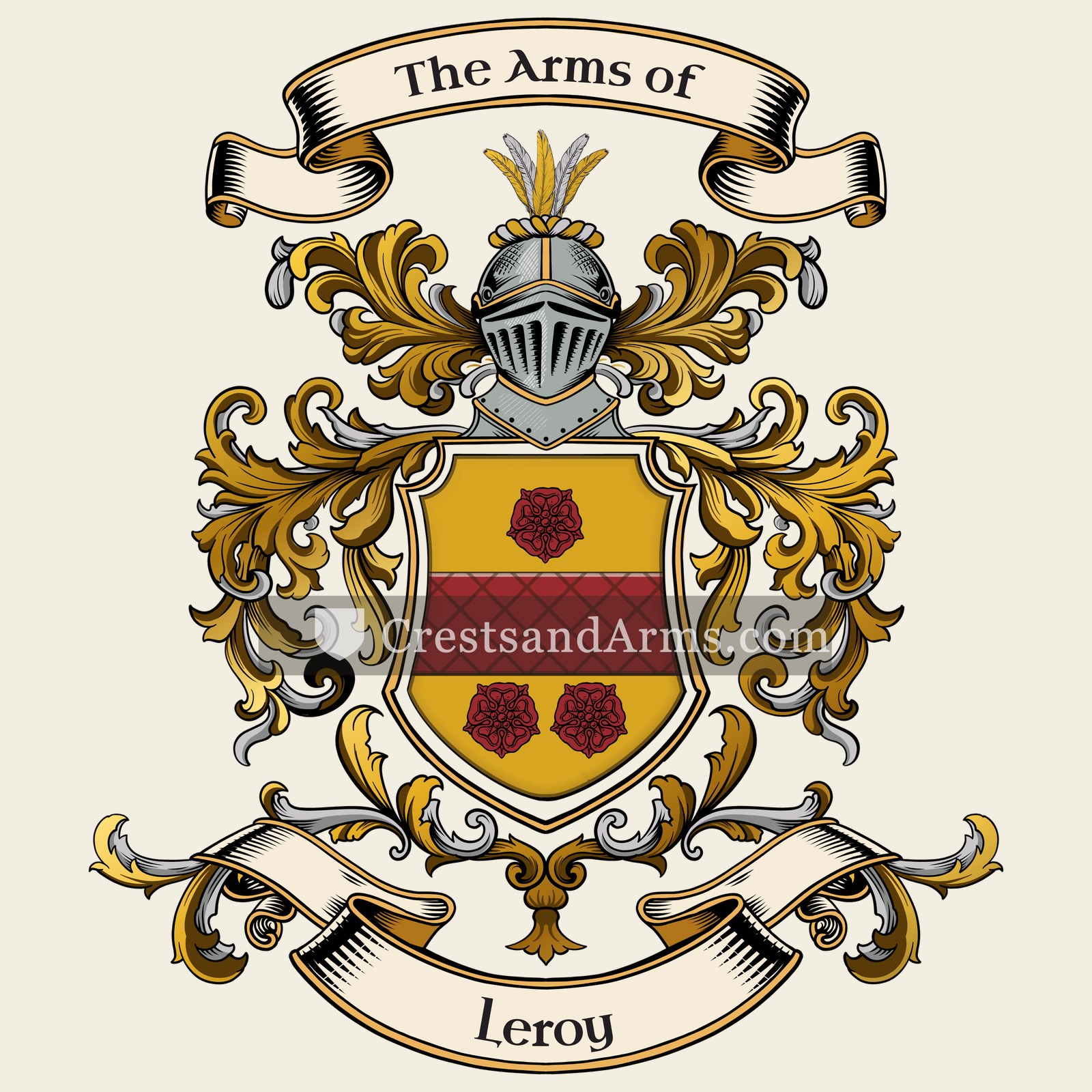


 mountThe ground held, and steadfastness upon it
 lambGentleness, patience and faith
 mulletThe third son, and a divine quality from above