Map of Belgium showing where the Lesperance arms are recorded
The Lesperance arms were recorded in Luxemb, c. 1737.
This is where the arms were entered in the register. Families often moved to other parts of the country, so the same name can turn up in more than one region.
The body that granted and recorded arms in Belgium in this period.
Charles VI, Holy Roman Emperor
Sovereign of the period
Charles VI, Holy Roman Emperor
1711–1740
Reigning in Belgium when the Lesperance arms are first recorded.
How Arms Worked in Belgium
In Belgium, a coat of arms is considered personal property that is passed down through the male line to legitimate descendants. Families often use the same shield design across generations to show their shared heritage. If a branch of the family wants to change the design, they must apply for an official update to their specific version of the arms.
Granting authority
The Conseil héraldique is the official body that regulates and approves all coats of arms in Belgium.
How they got arms
Families obtain their coats of arms through formal royal grants or by confirming their historical right to use existing designs.
Where arms were recorded
All approved coats of arms are officially recorded in the public registers of the Conseil héraldique since 1844.
The family's standing
Recorded among the armigerous families of Belgium.
Origin & History of the Lesperance Family in Belgium
The surname Lesperance, which translates to "the hope," emerged as a descriptive name in the French-speaking regions of Europe. By the early 18th century, the family had established a notable presence in the territory of Luxembourg, which was then part of the Southern Netherlands under the control of the Austrian Habsburgs. Records confirm that members of the family were living in this region by 1737, a time when the local population was deeply influenced by the transition between major European powers. Families with this name often lived in rural or semi-urban communities where they were likely involved in agriculture or skilled trades. Because the name carries a positive and aspirational meaning, it was often adopted or assigned to individuals who were valued for their optimism or their role in the local community. Over the decades, the family integrated into the social fabric of the region, contributing to the local workforce and the distinct cultural identity of the Belgian and Luxembourgish borderlands.
Meaning of the Lesperance family crest colors & symbols
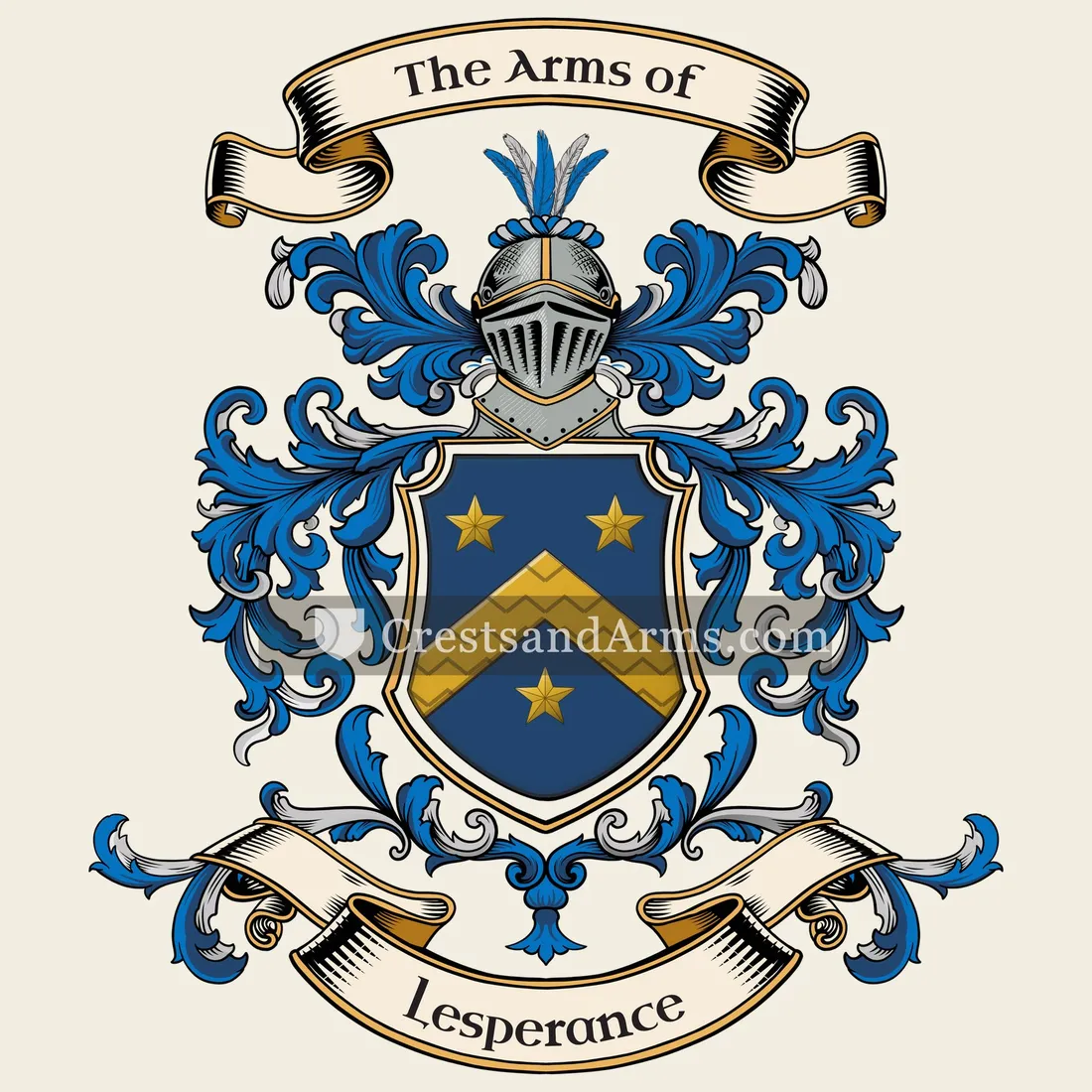
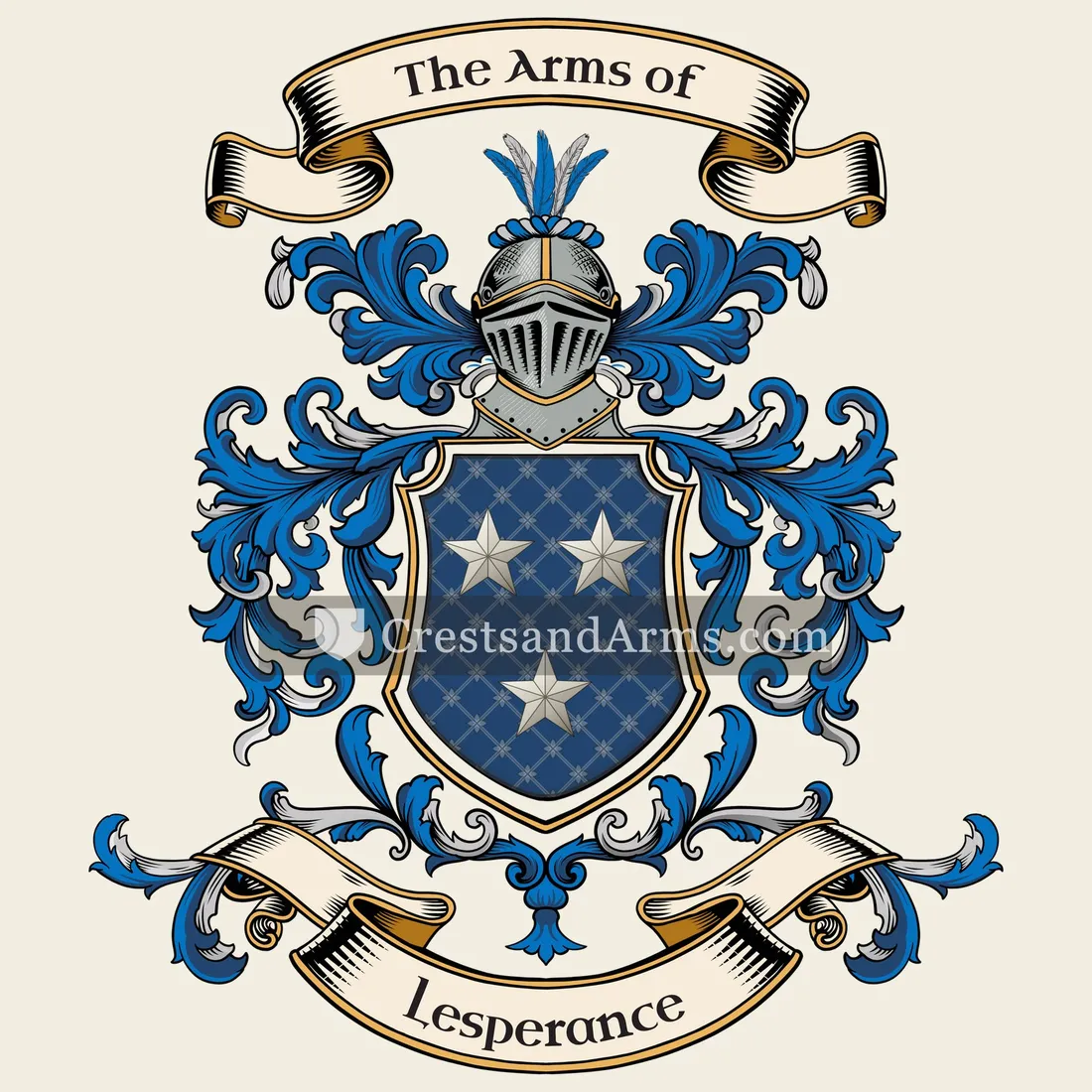
Symbols on this shield
mulletThe third son, and a divine quality from above
Colours
Blue (Azure)Means: Loyalty and truth
Silver (Argent)Means: Peace and sincerity
Historical info
Source
J. B. Rietstap, Armorial Général, Gouda: G. B. van Goor Zonen, 1884–87
Blazon (the actual original written record)
“D'azur à trois molettes d'arg.”
PicardiePicardie, c. 1663
Digital archive packCoat of arms PNG, gold border print PDF, vector SVG and the certificate of authenticity. Sent to your email in minutes.
Map of France showing where the Lesperance arms are recorded
The Lesperance arms were recorded in Picardie, c. 1663.
Picardie lay on the northern road into France and saw armies pass through it repeatedly. Its landowners were soldiers as often as farmers, and a soldier needed a shield he could be recognised by.
This is where the arms were entered in the register. Families often moved to other parts of the country, so the same name can turn up in more than one region.
The body that granted and recorded arms in France in this period.
Louis XIV of France
Sovereign of the period
Louis XIV of France
1643–1715
Reigning in Belgium when the Lesperance arms are first recorded.
How Arms Worked in France
In France, a coat of arms was a mark of honor that passed down through the male line to all legitimate descendants. Families often used the same shield without changes to show their shared heritage. If a branch wanted to stand out, they could add a small mark to their shield to show their specific place in the family tree.
Granting authority
The Juge d'armes de France acted as the official authority that regulated and verified coats of arms across the country.
How they got arms
Families typically inherited their arms from ancestors, though they could also receive them through royal grants or by proving their noble status.
Where arms were recorded
Coats of arms were officially recorded in the Armorial Général de France, which began its main collection in the year 1696.
The family's standing
Recorded among the armigerous families of Picardie.
Origin & History of the Lesperance Family in France
The surname Lespérance originated in France as a descriptive nickname, likely bestowed upon individuals noted for their optimistic nature or their steadfast faith. By the mid-seventeenth century, the name was firmly established in the northern region of Picardie. During this period, the social structure of Picardie was heavily influenced by its proximity to the border and its role as a hub for agricultural and military life. Families living in this area often faced the challenges of regional conflicts and shifting political loyalties. The presence of the Lespérance name in records from 1663 suggests that these ancestors were part of a stable community that valued local roots. As the name spread, it carried the cultural identity of the Picardie region, reflecting the resilience and hope that defined the lives of those who first adopted it as their own.
Lesperance Meaning & Related Branches
Root word
Sperare
A Latin verb meaning to hope or to trust.
This name
LesperanceDerived from the French phrase l'espérance, signifying the virtue of hope or expectation.
also spelled
Lesperonne
Documented Sources
J. B. Rietstap, Armorial Général, Gouda: G. B. van Goor Zonen, 1884–87
Archives de l'État à Arlon, Registres paroissiaux de la province de Luxembourg
Heintz, Joseph, Luxembourg et ses environs au XVIIIe siècle, 1982
Muller, Jean-Claude, Les familles luxembourgeoises sous l'Ancien Régime, 1995
Digital archive packCoat of arms PNG, gold border print PDF, vector SVG and the certificate of authenticity. Sent to your email in minutes.


 chevronProtection, and faithful service completed
 mulletThe third son, and a divine quality from above
 chevronProtection, and faithful service completed
 mulletThe third son, and a divine quality from above