Map of Spain showing where the Lil arms are recorded
The Lil arms were recorded in Guipuzcoa, c. 1722.
This is where the arms were entered in the register. Families often moved to other parts of the country, so the same name can turn up in more than one region.
The body that granted and recorded arms in Spain in this period.
Philip V of Spain
Sovereign of the period
Philip V of Spain
1714–1724
Reigning in Spain when the Lil arms are first recorded.
How Arms Worked in Spain
In Spain, a coat of arms was considered a form of property that belonged to the entire family line. These arms were passed down from a father to all his children equally. Younger branches of the family usually kept the original design without needing to add any special marks to distinguish their specific line.
Granting authority
The Cronista Rey de Armas was the official body that regulated and granted coats of arms throughout Spain.
How they got arms
Families often obtained their arms through royal grants or by proving their noble status to the official heraldic authority.
Where arms were recorded
Coats of arms were officially recorded in the registers of the Cronista Rey de Armas starting in 1496.
The family's standing
Recorded among the armigerous families of Spain.
Origin & History of the Lil Family in Spain
The family name Lil has deep roots in the northern Spanish province of Guipuzcoa, where records confirm their presence as early as 1722. During the eighteenth century, this region was a hub of industrial and maritime activity, and families like the Lils often integrated into the local social fabric through trade, agriculture, or service to the regional government. Because Guipuzcoa maintained a unique legal status known as the *fueros*, which granted its residents specific rights and tax exemptions, families living there were frequently documented in local parish registers and municipal tax rolls. The name likely reflects the linguistic landscape of the Basque Country, where surnames often evolved from descriptions of the land or specific family homesteads. By settling in this mountainous region, the early members of the Lil family became part of a resilient community that balanced traditional Basque customs with the shifting political landscape of the Spanish Bourbon monarchy.
Meaning of the Lil family crest colors & symbols
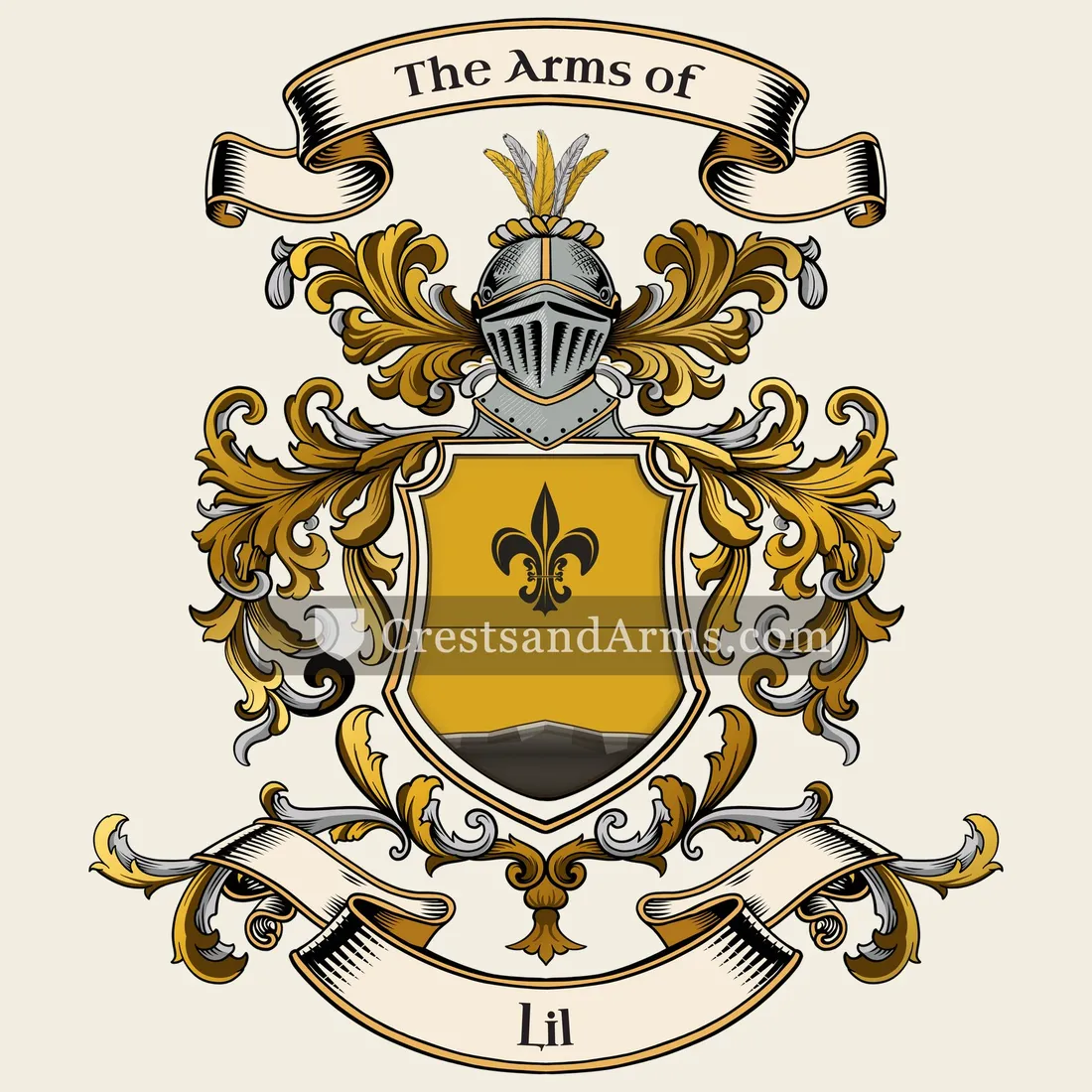
Symbols on this shield
mountThe ground held, and steadfastness upon it
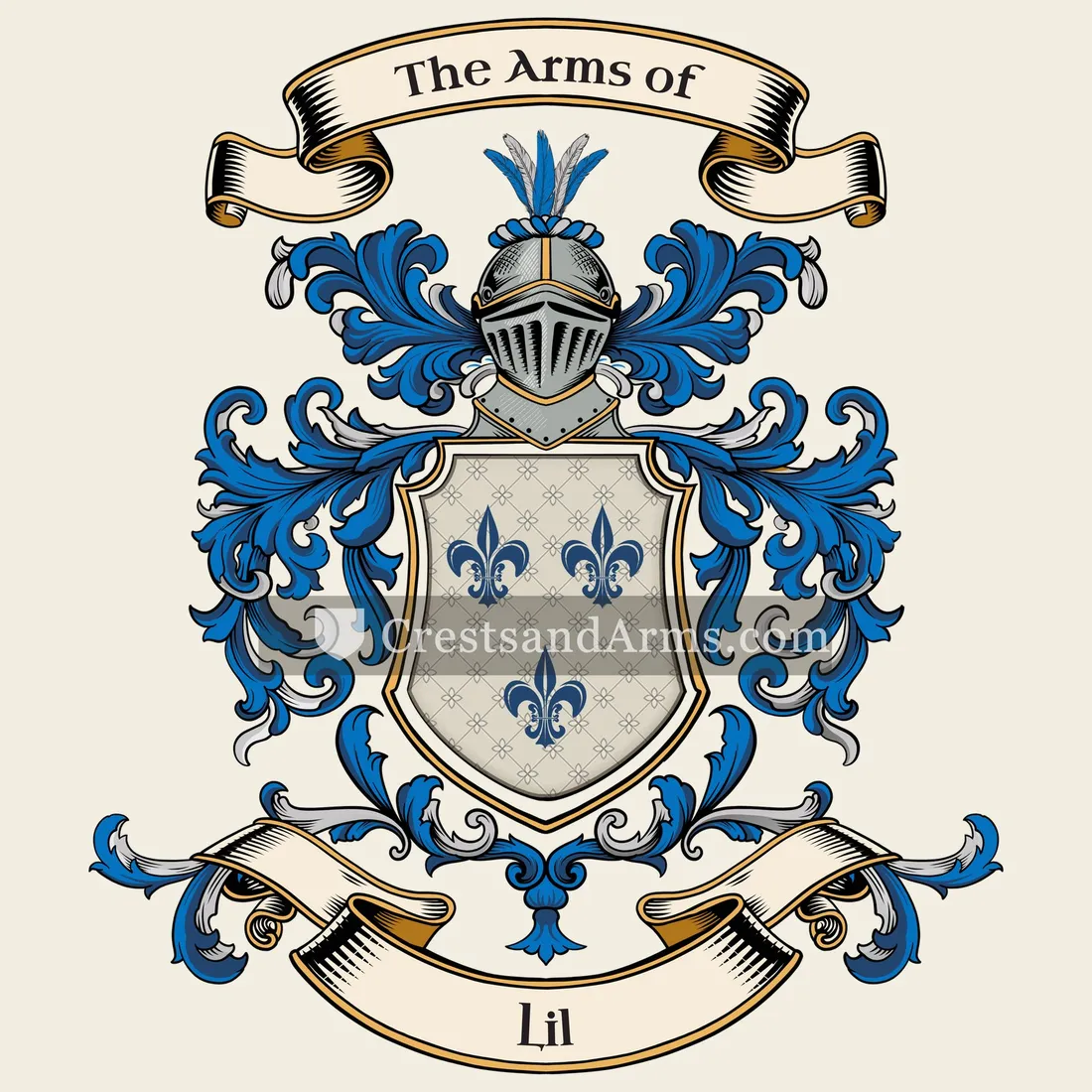
fleur de lisPurity, light, and the sixth son
Colours
Gold (Or)Means: Generosity
Black (Sable)Means: Constancy
Historical info
Source
J. B. Rietstap, Armorial Général, Gouda: G. B. van Goor Zonen, 1884–87
Blazon (the actual original written record)
“Coupé: au 1 d'or à une fleur-de-lis au pied coupé de sa., mouv. du coupé; au 2 d'or à un tertre de sa. C.: la fleur-de-lis.”
Germanyc. 1765
Digital archive packCoat of arms PNG, gold border print PDF, vector SVG and the certificate of authenticity. Sent to your email in minutes.
Map of Germany showing where the Lil arms are recorded
The Lil arms were recorded in Germany, c. 1765.
Arms such as these were typically recorded in Bavaria.
Bavaria was a country of old landed families and walled market towns. Estates passed down the same line for centuries, and both the landowners and the leading townsmen kept arms, which is why so many Bavarian names sit in the registers.
This is where the arms were entered in the register. Families often moved to other parts of the country, so the same name can turn up in more than one region.
The body that granted and recorded arms in Germany in this period.
Francis I, Holy Roman Emperor
Sovereign of the period
Francis I, Holy Roman Emperor
1745–1765
Reigning in Spain when the Lil arms are first recorded.
How Arms Worked in Germany
In the Holy Roman Empire, coats of arms were often granted to individuals by the Emperor or his representatives. These arms were then passed down through the generations to all legitimate descendants of the original holder. Younger branches of a family usually kept the same shield design without needing to change it, as the arms belonged to the entire lineage.
Granting authority
The Holy Roman Emperor held the sole power to grant new coats of arms throughout his vast imperial territories.
How they got arms
Families typically obtained their coats of arms through a formal imperial grant or by proving their noble status to the authorities.
Where arms were recorded
These grants were officially recorded in the Imperial Chancery registers, which began keeping formal records of such honors during the Middle Ages.
The family's standing
Recorded among the armigerous families of Germany.
Origin & History of the Lil Family in Germany
The surname Lil is deeply rooted in the historical landscape of southern Germany, particularly within the region of Bavaria. By the mid-eighteenth century, records confirm that families bearing this name were well-established in Bavarian communities. The name likely originated as a descriptive term or a shortened form of a longer Germanic name, reflecting the common practice of identifying individuals by their personal traits or their specific place of residence. During the 1760s, Bavaria was a society defined by agricultural traditions and local craftsmanship, and families like the Lils were often tied to the land or specialized trades that supported the local economy. As these families lived through the shifting political climate of the Holy Roman Empire, they contributed to the cultural fabric of their villages by maintaining local customs and participating in the regional church and civil life. This era marked a period of stability for the name, allowing it to take root firmly in the Bavarian records before the major social changes of the nineteenth century.
Lil Meaning & Related Branches
Root word
Lilio
Latin term for the lily flower representing purity and innocence.
This name
LilA habitational or ornamental surname derived from the lily flower, often associated with purity.
also spelled
Lyl
Lil
Lille
Lylle
Lyll
Documented Sources
J. B. Rietstap, Armorial Général, Gouda: G. B. van Goor Zonen, 1884–87
Archivo General de Guipúzcoa, Catálogo de la Sección de Hidalguía, 1722
Gorosabel, Pablo, Diccionario histórico-geográfico-descriptivo de los pueblos, valles, partidos, alcaldías y uniones de Guipúzcoa, 1862
Digital archive packCoat of arms PNG, gold border print PDF, vector SVG and the certificate of authenticity. Sent to your email in minutes.


 fleur de lisPurity, light, and the sixth son
 fleur de lisPurity, light, and the sixth son


 mountThe ground held, and steadfastness upon it