Map of Denmark showing where the Linde arms are recorded
The Linde arms were recorded in Denmark, c. 1704.
Arms such as these were typically recorded in Sjaælland.
Zealand held the Danish court, the crown's offices and Copenhagen itself. Families who served the king kept estates within reach of it, and royal service was the ordinary route to a coat of arms.
This is where the arms were entered in the register. Families often moved to other parts of the country, so the same name can turn up in more than one region.
The body that granted and recorded arms in Denmark in this period.
Frederik IV of Denmark
Sovereign of the period
Frederik IV of Denmark
1699–1730
Reigning in Denmark when the Linde arms are first recorded.
How Arms Worked in Denmark
Danish heraldry during this period was closely tied to noble status and royal favor rather than being open to all citizens. Arms were typically granted by the monarch to individuals, and these symbols were then shared by all members of the noble house. If a family line died out, the right to use those specific arms ended with them.
Granting authority
The Danish royal chancery held the power to issue and regulate official coats of arms for the kingdom.
How they got arms
Families usually received their arms through a formal royal grant that confirmed their noble status and rights.
Where arms were recorded
These grants were officially recorded in the Danish Royal Chancery records starting in the sixteenth century.
The family's standing
Recorded among the armigerous families of Denmark.
Origin & History of the Linde Family in Denmark
The name Linde is deeply connected to the landscape of Denmark, as the word itself refers to the linden or lime tree. In the early eighteenth century, the family was well established on the island of Sjaælland, where records confirm their presence by 1704. During this period, surnames in rural Denmark were often fluid and tied to the specific farm or village where a family lived. The choice of Linde suggests that the family likely resided near a prominent linden tree, which served as a natural landmark in their local community. As the family grew and moved across the island, they carried this name as a link to their ancestral home. This naming tradition reflects a time when a family’s identity was closely woven into the geography and the natural features of the Danish countryside.
Meaning of the Linde family crest colors & symbols
Symbols on this shield
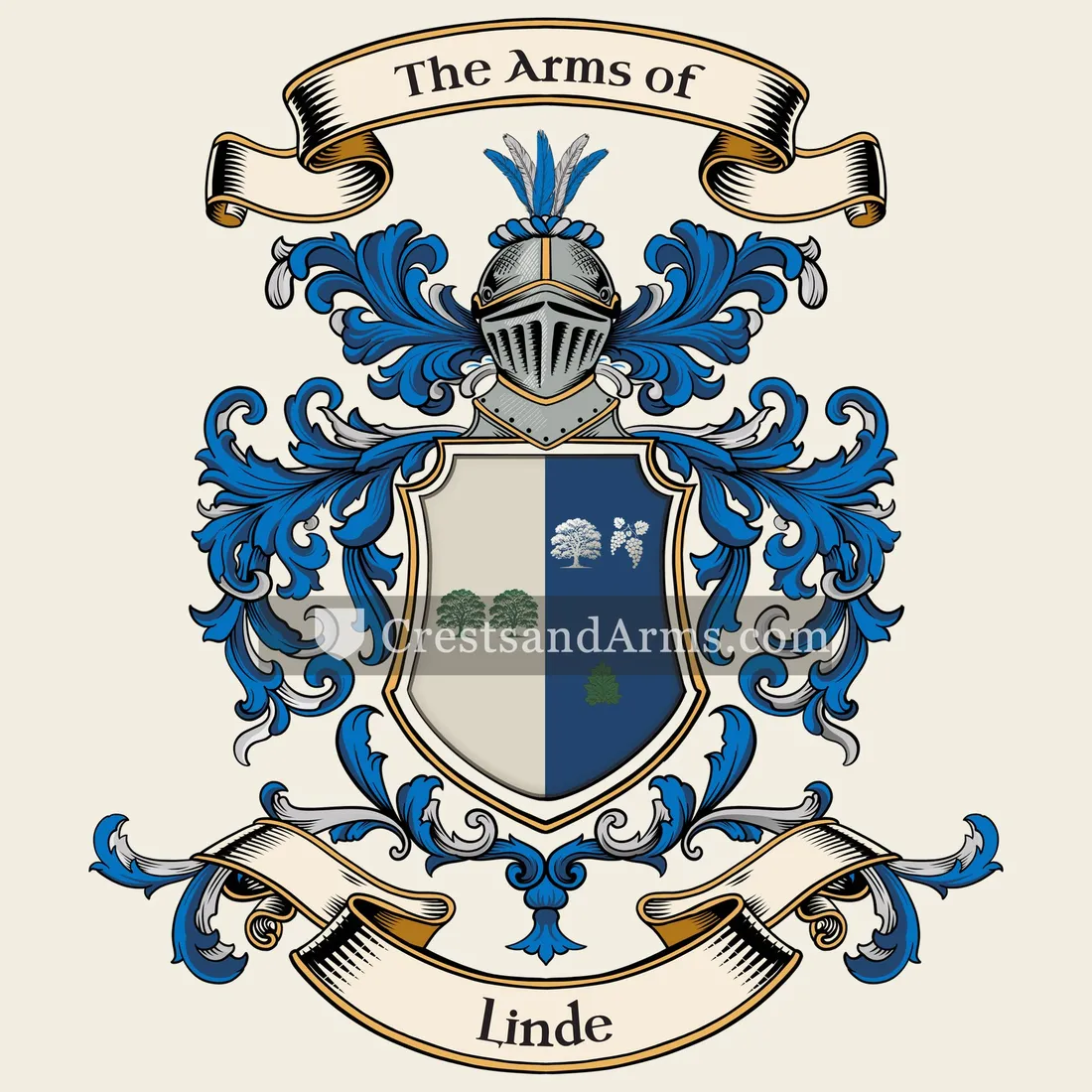
treeLife, endurance and deep roots
grapesPlenty, and the labour of the vine
leafHappiness and abundance
Colours
Silver (Argent)Means: Peace and sincerity
Blue (Azure)Means: Loyalty and truth
Green (Vert)Means: Hope
Historical info
Source
J. B. Rietstap, Armorial Général, Gouda: G. B. van Goor Zonen, 1884–87
Blazon (the actual original written record)
“d'arg. a deux tilleuls de sin., mouv. du coupe; au 2 d'azur a un chicot au nat., en fasce, ayant en bas a dextre une grappe de raisins d'arg. et a sen. une feuille de tilleul. C.: un tilleul de sin.”
Swedenc. 1631
Digital archive packCoat of arms PNG, gold border print PDF, vector SVG and the certificate of authenticity. Sent to your email in minutes.
Map of Sweden showing where the Linde arms are recorded
The Linde arms were recorded in Sweden, c. 1631.
Arms such as these were typically recorded in Stockholm.
Stockholm held the Swedish court and the House of Nobility, where every noble family's arms were entered and kept. Families ennobled for service registered there, which is why so many are recorded around the city.
This is where the arms were entered in the register. Families often moved to other parts of the country, so the same name can turn up in more than one region.
The body that granted and recorded arms in Sweden in this period.
Gustavus Adolphus of Sweden
Sovereign of the period
Gustavus Adolphus of Sweden
1611–1632
Reigning in Denmark when the Linde arms are first recorded.
How Arms Worked in Sweden
In Sweden, a coat of arms belonged to a noble family as a whole rather than just one individual. These arms were passed down through the generations to all legitimate descendants. Younger branches of the family used the same shield without needing to change it. This system ensured that the entire lineage shared the same identity and status under the law.
Granting authority
The Riddarhuset, or House of Nobility, regulated all noble coats of arms in Sweden under royal authority.
How they got arms
Families received their coats of arms through royal grants of nobility which were then officially registered with the House.
Where arms were recorded
Coats of arms were officially recorded in the Swedish House of Nobility register starting in the year 1626.
The family's standing
Recorded among the armigerous families of Sweden.
Origin & History of the Linde Family in Sweden
The name Linde has deep roots in the Swedish landscape, often reflecting the natural surroundings that defined life in the seventeenth century. In Swedish, the word "lind" refers to the linden tree, which was frequently used in naming practices to signify a connection to a specific location or a peaceful place of residence. By 1631, records confirm that members of the Linde family were already established in Stockholm, a city that was rapidly growing into a major center of power and trade during the Swedish Empire. During this era, families often adopted names that described their environment or their trade, and the Linde name likely emerged from this tradition of identifying individuals by the landmarks near their homes. As the family navigated life in the capital, they became part of the urban fabric of a changing nation, moving from local roots into the broader historical narrative of Swedish society.
Meaning of the Linde family crest colors & symbols
Symbols on this shield
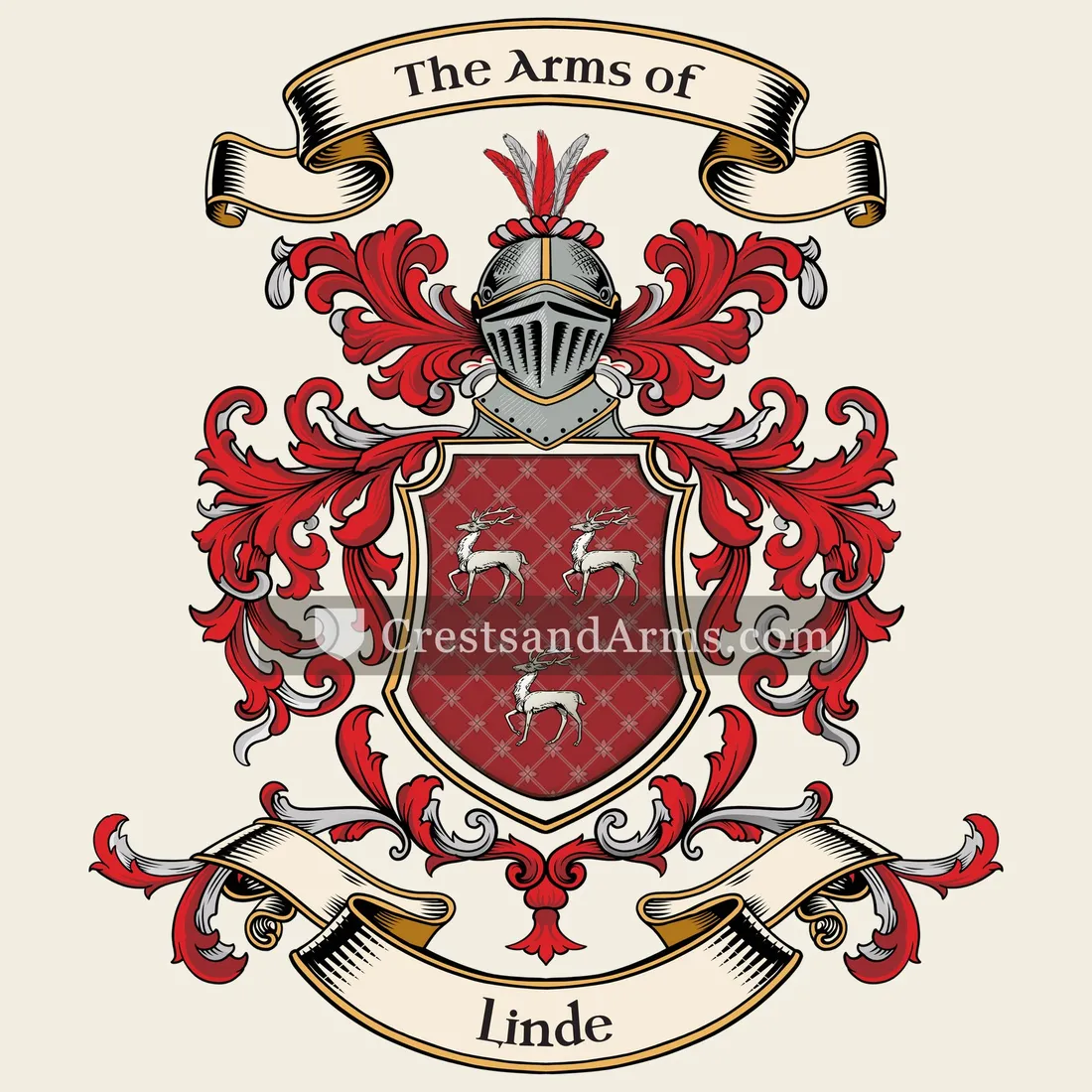
stagPeace and harmony, and one who will not fight unprovoked
Colours
Red (Gules)Means: Military strength
Silver (Argent)Means: Peace and sincerity
Historical info
Source
Sir Bernard Burke, The General Armory of England, Scotland, Ireland and Wales, London: Harrison & Sons, 1884
Blazon (the actual original written record)
“Gu. three bucks' heads couped ar”
DorsetDorset, c. 1620
Digital archive packCoat of arms PNG, gold border print PDF, vector SVG and the certificate of authenticity. Sent to your email in minutes.
Map of England showing where the Linde arms are recorded
The Linde arms were recorded in Dorset, c. 1620.
Dorset was quiet farming and grazing country along the south coast. Its gentry were middling rather than grand, but they held their manors for a very long time, and long holding is what puts a name in the records.
This is where the arms were entered in the register. Families often moved to other parts of the country, so the same name can turn up in more than one region.
The body that granted and recorded arms in England in this period.
James VI and I
Sovereign of the period
James VI and I
1603–1625
Reigning in Denmark when the Linde arms are first recorded.
How Arms Worked in England
English heraldry allowed arms to be shared by all legitimate descendants of the original owner. These symbols were treated as personal property that moved through the generations to all children. While the eldest son kept the original design, other family members could use the same shield without needing to change it or register their own unique versions.
Granting authority
The College of Arms in London has regulated the use of coats of arms throughout England and Wales since 1484.
How they got arms
Families typically obtained their coats of arms through a formal grant from the Crown or by proving their ancient right to them.
Where arms were recorded
All official coats of arms are recorded in the registers kept at the College of Arms, which date back to the fifteenth century.
The family's standing
Recorded among the armigerous families of Dorset.
Origin & History of the Linde Family in England
The surname Linde is a topographic name, meaning it was originally used to identify people who lived near a prominent linden or lime tree. In England, the name evolved from Old English roots, reflecting a time when families were often named after the natural landmarks near their homes. By the year 1620, historical records confirm that members of the Linde family were well-established in the county of Dorset. During this period, families in the region were often involved in local agriculture or trade, living in small rural communities that relied on the fertile landscape of the English coast. As the family settled in Dorset, they became part of the local social fabric, contributing to the development of the area through their work and community ties. This early presence in the West Country suggests that the family had deep roots in the region long before the waves of migration that would later spread the name across the globe.
Linde Meaning & Related Branches
Root word
Lind
Old Norse word for the linden or lime tree.
This name
LindeA topographic name for someone who lived near a prominent linden tree.
also spelled
Lynde
Lindy
Lynd
Related arms
Lyndevariant spelling
Documented Sources
J. B. Rietstap, Armorial Général, Gouda: G. B. van Goor Zonen, 1884–87
Dansk Historisk Fællesråd, Danske Slægtsnavne, 1980
Rigsarkivet, Kirkebøger fra Sjælland, 1704
Steenstrup, Johannes, De danske Stednavne, 1908
Digital archive packCoat of arms PNG, gold border print PDF, vector SVG and the certificate of authenticity. Sent to your email in minutes.


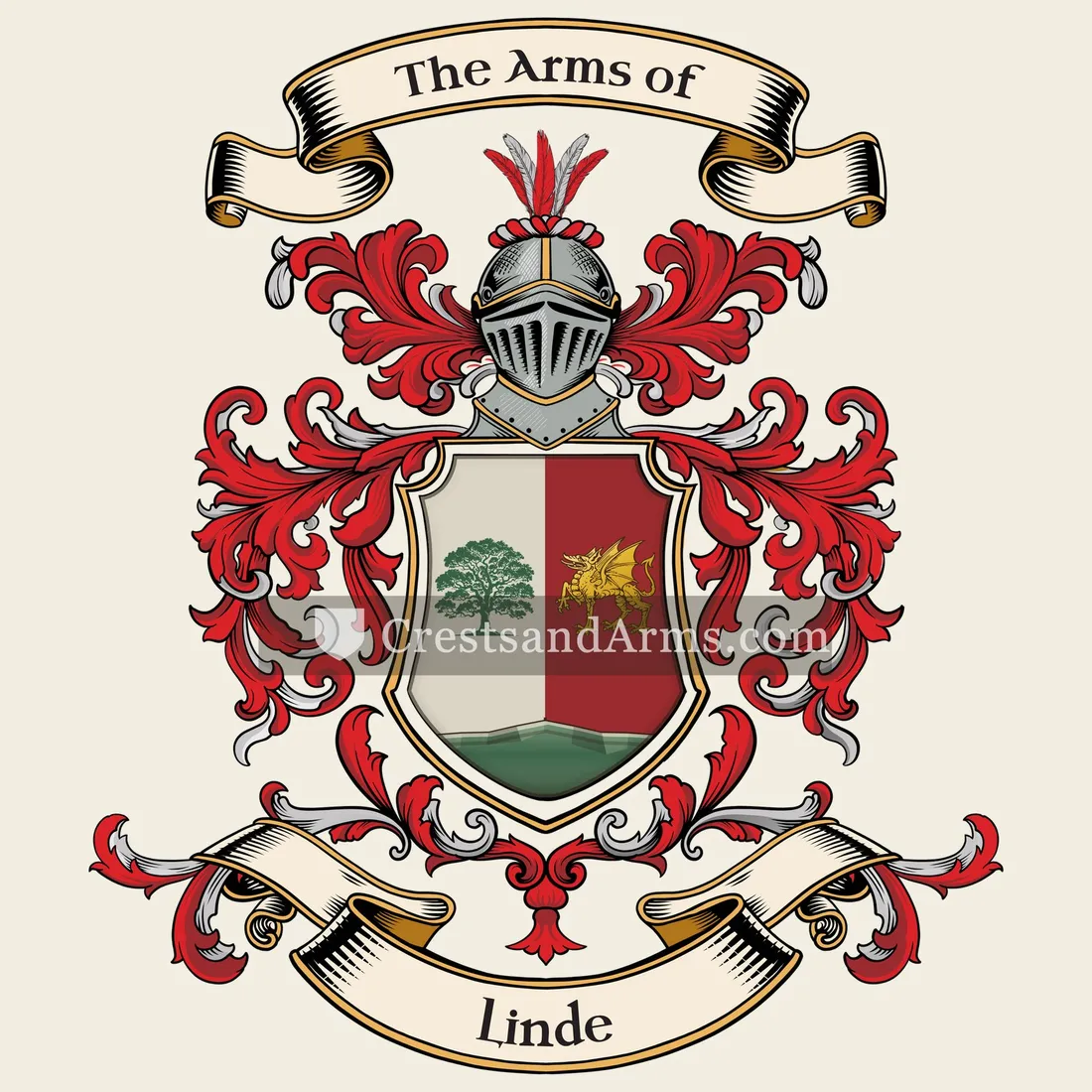
 treeLife, endurance and deep roots
 dragonA most valiant defender of treasure
 treeLife, endurance and deep roots
 dragonA most valiant defender of treasure


 grapesPlenty, and the labour of the vine
 leafHappiness and abundance


 stagPeace and harmony, and one who will not fight unprovoked