Map of Belgium showing where the Lion arms are recorded
The Lion arms were recorded in Bruxelles, c. 1737.
This is where the arms were entered in the register. Families often moved to other parts of the country, so the same name can turn up in more than one region.
The body that granted and recorded arms in Belgium in this period.
Charles VI, Holy Roman Emperor
Sovereign of the period
Charles VI, Holy Roman Emperor
1711–1740
Reigning in Belgium when the Lion arms are first recorded.
How Arms Worked in Belgium
In Belgium, a coat of arms is considered personal property that is passed down through the male line to legitimate descendants. Families often use the same shield design across generations to show their shared heritage. If a branch of the family wants to change the design, they must apply for an official update to their specific version of the arms.
Granting authority
The Conseil héraldique is the official body that regulates and approves all coats of arms in Belgium.
How they got arms
Families obtain their coats of arms through formal royal grants or by confirming their historical right to use existing designs.
Where arms were recorded
All approved coats of arms are officially recorded in the public registers of the Conseil héraldique since 1844.
The family's standing
Recorded among the armigerous families of Belgium.
Origin & History of the Lion Family in Belgium
The family name Lion has deep roots in the urban landscape of Brussels, where records confirm members of the family were established by 1737. During the eighteenth century, Brussels was a bustling center of trade and craftsmanship under the rule of the Austrian Netherlands. Families with this name were often integrated into the local economy, likely working as skilled laborers or merchants within the city walls. Because the name Lion is associated with strength and courage, it was often used as a descriptive nickname before becoming a permanent surname passed down through generations. By the mid-1700s, the family was already part of the complex social fabric of the city, living through a time of significant political change and urban growth. Their presence in the city archives from this period shows that they were recognized citizens who participated in the daily life and administrative systems of Brussels long before the modern nation of Belgium was formed.
Coat of Arms & Family Crest Details
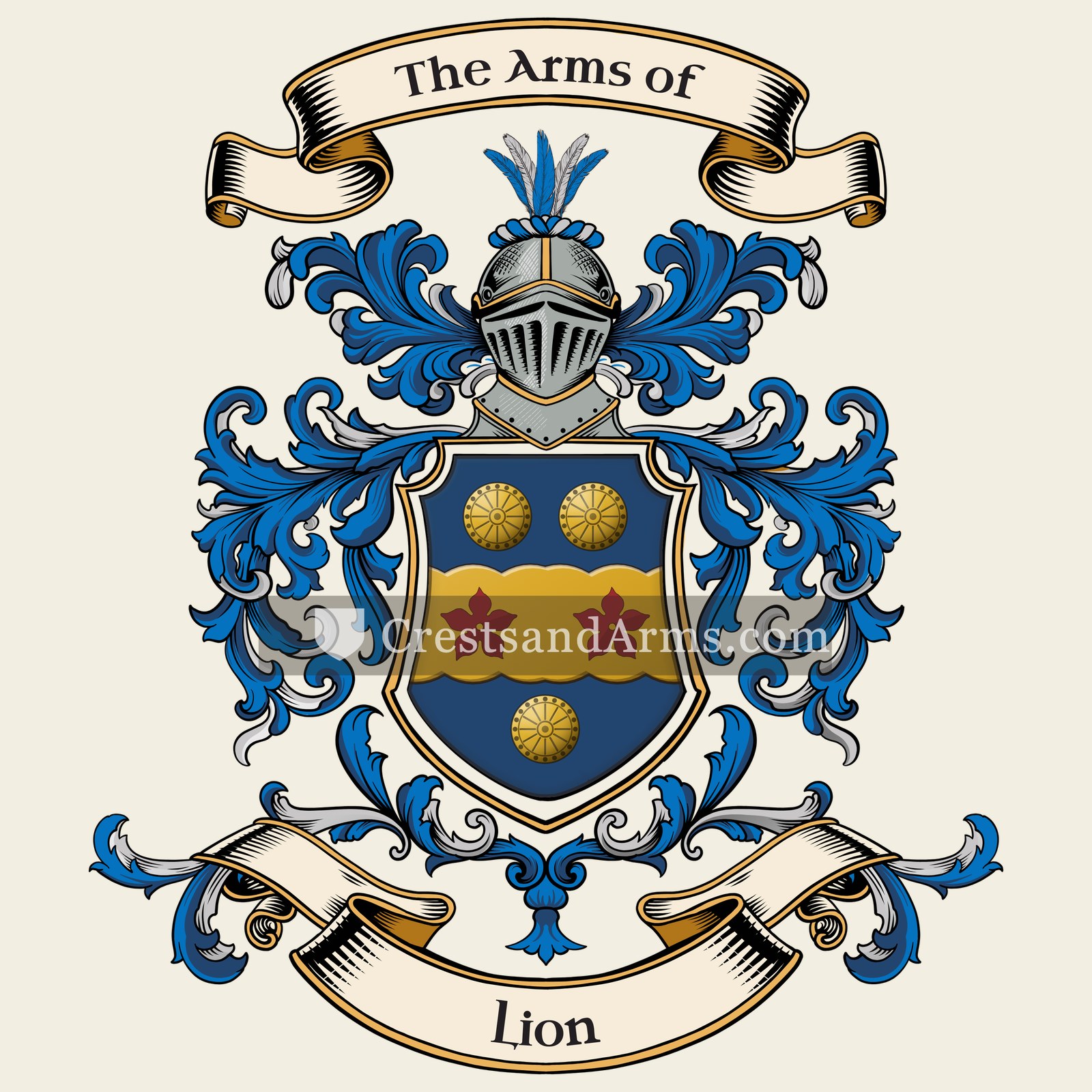
Symbols on this shield
fessThe military belt, and readiness to serve
roundelA coin, and one who has been to the crusades
cinquefoilHope and joy
Colours
Blue (Azure)Means: Loyalty and truth
Gold (Or)Means: Generosity
Red (Gules)Means: Military strength
Historical info
Source
Sir Bernard Burke, The General Armory of England, Scotland, Ireland and Wales, London: Harrison & Sons, 1884
Blazon (the actual original written record)
“Az. on a fesse engr. or, betw. three bezants, each charged with a griffin's head erased sa. a lion pass. guard. betw. two cinquefoils gu”
EnglandLondon, c. 1554
Digital archive packCoat of arms PNG, gold border print PDF, vector SVG and the certificate of authenticity. Sent to your email in minutes.
Map of England showing where the Lion arms are recorded
The Lion arms were recorded in London, c. 1554.
This is where the arms were entered in the register. Families often moved to other parts of the country, so the same name can turn up in more than one region.
The body that granted and recorded arms in England in this period.
Mary I
Sovereign of the period
Mary I
1553–1558
Reigning in Belgium when the Lion arms are first recorded.
How Arms Worked in England
English heraldry allowed arms to be shared by all legitimate descendants of the original owner. These symbols were treated as personal property that moved through the generations to all children. While the eldest son kept the original design, other family members could use the same shield without needing to change it or register their own unique versions.
Granting authority
The College of Arms in London has regulated the use of coats of arms throughout England and Wales since 1484.
How they got arms
Families typically obtained their coats of arms through a formal grant from the Crown or by proving their ancient right to them.
Where arms were recorded
All official coats of arms are recorded in the registers kept at the College of Arms, which date back to the fifteenth century.
The family's standing
Recorded among the armigerous families of England.
Origin & History of the Lion Family in England
The family name Lion emerged in England as a descriptive surname, likely originating from a nickname for a person who displayed the strength or courage associated with the animal. By the mid-sixteenth century, historical records confirm that members of the Lion family were established residents of London. During this period, London was a bustling center of trade and social change, and families with this name were part of the growing urban population. These early ancestors lived through a time of significant religious and political shifts in England, which shaped the environment in which they worked and raised their families. As the name became more common in city records, it solidified its place within the local community, marking the start of a long presence for the family in the English capital.
Lion Meaning & Related Branches
Root word
Leo
Latin term for the predatory feline animal.
This name
LionA surname originally used as a nickname for a brave or fierce person.
also spelled
Lyon
Lyons
Ly-on
Related arms
Lyonvariant spelling
Lyonsvariant spelling
Documented Sources
J. B. Rietstap, Armorial Général, Gouda: G. B. van Goor Zonen, 1884–87
Archives de la Ville de Bruxelles, Registres paroissiaux (baptêmes, mariages, sépultures), 1737
Despy, Georges, Histoire de Bruxelles, 1976
Henne, Alexandre and Wauters, Alphonse, Histoire de la ville de Bruxelles, 1845
Digital archive packCoat of arms PNG, gold border print PDF, vector SVG and the certificate of authenticity. Sent to your email in minutes.


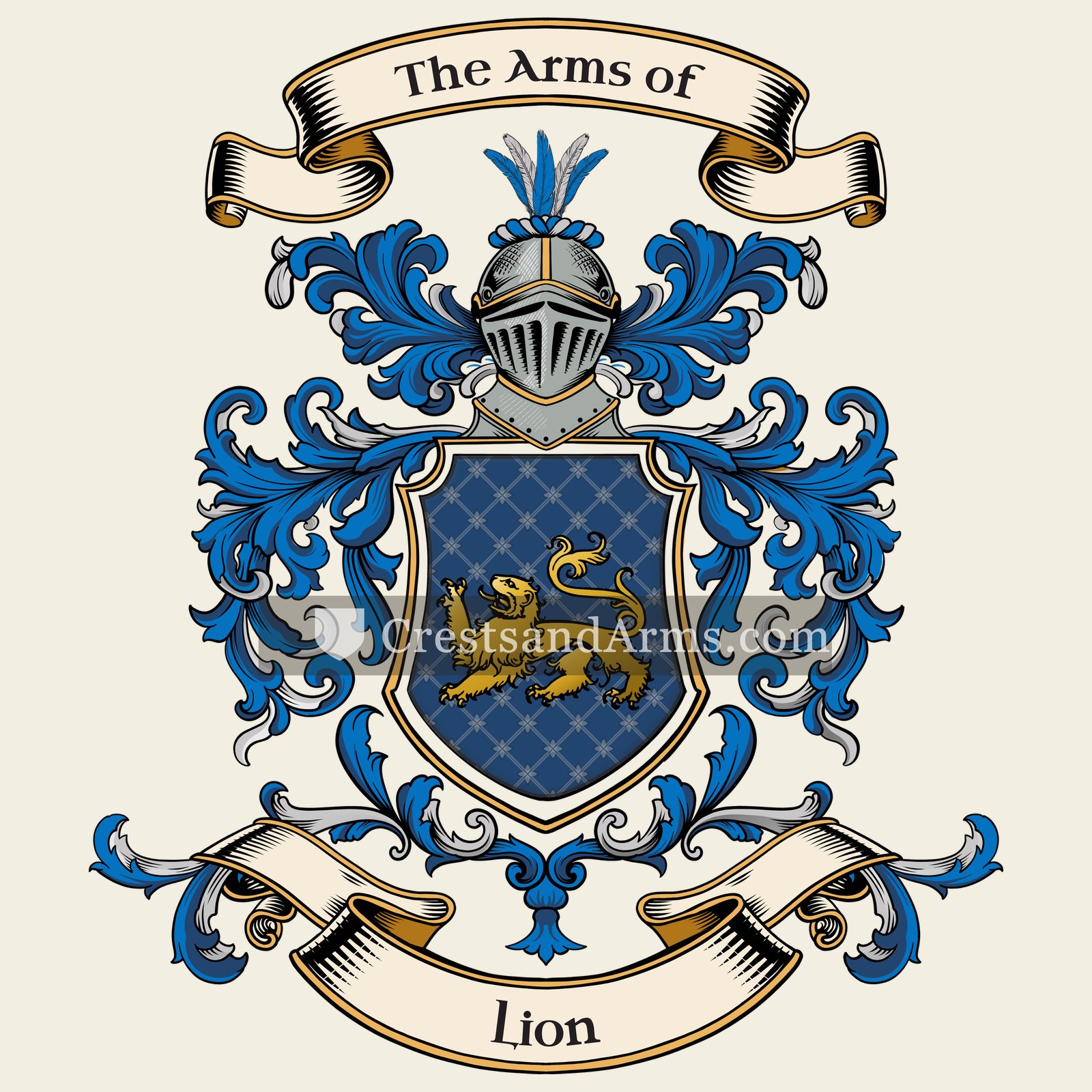
 lionCourage, strength and royalty
 lionCourage, strength and royalty


 fessThe military belt, and readiness to serve
 roundelA coin, and one who has been to the crusades
 cinquefoilHope and joy