Map of Austria showing where the Lipa arms are recorded
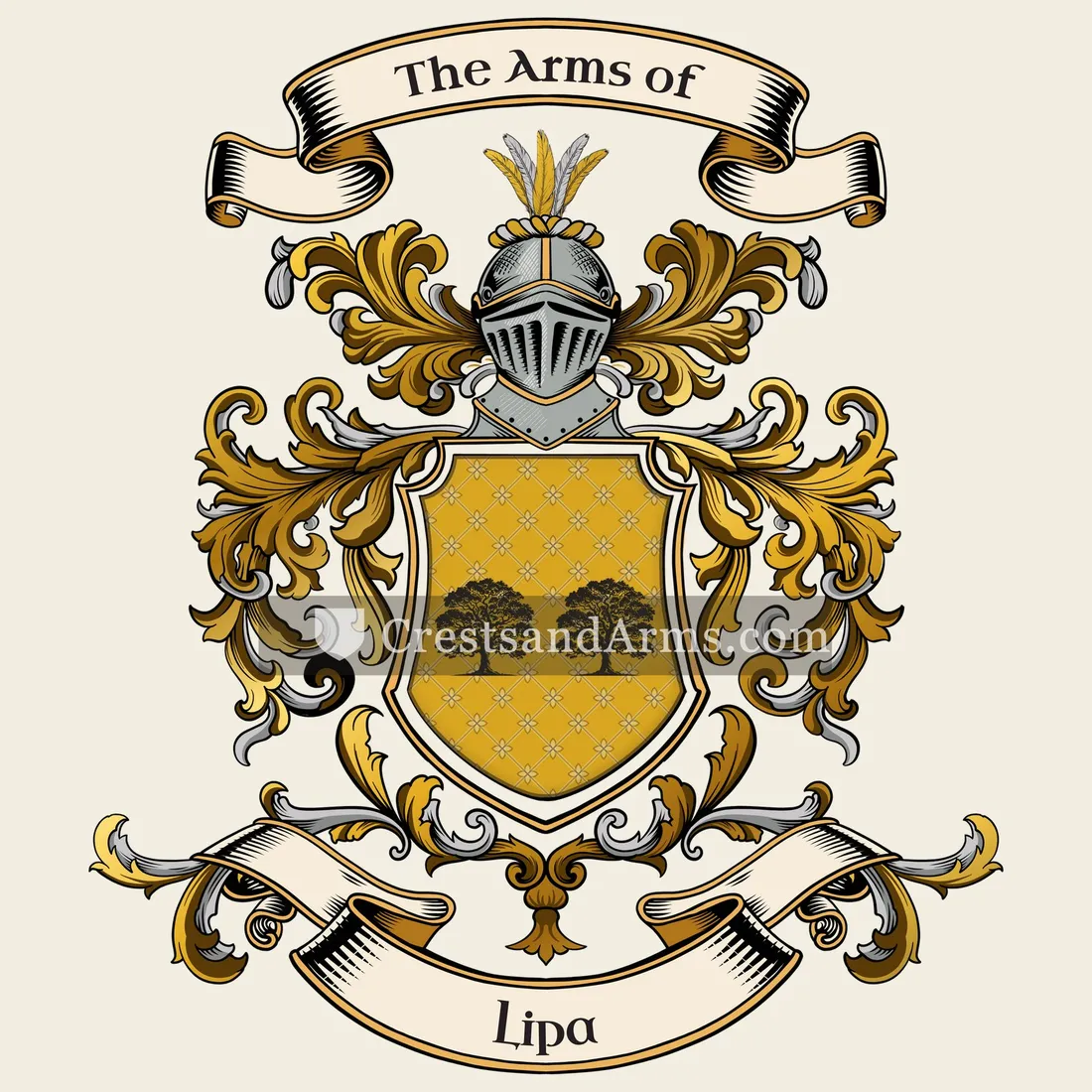
The Lipa arms were recorded in Silesia, c. 1682.
Silesia was farming country in the east of the German lands, held in large estates by families who stayed put for generations. Owning land was what entitled a family to arms, so the region fills a good deal of the register.
This is where the arms were entered in the register. Families often moved to other parts of the country, so the same name can turn up in more than one region.
Region
Silesia
First recorded
1682
Granting Authority for the Lipa Arms
Imperial and Royal chancery
Sodacan · CC BY-SA 3.0
The body that granted and recorded arms in Austria in this period.
Leopold I, Holy Roman Emperor
Sovereign of the period
Leopold I, Holy Roman Emperor
1658–1705
Reigning in Austria when the Lipa arms are first recorded.
How Arms Worked in Austria
Austrian coats of arms were often linked directly to noble titles granted by the Emperor. These symbols belonged to the entire family line rather than just one individual. When a family grew, new branches kept the original design without needing to change it. This system allowed all members of a noble house to share the same identity across many generations.
Granting authority
The Imperial and Royal chancery managed all heraldic matters and controlled the official granting of arms throughout the Austrian lands.
How they got arms
Families typically received their arms through a formal imperial decree that often accompanied the elevation of a person to noble status.
Where arms were recorded
Official records of these grants were kept in the Imperial Register of Nobility which began its formal documentation process in 1453.
The family's standing
Recorded among the armigerous families of Silesia.
Origin & History of the Lipa Family in Austria
The family name Lipa is deeply connected to the Slavic linguistic tradition, as the word itself refers to the linden tree. In many Slavic cultures, the linden tree was considered a sacred symbol of protection, community, and peace. By the late 17th century, the family was well established in the region of Silesia, which was a crossroads of diverse cultures and shifting political borders. Records from 1682 confirm that members of the Lipa family were active participants in the social and economic life of this area during a time of significant reconstruction following the Thirty Years' War. Because the linden tree was a common feature of the local landscape, the name likely originated as a way to identify families who lived near a prominent grove or a specific landmark tree. Over generations, this simple descriptive name became a permanent marker of the family identity as they settled into the towns and rural villages of the Silesian countryside.
Lipa Meaning & Related Branches
Root word
lipa
Slavic word for the linden or lime tree.
This name
LipaA topographic name for someone who lived near a prominent linden tree.
also spelled
Lypa
Documented Sources
J. B. Rietstap, Armorial Général, Gouda: G. B. van Goor Zonen, 1884–87
Brückner, Aleksander, Słownik etymologiczny języka polskiego, 1927
Kahl, Hans-Dietrich, Silesia: A History of the Region, 1998
State Archive in Wrocław (Archiwum Państwowe we Wrocławiu), Akta miasta Wrocławia, 1682
Digital archive packCoat of arms PNG, gold border print PDF, vector SVG and the certificate of authenticity. Sent to your email in minutes.


 treeLife, endurance and deep roots
 treeLife, endurance and deep roots