Map of Netherlands showing where the Lipski arms are recorded
The Lipski arms were recorded in Netherlands, c. 1815.
Arms such as these were typically recorded in Friesland.
Friesland was low, wet country on the northern coast of the Netherlands, farmed by families who had held the same land for centuries. Free landholders were unusually common there, and a free landholder could carry arms.
This is where the arms were entered in the register. Families often moved to other parts of the country, so the same name can turn up in more than one region.
Region
Friesland
First recorded
1815
Granting Authority for the Lipski Arms
Hoge Raad van Adel
Photograph made by me · CC BY-SA 3.0
The body that granted and recorded arms in Netherlands in this period.
William I of the Netherlands
Sovereign of the period
William I of the Netherlands
1815–1840
Reigning in Netherlands when the Lipski arms are first recorded.
How Arms Worked in Netherlands
In the Netherlands, coats of arms were often used by noble families and those who held specific public offices. These arms were passed down through the generations to legitimate descendants. Younger branches of a family usually kept the original design without needing to add special marks. This system ensured that the family identity remained clear and consistent over many years.
Granting authority
The Hoge Raad van Adel is the official body that regulates and manages noble titles and coats of arms in the Netherlands.
How they got arms
Families typically obtained their coats of arms through official royal grants or by proving their long-standing historical use of the symbols.
Where arms were recorded
Coats of arms are officially recorded in the registers held by the Hoge Raad van Adel, which began its work in 1814.
The family's standing
Recorded among the armigerous families of Netherlands.
Origin & History of the Lipski Family in Netherlands
The history of the Lipski name in the Netherlands begins with the movement of individuals into the northern province of Friesland by the early 19th century. While the name itself is of Slavic origin, typically denoting someone who hailed from a place called Lipsko or a location near linden trees, its presence in the Dutch records by 1815 suggests a period of migration during the turbulent years of the Napoleonic era. In Friesland, families often integrated into the local community through trade or agriculture, adapting their surnames to fit the Dutch civil registration systems that were strictly enforced during this time. These early records indicate that the Lipski family members were part of a broader pattern of European mobility, where people moved across borders to seek new opportunities in the changing landscape of the United Kingdom of the Netherlands. By establishing themselves in the Frisian region, these early ancestors helped weave a unique, cross-cultural thread into the local history of the province.
Coat of Arms & Family Crest Details
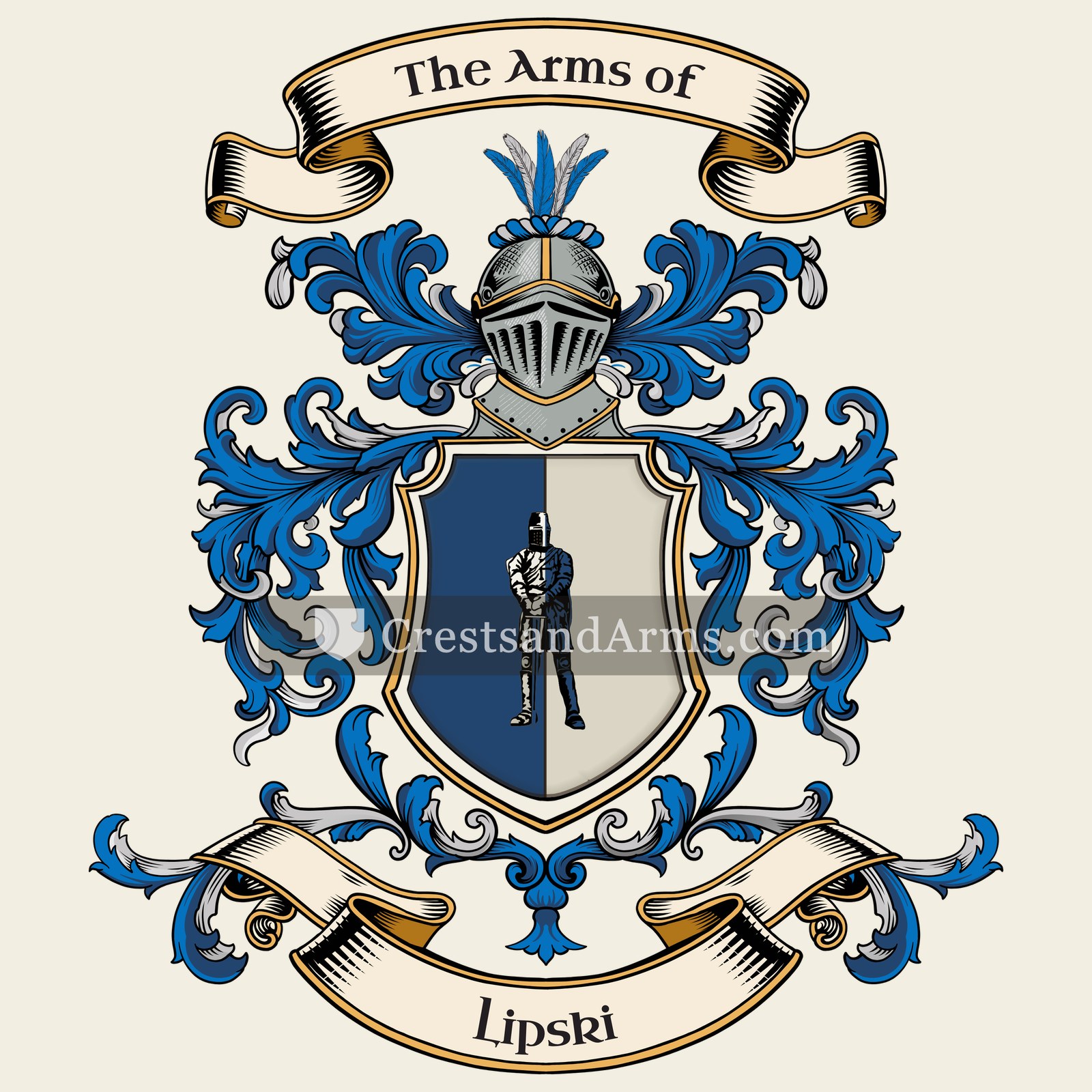
Symbols on this shield
knightChivalry and service in arms
Colours
Blue (Azure)Means: Loyalty and truth
Silver (Argent)Means: Peace and sincerity
Historical info
Source
J. B. Rietstap, Armorial Général, Gouda: G. B. van Goor Zonen, 1884–87
Blazon (the actual original written record)
“Parti d'azur et d'arg; à un homme iss., hab. de l'un en l'autre, cour. d'or, supp. de sa main dextre étendue une fleur-de-lis d'or, la sen. appuyée sur sa hanche. C.: une massue d'azur, la tête en haut, supp. une étoile d'arg; entre deux prob., coupées alt. d'arg. et d'azur. L. d'arg. et d'azur.”
BavariaBavaria, c. 1822
Digital archive packCoat of arms PNG, gold border print PDF, vector SVG and the certificate of authenticity. Sent to your email in minutes.
Map of Germany showing where the Lipski arms are recorded
The Lipski arms were recorded in Bavaria, c. 1822.
Bavaria was a country of old landed families and walled market towns. Estates passed down the same line for centuries, and both the landowners and the leading townsmen kept arms, which is why so many Bavarian names sit in the registers.
This is where the arms were entered in the register. Families often moved to other parts of the country, so the same name can turn up in more than one region.
The body that granted and recorded arms in Germany in this period.
Frederick William III of Prussia
Sovereign of the period
Frederick William III of Prussia
1797–1840
Reigning in Netherlands when the Lipski arms are first recorded.
How Arms Worked in Germany
Prussian heraldry was strictly tied to social rank and noble status rather than being a free choice for every citizen. These symbols were treated as permanent family property that moved through the generations to all legitimate heirs. If a family branch wanted to change their design to stand out, they had to apply for official permission to alter their specific version of the shield.
Granting authority
The Prussian Heroldsamt acted as the central state office that managed and strictly controlled all noble titles and coats of arms.
How they got arms
Families usually obtained their arms through formal royal grants or by proving their long-standing noble status to the state authorities.
Where arms were recorded
All official coats of arms were kept in the rolls of the Prussian Heroldsamt, which functioned from 1706 until 1918.
The family's standing
Recorded among the armigerous families of Bavaria.
Origin & History of the Lipski Family in Germany
The surname Lipski originates from the Slavic word for the linden tree, which was a common feature in the landscapes of Central and Eastern Europe. While the name is often associated with regions further east, historical records confirm that members of the Lipski family were established in the German state of Bavaria by 1822. During the early 19th century, Bavaria was undergoing significant administrative changes following the Napoleonic Wars, which led to more rigorous record-keeping for citizens. Families like the Lipskis often moved across borders due to shifting political boundaries, trade opportunities, or the search for farmland. By settling in Bavaria, these early ancestors integrated into a society defined by its unique blend of rural traditions and growing industrial influence. Their presence in 1822 suggests they were part of a broader movement of families who sought stability and new beginnings within the German Confederation during a time of regional transition.
Related Branches & Arms
Root word
Lipsk
A place name derived from the Slavic word for linden tree.
This name
LipskiA habitational surname denoting someone who originated from a town named Lipsk.
also spelled
Lyps
Lipps
Documented Sources
J. B. Rietstap, Armorial Général, Gouda: G. B. van Goor Zonen, 1884–87
Tresoar (Fries Historisch en Letterkundig Centrum), Burgerlijke Stand van Friesland (1811-1950)
Nederlandse Genealogische Vereniging, Nederlandse Familienamen Databank (2010)
Digital archive packCoat of arms PNG, gold border print PDF, vector SVG and the certificate of authenticity. Sent to your email in minutes.


 fessThe military belt, and readiness to serve
 roundelA coin, and one who has been to the crusades
 fessThe military belt, and readiness to serve
 roundelA coin, and one who has been to the crusades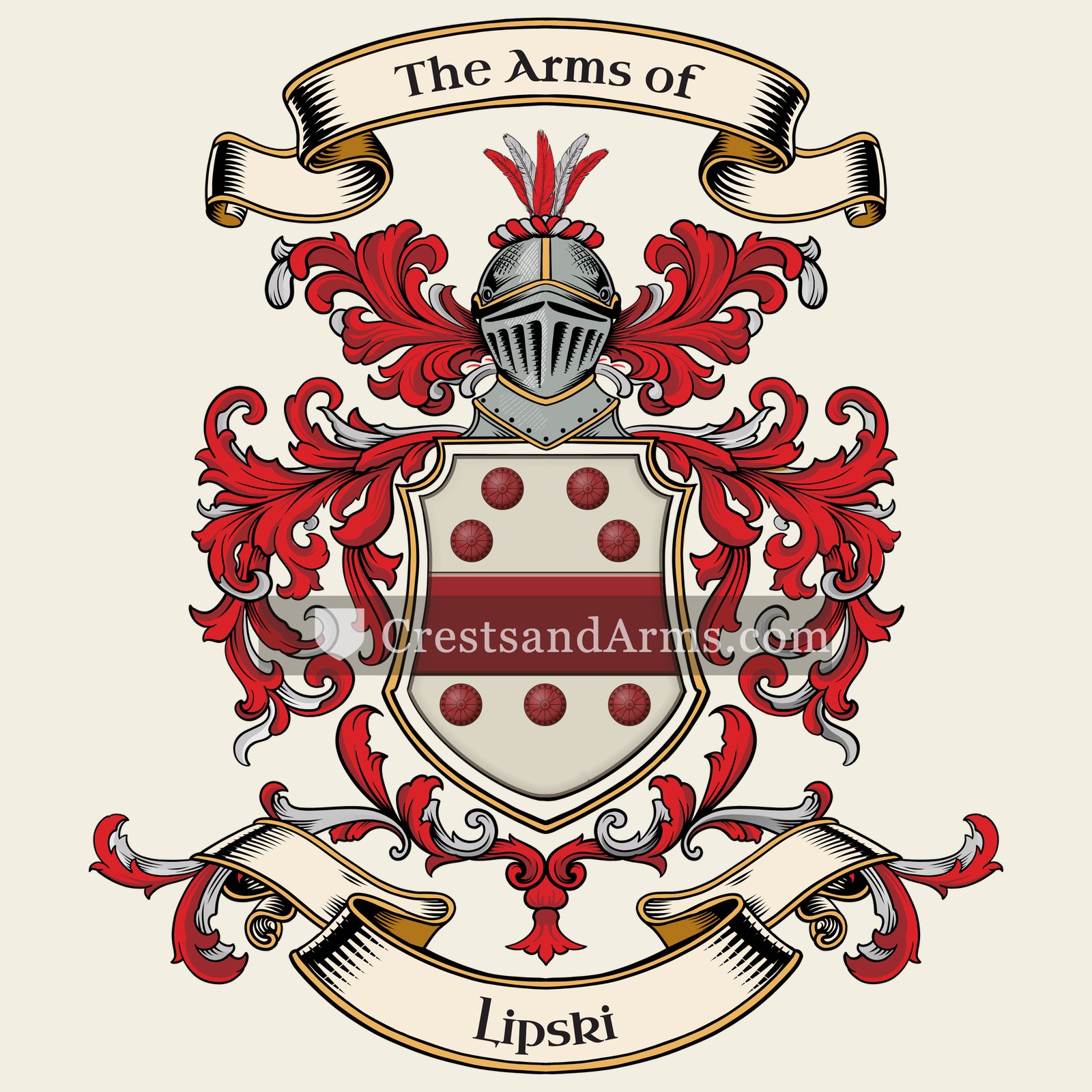


 knightChivalry and service in arms