Map of Germany showing where the Loach arms are recorded
The Loach arms were recorded in Bavaria, c. 1765.
Bavaria was a country of old landed families and walled market towns. Estates passed down the same line for centuries, and both the landowners and the leading townsmen kept arms, which is why so many Bavarian names sit in the registers.
This is where the arms were entered in the register. Families often moved to other parts of the country, so the same name can turn up in more than one region.
The body that granted and recorded arms in Germany in this period.
Francis I, Holy Roman Emperor
Sovereign of the period
Francis I, Holy Roman Emperor
1745–1765
Reigning in Germany when the Loach arms are first recorded.
How Arms Worked in Germany
In the Holy Roman Empire, coats of arms were often granted to individuals by the Emperor or his representatives. These arms were then passed down through the generations to all legitimate descendants of the original holder. Younger branches of a family usually kept the same shield design without needing to change it, as the arms belonged to the entire lineage.
Granting authority
The Holy Roman Emperor held the sole power to grant new coats of arms throughout his vast imperial territories.
How they got arms
Families typically obtained their coats of arms through a formal imperial grant or by proving their noble status to the authorities.
Where arms were recorded
These grants were officially recorded in the Imperial Chancery registers, which began keeping formal records of such honors during the Middle Ages.
The family's standing
Recorded among the armigerous families of Bavaria.
Origin & History of the Loach Family in Germany
The family name Loach finds its roots in the historical landscape of southern Germany, where records confirm the presence of family members in the region of Bavaria by 1765. During this era, surnames often evolved from local nicknames or descriptions of a person's trade, and the name likely emerged from the linguistic traditions of the Bavarian dialect. Life in eighteenth-century Bavaria was defined by agrarian cycles and the influence of local parishes, which served as the primary keepers of family identity through baptismal and marriage registers. As these early ancestors navigated the social structures of the Holy Roman Empire, their name became tied to the specific geography of the region. This period was a time of significant transition, as families began to establish deeper roots in their local communities, setting the foundation for the lineage that would eventually spread beyond the borders of their ancestral home.
Coat of Arms & Family Crest Details
Symbols on this shield
chevronProtection, and faithful service completed
roundelA coin, and one who has been to the crusades
Colours
Red (Gules)Means: Military strength
Gold (Or)Means: Generosity
Silver (Argent)Means: Peace and sincerity
Historical info
Source
J. B. Rietstap, Armorial Général, Gouda: G. B. van Goor Zonen, 1884–87
Blazon (the actual original written record)
“De gu. au chev. d'or, acc. de trois boules d'arg.”
SwitzerlandBerne, c. 1745
Digital archive packCoat of arms PNG, gold border print PDF, vector SVG and the certificate of authenticity. Sent to your email in minutes.
Map of Switzerland showing where the Loach arms are recorded
The Loach arms were recorded in Berne, c. 1745.
This is where the arms were entered in the register. Families often moved to other parts of the country, so the same name can turn up in more than one region.
The body that granted and recorded arms in Switzerland in this period.
How Arms Worked in Switzerland
In Switzerland, coats of arms were not restricted to the nobility and were often adopted by common citizens and families. These symbols were passed down through generations to show family identity. When branches of a family grew, they often changed small details of the design to distinguish their own line from the original group.
Granting authority
Cantonal and civic authorities managed the use of coats of arms within their specific regions and local jurisdictions.
How they got arms
Families typically assumed their own coats of arms based on local custom rather than receiving them from a central monarch.
Where arms were recorded
Arms were recorded in various cantonal and civic registers starting from the fourteenth century throughout the Swiss region.
The family's standing
Recorded among the armigerous families of Switzerland.
Origin & History of the Loach Family in Switzerland
The history of the Loach family in Switzerland is deeply rooted in the social fabric of the canton of Berne during the mid-eighteenth century. By 1745, records confirm that members of the family were established residents within this region, which was then a powerful city-state known for its strict administrative record-keeping. The name likely emerged as a descriptive identifier, potentially linked to the geography of the Swiss landscape or the specific trade practices of early ancestors who lived near the alpine waterways. During this period, families in Berne were often tied to specific guilds or agricultural communes, and the presence of the Loach name suggests they were part of the hardworking middle class that helped sustain the local economy. As the family integrated into the Swiss social structure, they became subject to the detailed census and tax registers maintained by the Bernese authorities, which provide a clear window into their lives as established citizens of the era.
Coat of Arms & Family Crest Details
Symbols on this shield
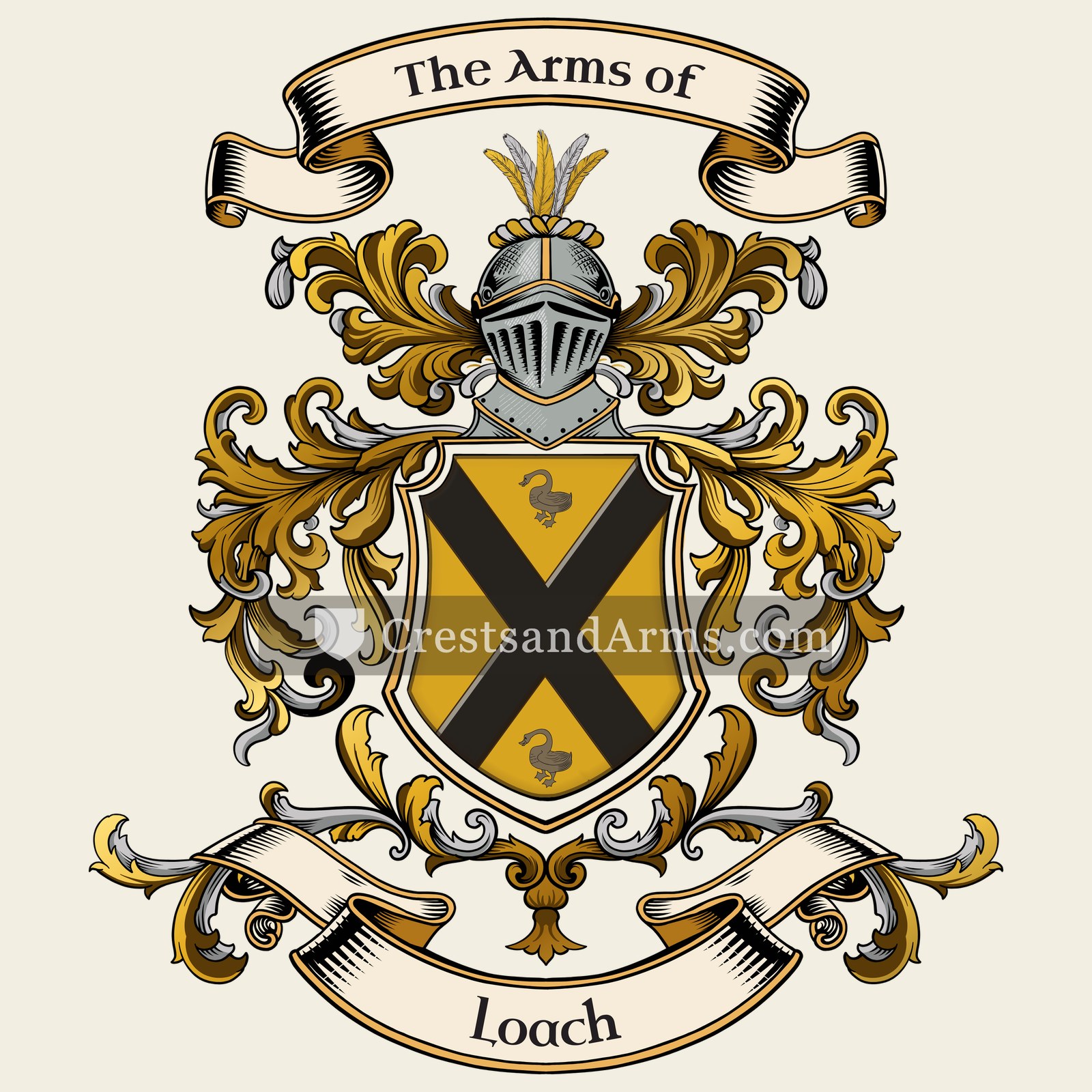
saltireResolution, and St Andrew's cross
swanGrace, light and the poet's art
Colours
Gold (Or)Means: Generosity
Black (Sable)Means: Constancy
Historical info
Source
Sir Bernard Burke, The General Armory of England, Scotland, Ireland and Wales, London: Harrison & Sons, 1884
Blazon (the actual original written record)
“Or, a saltire engr. sa. betw. two swans naiant in fesse in a loch ppr”
EdinburghDrylaw · Edinburgh, c. 1748
Digital archive packCoat of arms PNG, gold border print PDF, vector SVG and the certificate of authenticity. Sent to your email in minutes.
Map of Scotland showing where the Loach arms are recorded
The Loach arms were recorded in Edinburgh, c. 1748.
Edinburgh was the seat of Scotland's government, its courts and its heralds. Families with business there settled nearby, and being close to where arms were recorded is exactly why so many of them appear.
This is where the arms were entered in the register. Families often moved to other parts of the country, so the same name can turn up in more than one region.
The body that granted and recorded arms in Scotland in this period.
George II of Great Britain
Sovereign of the period
George II of Great Britain
1727–1760
Reigning in Germany when the Loach arms are first recorded.
How Arms Worked in Scotland
Scottish heraldry is unique because it treats a coat of arms as a piece of personal property protected by law. Only one person can own a specific design at any given time. When a family grows, the head keeps the original shield while other relatives must apply for their own distinct version with slight changes to prove their specific identity.
Granting authority
The Court of the Lord Lyon acts as the official body that regulates and controls all heraldic matters throughout Scotland.
How they got arms
Individuals obtain a legal right to their arms through a formal petition process that confirms their identity and family connection.
Where arms were recorded
All valid coats of arms are officially entered into the Public Register of All Arms and Bearings starting from 1672.
The family's standing
Recorded among the armigerous families of Edinburgh.
Origin & History of the Loach Family in Scotland
The history of the Loach family in Scotland is deeply tied to the urban development of Edinburgh during the mid-eighteenth century. While the name likely originated as a descriptive term or a locational identifier, its documented presence in the Scottish capital by 1748 places the family at the heart of a rapidly changing society. During this era, Edinburgh was transitioning from a cramped medieval town into a center of intellectual and economic growth known as the Scottish Enlightenment. Families like the Loaches would have navigated the social shifts of the Old Town, participating in the daily trade and professional life that defined the city before the expansion into the New Town. Their residence in this historic hub suggests they were part of the growing class of citizens who helped shape the local community and economy during a period of significant national transformation.
Related Branches & Arms
Root word
Loch
A hole, pit, or hollow in the ground.
This name
LoachA topographic name for someone who lived near a hollow or a pit.
also spelled
Loche
Lock
Lochh
Logh
Lough
Documented Sources
J. B. Rietstap, Armorial Général, Gouda: G. B. van Goor Zonen, 1884–87


 knightChivalry and service in arms
 knightChivalry and service in arms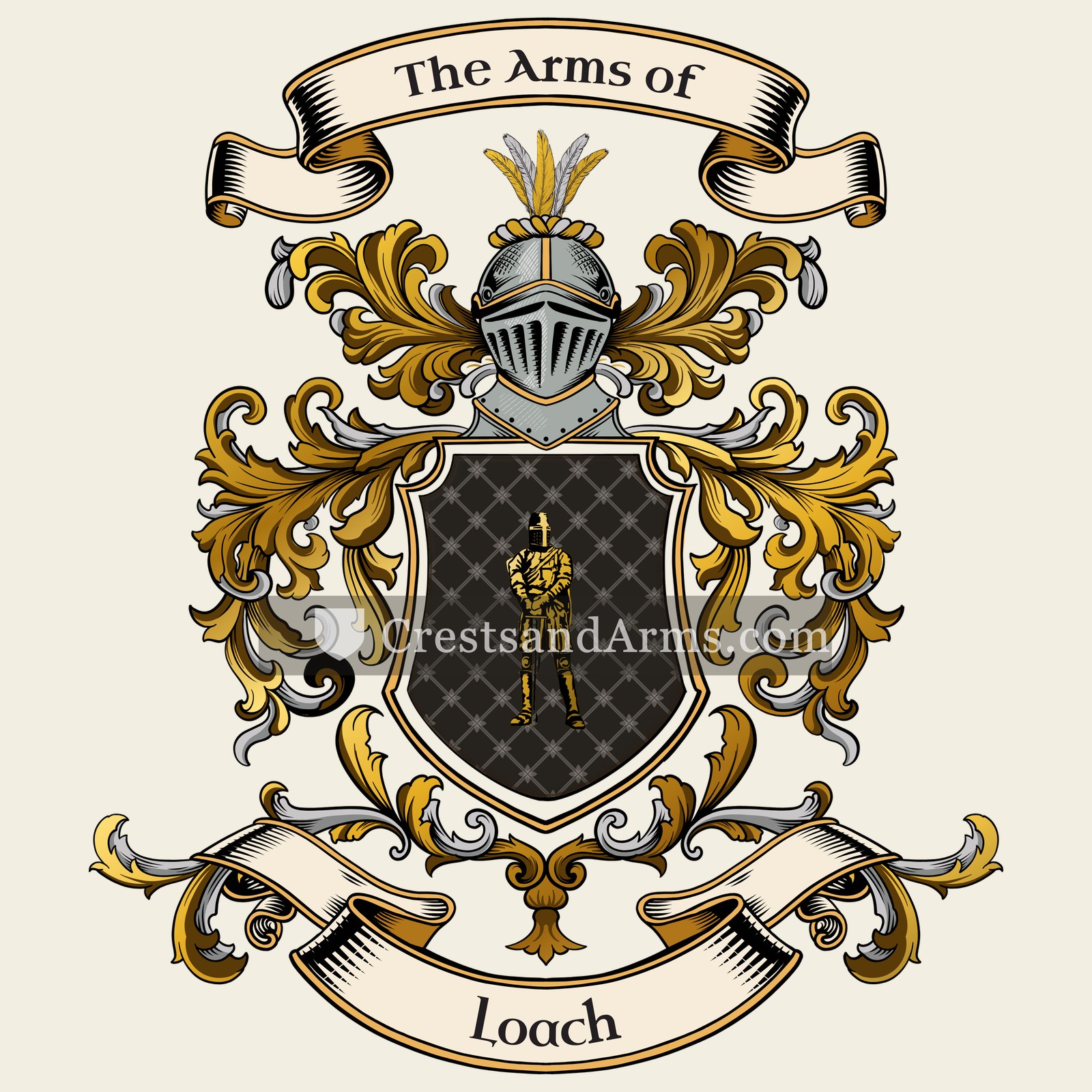


 chevronProtection, and faithful service completed
 roundelA coin, and one who has been to the crusades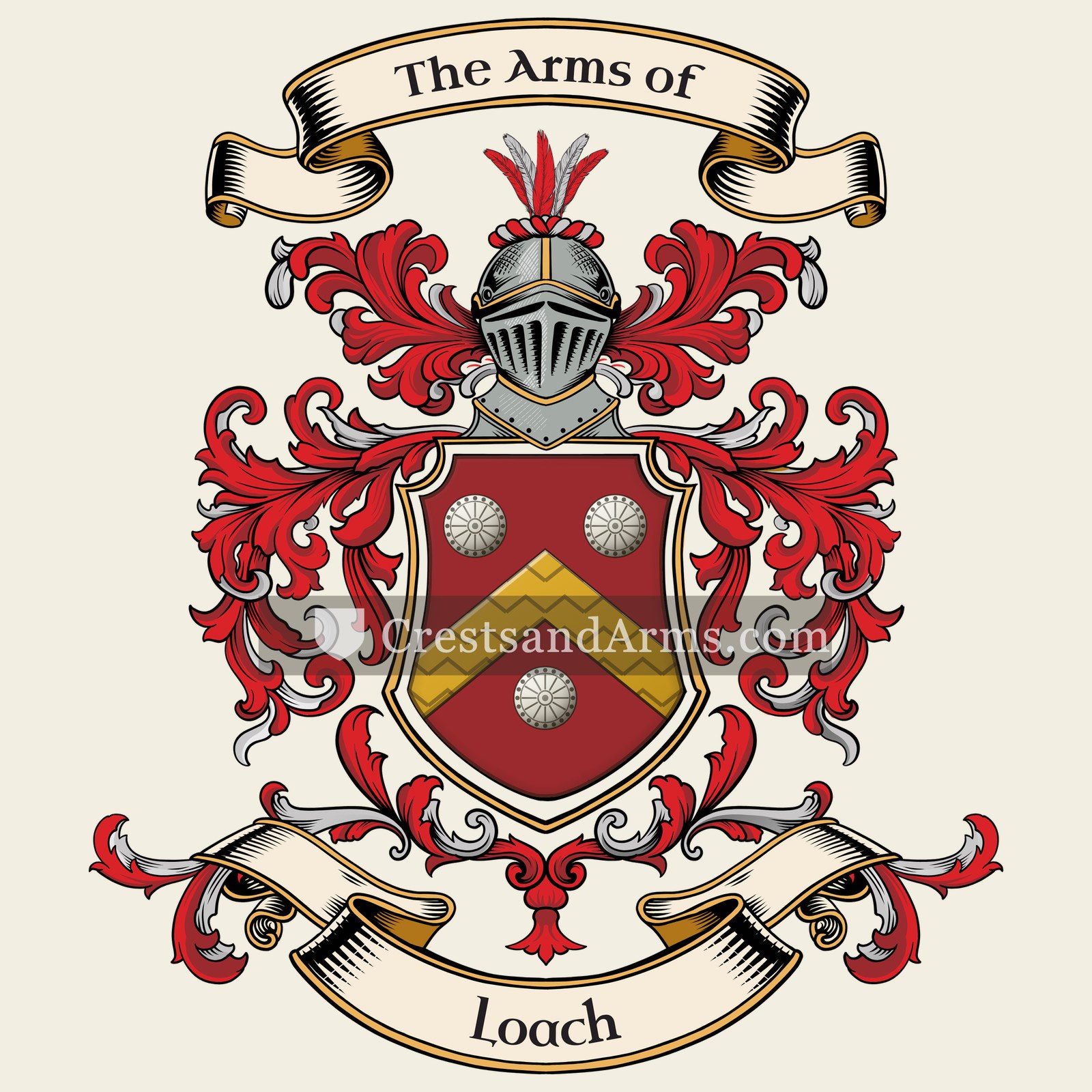

 saltireResolution, and St Andrew's cross
 swanGrace, light and the poet's art