Map of Netherlands showing where the Loder arms are recorded
The Loder arms were recorded in Netherlands, c. 1815.
Arms such as these were typically recorded in Friesland.
Friesland was low, wet country on the northern coast of the Netherlands, farmed by families who had held the same land for centuries. Free landholders were unusually common there, and a free landholder could carry arms.
This is where the arms were entered in the register. Families often moved to other parts of the country, so the same name can turn up in more than one region.
Region
Friesland
First recorded
1815
Granting Authority for the Loder Arms
Hoge Raad van Adel
Photograph made by me · CC BY-SA 3.0
The body that granted and recorded arms in Netherlands in this period.
William I of the Netherlands
Sovereign of the period
William I of the Netherlands
1815–1840
Reigning in Netherlands when the Loder arms are first recorded.
How Arms Worked in Netherlands
In the Netherlands, coats of arms were often used by noble families and those who held specific public offices. These arms were passed down through the generations to legitimate descendants. Younger branches of a family usually kept the original design without needing to add special marks. This system ensured that the family identity remained clear and consistent over many years.
Granting authority
The Hoge Raad van Adel is the official body that regulates and manages noble titles and coats of arms in the Netherlands.
How they got arms
Families typically obtained their coats of arms through official royal grants or by proving their long-standing historical use of the symbols.
Where arms were recorded
Coats of arms are officially recorded in the registers held by the Hoge Raad van Adel, which began its work in 1814.
The family's standing
Recorded among the armigerous families of Netherlands.
Origin & History of the Loder Family in Netherlands
The history of the Loder name in the Netherlands is deeply connected to the northern province of Friesland, where records confirm the family was well-established by 1815. The name likely originated as a descriptive term or a nickname, potentially linked to the Middle Low German word "loder," which historically referred to a person who was a traveler or a wanderer. By the early nineteenth century, members of the Loder family were active participants in the social and professional life of the Frisian region. During this period, the Netherlands underwent significant administrative changes, including the formal registration of surnames under the Napoleonic civil code. This transition helped solidify the family name within official government documents, allowing historians to trace their movements and occupations through local census records and civil registers. As the family grew, they became integrated into the local community, contributing to the agricultural and civic development that defined life in the northern provinces during the post-Napoleonic era.
Meaning of the Loder family crest colors & symbols
Symbols on this shield
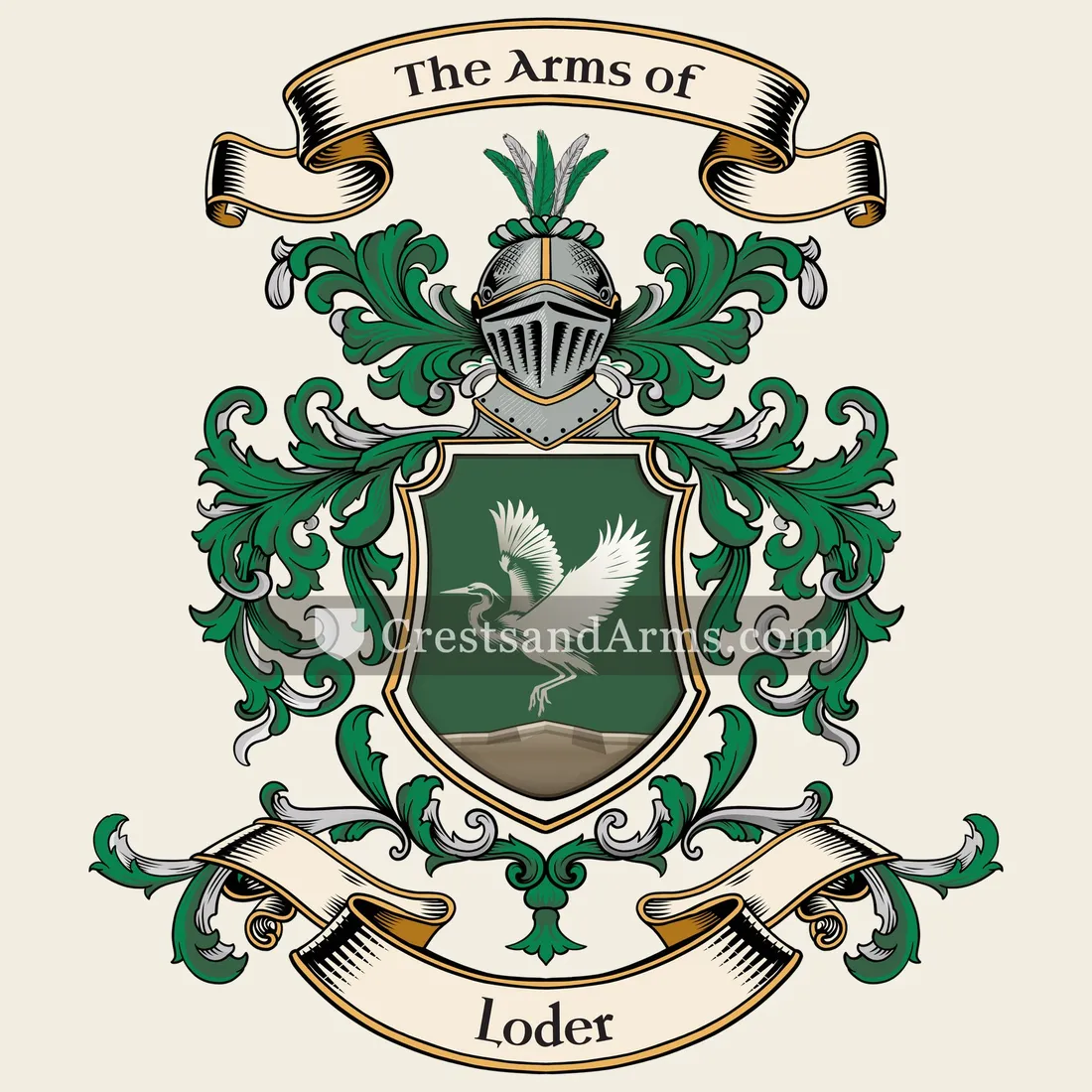
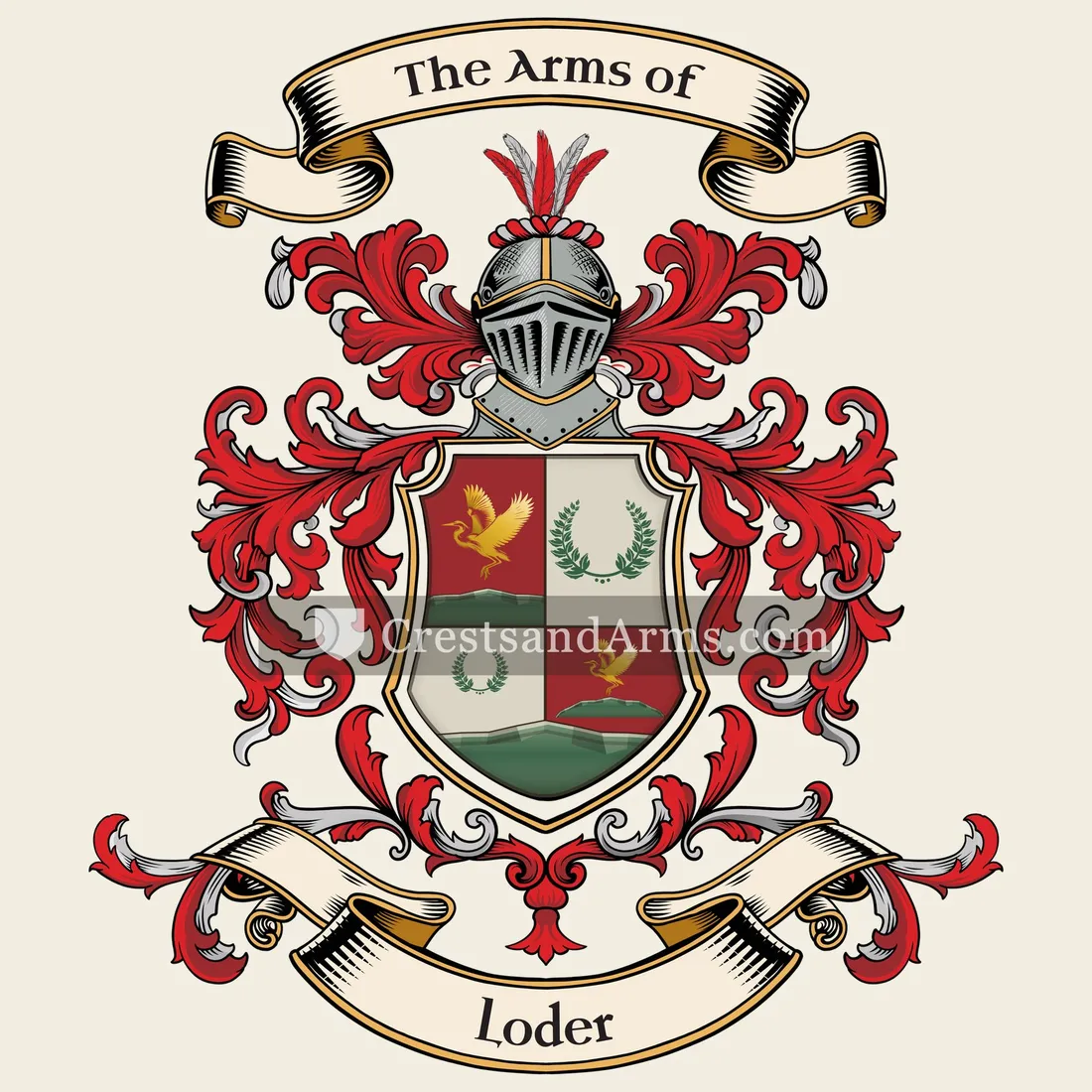
mountThe ground held, and steadfastness upon it
heronPatience and quiet watchfulness
wreathHonour, and a victory crowned
Colours
Red (Gules)Means: Military strength
Silver (Argent)Means: Peace and sincerity
Green (Vert)Means: Hope
Gold (Or)Means: Generosity
Historical info
Source
J. B. Rietstap, Armorial Général, Gouda: G. B. van Goor Zonen, 1884–87
Blazon (the actual original written record)
“Ec.: aux 1 et 4 de gu. à une grue avec sa vigilance d'or, posée sur un tertre de sin., celle du 1 cont.; aux 2 et 3 d'arg. à une couronne de chêne de sin., englantée d'or. Cq. cour. C.: un vol de l'aigle de Prusse. L.: à dextre d'or et de gu., à sen. d'arg. et de sin.”
Germanyc. 1809
Digital archive packCoat of arms PNG, gold border print PDF, vector SVG and the certificate of authenticity. Sent to your email in minutes.
Map of Germany showing where the Loder arms are recorded
The Loder arms were recorded in Germany, c. 1809.
Arms such as these were typically recorded in Bavaria.
Bavaria was a country of old landed families and walled market towns. Estates passed down the same line for centuries, and both the landowners and the leading townsmen kept arms, which is why so many Bavarian names sit in the registers.
This is where the arms were entered in the register. Families often moved to other parts of the country, so the same name can turn up in more than one region.
The body that granted and recorded arms in Germany in this period.
Frederick William III of Prussia
Sovereign of the period
Frederick William III of Prussia
1797–1840
Reigning in Netherlands when the Loder arms are first recorded.
How Arms Worked in Germany
Prussian heraldry was strictly tied to social rank and noble status rather than being a free choice for every citizen. These symbols were treated as permanent family property that moved through the generations to all legitimate heirs. If a family branch wanted to change their design to stand out, they had to apply for official permission to alter their specific version of the shield.
Granting authority
The Prussian Heroldsamt acted as the central state office that managed and strictly controlled all noble titles and coats of arms.
How they got arms
Families usually obtained their arms through formal royal grants or by proving their long-standing noble status to the state authorities.
Where arms were recorded
All official coats of arms were kept in the rolls of the Prussian Heroldsamt, which functioned from 1706 until 1918.
The family's standing
Recorded among the armigerous families of Germany.
Origin & History of the Loder Family in Germany
The surname Loder has deep roots in the southern regions of Germany, particularly within the historical landscape of Bavaria. Etymologists often link the name to the Middle High German word "loder," which historically referred to a person who worked with wool or acted as a cloth dresser. By the early 19th century, records confirm that members of the Loder family were well-established in Bavarian society. During this period, the region was undergoing significant political shifts as it transitioned into a kingdom under the influence of the Napoleonic era. Families like the Loders were typically tied to the local economy through trade, agriculture, or skilled craftsmanship. As the family grew, they became part of the social fabric of rural and urban Bavarian life, leaving behind a legacy that reflects the industrious nature of the German middle class during the 1800s.
Meaning of the Loder family crest colors & symbols
Symbols on this shield
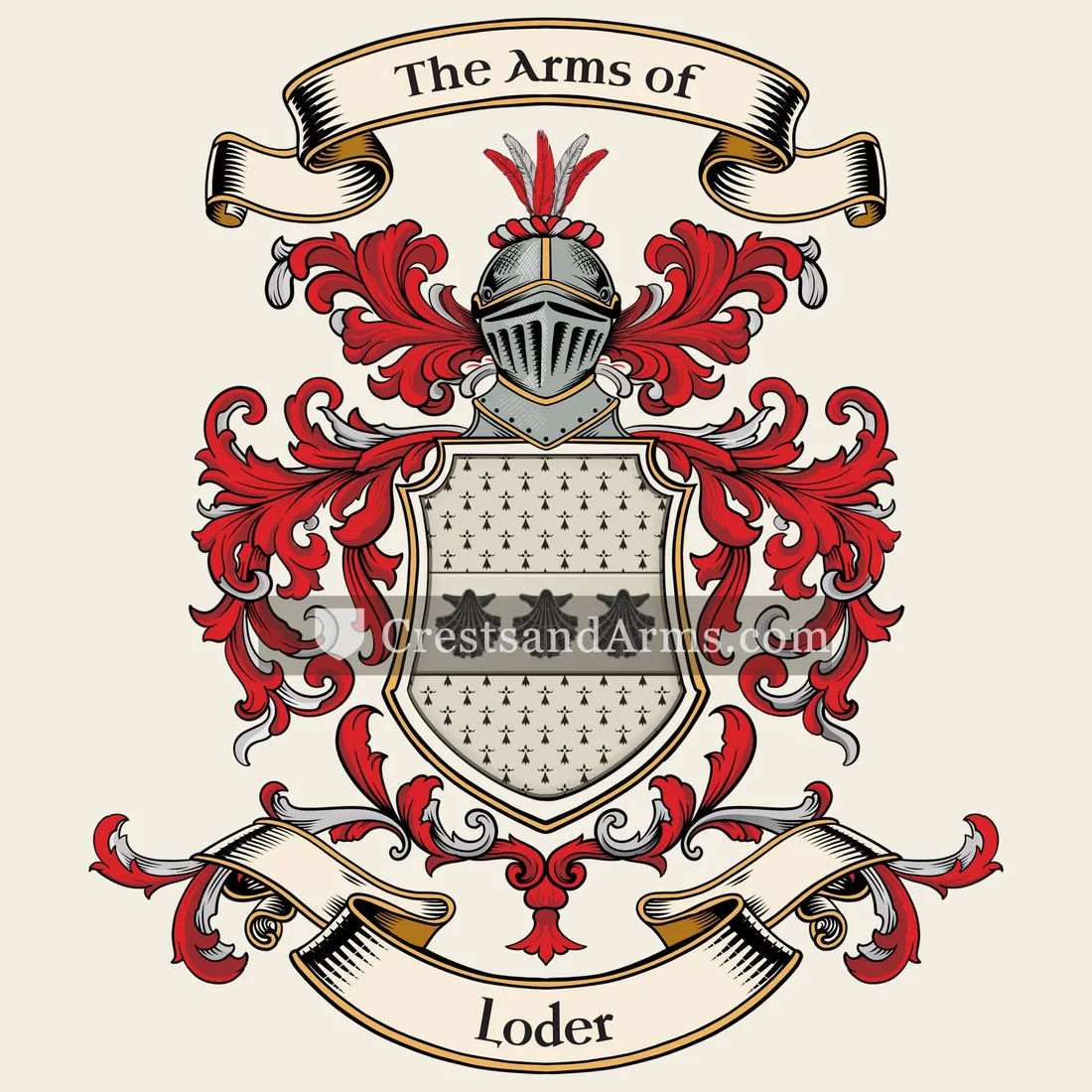
fessThe military belt, and readiness to serve
escallopThe pilgrim's shell, and a long journey made
Colours
ErmineMeans: Dignity
Historical info
Source
Sir Bernard Burke, The General Armory of England, Scotland, Ireland and Wales, London: Harrison & Sons, 1884
Blazon (the actual original written record)
“Erm. on a fesse three escallops”
Englandc. 1620
Digital archive packCoat of arms PNG, gold border print PDF, vector SVG and the certificate of authenticity. Sent to your email in minutes.
Map of England showing where the Loder arms are recorded
The Loder arms were recorded in England, c. 1620.
Arms such as these were typically recorded in York.
Yorkshire is the largest of the English counties, and it held more gentry families than any other. Land there was split among a great many households rather than a few, so a great many of them carried arms.
This is where the arms were entered in the register. Families often moved to other parts of the country, so the same name can turn up in more than one region.
The body that granted and recorded arms in England in this period.
James VI and I
Sovereign of the period
James VI and I
1603–1625
Reigning in Netherlands when the Loder arms are first recorded.
How Arms Worked in England
English heraldry allowed arms to be shared by all legitimate descendants of the original owner. These symbols were treated as personal property that moved through the generations to all children. While the eldest son kept the original design, other family members could use the same shield without needing to change it or register their own unique versions.
Granting authority
The College of Arms in London has regulated the use of coats of arms throughout England and Wales since 1484.
How they got arms
Families typically obtained their coats of arms through a formal grant from the Crown or by proving their ancient right to them.
Where arms were recorded
All official coats of arms are recorded in the registers kept at the College of Arms, which date back to the fifteenth century.
The family's standing
Recorded among the armigerous families of England.
Origin & History of the Loder Family in England
The surname Loder has deep roots in the English landscape, with early records placing the family firmly within the historic city of York by the year 1620. The name is generally considered to be occupational in origin, likely derived from the Middle English word "loder," which referred to a person who carried goods or acted as a carrier. During the seventeenth century, York served as a vital hub for trade and commerce in Northern England, making it a logical place for families associated with transport and logistics to settle and grow. As the family established itself in this urban center, they became part of the local social fabric, contributing to the city’s development during a period of significant economic change. While the name remained relatively localized in its early documented history, the presence of the Loder family in York highlights the importance of trade-based surnames in defining the identities of families during the early modern period.
Loder Meaning & Related Branches
Root word
Lothar
Derived from Germanic elements meaning famous warrior or loud army.
This name
LoderA topographic or occupational surname referring to a person who lived near a clearing or worked as a loader.
also spelled
Lode
Loader
Lodar
Loderre
Related arms
Lodevariant spelling
Loadervariant spelling
Loadesvariant spelling
Documented Sources
J. B. Rietstap, Armorial Général, Gouda: G. B. van Goor Zonen, 1884–87
Tresoar (Fries Historisch en Letterkundig Centrum), Burgerlijke Stand van Friesland
Nationaal Archief, Registers van de Burgerlijke Stand
Huizinga, Frans, Stamboomonderzoek in Friesland, 1998
Van der Meer, G., Nederlandse Familienamen: Oorsprong en Geschiedenis, 2005
Digital archive packCoat of arms PNG, gold border print PDF, vector SVG and the certificate of authenticity. Sent to your email in minutes.


 mountThe ground held, and steadfastness upon it
 heronPatience and quiet watchfulness
 mountThe ground held, and steadfastness upon it
 heronPatience and quiet watchfulness


 wreathHonour, and a victory crowned


 fessThe military belt, and readiness to serve
 escallopThe pilgrim's shell, and a long journey made