Map of Netherlands showing where the Loeb arms are recorded
The Loeb arms were recorded in Netherlands, c. 1815.
Arms such as these were typically recorded in Friesland.
Friesland was low, wet country on the northern coast of the Netherlands, farmed by families who had held the same land for centuries. Free landholders were unusually common there, and a free landholder could carry arms.
This is where the arms were entered in the register. Families often moved to other parts of the country, so the same name can turn up in more than one region.
Region
Friesland
First recorded
1815
Granting Authority for the Loeb Arms
Hoge Raad van Adel
Photograph made by me · CC BY-SA 3.0
The body that granted and recorded arms in Netherlands in this period.
William I of the Netherlands
Sovereign of the period
William I of the Netherlands
1815–1840
Reigning in Netherlands when the Loeb arms are first recorded.
How Arms Worked in Netherlands
In the Netherlands, coats of arms were often used by noble families and those who held specific public offices. These arms were passed down through the generations to legitimate descendants. Younger branches of a family usually kept the original design without needing to add special marks. This system ensured that the family identity remained clear and consistent over many years.
Granting authority
The Hoge Raad van Adel is the official body that regulates and manages noble titles and coats of arms in the Netherlands.
How they got arms
Families typically obtained their coats of arms through official royal grants or by proving their long-standing historical use of the symbols.
Where arms were recorded
Coats of arms are officially recorded in the registers held by the Hoge Raad van Adel, which began its work in 1814.
The family's standing
Recorded among the armigerous families of Netherlands.
Origin & History of the Loeb Family in Netherlands
The family name Loeb has deep roots tied to the movement of Jewish communities across Europe, eventually establishing a notable presence in the Netherlands by the early 19th century. In 1815, records confirm that members of the family were living in the province of Friesland, a region known for its distinct cultural identity and maritime history. During this era, the Netherlands underwent a significant transition regarding surnames, as the government required all citizens to formally register their family names for civil records. The name Loeb itself is often linked to the German word for lion, which was a common symbolic reference in Jewish naming traditions. By settling in Friesland, the family became part of the broader integration of Jewish people into Dutch society during a time of legal reform and modernization. Their presence in these northern provinces highlights how families navigated the changing landscape of the Napoleonic era and the subsequent formation of the United Kingdom of the Netherlands.
Meaning of the Loeb family crest colors & symbols
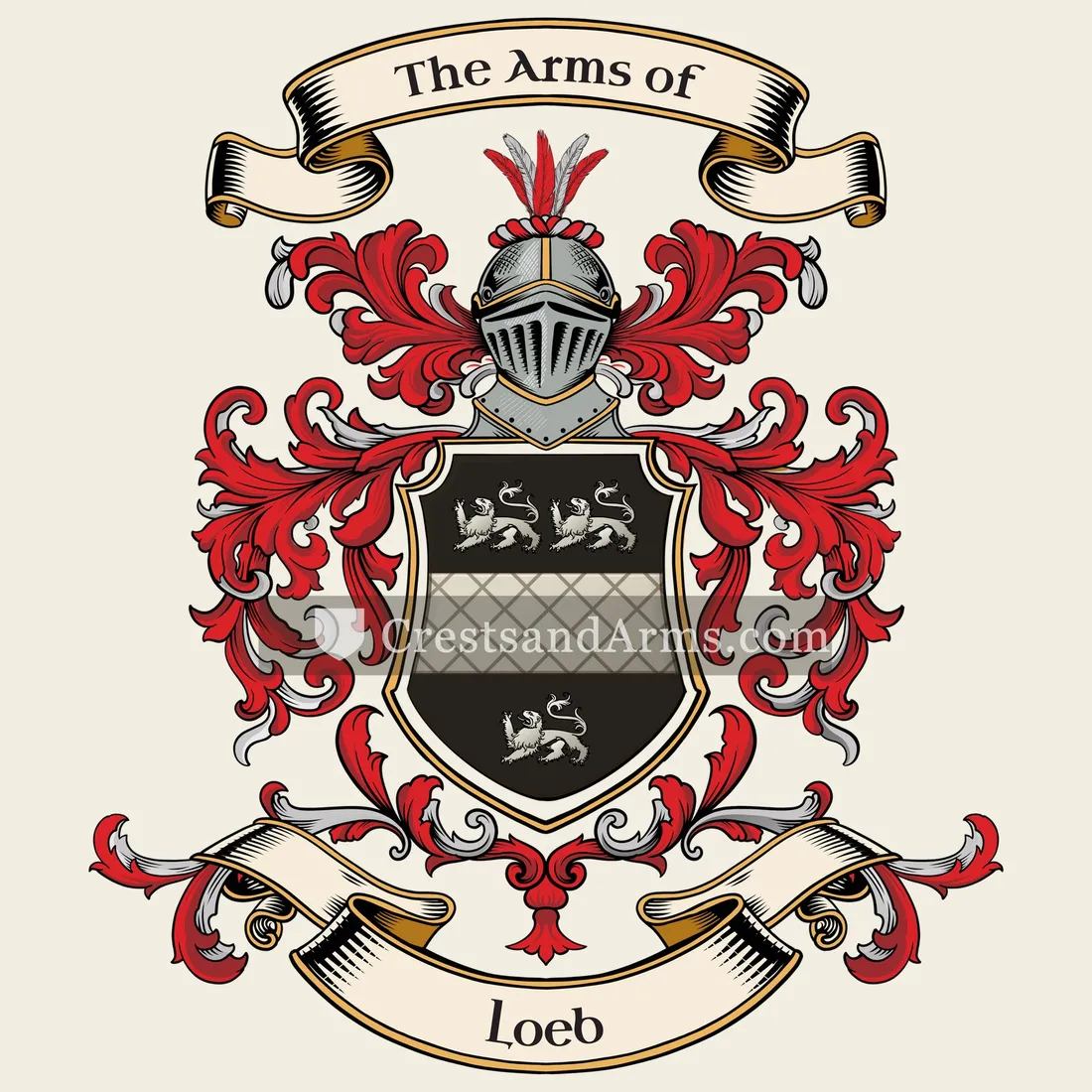
Symbols on this shield
fessThe military belt, and readiness to serve
lionCourage, strength and royalty
Colours
Black (Sable)Means: Constancy
Silver (Argent)Means: Peace and sincerity
Historical info
Source
J. B. Rietstap, Armorial Général, Gouda: G. B. van Goor Zonen, 1884–87
Blazon (the actual original written record)
“De sa. à la fasce d'arg., acc. de trois têtes de lion du même. C.: trois tiges d'or, portant des tulipes du même.”
SilesiaSilesia, c. 1765
Digital archive packCoat of arms PNG, gold border print PDF, vector SVG and the certificate of authenticity. Sent to your email in minutes.
Map of Germany showing where the Loeb arms are recorded
The Loeb arms were recorded in Silesia, c. 1765.
Silesia was farming country in the east of the German lands, held in large estates by families who stayed put for generations. Owning land was what entitled a family to arms, so the region fills a good deal of the register.
This is where the arms were entered in the register. Families often moved to other parts of the country, so the same name can turn up in more than one region.
The body that granted and recorded arms in Germany in this period.
Francis I, Holy Roman Emperor
Sovereign of the period
Francis I, Holy Roman Emperor
1745–1765
Reigning in Netherlands when the Loeb arms are first recorded.
How Arms Worked in Germany
In the Holy Roman Empire, coats of arms were often granted to individuals by the Emperor or his representatives. These arms were then passed down through the generations to all legitimate descendants of the original holder. Younger branches of a family usually kept the same shield design without needing to change it, as the arms belonged to the entire lineage.
Granting authority
The Holy Roman Emperor held the sole power to grant new coats of arms throughout his vast imperial territories.
How they got arms
Families typically obtained their coats of arms through a formal imperial grant or by proving their noble status to the authorities.
Where arms were recorded
These grants were officially recorded in the Imperial Chancery registers, which began keeping formal records of such honors during the Middle Ages.
The family's standing
Recorded among the armigerous families of Silesia.
Origin & History of the Loeb Family in Germany
The name Loeb originates from the Middle High German word *lēwe*, which translates to lion. During the Middle Ages, many Jewish families in German-speaking lands adopted names based on animals, often as a reference to biblical imagery or as a way to identify a specific household. By the mid-18th century, the name had become well-established among Jewish communities across central Europe. Records confirm that members of the Loeb family were living in the region of Silesia by 1765. At that time, Silesia was part of the Prussian Kingdom, and families like the Loebs were subject to strict government regulations regarding residency and taxation. These early ancestors were likely involved in local trade or craft guilds, navigating the complex social and legal landscape of the Prussian state while maintaining their family identity through generations.
Loeb Meaning & Related Branches
Root word
Leo
Latin word meaning lion.
This name
LoebA habitational or ornamental name derived from the lion, often associated with the tribe of Judah.
also spelled
Loeb
Loebbe
Documented Sources
J. B. Rietstap, Armorial Général, Gouda: G. B. van Goor Zonen, 1884–87
AlleFriezen, Burgerlijke Stand van de provincie Friesland (Civil Registry of the Province of Friesland)
Nationaal Archief, Registers van de Burgerlijke Stand (Registers of the Civil Registry)
Michman, J., Beem, H., and Michman, D., Pinkas: Geschiedenis van de joodse gemeenschap in Nederland, 1992
Van Straten, S., Joodse familienamen in Nederland, 1989
Digital archive packCoat of arms PNG, gold border print PDF, vector SVG and the certificate of authenticity. Sent to your email in minutes.


 chiefAuthority, wisdom and dominion
 ermineDignity and rank
 chiefAuthority, wisdom and dominion
 ermineDignity and rank
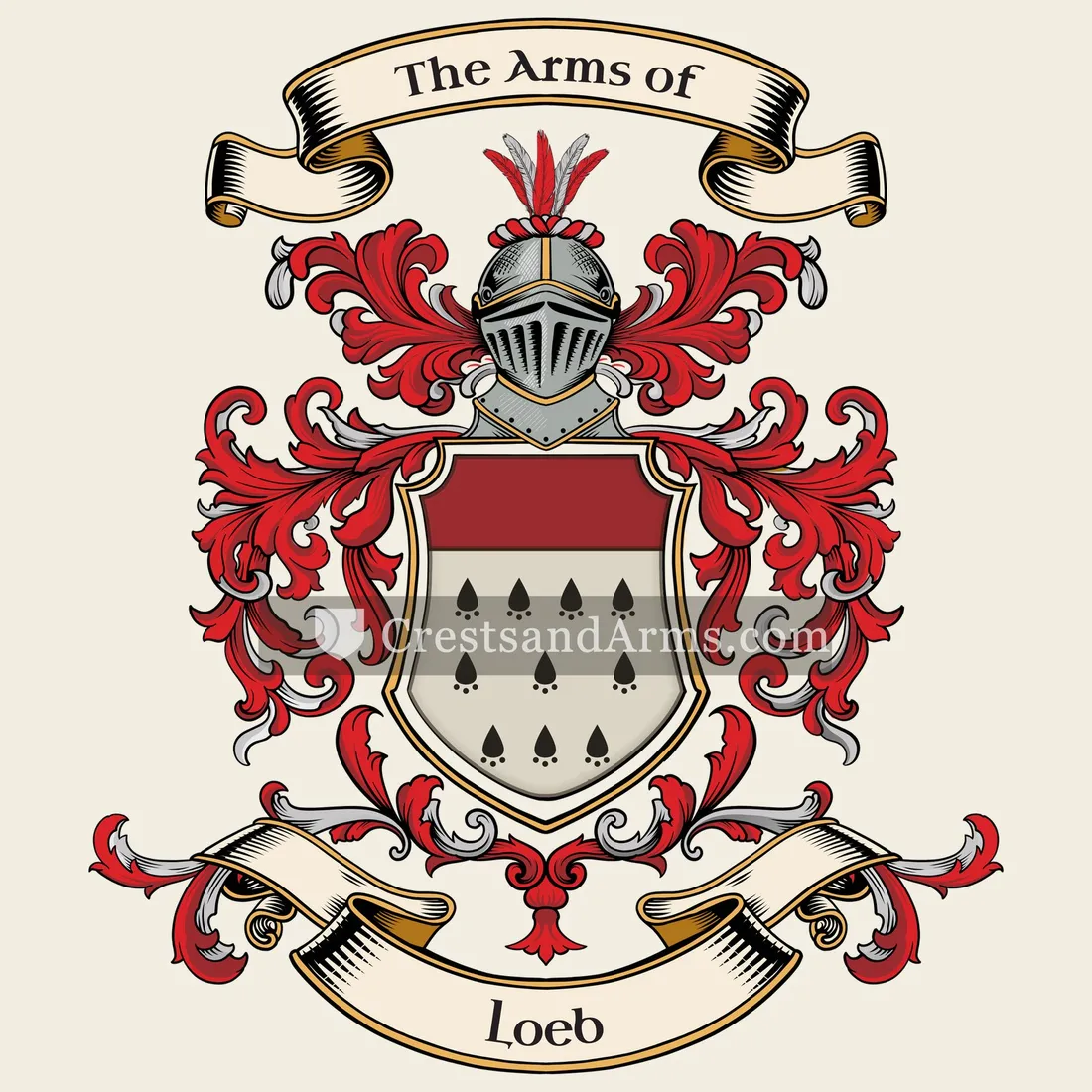


 fessThe military belt, and readiness to serve
 lionCourage, strength and royalty