Map of Britain showing where the Loiacono arms are recorded
The Loiacono arms were recorded in Norfolk, c. 1818.
Norfolk grew rich on wool and grain, and its wealth was spread among many middling families rather than a few great ones. Households of that kind bought land and took arms, and the county holds a large share of English names.
This is where the arms were entered in the register. Families often moved to other parts of the country, so the same name can turn up in more than one region.
The body that granted and recorded arms in Britain in this period.
George III of Great Britain
Sovereign of the period
George III of Great Britain
1801–1820
Reigning in Britain when the Loiacono arms are first recorded.
How Arms Worked in Britain
English heraldry allowed arms to be shared by all legitimate descendants of the original owner. These symbols were treated as personal property that moved through the generations to all children. While the eldest son kept the original design, other family members could use the same shield without needing to change it or register their own unique versions.
Granting authority
The College of Arms in London has regulated the use of coats of arms throughout England and Wales since 1484.
How they got arms
Families typically obtained their coats of arms through a formal grant from the Crown or by proving their ancient right to them.
Where arms were recorded
All official coats of arms are recorded in the registers kept at the College of Arms, which date back to the fifteenth century.
The family's standing
Recorded among the armigerous families of Norfolk.
Origin & History of the Loiacono Family in Britain
The surname Loiacono originates from Southern Italy, but its presence in Britain is a fascinating study of migration and adaptation during the early nineteenth century. While the name is deeply rooted in Mediterranean culture, records confirm that members of the family had established a presence in Norfolk by 1818. During this period, Britain was experiencing significant shifts in trade and movement across Europe, which likely facilitated the arrival of families from the Italian peninsula. These early settlers often navigated a society that was unfamiliar with their linguistic heritage, leading to the gradual integration of the name into local parish registers and administrative documents. By settling in Norfolk, the family became part of a small but growing demographic of continental Europeans who contributed to the diverse social fabric of the region. Their transition from Italian origins to life in an English county highlights the quiet persistence of immigrant families who helped shape the local history of the nineteenth century.
Coat of Arms & Family Crest Details
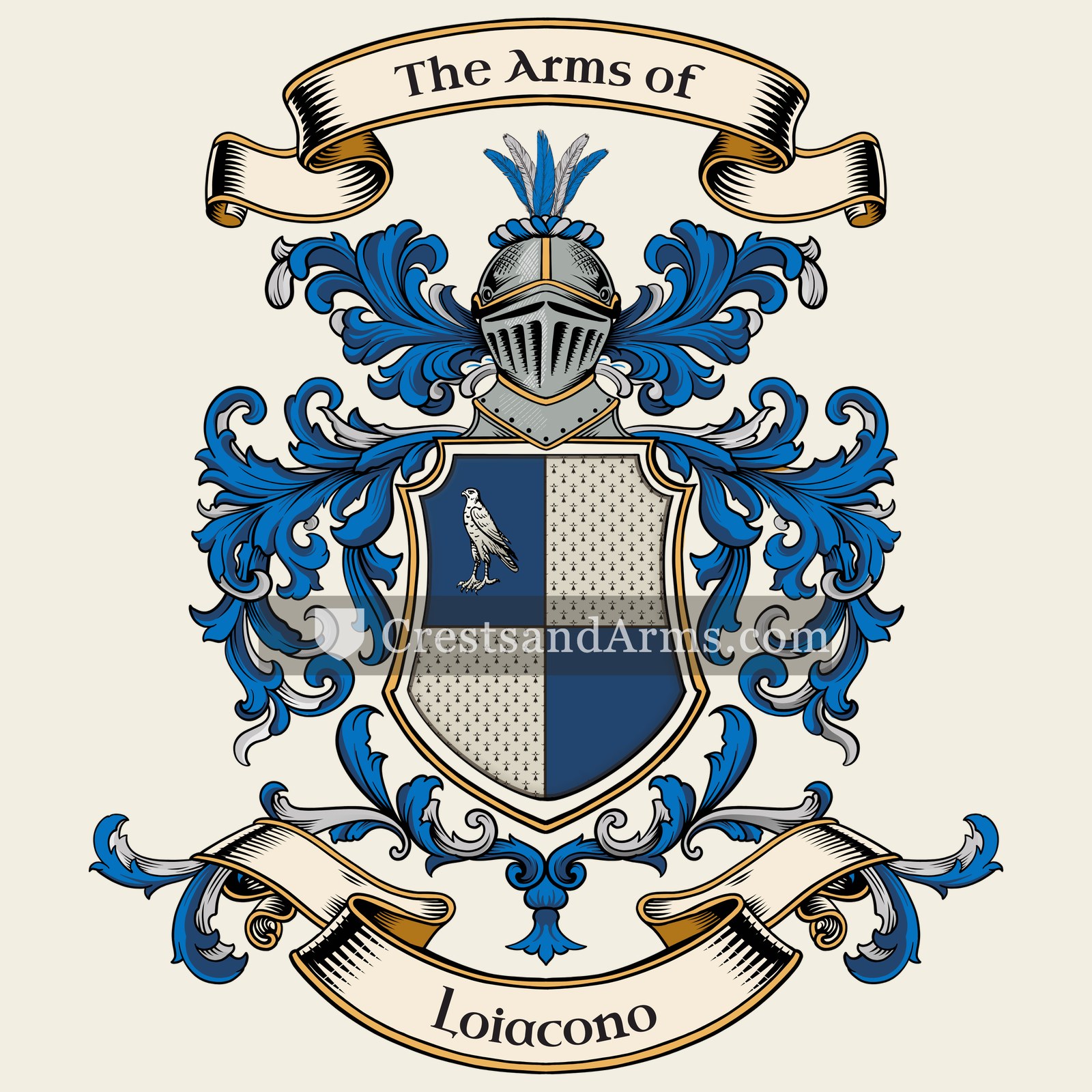
Symbols on this shield
falconOne eager and quick in pursuit
Colours
Blue (Azure)Means: Loyalty and truth
ErmineMeans: Dignity
Silver (Argent)Means: Peace and sincerity
Historical info
Source
Sir Bernard Burke, The General Armory of England, Scotland, Ireland and Wales, London: Harrison & Sons, 1884
Blazon (the actual original written record)
“Quarterly, per fesse indented az. and erm. in the 1st quarter a hawk belled and jessed ar”
SalopWilley · Salop, c. 1620
Digital archive packCoat of arms PNG, gold border print PDF, vector SVG and the certificate of authenticity. Sent to your email in minutes.
Map of England showing where the Loiacono arms are recorded
The Loiacono arms were recorded in Salop, c. 1620.
Shropshire lay on the Welsh border, and border country needed men who could fight. Families held their land in return for service, and service in arms is what a coat of arms was originally for.
This is where the arms were entered in the register. Families often moved to other parts of the country, so the same name can turn up in more than one region.
The body that granted and recorded arms in England in this period.
James VI and I
Sovereign of the period
James VI and I
1603–1625
Reigning in Britain when the Loiacono arms are first recorded.
How Arms Worked in England
English heraldry allowed arms to be shared by all legitimate descendants of the original owner. These symbols were treated as personal property that moved through the generations to all children. While the eldest son kept the original design, other family members could use the same shield without needing to change it or register their own unique versions.
Granting authority
The College of Arms in London has regulated the use of coats of arms throughout England and Wales since 1484.
How they got arms
Families typically obtained their coats of arms through a formal grant from the Crown or by proving their ancient right to them.
Where arms were recorded
All official coats of arms are recorded in the registers kept at the College of Arms, which date back to the fifteenth century.
The family's standing
Recorded among the armigerous families of Salop.
Origin & History of the Loiacono Family in England
The surname Loiacono is rooted in the southern Italian regions of Sicily and Calabria, but its presence in England offers a fascinating glimpse into the movement of families during the seventeenth century. Historical records confirm that members of the family were settled in the county of Salop, now known as Shropshire, by the year 1620. During this period, England was experiencing a time of religious and political transition, and the arrival of families with Mediterranean origins often coincided with the growth of trade networks or the movement of skilled laborers across Europe. While the name remains distinctly Italian in its linguistic structure, its early establishment in a rural English county suggests that these ancestors successfully integrated into the local community while maintaining their unique cultural identity. By living in Salop, these early family members became part of the diverse social fabric of England long before the mass migrations of later centuries.
Loiacono Meaning & Related Branches
Root word
Iacono
Derived from the Hebrew name Yaakov meaning supplanter or held by the heel.
This name
LoiaconoA locative or patronymic surname indicating a descendant of someone named Iacono.
also spelled
Laconne
Lachon
Laconn
Lakon
Documented Sources
J. B. Rietstap, Armorial Général, Gouda: G. B. van Goor Zonen, 1884–87
Norfolk Record Office, Parish Registers of Norfolk, 1818
Digital archive packCoat of arms PNG, gold border print PDF, vector SVG and the certificate of authenticity. Sent to your email in minutes.


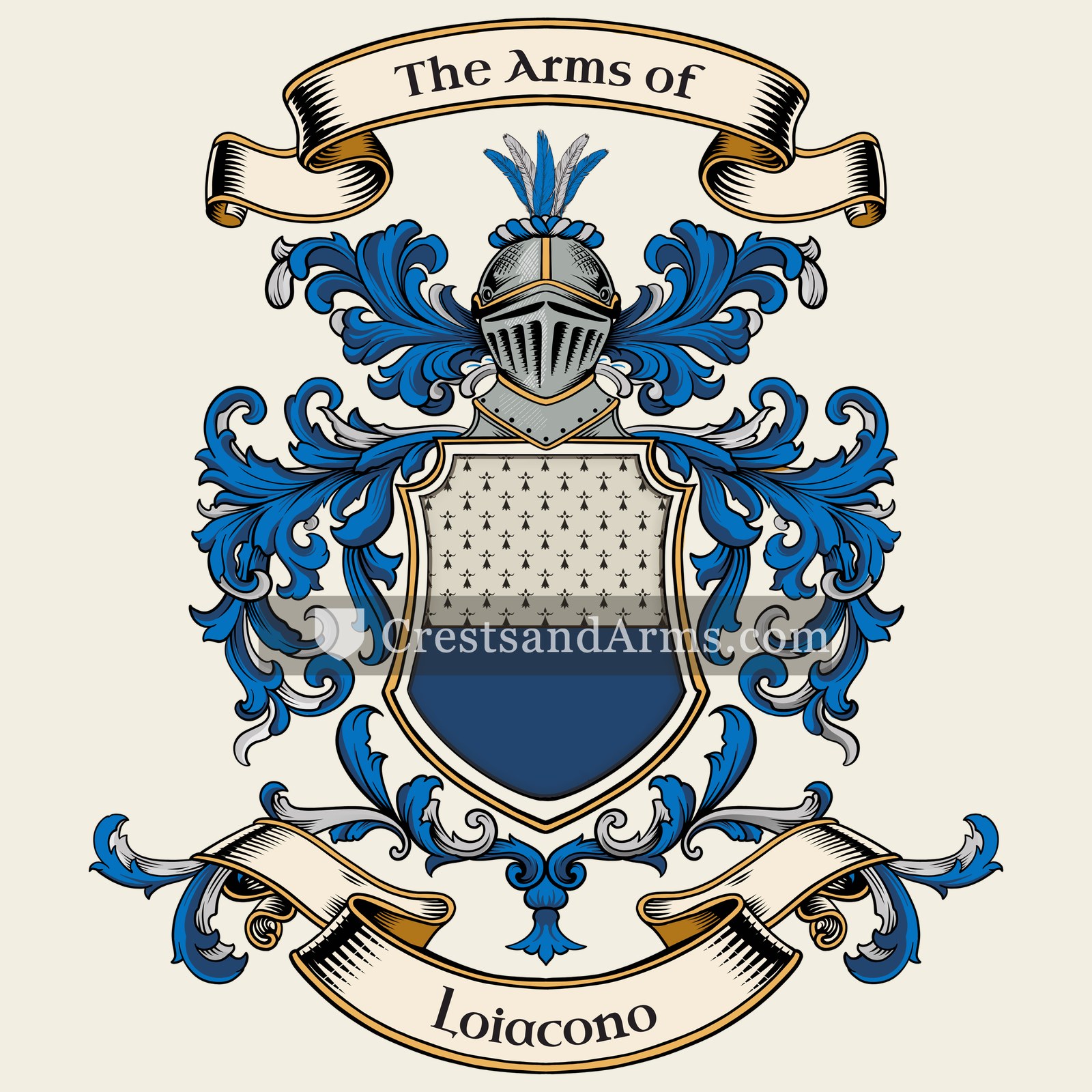


 falconOne eager and quick in pursuit