Map of Netherlands showing where the Longespée arms are recorded
The Longespée arms were recorded in Netherlands, c. 1256.
Arms such as these were typically recorded in Friesland.
Friesland was low, wet country on the northern coast of the Netherlands, farmed by families who had held the same land for centuries. Free landholders were unusually common there, and a free landholder could carry arms.
This is where the arms were entered in the register. Families often moved to other parts of the country, so the same name can turn up in more than one region.
Region
Friesland
First recorded
1256
Granting Authority for the Longespée Arms
Hoge Raad van Adel
Photograph made by me · CC BY-SA 3.0
The body that granted and recorded arms in Netherlands in this period.
How Arms Worked in Netherlands
In the Netherlands, coats of arms were often used by noble families and those who held specific public offices. These arms were passed down through the generations to legitimate descendants. Younger branches of a family usually kept the original design without needing to add special marks. This system ensured that the family identity remained clear and consistent over many years.
Granting authority
The Hoge Raad van Adel is the official body that regulates and manages noble titles and coats of arms in the Netherlands.
How they got arms
Families typically obtained their coats of arms through official royal grants or by proving their long-standing historical use of the symbols.
Where arms were recorded
Coats of arms are officially recorded in the registers held by the Hoge Raad van Adel, which began its work in 1814.
The family's standing
Recorded among the armigerous families of Netherlands.
Origin & History of the Longespée Family in Netherlands
The name Longespée, which translates to "long sword," carries a legacy that extends beyond its famous English roots into the coastal regions of the Netherlands. Historical records indicate that members of this family were present in the province of Friesland as early as 1256. During this period, the region was characterized by a unique social structure where local leaders maintained significant autonomy. The arrival of the Longespée name in this area suggests a history of travel and connection between the influential families of Western Europe and the northern Dutch territories. While the name is often associated with the nobility of the Middle Ages, its appearance in Friesland highlights the movement of individuals across borders during a time of shifting political alliances. This early presence in the Netherlands serves as a reminder that the family was part of a broader network of people who shaped the landscape of medieval Europe through trade, military service, and regional governance.
Coat of Arms & Family Crest Details
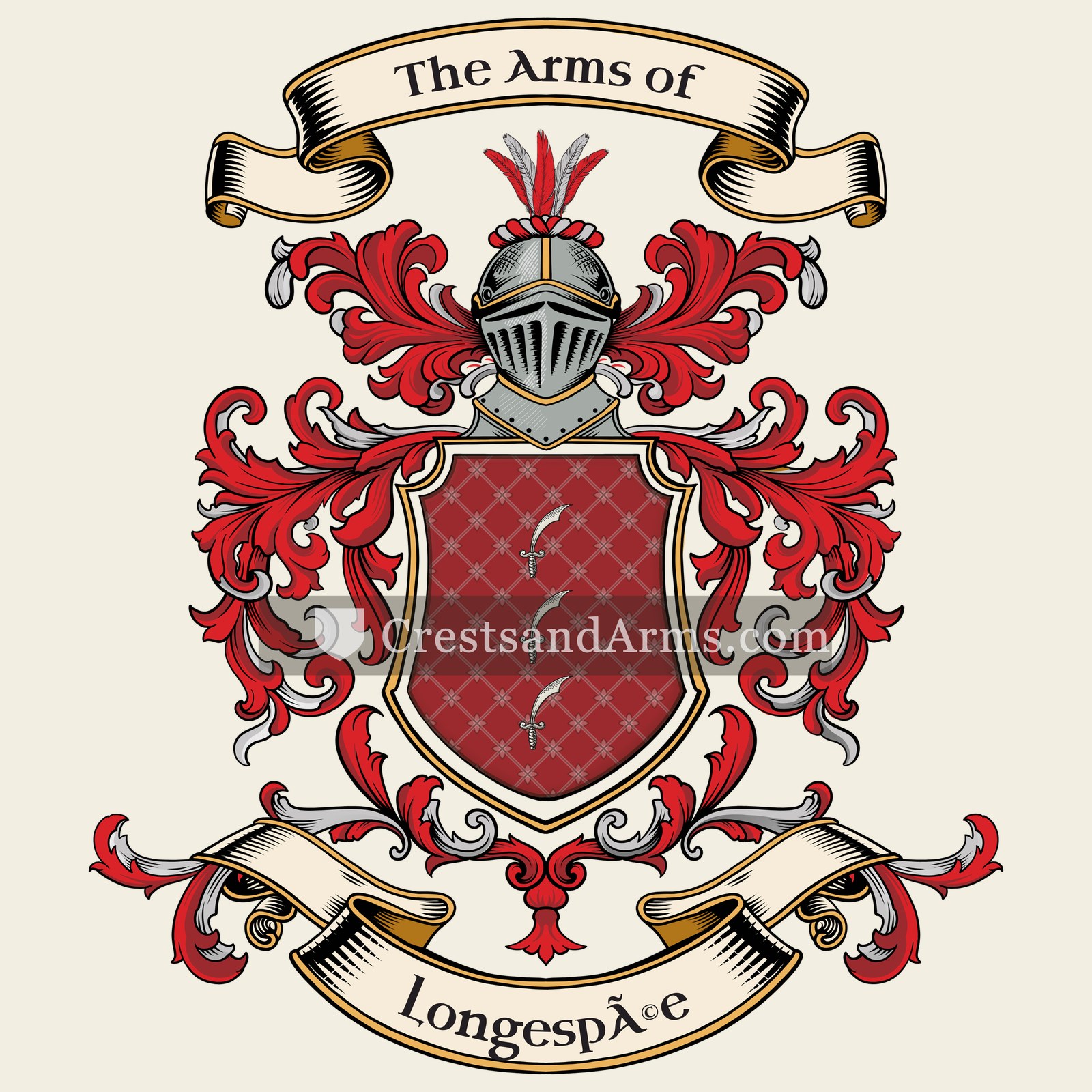
Symbols on this shield
swordJustice, and military honour
Colours
Red (Gules)Means: Military strength
Silver (Argent)Means: Peace and sincerity
Historical info
Source
Sir Bernard Burke, The General Armory of England, Scotland, Ireland and Wales, London: Harrison & Sons, 1884
Blazon (the actual original written record)
“Gu. three swords in pale ar”
Irelandc. 1645
Digital archive packCoat of arms PNG, gold border print PDF, vector SVG and the certificate of authenticity. Sent to your email in minutes.
Map of Ireland showing where the Longespée arms are recorded
The Longespée arms were recorded in Ireland, c. 1645.
Arms such as these were typically recorded in Dublin.
Dublin was the seat of government in Ireland and the place where grants were sought and recorded. Families with business at the castle or the courts settled nearby, and settling there put their arms on record.
This is where the arms were entered in the register. Families often moved to other parts of the country, so the same name can turn up in more than one region.
The body that granted and recorded arms in Ireland in this period.
Charles I of England
Sovereign of the period
Charles I of England
1625–1649
Reigning in Netherlands when the Longespée arms are first recorded.
How Arms Worked in Ireland
The Ulster King of Arms granted coats of arms to individuals who proved their social standing and good character. These symbols were typically inherited by all legitimate descendants of the original holder. If a family branch wanted a unique look, they could apply for a specific change to their design through the office to ensure their identity remained distinct.
Granting authority
The Ulster King of Arms acted as the official body that regulated and issued all coats of arms throughout Ireland.
How they got arms
Families obtained their arms through formal grants issued by the office after proving their eligibility and paying the required fees.
Where arms were recorded
All official grants were recorded in the registers held by the Ulster King of Arms starting from the year 1552.
The family's standing
Recorded among the armigerous families of Ireland.
Origin & History of the Longespée Family in Ireland
The history of the Longespée name in Ireland is deeply connected to the turbulent political landscape of the seventeenth century. While the name originated from powerful Norman roots, its presence in Dublin by 1645 reflects the family's integration into the administrative and social life of the city during a time of great upheaval. At this stage in history, the family members living in Dublin were likely navigating the complex religious and land-ownership disputes that defined the era of the Irish Confederate Wars. By establishing themselves in the capital, these early settlers became part of the urban fabric of a changing Ireland, moving away from their medieval origins to become residents of a bustling colonial center. Their survival and presence in official records from this period suggest that they were active participants in the local economy and legal systems of the mid-seventeenth century.
Related Branches & Arms
Root word
Longus Spatha
Latin for long sword.
This name
LongespéeA descriptive nickname for a person who carried a long sword or was a skilled swordsman.
also spelled
Longespe
Longesp
Longespay
Longspee
Longaspee
Related arms
Longaspee, or Longspardevariant spelling
Longspearevariant spelling
Longspeevariant spelling
Documented Sources
J. B. Rietstap, Armorial Général, Gouda: G. B. van Goor Zonen, 1884–87
Halbertsma, Herrius. Frieslands Oudheid: Het rijk van de Friese koningen, opkomst en ondergang. 2000
Van der Tuuk, Luit. De Friezen: De vroegste geschiedenis van het Nederlandse kustgebied. 2013
Tresoar (Fries Historisch en Letterkundig Centrum), Oudfriese oorkonden
Digital archive packCoat of arms PNG, gold border print PDF, vector SVG and the certificate of authenticity. Sent to your email in minutes.


 lionCourage, strength and royalty
 lionCourage, strength and royalty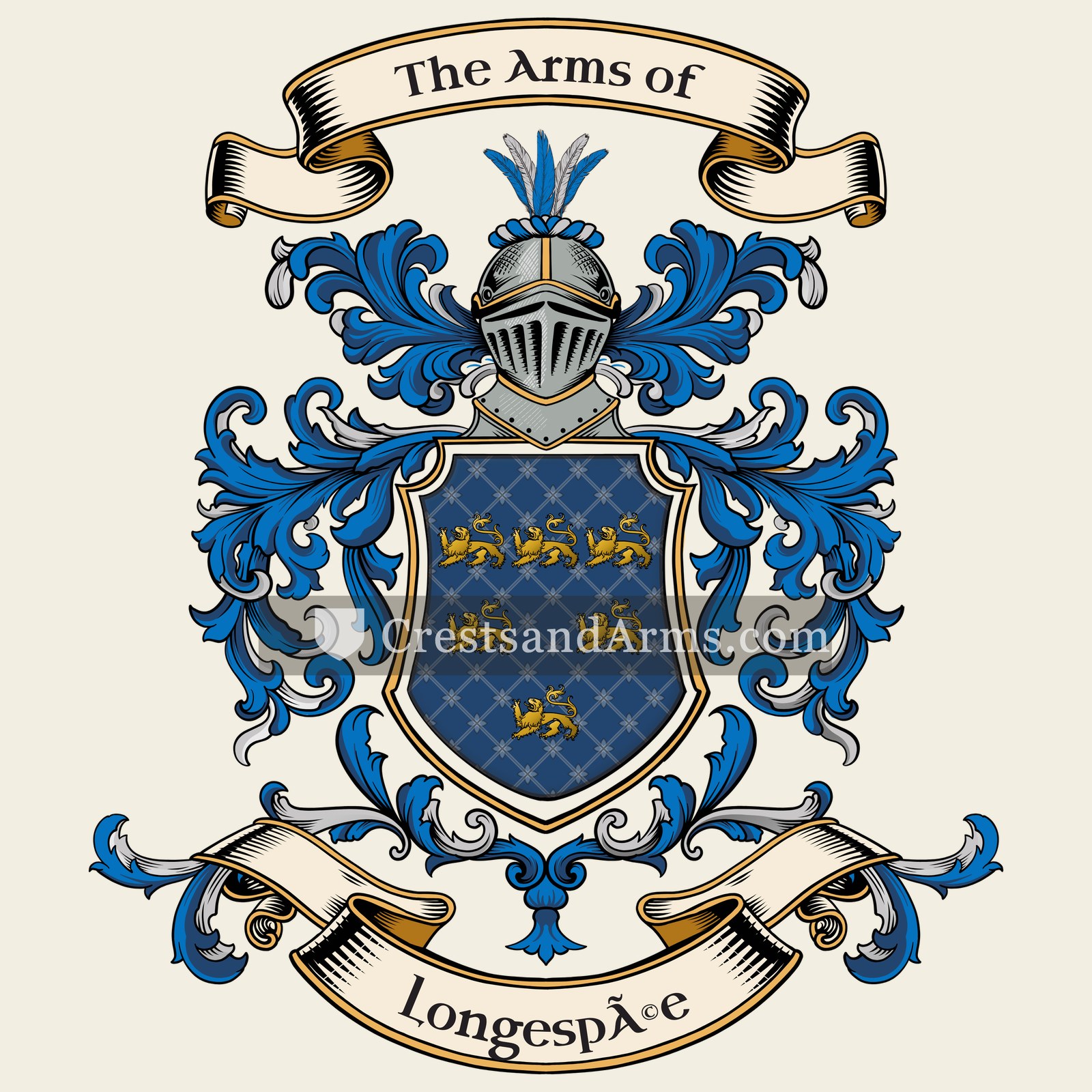

 swordJustice, and military honour