Map of Belgium showing where the Loots arms are recorded
The Loots arms were recorded in Gand, c. 1737.
This is where the arms were entered in the register. Families often moved to other parts of the country, so the same name can turn up in more than one region.
The body that granted and recorded arms in Belgium in this period.
Charles VI, Holy Roman Emperor
Sovereign of the period
Charles VI, Holy Roman Emperor
1711–1740
Reigning in Belgium when the Loots arms are first recorded.
How Arms Worked in Belgium
In Belgium, a coat of arms is considered personal property that is passed down through the male line to legitimate descendants. Families often use the same shield design across generations to show their shared heritage. If a branch of the family wants to change the design, they must apply for an official update to their specific version of the arms.
Granting authority
The Conseil héraldique is the official body that regulates and approves all coats of arms in Belgium.
How they got arms
Families obtain their coats of arms through formal royal grants or by confirming their historical right to use existing designs.
Where arms were recorded
All approved coats of arms are officially recorded in the public registers of the Conseil héraldique since 1844.
The family's standing
Recorded among the armigerous families of Belgium.
Origin & History of the Loots Family in Belgium
The family name Loots has deep roots in the historical landscape of Flanders, specifically within the city of Ghent. By the year 1737, records confirm that members of the family were already established residents of this vibrant trading hub. The name itself is thought to be linked to the Middle Dutch word "loot," which historically referred to a sprout, a young branch, or a piece of lead used in construction and measuring. During the eighteenth century, families in Ghent often identified themselves through their specific trade or their connection to the local land. As the family grew, they became part of the social fabric of the city, likely participating in the bustling textile industry or the local craft guilds that defined Ghent during that era. Their presence in the city archives from this time suggests they were settled, contributing members of the community who helped shape the local history of the region.
Loots Meaning & Related Branches
Root word
Lode
A Germanic name meaning famous warrior or bright fame.
This name
LootsA patronymic surname derived from a diminutive form of the name Lodewijk.
also spelled
Lots
Documented Sources
J. B. Rietstap, Armorial Général, Gouda: G. B. van Goor Zonen, 1884–87
Stadsarchief Gent, Parochieregisters (Doop-, huwelijks- en overlijdensregisters)
Rijksarchief te Gent, Fonds van de Raad van Vlaanderen
Debrabandere, Frans, Woordenboek van de familienamen in België en Noord-Frankrijk, 2003
Vandeputte, Omer, Gids voor Vlaanderen: Toeristische en culturele gids voor alle steden en dorpen in Vlaanderen, 2007
Digital archive packCoat of arms PNG, gold border print PDF, vector SVG and the certificate of authenticity. Sent to your email in minutes.


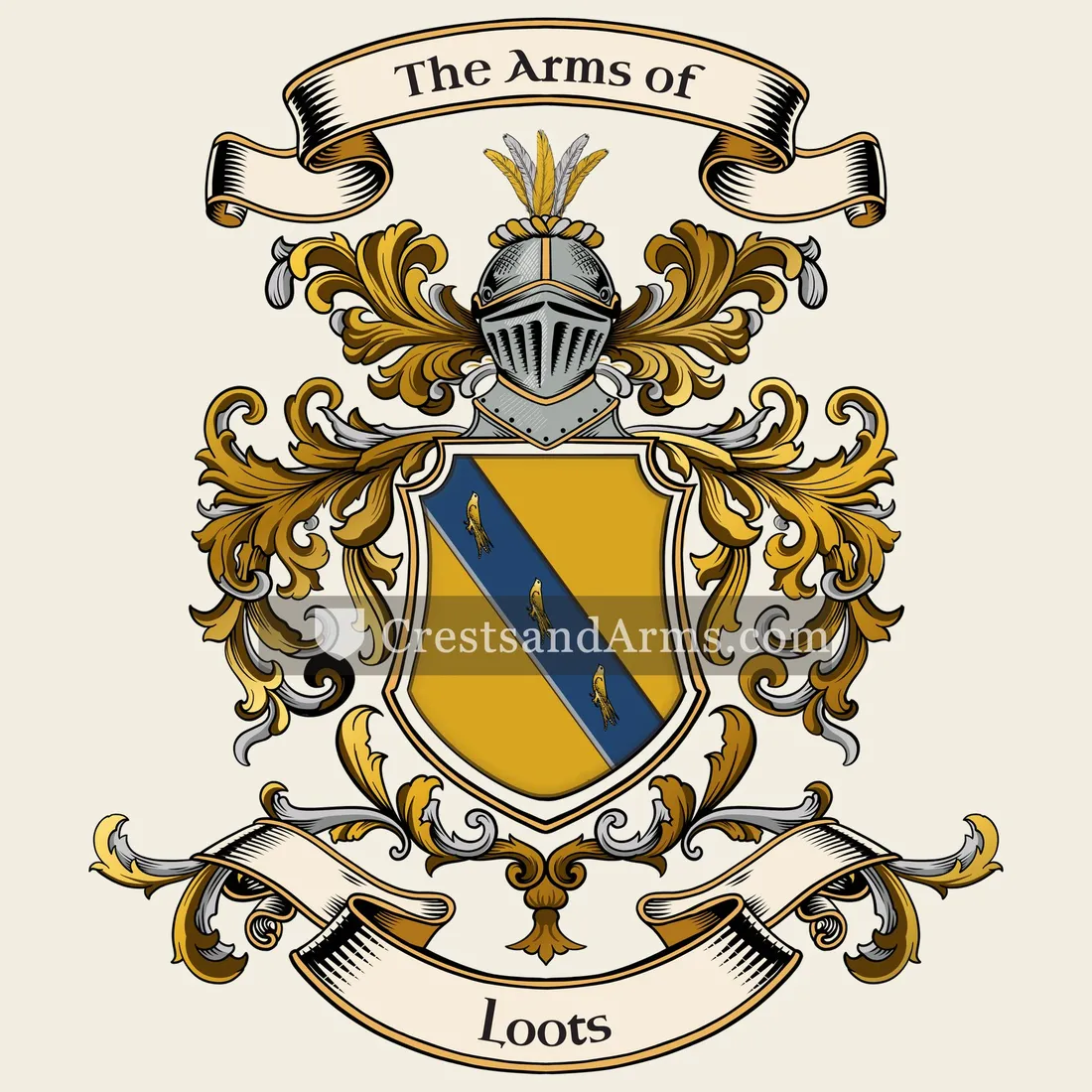
 bendDefence, and the scarf of a commander
 martletA younger son, who must win his own land
 bendDefence, and the scarf of a commander
 martletA younger son, who must win his own land