Map of France showing where the Lorenz arms are recorded
The Lorenz arms were recorded in Anjou, c. 1663.
Anjou was rich valley country along the Loire, with a dense scatter of small manors. Its gentry were numerous rather than wealthy, and even a modest holding was enough to justify a shield of one's own.
This is where the arms were entered in the register. Families often moved to other parts of the country, so the same name can turn up in more than one region.
The body that granted and recorded arms in France in this period.
Louis XIV of France
Sovereign of the period
Louis XIV of France
1643–1715
Reigning in France when the Lorenz arms are first recorded.
How Arms Worked in France
In France, a coat of arms was a mark of honor that passed down through the male line to all legitimate descendants. Families often used the same shield without changes to show their shared heritage. If a branch wanted to stand out, they could add a small mark to their shield to show their specific place in the family tree.
Granting authority
The Juge d'armes de France acted as the official authority that regulated and verified coats of arms across the country.
How they got arms
Families typically inherited their arms from ancestors, though they could also receive them through royal grants or by proving their noble status.
Where arms were recorded
Coats of arms were officially recorded in the Armorial Général de France, which began its main collection in the year 1696.
The family's standing
Recorded among the armigerous families of Anjou.
Origin & History of the Lorenz Family in France
The family name Lorenz traces its roots to the Latin name Laurentius, which honors those who wore the laurel wreath of victory in ancient times. By the year 1663, records confirm that members of the family were established in the Anjou region of France. During this period, Anjou was a central hub for agriculture and trade, and families living there were often deeply connected to the local land and the administrative life of the province. As the name spread through the French countryside, it evolved to reflect local dialects and regional naming customs. The presence of the family in Anjou suggests they were part of the hardworking population that helped shape the social and economic fabric of seventeenth-century France. Over time, the name became a permanent fixture in the region, marking the family as a long-standing part of the local history.
Coat of Arms & Family Crest Details
Symbols on this shield
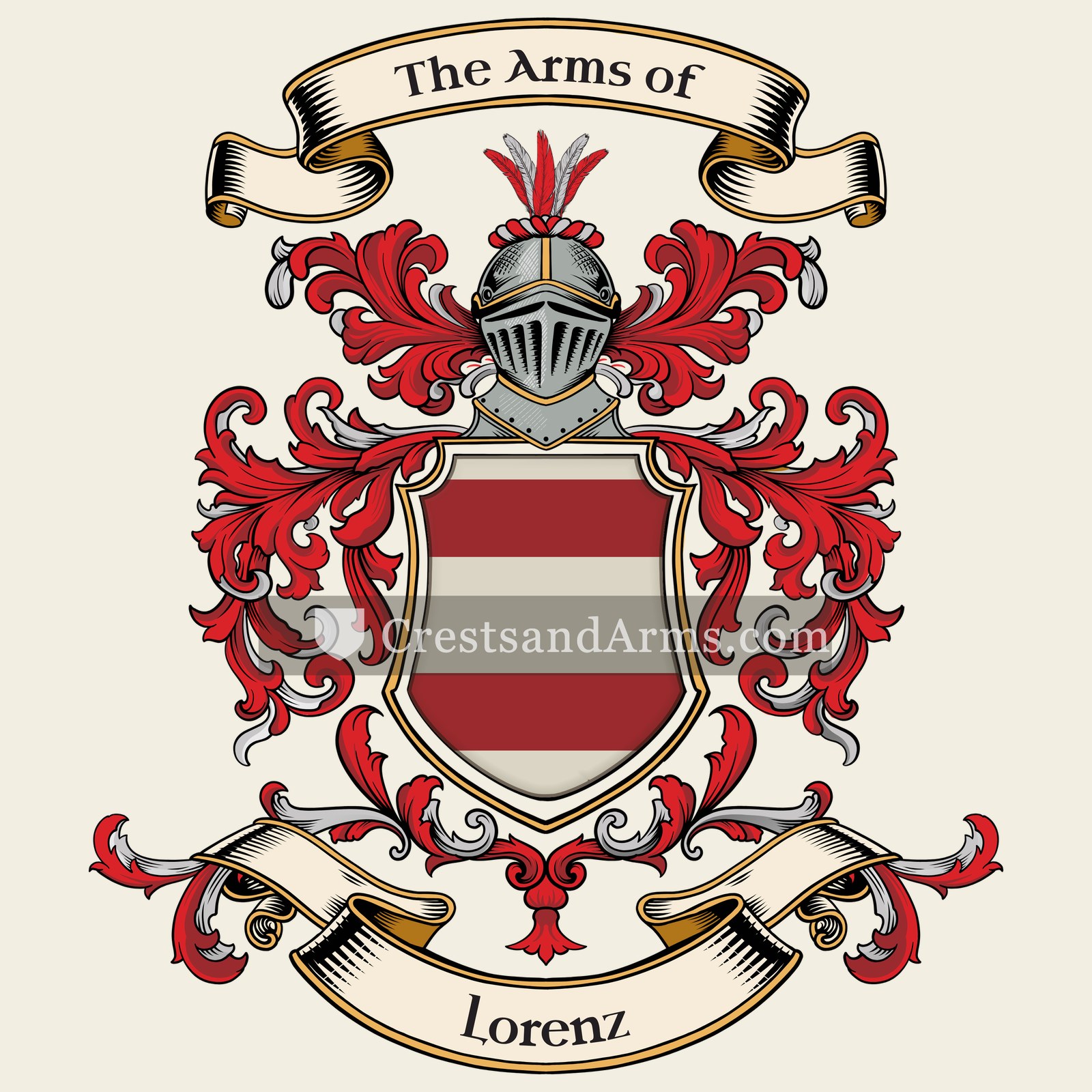
fessThe military belt, and readiness to serve
Colours
Silver (Argent)Means: Peace and sincerity
Red (Gules)Means: Military strength
Historical info
Source
J. B. Rietstap, Armorial Général, Gouda: G. B. van Goor Zonen, 1884–87
Blazon (the actual original written record)
“D'arg. à deux fasces de gu. Cq. cour. C.: un vol de gu. S.: deux lions reg. d'or.”
SaxonySaxony, c. 1790
Digital archive packCoat of arms PNG, gold border print PDF, vector SVG and the certificate of authenticity. Sent to your email in minutes.
Map of Germany showing where the Lorenz arms are recorded
The Lorenz arms were recorded in Saxony, c. 1790.
Saxony had mines, trade and old landed families all at once. Silver made some fortunes and land held others, and both sorts of family kept arms, which is why Saxon names appear so often in the registers.
This is where the arms were entered in the register. Families often moved to other parts of the country, so the same name can turn up in more than one region.
The body that granted and recorded arms in Germany in this period.
Joseph II, Holy Roman Emperor
Sovereign of the period
Joseph II, Holy Roman Emperor
1765–1790
Reigning in France when the Lorenz arms are first recorded.
How Arms Worked in Germany
In the Holy Roman Empire, coats of arms were often granted to individuals by the Emperor or his representatives. These arms were then passed down through the generations to all legitimate descendants of the original holder. Younger branches of a family usually kept the same shield design without needing to change it, as the arms belonged to the entire lineage.
Granting authority
The Holy Roman Emperor held the sole power to grant new coats of arms throughout his vast imperial territories.
How they got arms
Families typically obtained their coats of arms through a formal imperial grant or by proving their noble status to the authorities.
Where arms were recorded
These grants were officially recorded in the Imperial Chancery registers, which began keeping formal records of such honors during the Middle Ages.
The family's standing
Recorded among the armigerous families of Saxony.
Origin & History of the Lorenz Family in Germany
The name Lorenz is a German variation of the Latin name Laurentius, which translates to someone who comes from the city of Laurentum or one who is crowned with laurel leaves. During the Middle Ages, the name became popular across German-speaking lands because of Saint Lawrence, a respected figure in Christian history. By the time the family was established in Saxony around 1790, the name had been used for centuries as both a given name and a surname. In the region of Saxony, families with this name often worked as farmers, craftsmen, or tradespeople who contributed to the local economy. Because Saxony was a central hub for trade and industry during the late 18th century, the Lorenz family likely lived in a society that valued hard work and community ties. The name reflects a long tradition of naming customs that evolved from ancient Roman roots into the common German family names we recognize today.
Coat of Arms & Family Crest Details
Symbols on this shield
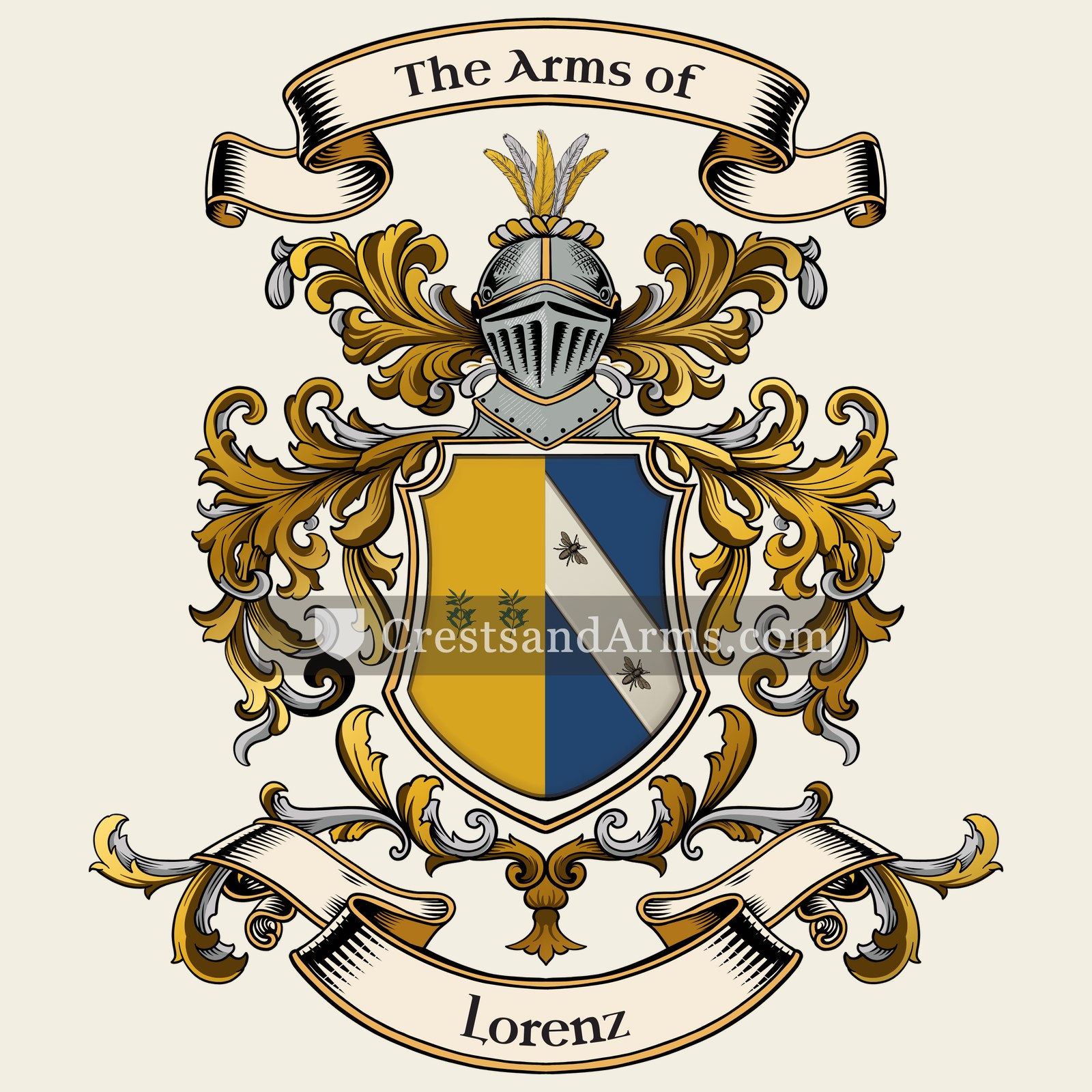
bendDefence, and the scarf of a commander
branchPeace, and new growth
beeIndustry, order and tireless work
Colours
Gold (Or)Means: Generosity
Blue (Azure)Means: Loyalty and truth
Silver (Argent)Means: Peace and sincerity
Green (Vert)Means: Hope
Historical info
Source
J. B. Rietstap, Armorial Général, Gouda: G. B. van Goor Zonen, 1884–87
Blazon (the actual original written record)
“Parti : au 1 d'or à deux rameaux de laurier de sin., fruités de gu., courbés en couronne, les pieds passés en saut.; au 2 d'azur à la bande d'arg., ch. de deux abeilles au nat., posées dans le sens de la bande.”
AustriaVienne, c. 1772
Digital archive packCoat of arms PNG, gold border print PDF, vector SVG and the certificate of authenticity. Sent to your email in minutes.
Map of Austria showing where the Lorenz arms are recorded
The Lorenz arms were recorded in Vienne, c. 1772.
This is where the arms were entered in the register. Families often moved to other parts of the country, so the same name can turn up in more than one region.
Region
Vienne
Town
Vienne
First recorded
1772
Granting Authority for the Lorenz Arms
Imperial and Royal chancery
Sodacan · CC BY-SA 3.0
The body that granted and recorded arms in Austria in this period.
Joseph II, Holy Roman Emperor
Sovereign of the period
Joseph II, Holy Roman Emperor
1765–1790
Reigning in France when the Lorenz arms are first recorded.
How Arms Worked in Austria
Austrian coats of arms were often linked directly to noble titles granted by the Emperor. These symbols belonged to the entire family line rather than just one individual. When a family grew, new branches kept the original design without needing to change it. This system allowed all members of a noble house to share the same identity across many generations.
Granting authority
The Imperial and Royal chancery managed all heraldic matters and controlled the official granting of arms throughout the Austrian lands.
How they got arms
Families typically received their arms through a formal imperial decree that often accompanied the elevation of a person to noble status.
Where arms were recorded
Official records of these grants were kept in the Imperial Register of Nobility which began its formal documentation process in 1453.
The family's standing
Recorded among the armigerous families of Austria.
Origin & History of the Lorenz Family in Austria
The family name Lorenz traces its roots back to the Latin name Laurentius, which means a person from the city of Laurentum. Over many centuries, this name evolved across Europe and eventually became a popular surname in German-speaking regions. By the time members of the family were documented in Vienna in 1772, the name had already been established for generations as a common way to identify individuals who lived near or worked at churches dedicated to Saint Lawrence. In the context of eighteenth-century Austria, families with this name often integrated into the growing urban workforce of the capital city. These early residents of Vienna were part of a period of significant social change, as the city expanded its influence as a center of trade and culture. Their presence in official records from that era suggests they were part of the steady migration of families who moved to the city to participate in the skilled crafts and administrative roles that defined Austrian life during the Enlightenment.
Lorenz Meaning & Related Branches
Root word
Laurentius
Derived from the Latin word for the laurel tree or laurel wreath.
This name
LorenzA French surname signifying someone who is crowned with laurel leaves, symbolizing victory or honor.
also spelled
Lorens
Lorentz
Lorents
Lawrence
Related arms
Lorensvariant spelling
Lorentzvariant spelling
Documented Sources
J. B. Rietstap, Armorial Général, Gouda: G. B. van Goor Zonen, 1884–87
Dauzat, Albert. Dictionnaire étymologique des noms et prénoms de France. 1951
Morlet, Marie-Thérèse. Dictionnaire étymologique des noms de famille. 1991
Archives départementales de Maine-et-Loire, État civil et registres paroissiaux de l'Anjou
Digital archive packCoat of arms PNG, gold border print PDF, vector SVG and the certificate of authenticity. Sent to your email in minutes.


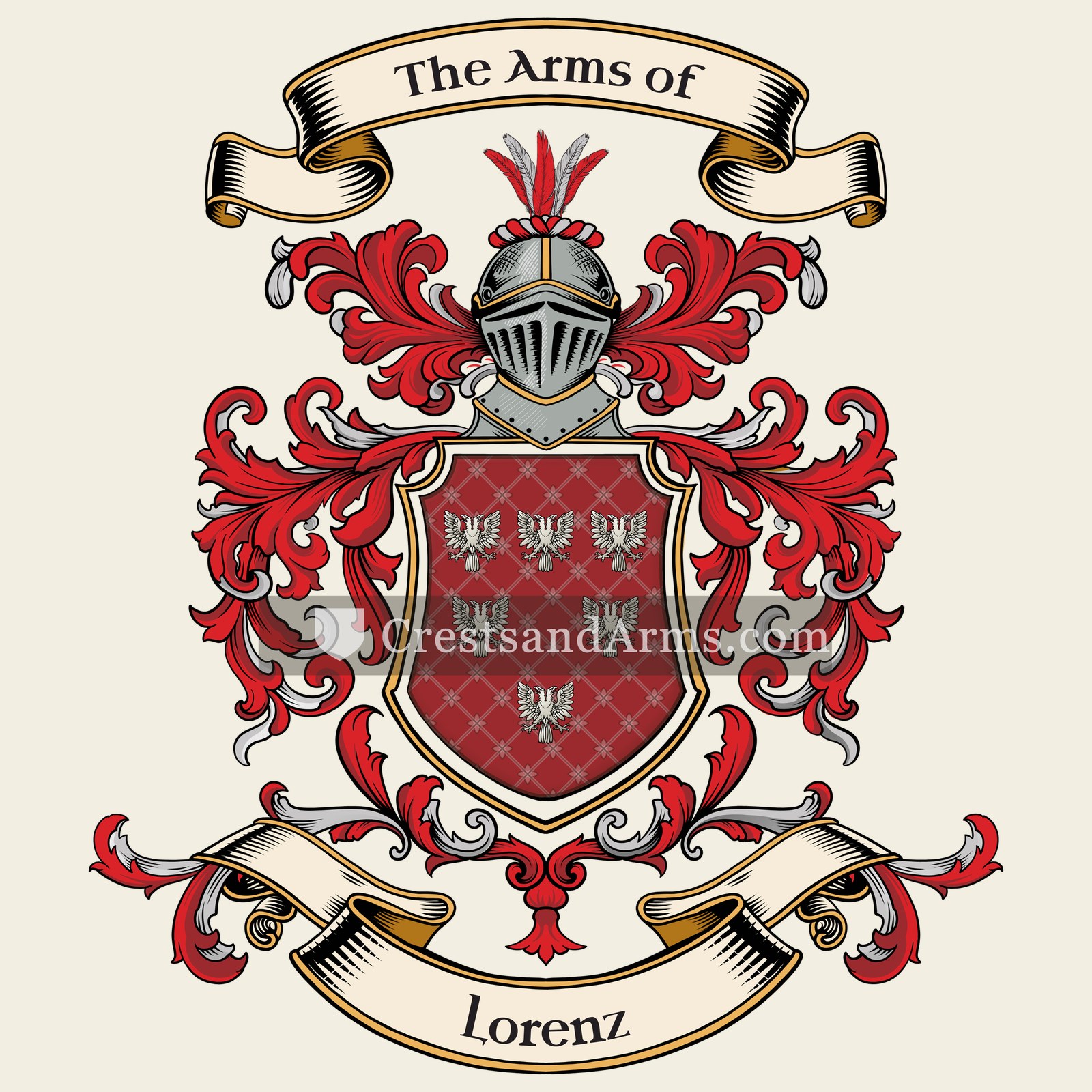
 eagleNobility, strength and a keen mind
 eagleNobility, strength and a keen mind


 fessThe military belt, and readiness to serve


 bendDefence, and the scarf of a commander
 branchPeace, and new growth
 beeIndustry, order and tireless work