Map of France showing where the Lorenzana arms are recorded
The Lorenzana arms were recorded in Anjou, c. 1663.
Anjou was rich valley country along the Loire, with a dense scatter of small manors. Its gentry were numerous rather than wealthy, and even a modest holding was enough to justify a shield of one's own.
This is where the arms were entered in the register. Families often moved to other parts of the country, so the same name can turn up in more than one region.
The body that granted and recorded arms in France in this period.
Louis XIV of France
Sovereign of the period
Louis XIV of France
1643–1715
Reigning in France when the Lorenzana arms are first recorded.
How Arms Worked in France
In France, a coat of arms was a mark of honor that passed down through the male line to all legitimate descendants. Families often used the same shield without changes to show their shared heritage. If a branch wanted to stand out, they could add a small mark to their shield to show their specific place in the family tree.
Granting authority
The Juge d'armes de France acted as the official authority that regulated and verified coats of arms across the country.
How they got arms
Families typically inherited their arms from ancestors, though they could also receive them through royal grants or by proving their noble status.
Where arms were recorded
Coats of arms were officially recorded in the Armorial Général de France, which began its main collection in the year 1696.
The family's standing
Recorded among the armigerous families of Anjou.
Origin & History of the Lorenzana Family in France
The history of the Lorenzana family in France is deeply rooted in the cultural landscape of the Anjou region during the mid-seventeenth century. By 1663, records confirm that members of the family were well-established within this historic province, which was known for its fertile lands and proximity to the Loire River. During this era, families in Anjou often played vital roles in local administration or agriculture, helping to shape the social fabric of the French countryside. The name itself reflects the movement of people across European borders, as it likely traveled from Mediterranean regions into the French heartland. As these early ancestors settled into their new environment, they integrated into the local traditions and community life that defined the Anjou territory. Their presence in the region serves as a testament to the migration patterns that connected different parts of Europe long before modern borders were strictly defined.
Meaning of the Lorenzana family crest colors & symbols
Symbols on this shield
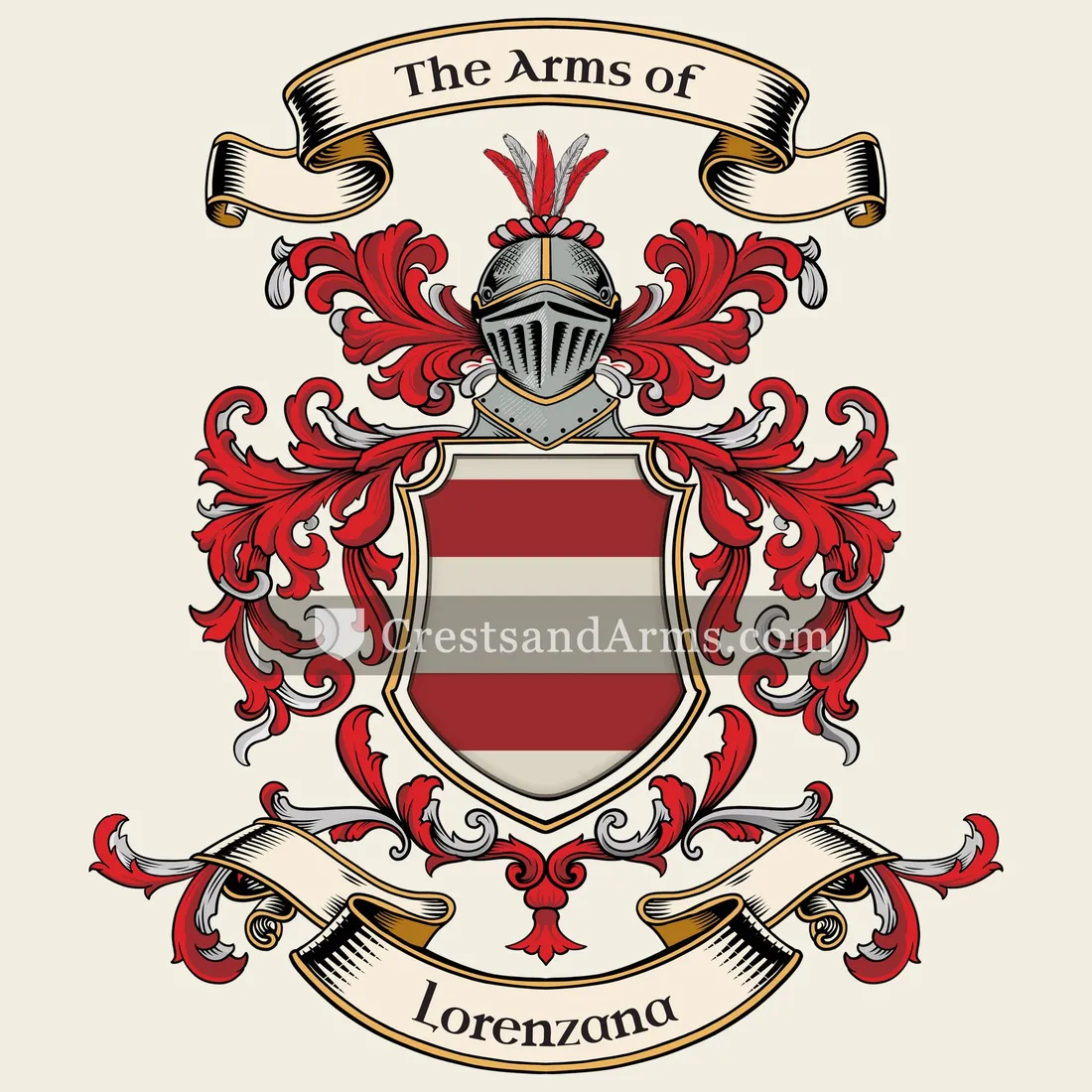
fessThe military belt, and readiness to serve
Colours
Silver (Argent)Means: Peace and sincerity
Red (Gules)Means: Military strength
Historical info
Source
J. B. Rietstap, Armorial Général, Gouda: G. B. van Goor Zonen, 1884–87
Blazon (the actual original written record)
“D'arg. à deux fasces de gu. Cq. cour. C.: un vol de gu. S.: deux lions reg. d'or.”
SaxonySaxony, c. 1790
Digital archive packCoat of arms PNG, gold border print PDF, vector SVG and the certificate of authenticity. Sent to your email in minutes.
Map of Germany showing where the Lorenzana arms are recorded
The Lorenzana arms were recorded in Saxony, c. 1790.
Saxony had mines, trade and old landed families all at once. Silver made some fortunes and land held others, and both sorts of family kept arms, which is why Saxon names appear so often in the registers.
This is where the arms were entered in the register. Families often moved to other parts of the country, so the same name can turn up in more than one region.
The body that granted and recorded arms in Germany in this period.
Joseph II, Holy Roman Emperor
Sovereign of the period
Joseph II, Holy Roman Emperor
1765–1790
Reigning in France when the Lorenzana arms are first recorded.
How Arms Worked in Germany
In the Holy Roman Empire, coats of arms were often granted to individuals by the Emperor or his representatives. These arms were then passed down through the generations to all legitimate descendants of the original holder. Younger branches of a family usually kept the same shield design without needing to change it, as the arms belonged to the entire lineage.
Granting authority
The Holy Roman Emperor held the sole power to grant new coats of arms throughout his vast imperial territories.
How they got arms
Families typically obtained their coats of arms through a formal imperial grant or by proving their noble status to the authorities.
Where arms were recorded
These grants were officially recorded in the Imperial Chancery registers, which began keeping formal records of such honors during the Middle Ages.
The family's standing
Recorded among the armigerous families of Saxony.
Origin & History of the Lorenzana Family in Germany
The family name Lorenzana carries a distinct history that traces back to the cultural landscape of Saxony during the late eighteenth century. By 1790, records indicate that members of the family were firmly established within this region, which was then a significant center for trade and intellectual growth in the Holy Roman Empire. During this period, the name was likely influenced by the complex social shifts occurring in German lands, where surnames often reflected local geography or the professional roles of ancestors within their communities. As the family lived in Saxony, they were part of a society transitioning through the Enlightenment, which encouraged greater record-keeping and a stronger sense of individual identity. This era allowed families like the Lorenzana line to integrate into the local fabric of the region, contributing to the agricultural and administrative life that defined life in the Saxon territories before the turn of the nineteenth century.
Meaning of the Lorenzana family crest colors & symbols
Symbols on this shield
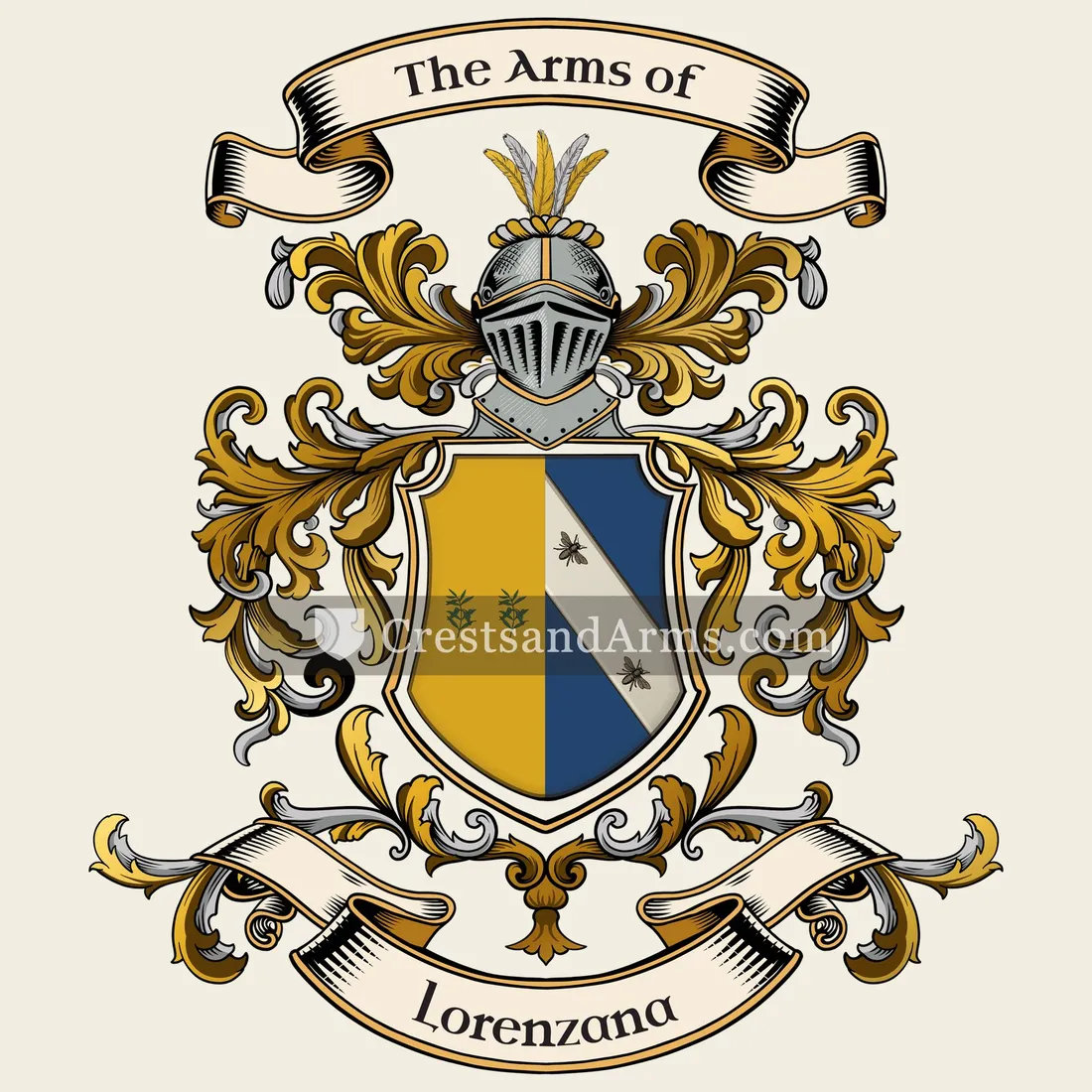
bendDefence, and the scarf of a commander
branchPeace, and new growth
beeIndustry, order and tireless work
Colours
Gold (Or)Means: Generosity
Blue (Azure)Means: Loyalty and truth
Silver (Argent)Means: Peace and sincerity
Green (Vert)Means: Hope
Historical info
Source
J. B. Rietstap, Armorial Général, Gouda: G. B. van Goor Zonen, 1884–87
Blazon (the actual original written record)
“Parti : au 1 d'or à deux rameaux de laurier de sin., fruités de gu., courbés en couronne, les pieds passés en saut.; au 2 d'azur à la bande d'arg., ch. de deux abeilles au nat., posées dans le sens de la bande.”
AustriaVienne, c. 1772
Digital archive packCoat of arms PNG, gold border print PDF, vector SVG and the certificate of authenticity. Sent to your email in minutes.
Map of Austria showing where the Lorenzana arms are recorded
The Lorenzana arms were recorded in Vienne, c. 1772.
This is where the arms were entered in the register. Families often moved to other parts of the country, so the same name can turn up in more than one region.
Region
Vienne
Town
Vienne
First recorded
1772
Granting Authority for the Lorenzana Arms
Imperial and Royal chancery
Sodacan · CC BY-SA 3.0
The body that granted and recorded arms in Austria in this period.
Joseph II, Holy Roman Emperor
Sovereign of the period
Joseph II, Holy Roman Emperor
1765–1790
Reigning in France when the Lorenzana arms are first recorded.
How Arms Worked in Austria
Austrian coats of arms were often linked directly to noble titles granted by the Emperor. These symbols belonged to the entire family line rather than just one individual. When a family grew, new branches kept the original design without needing to change it. This system allowed all members of a noble house to share the same identity across many generations.
Granting authority
The Imperial and Royal chancery managed all heraldic matters and controlled the official granting of arms throughout the Austrian lands.
How they got arms
Families typically received their arms through a formal imperial decree that often accompanied the elevation of a person to noble status.
Where arms were recorded
Official records of these grants were kept in the Imperial Register of Nobility which began its formal documentation process in 1453.
The family's standing
Recorded among the armigerous families of Austria.
Origin & History of the Lorenzana Family in Austria
The history of the Lorenzana family in Austria begins with their documented presence in Vienna during the year 1772. At this time, the city served as the vibrant capital of the Habsburg Empire, acting as a central hub for diplomacy, trade, and the arts. Families like the Lorenzana often moved to Vienna to participate in the imperial administration or to engage in the growing merchant class that supported the city's expansion. Because the name has roots in the Iberian Peninsula, its appearance in the Austrian capital suggests a family involved in the complex international networks of the eighteenth century. These early members likely navigated a society defined by strict social hierarchies and the influence of the Enlightenment. By settling in Vienna, they became part of a diverse urban population that helped shape the cultural and political landscape of Central Europe during a period of significant transition.
Lorenzana Meaning & Related Branches
Root word
Laurentius
Derived from the Latin word for the laurel tree or crown.
This name
LorenzanaA habitational surname referring to someone originating from the town of Lorenzana.
also spelled
Lorens
Lorentz
Lorents
Lawrence
Documented Sources
J. B. Rietstap, Armorial Général, Gouda: G. B. van Goor Zonen, 1884–87
Archives départementales de Maine-et-Loire, Série B: Cours et juridictions
Port, Célestin, Dictionnaire historique, géographique et biographique de Maine-et-Loire et de l'ancienne province d'Anjou, 1874
Digital archive packCoat of arms PNG, gold border print PDF, vector SVG and the certificate of authenticity. Sent to your email in minutes.


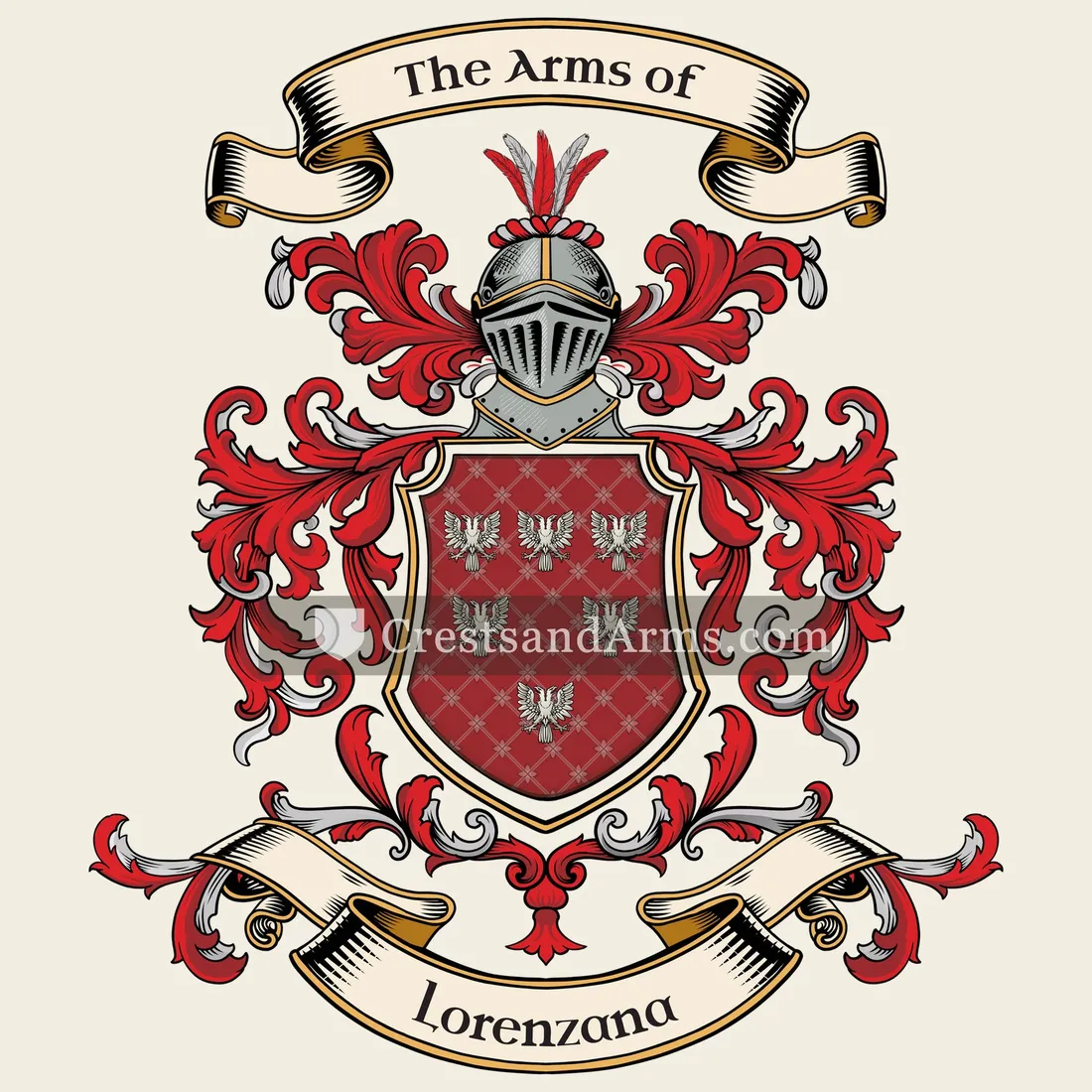
 eagleNobility, strength and a keen mind
 eagleNobility, strength and a keen mind


 fessThe military belt, and readiness to serve


 bendDefence, and the scarf of a commander
 branchPeace, and new growth
 beeIndustry, order and tireless work