A record of documented arms, meaning and origin, researched for the Loy family lines. Documented in 2 countries.
Reg. 3088 · German, J–L
Coat of Arms & Family Crest Details
Symbols on this shield
chevronProtection, and faithful service completed
bendDefence, and the scarf of a commander
lionCourage, strength and royalty
Colours
Gold (Or)Means: Generosity
Historical info
Source
J. B. Rietstap, Armorial Général, Gouda: G. B. van Goor Zonen, 1884–87
Blazon (the actual original written record)
“D'or au chev. renv. de sa., ch. de trois têtes de léopard du champ. C.: un lion iss., tranché d'or sur sa., entre une ramure de daim d'or, la corne dextre ch. d'une bande de sa. et la corne sen. d'une barre du même.”
GermanyRatisbonne, c. 1765
Digital archive packCoat of arms PNG, gold border print PDF, vector SVG and the certificate of authenticity. Sent to your email in minutes.
Map of Germany showing where the Loy arms are recorded
The Loy arms were recorded in Ratisbonne, c. 1765.
This is where the arms were entered in the register. Families often moved to other parts of the country, so the same name can turn up in more than one region.
The body that granted and recorded arms in Germany in this period.
Francis I, Holy Roman Emperor
Sovereign of the period
Francis I, Holy Roman Emperor
1745–1765
Reigning in Germany when the Loy arms are first recorded.
How Arms Worked in Germany
In the Holy Roman Empire, coats of arms were often granted to individuals by the Emperor or his representatives. These arms were then passed down through the generations to all legitimate descendants of the original holder. Younger branches of a family usually kept the same shield design without needing to change it, as the arms belonged to the entire lineage.
Granting authority
The Holy Roman Emperor held the sole power to grant new coats of arms throughout his vast imperial territories.
How they got arms
Families typically obtained their coats of arms through a formal imperial grant or by proving their noble status to the authorities.
Where arms were recorded
These grants were officially recorded in the Imperial Chancery registers, which began keeping formal records of such honors during the Middle Ages.
The family's standing
Recorded among the armigerous families of Germany.
Origin & History of the Loy Family in Germany
The surname Loy has deep roots in the German-speaking regions of Europe, where it often functioned as a shortened form of names like Ludwig or Nikolaus. By the mid-eighteenth century, the family established a notable presence in the city of Ratisbonne, which is known today as Regensburg. During this era, Ratisbonne served as a vital cultural and political hub along the Danube River. Families living in this region were often involved in the city's active trade networks or served within the administrative structures of the Holy Roman Empire. The presence of the Loy family in Ratisbonne by 1765 suggests they were part of the established urban population that helped shape the city during the late Enlightenment period. Over time, the name spread across various German states as families moved to seek new opportunities in agriculture, craftsmanship, and local governance.
Coat of Arms & Family Crest Details
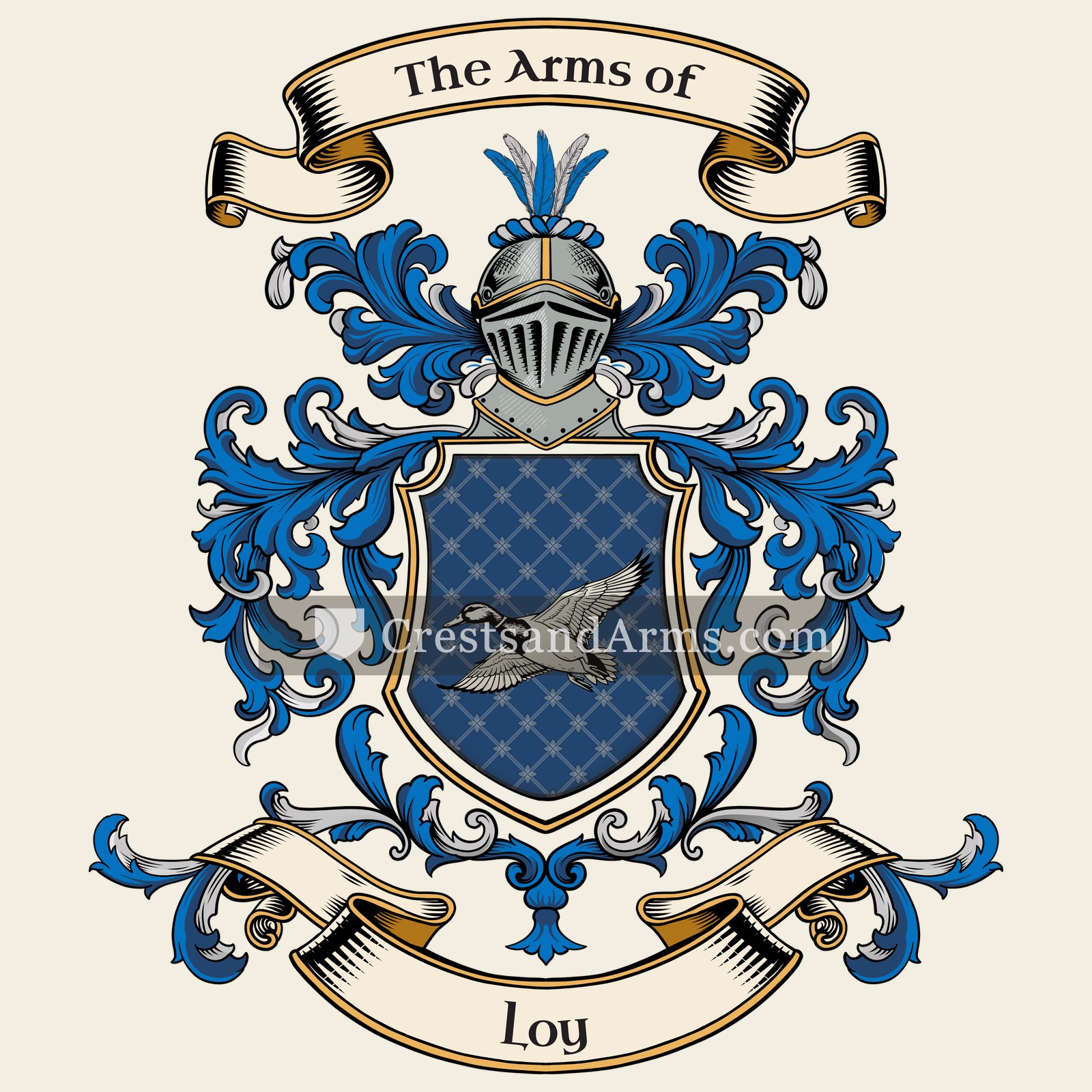
Symbols on this shield
duckResourcefulness on land and water
Colours
Blue (Azure)Means: Loyalty and truth
Silver (Argent)Means: Peace and sincerity
Historical info
Source
J. B. Rietstap, Armorial Général, Gouda: G. B. van Goor Zonen, 1884–87
Blazon (the actual original written record)
“D'azur à une oie d'arg., bq. de gu., m. de sa.”
ForezForez, c. 1663
Digital archive packCoat of arms PNG, gold border print PDF, vector SVG and the certificate of authenticity. Sent to your email in minutes.
Map of France showing where the Loy arms are recorded
The Loy arms were recorded in Forez, c. 1663.
Forez was a small upland county in central France, thick with minor gentry holding modest estates. Its families were more numerous than wealthy, and even a small holding was enough for a shield of one's own.
This is where the arms were entered in the register. Families often moved to other parts of the country, so the same name can turn up in more than one region.
The body that granted and recorded arms in France in this period.
Louis XIV of France
Sovereign of the period
Louis XIV of France
1643–1715
Reigning in Germany when the Loy arms are first recorded.
How Arms Worked in France
In France, a coat of arms was a mark of honor that passed down through the male line to all legitimate descendants. Families often used the same shield without changes to show their shared heritage. If a branch wanted to stand out, they could add a small mark to their shield to show their specific place in the family tree.
Granting authority
The Juge d'armes de France acted as the official authority that regulated and verified coats of arms across the country.
How they got arms
Families typically inherited their arms from ancestors, though they could also receive them through royal grants or by proving their noble status.
Where arms were recorded
Coats of arms were officially recorded in the Armorial Général de France, which began its main collection in the year 1696.
The family's standing
Recorded among the armigerous families of Forez.
Origin & History of the Loy Family in France
The family name Loy has deep roots in the historical province of Forez, a region known for its rugged landscape and long-standing traditions in central France. By the year 1663, records confirm that members of the Loy family were already established residents in this area. During the seventeenth century, Forez was a place where families often stayed in the same villages for generations, working the land or practicing specialized trades. The name itself likely evolved from local dialects or nicknames common to the people living near the Loire River. Because the region was relatively isolated by its mountainous terrain, the Loy family would have been closely tied to the social and religious life of their local parish. These early ancestors lived through a time of significant change as the French monarchy consolidated power, yet families in Forez maintained a strong sense of local identity that defined their daily lives and community standing.
Related Branches & Arms
Root word
Ludwig
Derived from the Germanic elements for famous and warrior.
This name
LoyA shortened form of the name Louis, signifying a renowned fighter or famous warrior.
also spelled
Loye
Loys
Loie
Documented Sources
J. B. Rietstap, Armorial Général, Gouda: G. B. van Goor Zonen, 1884–87
Bauer, Karl. Regensburg: Kunst-, Kultur- und Alltagsgeschichte. 2014
Heintze, Albert. Die deutschen Familiennamen: geschichtlich, geographisch, sprachlich. 1903
Stadtarchiv Regensburg. Bürgeraufnahmen und Zunftprotokolle der Stadt Regensburg. 1765
Digital archive packCoat of arms PNG, gold border print PDF, vector SVG and the certificate of authenticity. Sent to your email in minutes.


 chevronProtection, and faithful service completed
 bendDefence, and the scarf of a commander
 lionCourage, strength and royalty
 chevronProtection, and faithful service completed
 bendDefence, and the scarf of a commander
 lionCourage, strength and royalty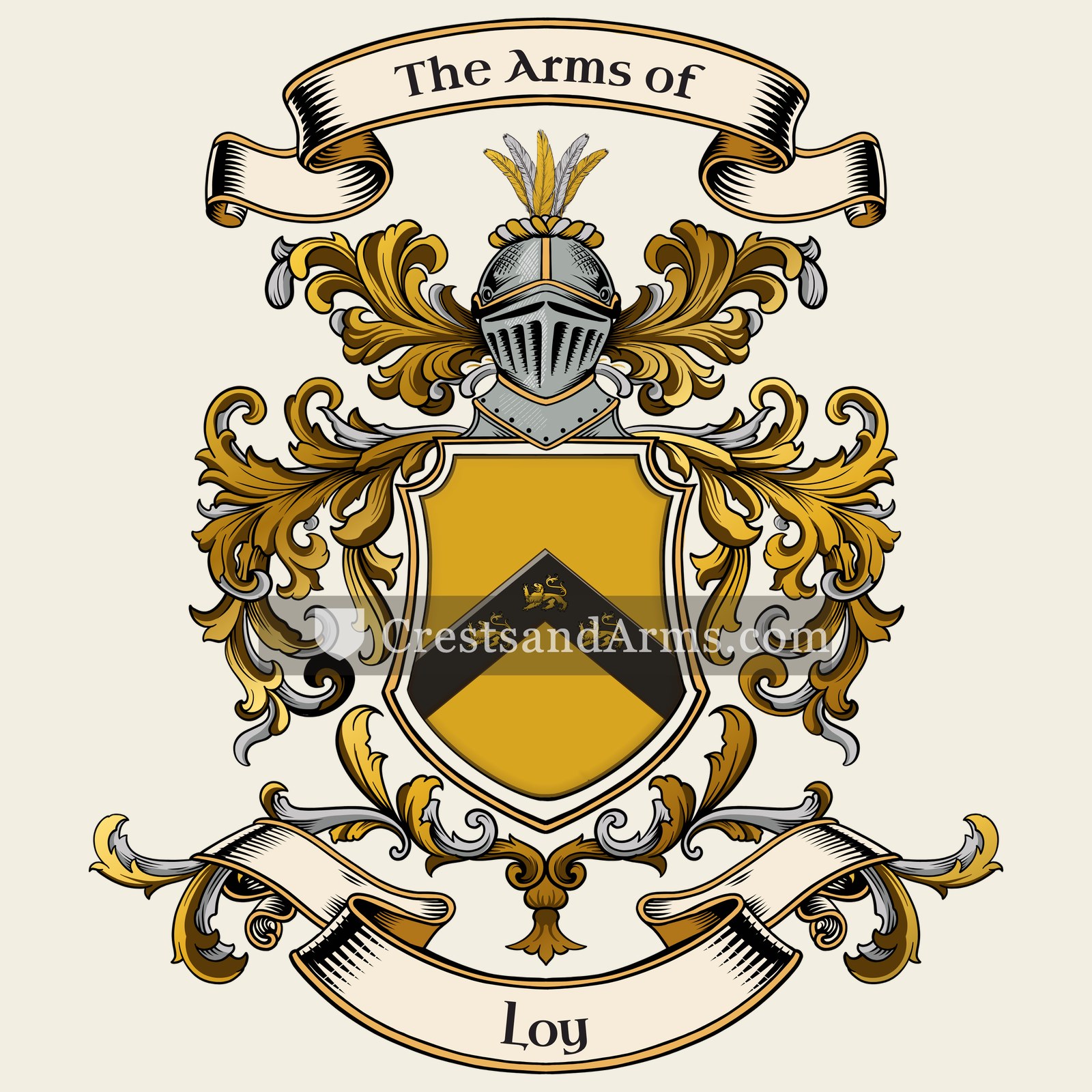


 duckResourcefulness on land and water