Map of Spain showing where the Lozo arms are recorded
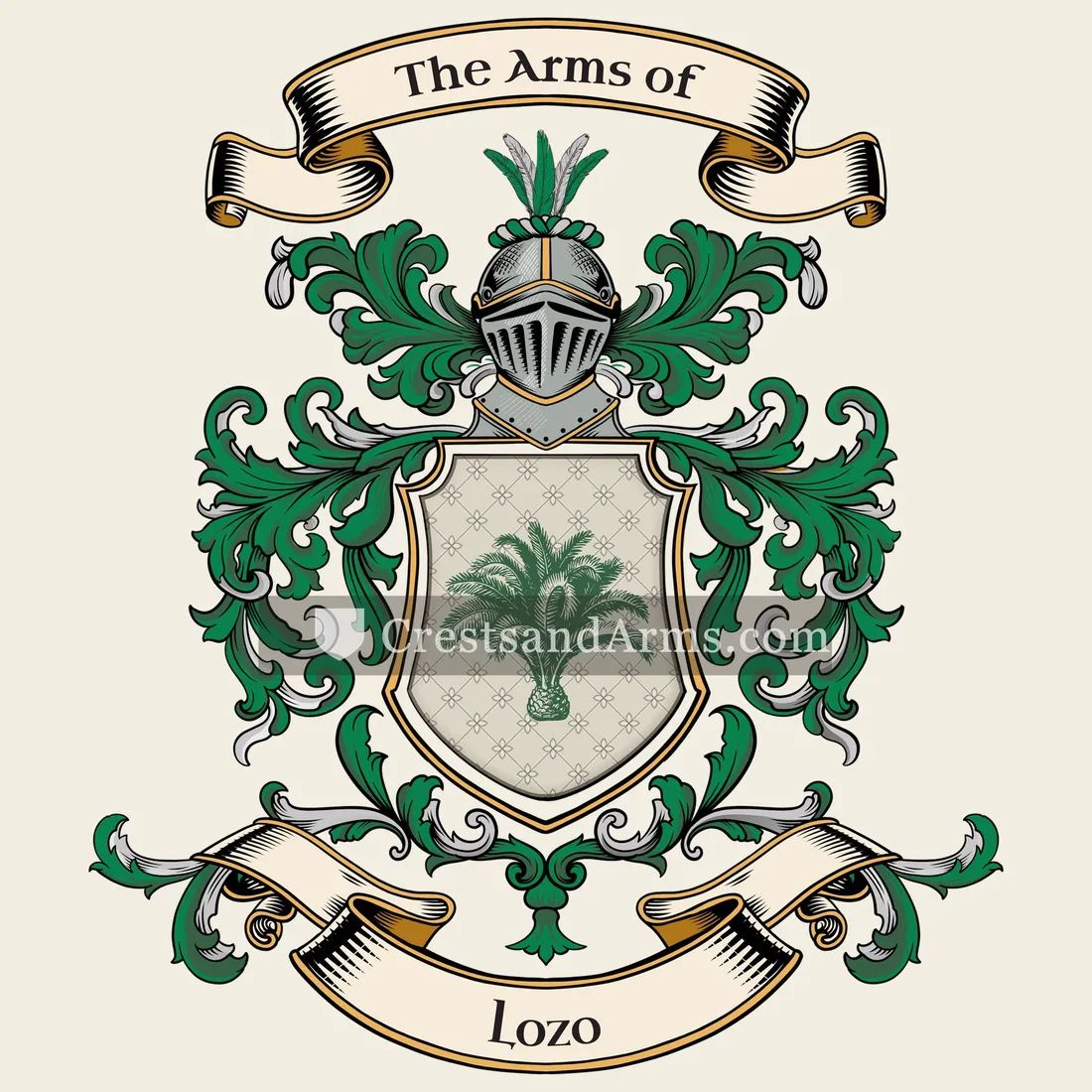
The Lozo arms were recorded in Spain, c. 1722.
Arms such as these were typically recorded in Castile.
Castile was the heart of Spain and the source of most of its noble families. Land won in the long wars against the Moors was granted out to fighting men, and a man granted land was granted arms along with it.
This is where the arms were entered in the register. Families often moved to other parts of the country, so the same name can turn up in more than one region.
The body that granted and recorded arms in Spain in this period.
Philip V of Spain
Sovereign of the period
Philip V of Spain
1714–1724
Reigning in Spain when the Lozo arms are first recorded.
How Arms Worked in Spain
In Spain, a coat of arms was considered a form of property that belonged to the entire family line. These arms were passed down from a father to all his children equally. Younger branches of the family usually kept the original design without needing to add any special marks to distinguish their specific line.
Granting authority
The Cronista Rey de Armas was the official body that regulated and granted coats of arms throughout Spain.
How they got arms
Families often obtained their arms through royal grants or by proving their noble status to the official heraldic authority.
Where arms were recorded
Coats of arms were officially recorded in the registers of the Cronista Rey de Armas starting in 1496.
The family's standing
Recorded among the armigerous families of Spain.
Origin & History of the Lozo Family in Spain
The family name Lozo traces its roots to the rugged landscapes of Castile, Spain, where records confirm the presence of family members as early as 1722. During this period, the region was characterized by small agricultural communities and a rigid social structure that defined the lives of its inhabitants. Families like the Lozos were often tied to the land, working within the local parish systems that served as the primary centers for record-keeping and community life. As the name appears in these early eighteenth-century documents, it suggests that the family was well-established within the local Castilian social fabric long before the modern era. Over time, the name likely traveled through the Iberian Peninsula as members sought new opportunities in trade, military service, or expanding agricultural frontiers. This early history reflects the broader patterns of life in colonial-era Spain, where family identity was deeply connected to one's home village and the local church registers that documented births, marriages, and deaths.
Lozo Meaning & Related Branches
Root word
Laus
Latin term meaning praise, glory, or fame.
This name
LozoA topographic or habitational name likely derived from a place associated with praise or renown.
also spelled
Loze
Lozs
Documented Sources
J. B. Rietstap, Armorial Général, Gouda: G. B. van Goor Zonen, 1884–87


 palm treeVictory, and righteousness that flourishes
 palm treeVictory, and righteousness that flourishes