Map of France showing where the Luis arms are recorded
The Luis arms were recorded in Lorraine, c. 1578.
Lorraine sat on the border between France and the German lands, and border country bred soldiers. Families here held small estates and served in arms, and a fighting man was exactly the sort who carried a shield of his own.
This is where the arms were entered in the register. Families often moved to other parts of the country, so the same name can turn up in more than one region.
The body that granted and recorded arms in France in this period.
Henry III of France
Sovereign of the period
Henry III of France
1574–1589
Reigning in France when the Luis arms are first recorded.
How Arms Worked in France
In France, a coat of arms was a mark of honor that passed down through the male line to all legitimate descendants. Families often used the same shield without changes to show their shared heritage. If a branch wanted to stand out, they could add a small mark to their shield to show their specific place in the family tree.
Granting authority
The Juge d'armes de France acted as the official authority that regulated and verified coats of arms across the country.
How they got arms
Families typically inherited their arms from ancestors, though they could also receive them through royal grants or by proving their noble status.
Where arms were recorded
Coats of arms were officially recorded in the Armorial Général de France, which began its main collection in the year 1696.
The family's standing
Recorded among the armigerous families of Lorraine.
Origin & History of the Luis Family in France
The family name Luis traces its roots in France to the historic region of Lorraine, where records confirm the presence of family members as early as 1578. During this period, Lorraine was a crossroads of European culture and politics, situated between the French Kingdom and the Holy Roman Empire. Families living in this region often navigated a complex landscape of shifting borders and local traditions. The name itself likely evolved from regional linguistic variations of the Germanic name Ludwig, which became popularized through the influence of Frankish rulers. As the family established their presence in the towns and rural communities of Lorraine, they became part of the local social fabric during a time of significant religious and economic change. By settling in this specific area, the early members of the Luis family contributed to the long history of the region, leaving behind traces in local parish registers and administrative documents that reflect their daily lives and community standing.
Meaning of the Luis family crest colors & symbols
Symbols on this shield
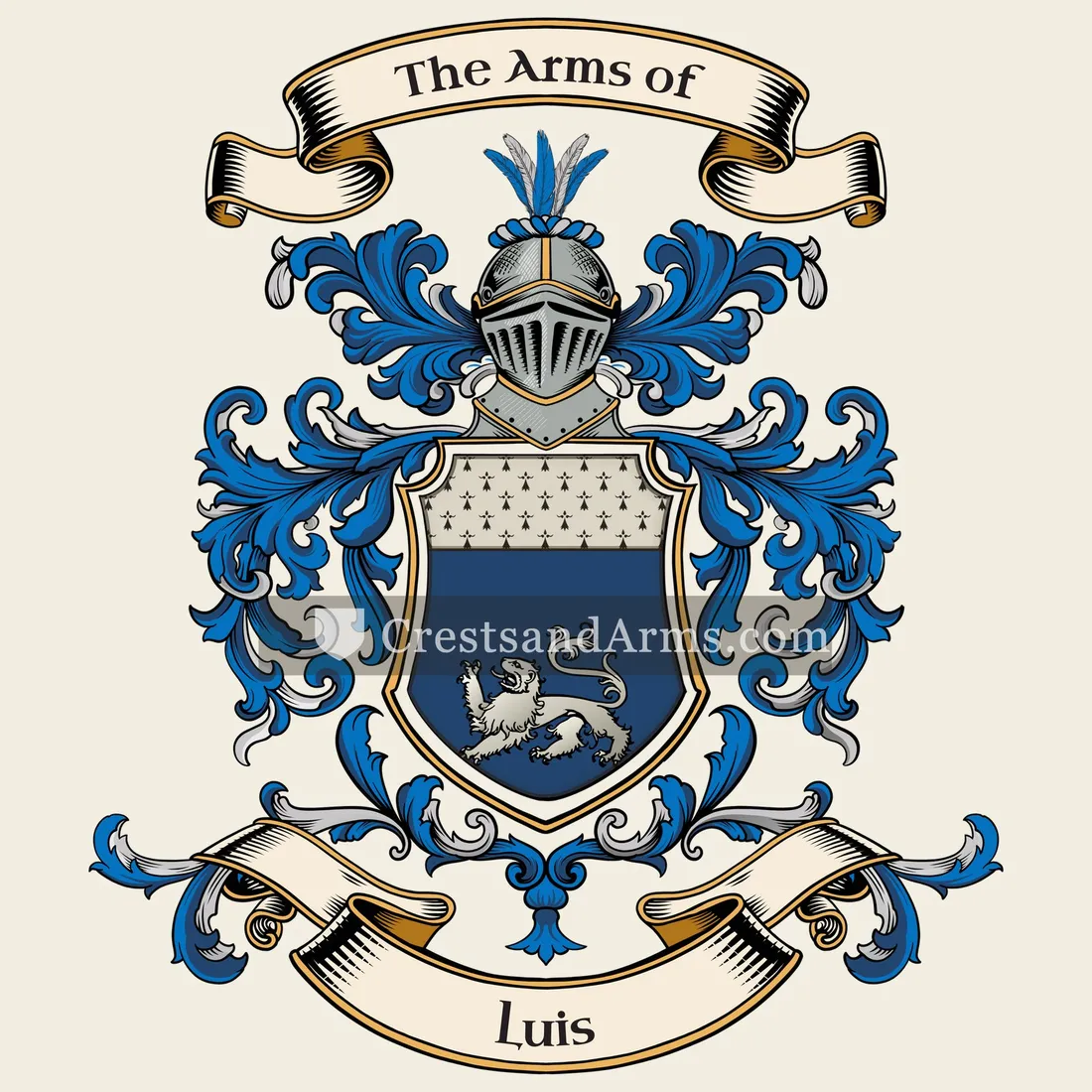
chiefAuthority, wisdom and dominion
lionCourage, strength and royalty
Colours
Blue (Azure)Means: Loyalty and truth
ErmineMeans: Dignity
Silver (Argent)Means: Peace and sincerity
Historical info
Source
Sir Bernard Burke, The General Armory of England, Scotland, Ireland and Wales, London: Harrison & Sons, 1884
Blazon (the actual original written record)
“Az. a lion ramp. ar. charged on the shoulder with an eagle displ. sa. on a chief wavy erm. an anchor erect of the third, the shank surrounded with a naval crown, the rim az. stern and sails ppr”
DevonChelston · Devon, c. 1620
Digital archive packCoat of arms PNG, gold border print PDF, vector SVG and the certificate of authenticity. Sent to your email in minutes.
Map of England showing where the Luis arms are recorded
The Luis arms were recorded in Devon, c. 1620.
Devon was a county of small manors and seafaring families. Its gentry were spread thickly across the countryside, and money made at sea often bought an estate, which in turn brought a coat of arms.
This is where the arms were entered in the register. Families often moved to other parts of the country, so the same name can turn up in more than one region.
The body that granted and recorded arms in England in this period.
James VI and I
Sovereign of the period
James VI and I
1603–1625
Reigning in France when the Luis arms are first recorded.
How Arms Worked in England
English heraldry allowed arms to be shared by all legitimate descendants of the original owner. These symbols were treated as personal property that moved through the generations to all children. While the eldest son kept the original design, other family members could use the same shield without needing to change it or register their own unique versions.
Granting authority
The College of Arms in London has regulated the use of coats of arms throughout England and Wales since 1484.
How they got arms
Families typically obtained their coats of arms through a formal grant from the Crown or by proving their ancient right to them.
Where arms were recorded
All official coats of arms are recorded in the registers kept at the College of Arms, which date back to the fifteenth century.
The family's standing
Recorded among the armigerous families of Devon.
Origin & History of the Luis Family in England
The family name Luis, while often associated with continental European origins, established a notable presence in the English county of Devon by the early 17th century. During this period, Devon was a hub of maritime activity and agricultural growth, providing a stable environment for families to settle and expand. Records from 1620 indicate that members of the family were already integrated into the local community, likely participating in the regional trade or farming practices that defined the West Country at the time. As the name took root in this landscape, it became part of the social fabric of the region, reflecting the migration patterns and local stability that characterized rural England before the major upheavals of the mid-1600s. By staying in one area, these early settlers helped preserve the name within the local parish registers and legal documents, allowing the family line to persist through generations of English history.
Meaning of the Luis family crest colors & symbols
Symbols on this shield
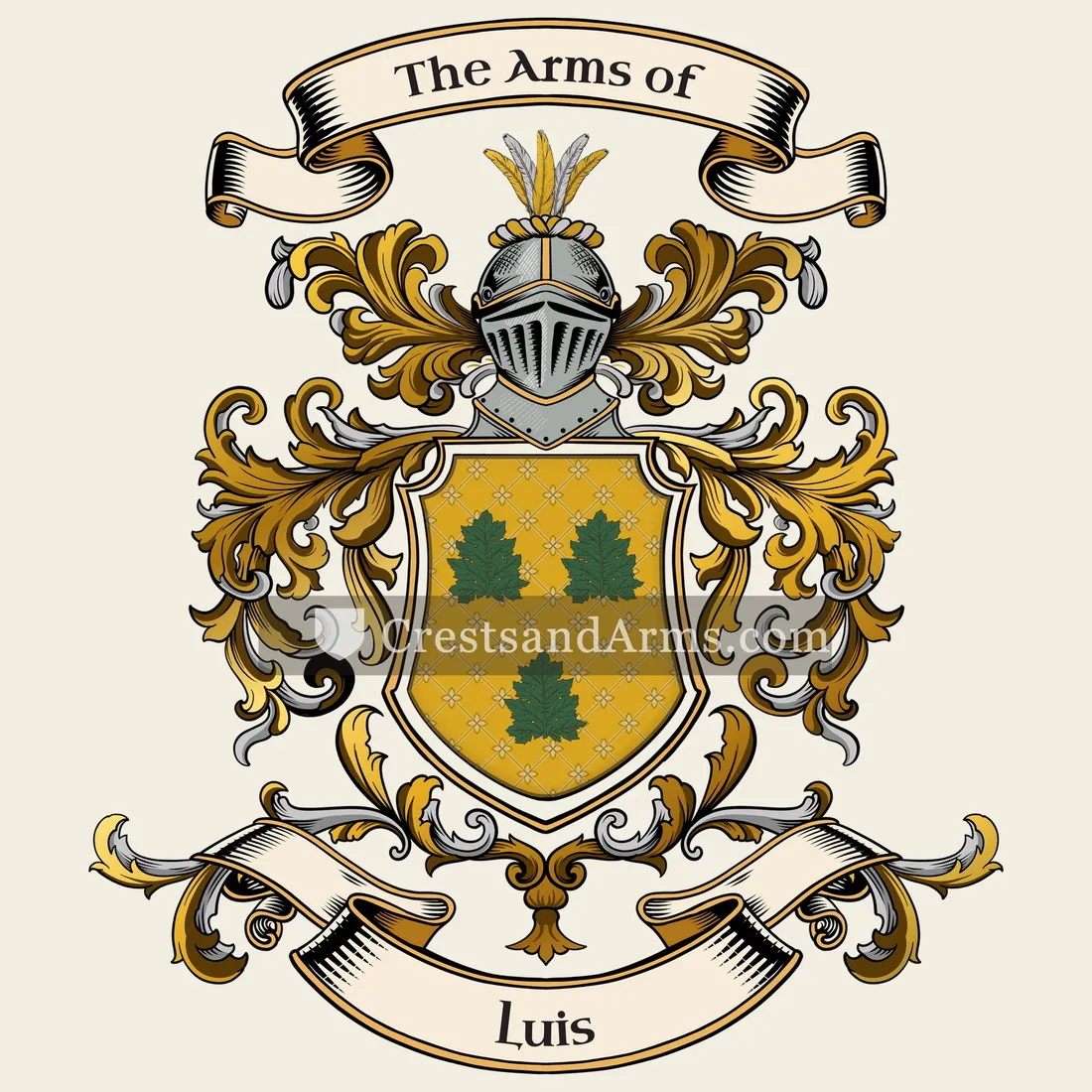
leafHappiness and abundance
Colours
Gold (Or)Means: Generosity
Green (Vert)Means: Hope
Historical info
Source
Sir Bernard Burke, The General Armory of England, Scotland, Ireland and Wales, London: Harrison & Sons, 1884
Blazon (the actual original written record)
“Or, three laurel leaves vert”
ScotlandMerchiston, c. 1748
Digital archive packCoat of arms PNG, gold border print PDF, vector SVG and the certificate of authenticity. Sent to your email in minutes.
Map of Scotland showing where the Luis arms are recorded
The Luis arms were recorded in Merchiston, c. 1748.
Arms such as these were typically recorded in Edinburgh.
Edinburgh was the seat of Scotland's government, its courts and its heralds. Families with business there settled nearby, and being close to where arms were recorded is exactly why so many of them appear.
This is where the arms were entered in the register. Families often moved to other parts of the country, so the same name can turn up in more than one region.
The body that granted and recorded arms in Scotland in this period.
George II of Great Britain
Sovereign of the period
George II of Great Britain
1727–1760
Reigning in France when the Luis arms are first recorded.
How Arms Worked in Scotland
Scottish heraldry is unique because it treats a coat of arms as a piece of personal property protected by law. Only one person can own a specific design at any given time. When a family grows, the head keeps the original shield while other relatives must apply for their own distinct version with slight changes to prove their specific identity.
Granting authority
The Court of the Lord Lyon acts as the official body that regulates and controls all heraldic matters throughout Scotland.
How they got arms
Individuals obtain a legal right to their arms through a formal petition process that confirms their identity and family connection.
Where arms were recorded
All valid coats of arms are officially entered into the Public Register of All Arms and Bearings starting from 1672.
The family's standing
Recorded among the armigerous families of Scotland.
Origin & History of the Luis Family in Scotland
The history of the Luis family in Scotland centers on their established presence in Edinburgh by the middle of the eighteenth century. While the name itself has roots in various European languages, its appearance in Scottish records during the 1740s suggests a family integrated into the urban life of the capital during a period of significant social change. By 1748, members of the family were documented as residents within the city, likely participating in the growing trade and professional networks that defined Edinburgh at the time. These early individuals were part of a broader movement of families who settled in the city to take advantage of the expanding economy following the Union of the Parliaments. Their presence in the parish registers and local legal documents provides a clear link to the daily life of the city, showing that the family was well-settled and active in the community long before the industrial shifts of the nineteenth century.
Luis Meaning & Related Branches
Root word
Hlodowig
Derived from Germanic elements meaning famous in battle or renowned warrior.
This name
LuisA French name signifying a famous warrior or one who is celebrated in combat.
also spelled
Louys
Louee
Lewis
Lewes
Lowis
Documented Sources
J. B. Rietstap, Armorial Général, Gouda: G. B. van Goor Zonen, 1884–87
Archives départementales de Meurthe-et-Moselle, Série B (Cours et juridictions)
Cabourdin, Guy, Histoire de la Lorraine, 1991
Lepage, Henri, Les communes de la Meurthe: journal historique des villes, bourgs, villages, hameaux et censes de ce département, 1853
Digital archive packCoat of arms PNG, gold border print PDF, vector SVG and the certificate of authenticity. Sent to your email in minutes.


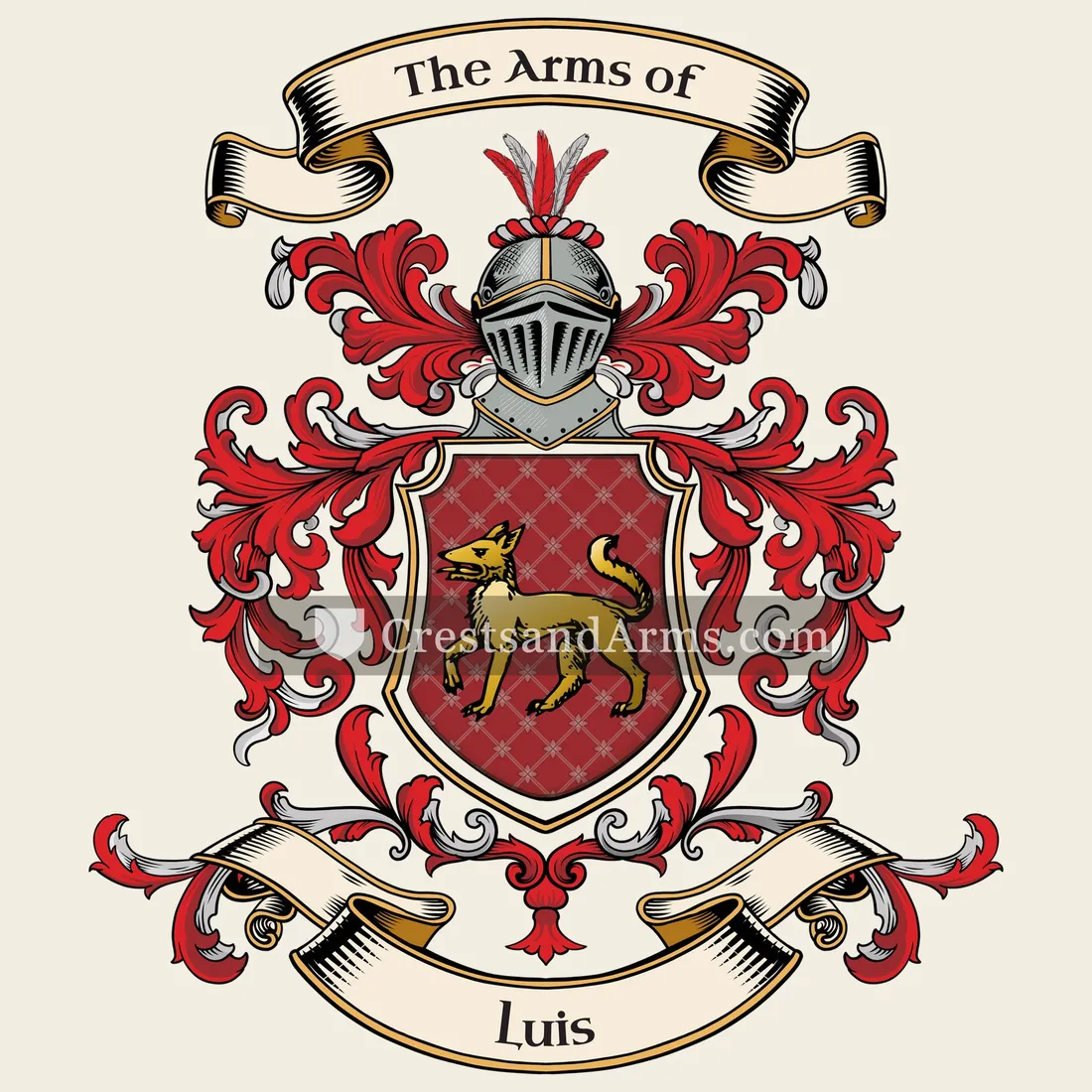
 wolfReward from long service and hard work
 wolfReward from long service and hard work


 chiefAuthority, wisdom and dominion
 lionCourage, strength and royalty


 leafHappiness and abundance