Map of France showing where the Luong arms are recorded
The Luong arms were recorded in Provence, c. 1663.
Provence was old country, with towns dating to the Romans and families who traced their land back nearly as far. Its gentry were many and long-settled, and long settlement is what fills a register.
This is where the arms were entered in the register. Families often moved to other parts of the country, so the same name can turn up in more than one region.
The body that granted and recorded arms in France in this period.
Louis XIV of France
Sovereign of the period
Louis XIV of France
1643–1715
Reigning in France when the Luong arms are first recorded.
How Arms Worked in France
In France, a coat of arms was a mark of honor that passed down through the male line to all legitimate descendants. Families often used the same shield without changes to show their shared heritage. If a branch wanted to stand out, they could add a small mark to their shield to show their specific place in the family tree.
Granting authority
The Juge d'armes de France acted as the official authority that regulated and verified coats of arms across the country.
How they got arms
Families typically inherited their arms from ancestors, though they could also receive them through royal grants or by proving their noble status.
Where arms were recorded
Coats of arms were officially recorded in the Armorial Général de France, which began its main collection in the year 1696.
The family's standing
Recorded among the armigerous families of Provence.
Origin & History of the Luong Family in France
The history of the Luong family in France begins in the sun-drenched region of Provence, where records confirm their presence as early as 1663. During the seventeenth century, Provence served as a vital crossroads for trade and cultural exchange, drawing families into the local administrative and social structures of the time. While the name Luong is often associated with later migrations, its appearance in the seventeenth-century registers of Provence suggests that early members of the family integrated into the local community through agriculture, craftsmanship, or regional commerce. These ancestors navigated the complexities of life under the French monarchy, leaving behind traces in parish records that document their births, marriages, and daily contributions to the provincial landscape. By establishing roots in this Mediterranean environment, the early Luong family became part of the long and diverse tapestry of French social history, maintaining their identity while adapting to the traditions of southern France.
Meaning of the Luong family crest colors & symbols
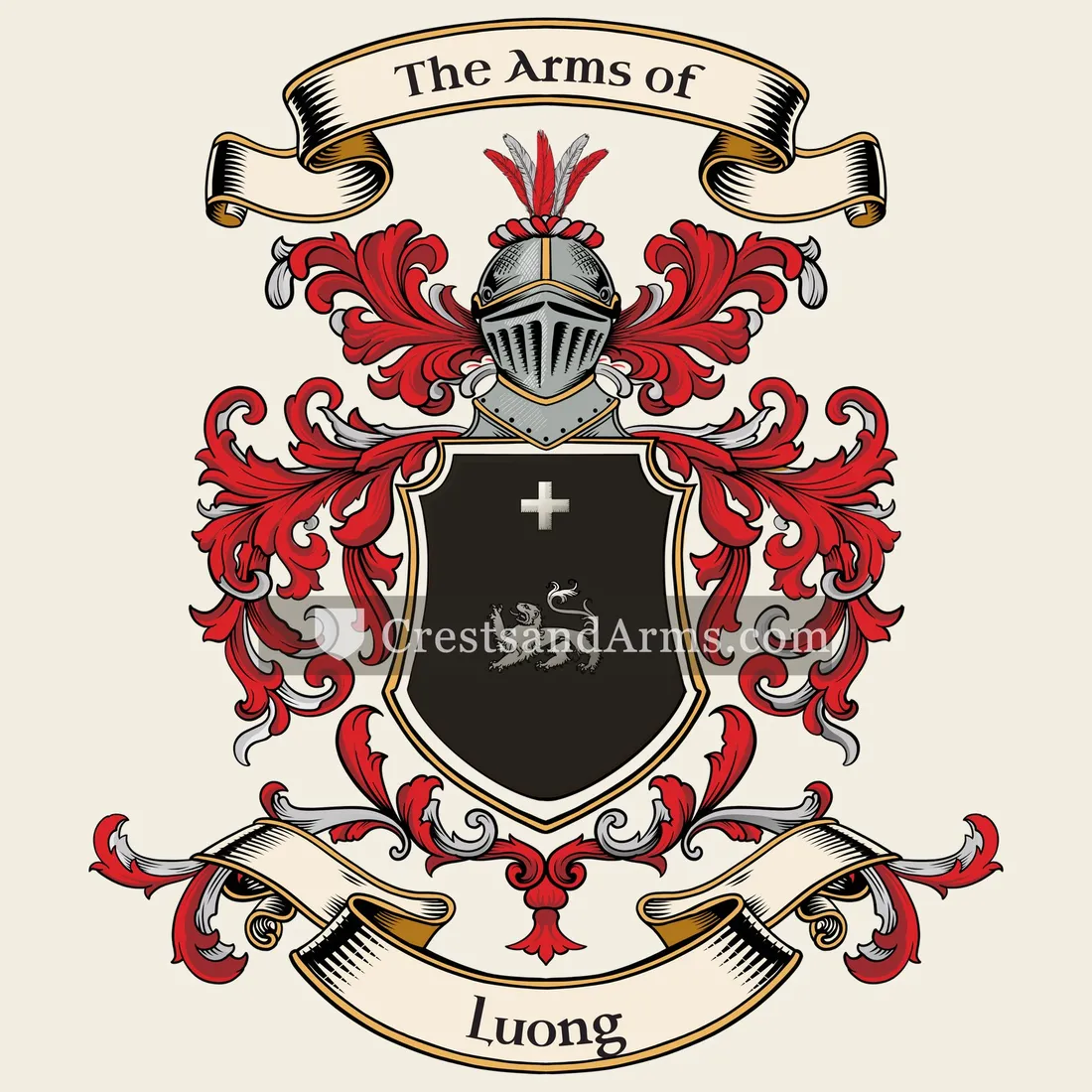
Symbols on this shield
cross symbolChristian faith and service
lionCourage, strength and royalty
Colours
Black (Sable)Means: Constancy
Silver (Argent)Means: Peace and sincerity
Historical info
Source
Sir Bernard Burke, The General Armory of England, Scotland, Ireland and Wales, London: Harrison & Sons, 1884
Blazon (the actual original written record)
“Sa. semée of crosses crosslet a lion ramp. ar. all betw. two flaunches erm”
WiltsTrowbridge · Wilts, c. 1561
Digital archive packCoat of arms PNG, gold border print PDF, vector SVG and the certificate of authenticity. Sent to your email in minutes.
Map of England showing where the Luong arms are recorded
The Luong arms were recorded in Wilts, c. 1561.
Wiltshire was sheep country, and wool made money steadily for hundreds of years. Families who made it bought manors on the downs, and holding a manor was the usual reason to take arms.
This is where the arms were entered in the register. Families often moved to other parts of the country, so the same name can turn up in more than one region.
The body that granted and recorded arms in England in this period.
Elizabeth I of England
Sovereign of the period
Elizabeth I of England
1558–1603
Reigning in France when the Luong arms are first recorded.
How Arms Worked in England
English heraldry allowed arms to be shared by all legitimate descendants of the original owner. These symbols were treated as personal property that moved through the generations to all children. While the eldest son kept the original design, other family members could use the same shield without needing to change it or register their own unique versions.
Granting authority
The College of Arms in London has regulated the use of coats of arms throughout England and Wales since 1484.
How they got arms
Families typically obtained their coats of arms through a formal grant from the Crown or by proving their ancient right to them.
Where arms were recorded
All official coats of arms are recorded in the registers kept at the College of Arms, which date back to the fifteenth century.
The family's standing
Recorded among the armigerous families of Wilts.
Origin & History of the Luong Family in England
The history of the Luong family in England begins with their documented presence in the county of Wiltshire as early as 1561. During this period, the name appeared in local parish records, suggesting that the family had established themselves as part of the rural community during the reign of Queen Elizabeth I. In the sixteenth century, Wiltshire was a hub of the wool and textile trade, and families living in the region often participated in the agricultural or merchant activities that defined the local economy. While the name Luong is often associated with diverse origins, its early appearance in English records indicates that these specific ancestors were integrated into the social and legal structures of the English countryside. By maintaining their presence in Wiltshire, the family became part of the long history of local record-keeping that tracked the lives, marriages, and property of ordinary citizens during the Renaissance.
Meaning of the Luong family crest colors & symbols
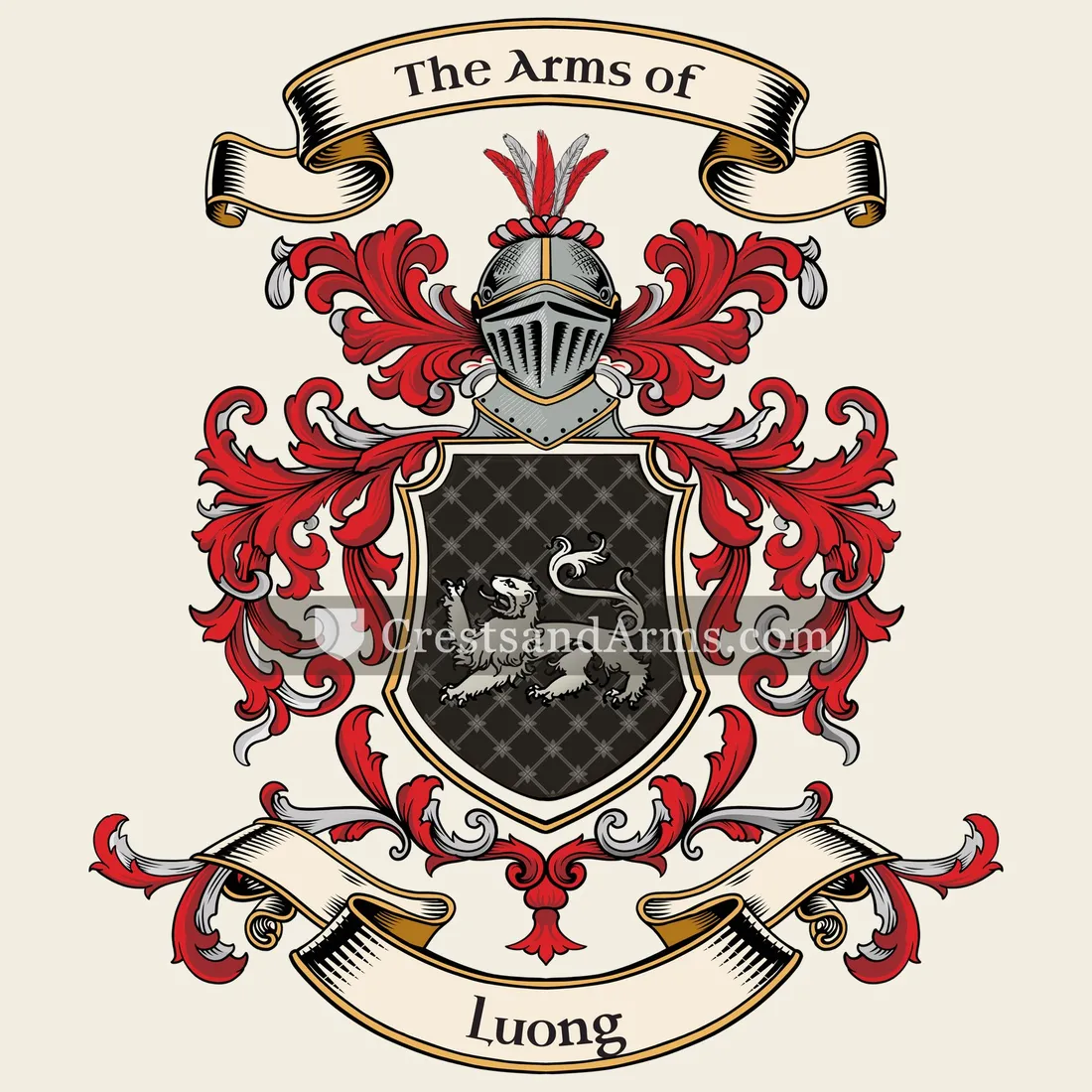
Symbols on this shield
lionCourage, strength and royalty
Colours
Black (Sable)Means: Constancy
Silver (Argent)Means: Peace and sincerity
Historical info
Source
Sir Bernard Burke, The General Armory of England, Scotland, Ireland and Wales, London: Harrison & Sons, 1884
Blazon (the actual original written record)
“Sa. a lion ramp. ar. armed and langued gu. betw. two flanges erm”
Irelandc. 1649
Digital archive packCoat of arms PNG, gold border print PDF, vector SVG and the certificate of authenticity. Sent to your email in minutes.
Map of Ireland showing where the Luong arms are recorded
The Luong arms were recorded in Ireland, c. 1649.
Arms such as these were typically recorded in Dublin.
Dublin was the seat of government in Ireland and the place where grants were sought and recorded. Families with business at the castle or the courts settled nearby, and settling there put their arms on record.
This is where the arms were entered in the register. Families often moved to other parts of the country, so the same name can turn up in more than one region.
The body that granted and recorded arms in Ireland in this period.
Charles I of England
Sovereign of the period
Charles I of England
1625–1649
Reigning in France when the Luong arms are first recorded.
How Arms Worked in Ireland
The Ulster King of Arms granted coats of arms to individuals who proved their social standing and good character. These symbols were typically inherited by all legitimate descendants of the original holder. If a family branch wanted a unique look, they could apply for a specific change to their design through the office to ensure their identity remained distinct.
Granting authority
The Ulster King of Arms acted as the official body that regulated and issued all coats of arms throughout Ireland.
How they got arms
Families obtained their arms through formal grants issued by the office after proving their eligibility and paying the required fees.
Where arms were recorded
All official grants were recorded in the registers held by the Ulster King of Arms starting from the year 1552.
The family's standing
Recorded among the armigerous families of Ireland.
Origin & History of the Luong Family in Ireland
The history of the Luong name in Ireland is a fascinating study of migration and integration during a period of great upheaval. While the name is primarily associated with East Asian origins, records indicate that individuals bearing the name Luong were present in Dublin as early as 1649. During this era, Dublin was a bustling port city recovering from the intense conflicts of the Cromwellian conquest. It is likely that these early arrivals were either merchants or travelers who arrived through established maritime trade routes connecting distant regions to the Irish capital. Over time, these early settlers navigated the complexities of seventeenth-century Irish society, blending their unique cultural heritage into the diverse fabric of Dublin’s urban population. Their presence highlights how Ireland served as a crossroads for international movement long before the modern era of globalization.
Luong Meaning & Related Branches
Root word
Lumen
Latin term meaning light or a source of illumination.
This name
LuongDerived from a Vietnamese surname meaning bright, brilliant, or virtuous.
also spelled
Longe
Longue
Longg
Lunge
Documented Sources
J. B. Rietstap, Armorial Général, Gouda: G. B. van Goor Zonen, 1884–87
Archives Départementales des Bouches-du-Rhône, Registres paroissiaux et d'état civil (Collection communale), 1663
Boyer, Jean, La vie quotidienne en Provence au XVIIe siècle, 1972
Cubells, Monique, La Provence des Lumières: Les parlementaires d'Aix au XVIIIe siècle, 1984
Digital archive packCoat of arms PNG, gold border print PDF, vector SVG and the certificate of authenticity. Sent to your email in minutes.


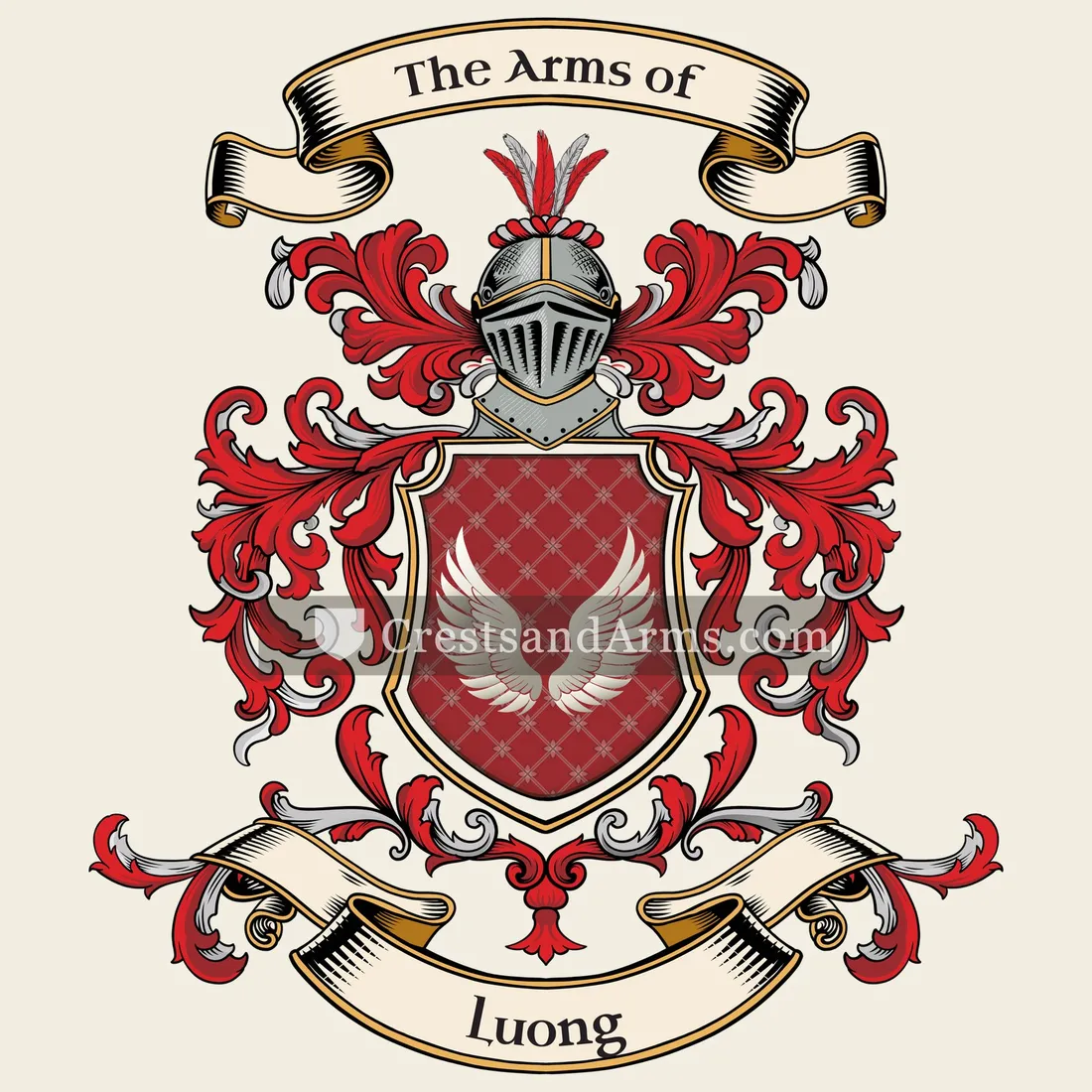
 vol / wingsSwiftness and protection
 vol / wingsSwiftness and protection


 cross symbolChristian faith and service
 lionCourage, strength and royalty