A record of documented arms, meaning and origin, researched for the Luthor family lines. Documented in 3 countries.
Reg. 8361 · Britain, J–L
Meaning of the Luthor family crest colors & symbols
Symbols on this shield
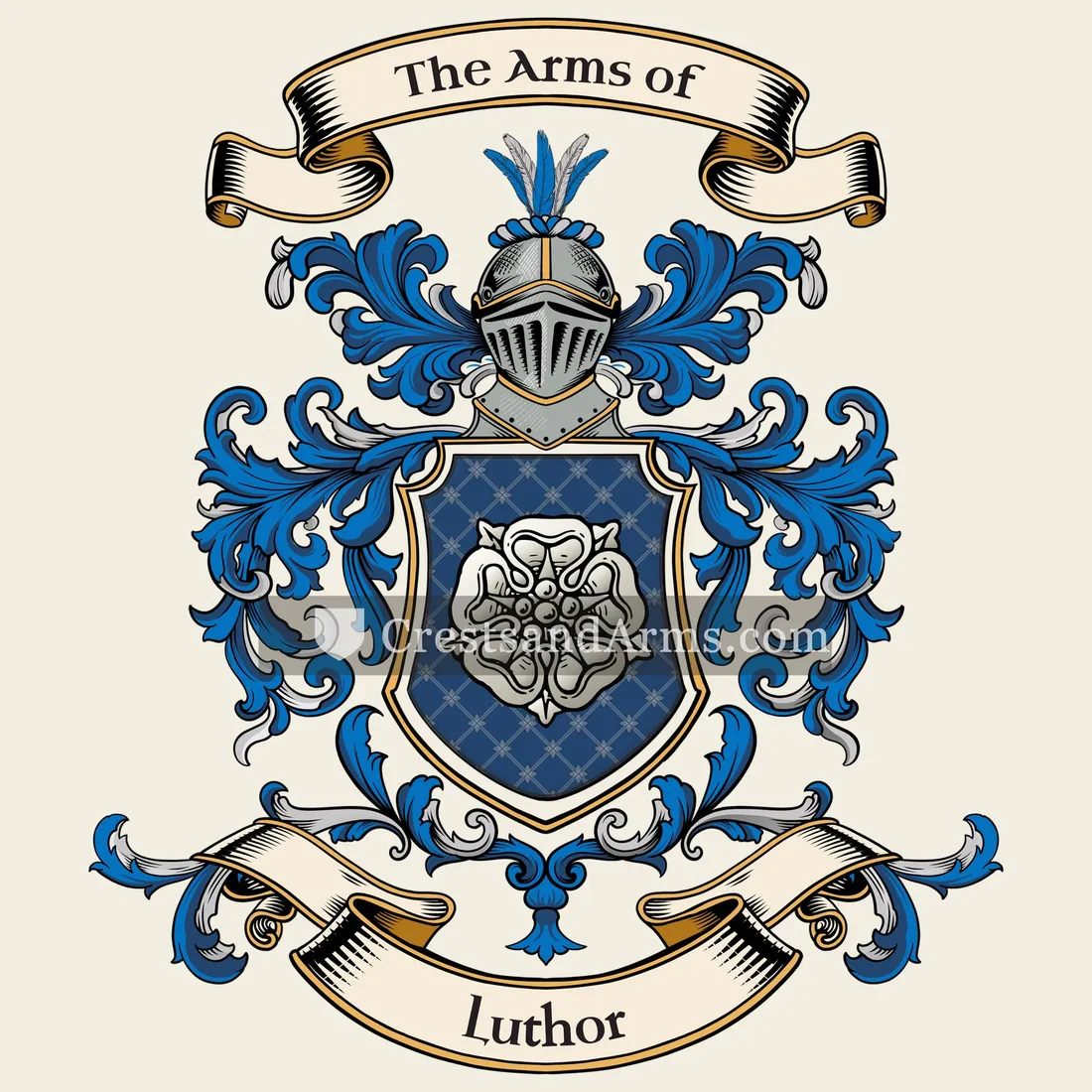
roseThe seventh son, and beauty with grace
Colours
Blue (Azure)Means: Loyalty and truth
Silver (Argent)Means: Peace and sincerity
Historical info
Source
J. B. Rietstap, Armorial Général, Gouda: G. B. van Goor Zonen, 1884–87
Blazon (the actual original written record)
“D'azur à une rose d'arg., ch. d'un coeur de gu., surch. d'une croix du second émail; le tout renfermé dans un cyclamor d'or [Armes attribuées au docteur Martin Luther.]”
Britainc. 1700
Digital archive packCoat of arms PNG, gold border print PDF, vector SVG and the certificate of authenticity. Sent to your email in minutes.
Map of Britain showing where the Luthor arms are recorded
The Luthor arms were recorded in Britain, c. 1700.
Arms such as these were typically recorded in Kent.
Kent sits between London and the short crossing to Europe, and the trade passing through made it wealthy. Merchant families bought land with that money, and it was landowners who took coats of arms.
This is where the arms were entered in the register. Families often moved to other parts of the country, so the same name can turn up in more than one region.
The body that granted and recorded arms in Britain in this period.
William III of England
Sovereign of the period
William III of England
1694–1702
Reigning in Britain when the Luthor arms are first recorded.
How Arms Worked in Britain
English heraldry allowed arms to be shared by all legitimate descendants of the original owner. These symbols were treated as personal property that moved through the generations to all children. While the eldest son kept the original design, other family members could use the same shield without needing to change it or register their own unique versions.
Granting authority
The College of Arms in London has regulated the use of coats of arms throughout England and Wales since 1484.
How they got arms
Families typically obtained their coats of arms through a formal grant from the Crown or by proving their ancient right to them.
Where arms were recorded
All official coats of arms are recorded in the registers kept at the College of Arms, which date back to the fifteenth century.
The family's standing
Recorded among the armigerous families of Britain.
Origin & History of the Luthor Family in Britain
The Luthor family name has roots that trace back to the rolling landscapes of Kent during the early eighteenth century. While the name is often associated with German origins, its presence in England suggests a history of migration and integration into local society. By the year 1700, members of the family were already established within Kentish communities, likely participating in the agricultural and trade-based economy that defined the region at the time. These early settlers lived through a period of significant social change as Britain transitioned into a modern industrial power. Because record-keeping in rural parishes was becoming more standardized during this era, the Luthor name began to appear more frequently in local tax rolls and property deeds. This documentation confirms that the family was well-integrated into the fabric of English life long before the name gained wider recognition in popular culture.
Meaning of the Luthor family crest colors & symbols
Symbols on this shield
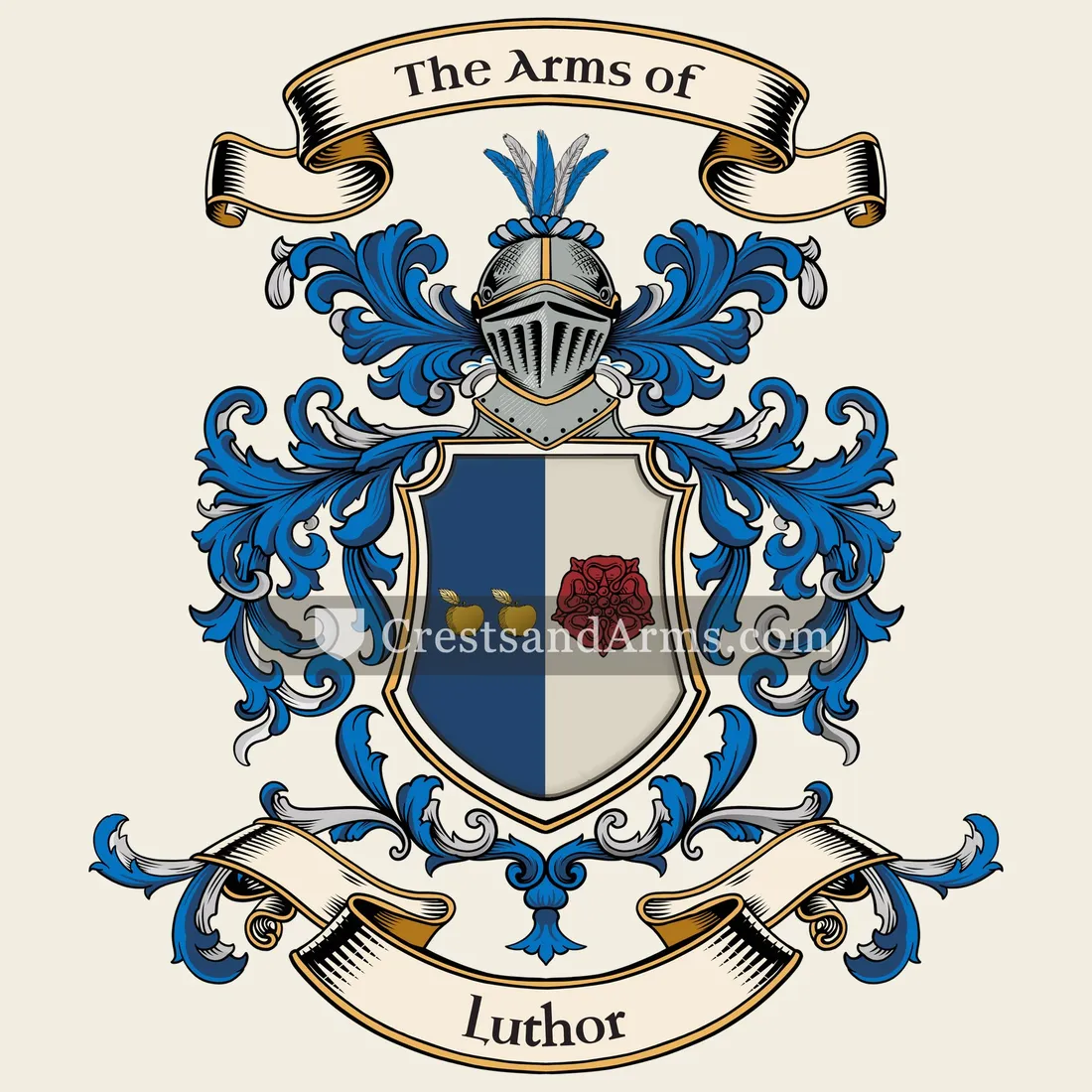
applePeace, plenty and long-standing settlement
roseThe seventh son, and beauty with grace
Colours
Blue (Azure)Means: Loyalty and truth
Silver (Argent)Means: Peace and sincerity
Gold (Or)Means: Generosity
Red (Gules)Means: Military strength
Historical info
Source
J. B. Rietstap, Armorial Général, Gouda: G. B. van Goor Zonen, 1884–87
Blazon (the actual original written record)
“d'azur sur arg.; l'azur ch. de deux pommes d'or, les queues en bas, et l'arg. d'une rose de gu., bout. d'or. C.: un homme barbu iss., coiffé d'une couronne de roses de gu., hab. d'un parti d'azur et d'arg., au rabat de l'un à l'autre, tenant de sa main dextre une rose de gu., bout. d'or, tigée et feuillée de sin., et de sa sen. une pomme d'or, tigée et feuillée de sin. L. d'arg. et d'azur [Descendants d'un frère du grand-père du réformateur.]”
SaxonySaxony, c. 1570
Digital archive packCoat of arms PNG, gold border print PDF, vector SVG and the certificate of authenticity. Sent to your email in minutes.
Map of Germany showing where the Luthor arms are recorded
The Luthor arms were recorded in Saxony, c. 1570.
Saxony had mines, trade and old landed families all at once. Silver made some fortunes and land held others, and both sorts of family kept arms, which is why Saxon names appear so often in the registers.
This is where the arms were entered in the register. Families often moved to other parts of the country, so the same name can turn up in more than one region.
The body that granted and recorded arms in Germany in this period.
Maximilian II, Holy Roman Emperor
Sovereign of the period
Maximilian II, Holy Roman Emperor
1564–1576
Reigning in Britain when the Luthor arms are first recorded.
How Arms Worked in Germany
In the Holy Roman Empire, coats of arms were often granted to individuals by the Emperor or his representatives. These arms were then passed down through the generations to all legitimate descendants of the original holder. Younger branches of a family usually kept the same shield design without needing to change it, as the arms belonged to the entire lineage.
Granting authority
The Holy Roman Emperor held the sole power to grant new coats of arms throughout his vast imperial territories.
How they got arms
Families typically obtained their coats of arms through a formal imperial grant or by proving their noble status to the authorities.
Where arms were recorded
These grants were officially recorded in the Imperial Chancery registers, which began keeping formal records of such honors during the Middle Ages.
The family's standing
Recorded among the armigerous families of Saxony.
Origin & History of the Luthor Family in Germany
The name Luthor is a variant of the older German name Luther, which originates from the Germanic personal name Liuthar. This name is composed of two distinct roots that translate to people and army, suggesting that the early bearers of the name were seen as leaders or protectors of their community. By the time the family was firmly established in the region of Saxony in 1570, the name had become deeply rooted in the cultural landscape of central Germany. During this period, the family likely lived as part of the growing middle class or the landed peasantry, navigating the significant religious and social shifts brought on by the Reformation. Because Saxony was a central hub for these historical movements, families like the Luthors were often involved in the local administration or the agricultural development of the region. Their presence in 16th-century records highlights a transition from a simple family name to a recognized lineage within the German territories.
Meaning of the Luthor family crest colors & symbols
Symbols on this shield
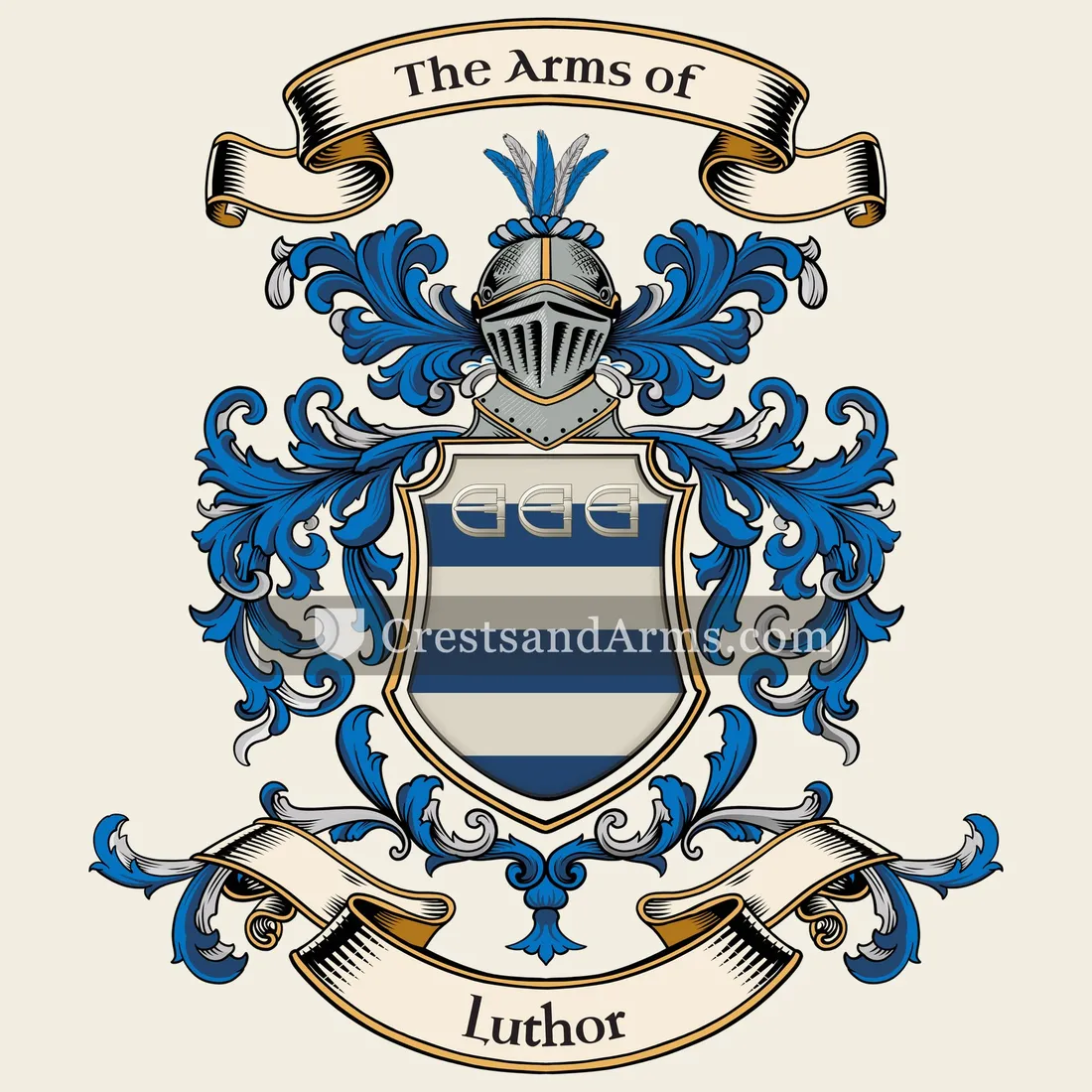
buckleFidelity, and a bond firmly held
Colours
Blue (Azure)Means: Loyalty and truth
Silver (Argent)Means: Peace and sincerity
Historical info
Source
Sir Bernard Burke, The General Armory of England, Scotland, Ireland and Wales, London: Harrison & Sons, 1884
Blazon (the actual original written record)
“Barry of six az. and ar. in chief three round buckles of the last”
Irelandc. 1678
Digital archive packCoat of arms PNG, gold border print PDF, vector SVG and the certificate of authenticity. Sent to your email in minutes.
Map of Ireland showing where the Luthor arms are recorded
The Luthor arms were recorded in Ireland, c. 1678.
Arms such as these were typically recorded in Dublin.
Dublin was the seat of government in Ireland and the place where grants were sought and recorded. Families with business at the castle or the courts settled nearby, and settling there put their arms on record.
This is where the arms were entered in the register. Families often moved to other parts of the country, so the same name can turn up in more than one region.
The body that granted and recorded arms in Ireland in this period.
Charles II of England
Sovereign of the period
Charles II of England
1660–1685
Reigning in Britain when the Luthor arms are first recorded.
How Arms Worked in Ireland
The Ulster King of Arms granted coats of arms to individuals who proved their social standing and good character. These symbols were typically inherited by all legitimate descendants of the original holder. If a family branch wanted a unique look, they could apply for a specific change to their design through the office to ensure their identity remained distinct.
Granting authority
The Ulster King of Arms acted as the official body that regulated and issued all coats of arms throughout Ireland.
How they got arms
Families obtained their arms through formal grants issued by the office after proving their eligibility and paying the required fees.
Where arms were recorded
All official grants were recorded in the registers held by the Ulster King of Arms starting from the year 1552.
The family's standing
Recorded among the armigerous families of Ireland.
Origin & History of the Luthor Family in Ireland
The history of the Luthor family in Ireland is rooted in the bustling urban environment of seventeenth-century Dublin. By 1678, records indicate that members of the family were already established within the city, a time when Dublin was undergoing significant expansion and social change. During this period, the city served as a primary hub for trade and administration, attracting families who sought to participate in the growing economy of the capital. While the name itself carries linguistic connections to Germanic roots, its presence in Ireland suggests a history of migration and integration into the local merchant or professional classes. These early settlers likely navigated the complex political landscape of the Restoration era, contributing to the development of the city as they settled into their new surroundings. Their presence in the official registers of the late 1600s marks the beginning of a long-standing connection to the Irish capital that persisted through subsequent generations.
Luthor Meaning & Related Branches
Root word
Hlud-hari
Derived from Germanic elements meaning loud or famous and army or warrior.
This name
LuthorA surname of Germanic origin signifying a famous warrior or renowned soldier.
also spelled
Luter
Luthere
Luthar
Documented Sources
J. B. Rietstap, Armorial Général, Gouda: G. B. van Goor Zonen, 1884–87
Hasted, Edward, The History and Topographical Survey of the County of Kent, 1797
Kent Archives, Quarter Sessions Records: Petitions and Orders, Q/SO
The National Archives, Parish Registers of Kent, RG 4
Digital archive packCoat of arms PNG, gold border print PDF, vector SVG and the certificate of authenticity. Sent to your email in minutes.


 roseThe seventh son, and beauty with grace
 roseThe seventh son, and beauty with grace


 applePeace, plenty and long-standing settlement


 buckleFidelity, and a bond firmly held