A record of documented arms, meaning and origin, researched for the Lux family lines. Documented in 2 countries.
Reg. 7489 · Danish, J–L
Coat of Arms & Family Crest Details
Symbols on this shield
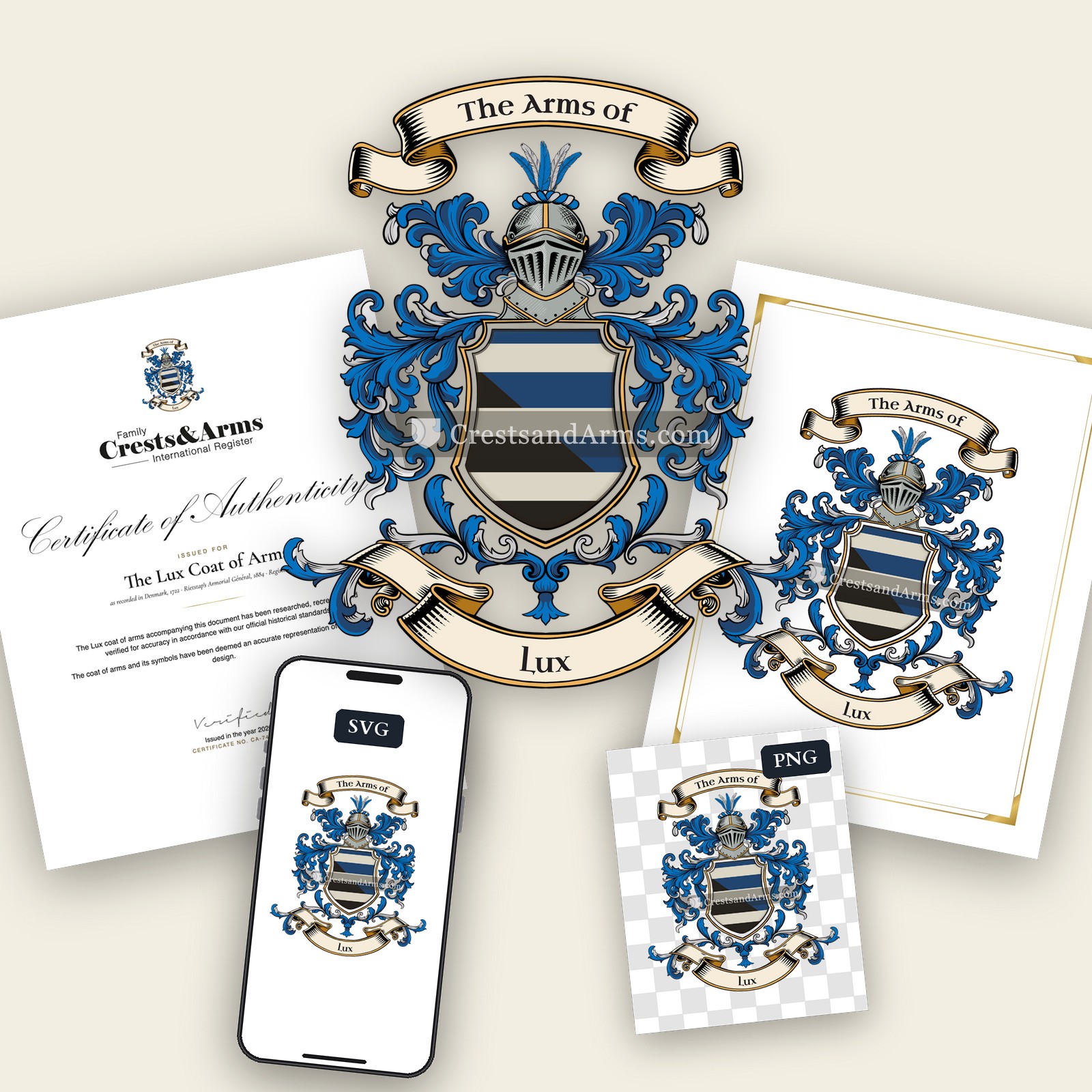
fessThe military belt, and readiness to serve
Colours
Black (Sable)Means: Constancy
Blue (Azure)Means: Loyalty and truth
Silver (Argent)Means: Peace and sincerity
Historical info
Source
J. B. Rietstap, Armorial Général, Gouda: G. B. van Goor Zonen, 1884–87
Blazon (the actual original written record)
“Tranché: au 1 de sa. à trois fasces d'arg.; au 2 d'azur plein. C.: deux prob., celle à dextre d'azur plein, celle à sen. de sa. à trois fasces d'arg.”
Denmarkc. 1722
Digital archive packCoat of arms PNG, gold border print PDF, vector SVG and the certificate of authenticity. Sent to your email in minutes.
Map of Denmark showing where the Lux arms are recorded
The Lux arms were recorded in Denmark, c. 1722.
Arms such as these were typically recorded in Sjaælland.
Zealand held the Danish court, the crown's offices and Copenhagen itself. Families who served the king kept estates within reach of it, and royal service was the ordinary route to a coat of arms.
This is where the arms were entered in the register. Families often moved to other parts of the country, so the same name can turn up in more than one region.
The body that granted and recorded arms in Denmark in this period.
Frederik IV of Denmark
Sovereign of the period
Frederik IV of Denmark
1699–1730
Reigning in Denmark when the Lux arms are first recorded.
How Arms Worked in Denmark
Danish heraldry during this period was closely tied to noble status and royal favor rather than being open to all citizens. Arms were typically granted by the monarch to individuals, and these symbols were then shared by all members of the noble house. If a family line died out, the right to use those specific arms ended with them.
Granting authority
The Danish royal chancery held the power to issue and regulate official coats of arms for the kingdom.
How they got arms
Families usually received their arms through a formal royal grant that confirmed their noble status and rights.
Where arms were recorded
These grants were officially recorded in the Danish Royal Chancery records starting in the sixteenth century.
The family's standing
Recorded among the armigerous families of Denmark.
Origin & History of the Lux Family in Denmark
The family name Lux first appears in the historical records of Sjælland in 1722, marking the beginning of a documented presence in Denmark. During this period, the name was often associated with individuals who lived in rural parishes and worked as skilled laborers or small-scale farmers. Because surnames in Denmark were not strictly fixed at the time, the name likely served as a way to distinguish specific households within their local communities. As the family moved through the eighteenth century, they became part of the shifting social landscape of the Danish countryside, adapting to the changing agricultural laws and economic conditions of the era. By tracing these early ancestors, we gain a clearer picture of how families established their roots and maintained their identity across generations in the Danish heartland.
Coat of Arms & Family Crest Details
Symbols on this shield
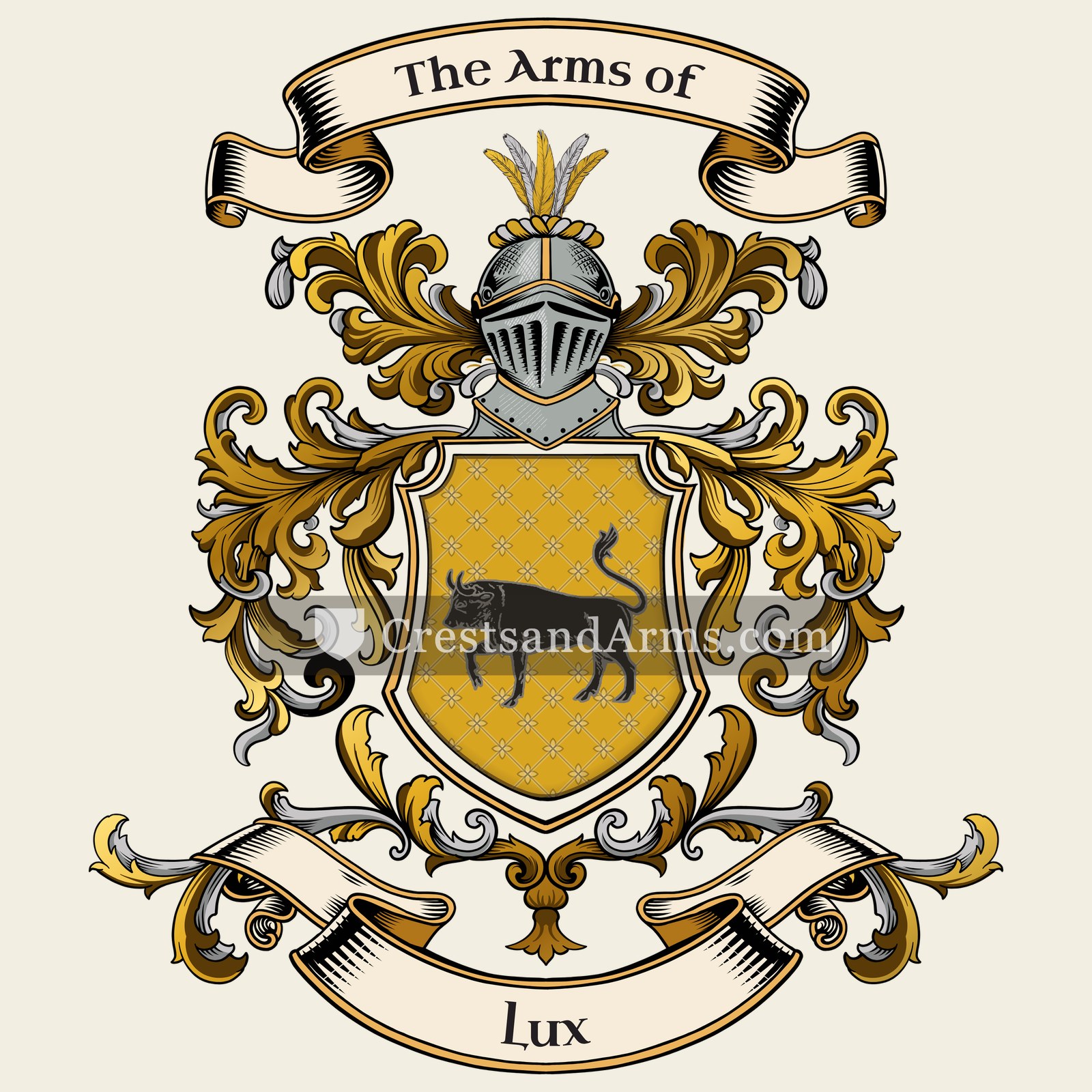
bullValour and generosity
Colours
Gold (Or)Means: Generosity
Black (Sable)Means: Constancy
Historical info
Source
J. B. Rietstap, Armorial Général, Gouda: G. B. van Goor Zonen, 1884–87
Blazon (the actual original written record)
“D'or à un rencontre de boeuf de sa. Cq. cour. C.: une queue de paon au nat.”
GermanyNuremberg, c. 1765
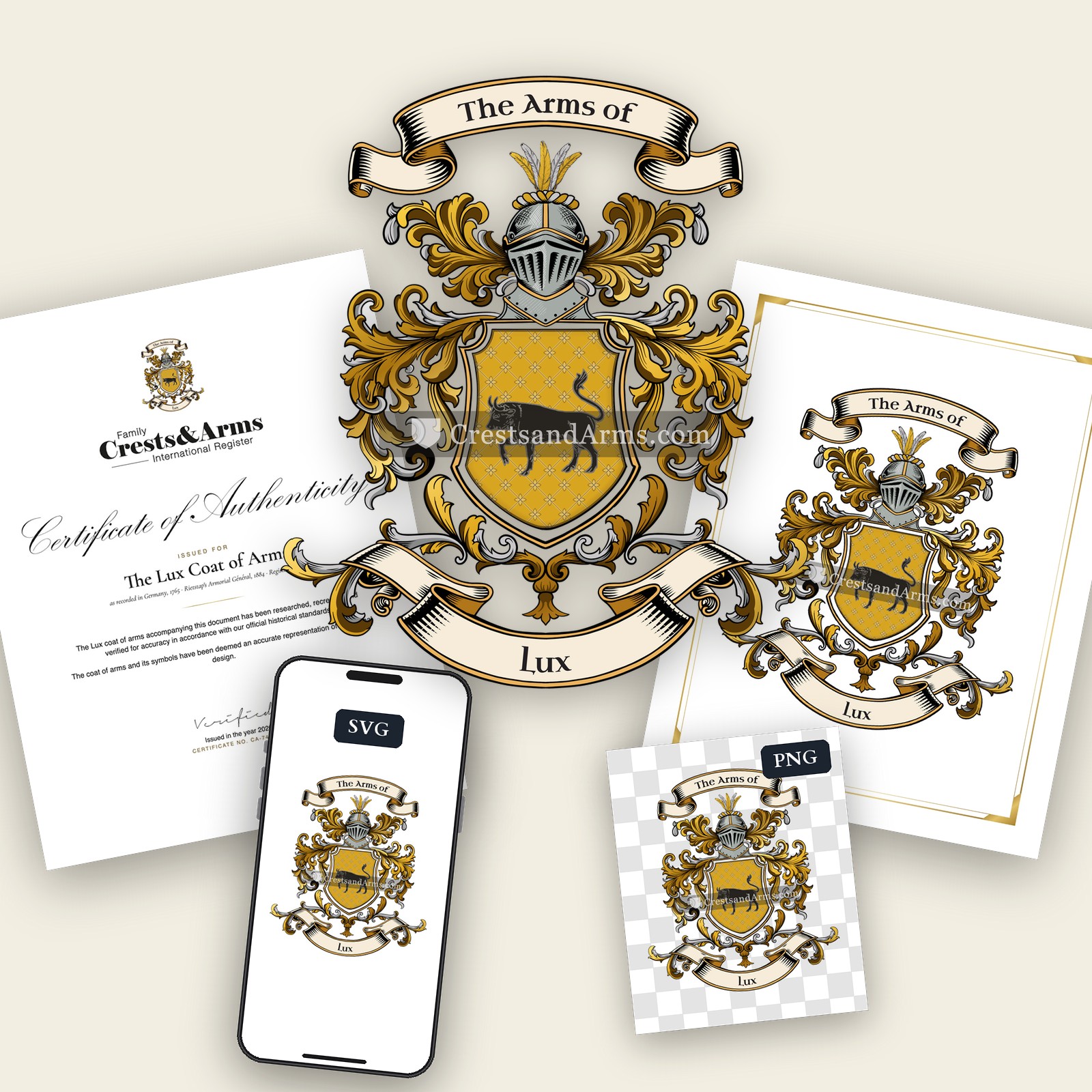
Digital archive packCoat of arms PNG, gold border print PDF, vector SVG and the certificate of authenticity. Sent to your email in minutes.
Map of Germany showing where the Lux arms are recorded
The Lux arms were recorded in Nuremberg, c. 1765.
This is where the arms were entered in the register. Families often moved to other parts of the country, so the same name can turn up in more than one region.
The body that granted and recorded arms in Germany in this period.
Francis I, Holy Roman Emperor
Sovereign of the period
Francis I, Holy Roman Emperor
1745–1765
Reigning in Denmark when the Lux arms are first recorded.
How Arms Worked in Germany
In the Holy Roman Empire, coats of arms were often granted to individuals by the Emperor or his representatives. These arms were then passed down through the generations to all legitimate descendants of the original holder. Younger branches of a family usually kept the same shield design without needing to change it, as the arms belonged to the entire lineage.
Granting authority
The Holy Roman Emperor held the sole power to grant new coats of arms throughout his vast imperial territories.
How they got arms
Families typically obtained their coats of arms through a formal imperial grant or by proving their noble status to the authorities.
Where arms were recorded
These grants were officially recorded in the Imperial Chancery registers, which began keeping formal records of such honors during the Middle Ages.
The family's standing
Recorded among the armigerous families of Germany.
Origin & History of the Lux Family in Germany
The surname Lux is deeply rooted in the German-speaking regions of Central Europe, where it originated as a shortened form of the name Lucas. During the medieval period, names were often simplified to make them easier to use in daily life, and Lux became a popular choice in areas like Bavaria and Franconia. By the mid-eighteenth century, the family had established a notable presence in the imperial city of Nuremberg. In 1765, Nuremberg was a thriving center for trade, clockmaking, and metalwork, providing a stable environment for families to build their livelihoods. Members of the Lux family during this era were likely integrated into the city’s industrious middle class, contributing to the local economy through skilled craftsmanship or commerce. This period of residency in Nuremberg reflects the broader movement of families settling into urban centers to take advantage of the city's reputation for innovation and economic opportunity.
Lux Meaning & Related Branches
Root word
Lux
Latin word meaning light or illumination.
This name
LuxA habitational or descriptive surname derived from the Latin term for light.
also spelled
Luks
Documented Sources
J. B. Rietstap, Armorial Général, Gouda: G. B. van Goor Zonen, 1884–87
Rigsarkivet (Danish National Archives), Kirkebøger (Parish Registers), Sjælland diocese
Rigsarkivet (Danish National Archives), Folketællinger (Census Records), 1787
Hansen, J. V., Danske Efternavne: En historisk oversigt, 1995
Jensen, K. M., Landboliv og slægtshistorie på Sjælland i det 18. århundrede, 2002
Digital archive packCoat of arms PNG, gold border print PDF, vector SVG and the certificate of authenticity. Sent to your email in minutes.


 fessThe military belt, and readiness to serve
 fessThe military belt, and readiness to serve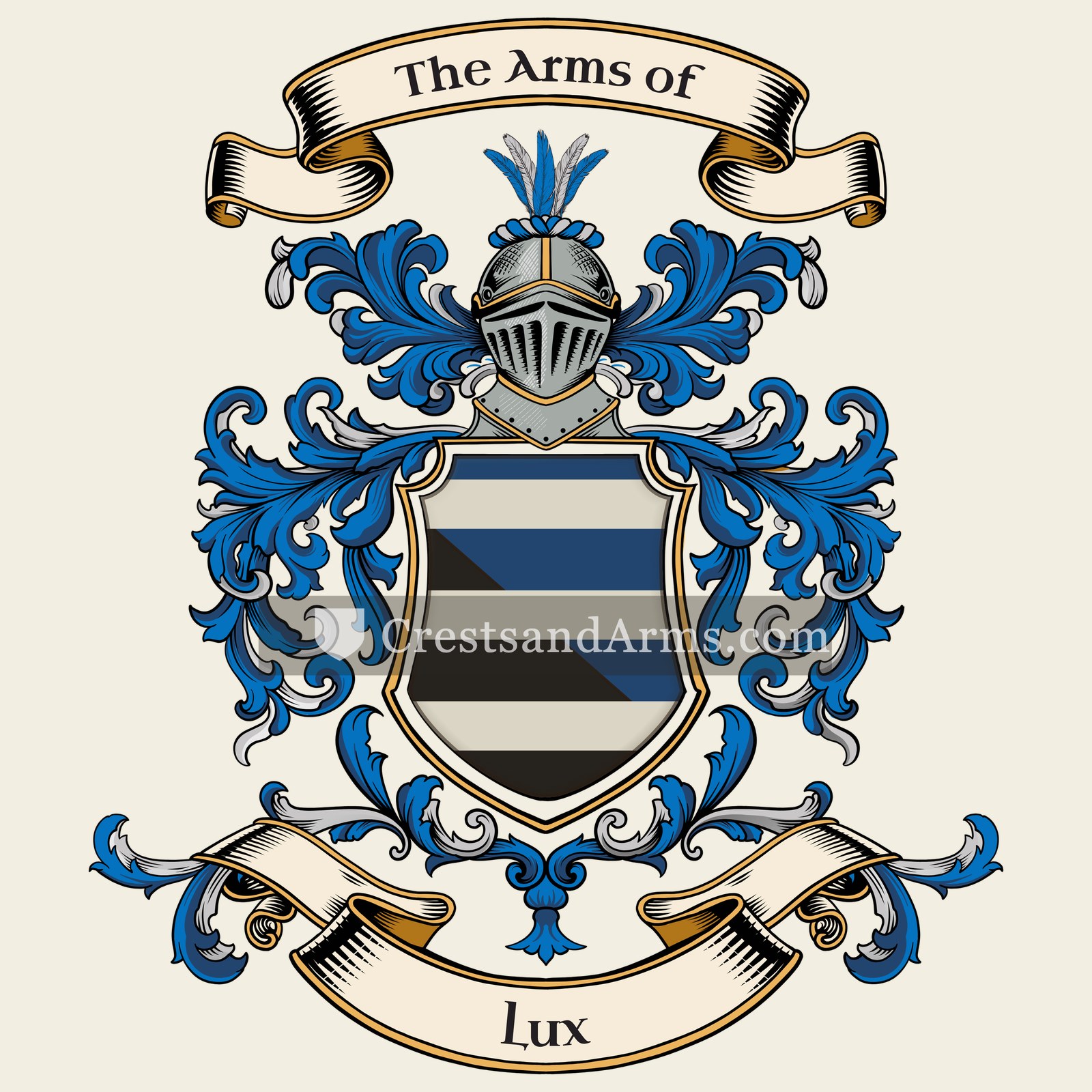


 bullValour and generosity