A record of documented arms, meaning and origin, researched for the Luxe family lines. Documented in 2 countries.
Reg. 9093 · Danish, J–L
Meaning of the Luxe family crest colors & symbols
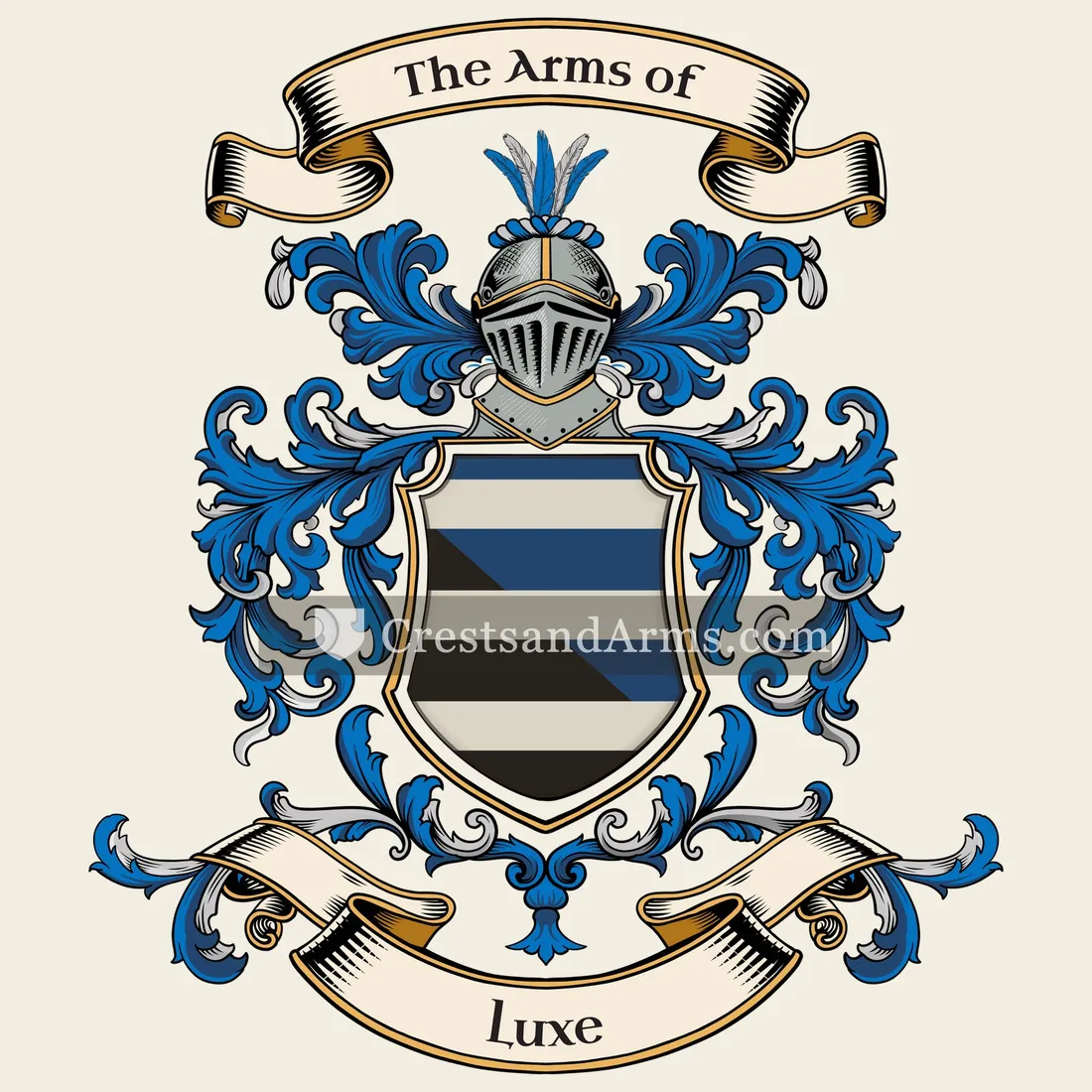
Symbols on this shield
fessThe military belt, and readiness to serve
Colours
Black (Sable)Means: Constancy
Blue (Azure)Means: Loyalty and truth
Silver (Argent)Means: Peace and sincerity
Historical info
Source
J. B. Rietstap, Armorial Général, Gouda: G. B. van Goor Zonen, 1884–87
Blazon (the actual original written record)
“Tranché: au 1 de sa. à trois fasces d'arg.; au 2 d'azur plein. C.: deux prob., celle à dextre d'azur plein, celle à sen. de sa. à trois fasces d'arg.”
Denmarkc. 1722
Digital archive packCoat of arms PNG, gold border print PDF, vector SVG and the certificate of authenticity. Sent to your email in minutes.
Map of Denmark showing where the Luxe arms are recorded
The Luxe arms were recorded in Denmark, c. 1722.
Arms such as these were typically recorded in Sjaælland.
Zealand held the Danish court, the crown's offices and Copenhagen itself. Families who served the king kept estates within reach of it, and royal service was the ordinary route to a coat of arms.
This is where the arms were entered in the register. Families often moved to other parts of the country, so the same name can turn up in more than one region.
The body that granted and recorded arms in Denmark in this period.
Frederik IV of Denmark
Sovereign of the period
Frederik IV of Denmark
1699–1730
Reigning in Denmark when the Luxe arms are first recorded.
How Arms Worked in Denmark
Danish heraldry during this period was closely tied to noble status and royal favor rather than being open to all citizens. Arms were typically granted by the monarch to individuals, and these symbols were then shared by all members of the noble house. If a family line died out, the right to use those specific arms ended with them.
Granting authority
The Danish royal chancery held the power to issue and regulate official coats of arms for the kingdom.
How they got arms
Families usually received their arms through a formal royal grant that confirmed their noble status and rights.
Where arms were recorded
These grants were officially recorded in the Danish Royal Chancery records starting in the sixteenth century.
The family's standing
Recorded among the armigerous families of Denmark.
Origin & History of the Luxe Family in Denmark
The history of the Luxe family in Denmark begins with documented records appearing on the island of Sjælland in 1722. During this period, the name was closely tied to the rural landscapes and the evolving social structures of the Danish countryside. Families with this name were often integrated into the local parish systems, where their lives were recorded in church registers that tracked births, marriages, and deaths. Because Sjælland served as the political and economic heart of the kingdom, the Luxe family likely navigated the transition from traditional agrarian life toward the more structured administrative society of the eighteenth century. While the name itself carries a sense of elegance, its early bearers were primarily common citizens who contributed to the local community through farming, trade, or craftsmanship. Over the decades, these early settlers established deep roots in the region, helping to shape the demographic history of eastern Denmark through their steady presence in the local villages.
Meaning of the Luxe family crest colors & symbols
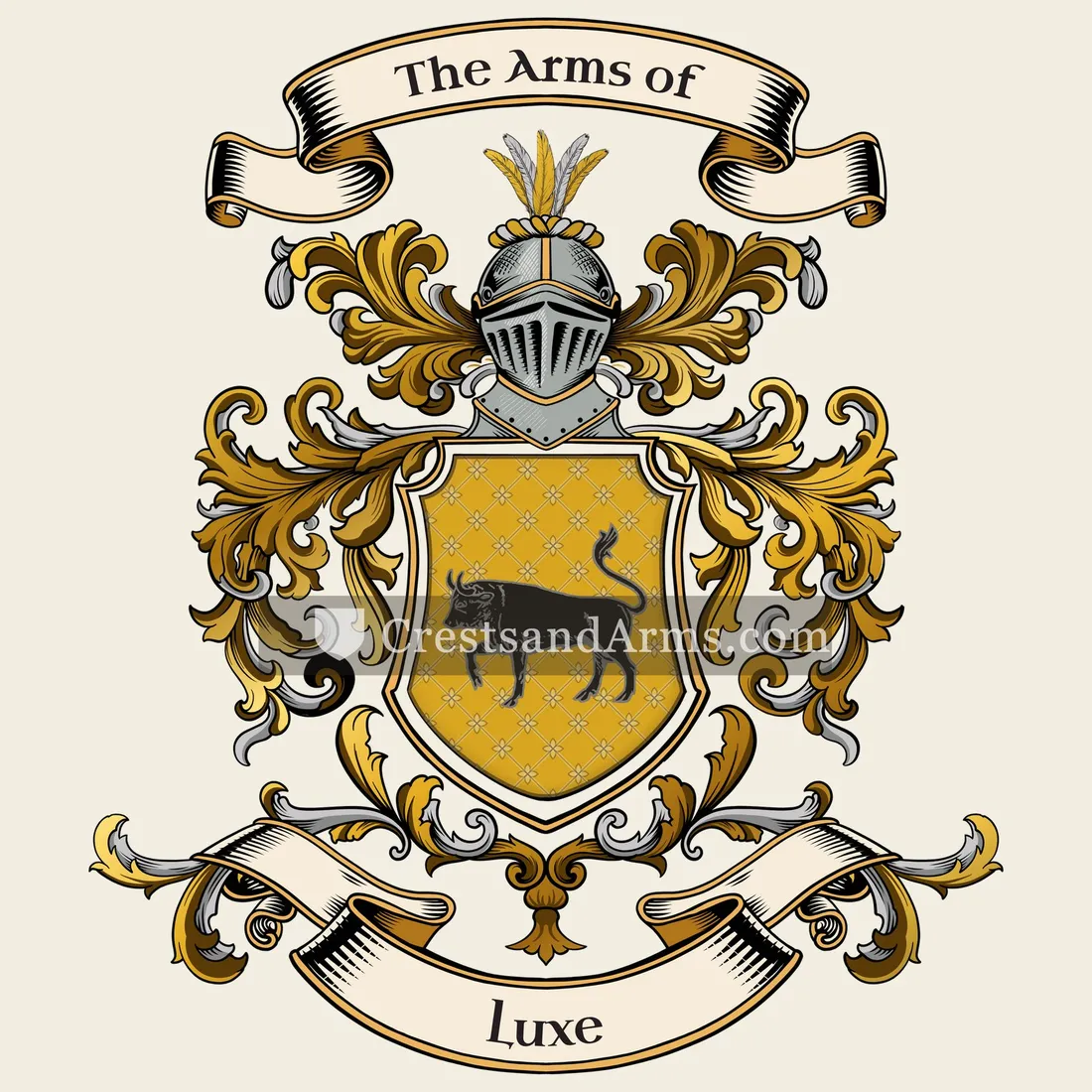
Symbols on this shield
bullValour and generosity
Colours
Gold (Or)Means: Generosity
Black (Sable)Means: Constancy
Historical info
Source
J. B. Rietstap, Armorial Général, Gouda: G. B. van Goor Zonen, 1884–87
Blazon (the actual original written record)
“D'or à un rencontre de boeuf de sa. Cq. cour. C.: une queue de paon au nat.”
GermanyNuremberg, c. 1765
Digital archive packCoat of arms PNG, gold border print PDF, vector SVG and the certificate of authenticity. Sent to your email in minutes.
Map of Germany showing where the Luxe arms are recorded
The Luxe arms were recorded in Nuremberg, c. 1765.
This is where the arms were entered in the register. Families often moved to other parts of the country, so the same name can turn up in more than one region.
The body that granted and recorded arms in Germany in this period.
Francis I, Holy Roman Emperor
Sovereign of the period
Francis I, Holy Roman Emperor
1745–1765
Reigning in Denmark when the Luxe arms are first recorded.
How Arms Worked in Germany
In the Holy Roman Empire, coats of arms were often granted to individuals by the Emperor or his representatives. These arms were then passed down through the generations to all legitimate descendants of the original holder. Younger branches of a family usually kept the same shield design without needing to change it, as the arms belonged to the entire lineage.
Granting authority
The Holy Roman Emperor held the sole power to grant new coats of arms throughout his vast imperial territories.
How they got arms
Families typically obtained their coats of arms through a formal imperial grant or by proving their noble status to the authorities.
Where arms were recorded
These grants were officially recorded in the Imperial Chancery registers, which began keeping formal records of such honors during the Middle Ages.
The family's standing
Recorded among the armigerous families of Germany.
Origin & History of the Luxe Family in Germany
The family name Luxe has roots that trace back to the bustling trade hub of Nuremberg during the mid-eighteenth century. By 1765, records confirm that members of the family were established residents within this influential center of the Holy Roman Empire. During this era, Nuremberg was a city defined by its skilled artisans and merchant guilds. Families like the Luxe clan often integrated into the local economy by participating in the city’s famous metalworking or printing industries. Because the name appears in municipal registers during this period, it suggests that the family was part of the growing urban middle class that helped sustain the city after the disruptions of earlier European conflicts. These early ancestors likely lived in the dense, timber-framed neighborhoods near the Pegnitz River, where they contributed to the civic and commercial life that made Nuremberg a vital engine of German history.
Luxe Meaning & Related Branches
Root word
Lux
Latin word meaning light or illumination.
This name
LuxeA surname derived from the Latin term for light, often denoting someone bright or radiant.
also spelled
Luks
Documented Sources
J. B. Rietstap, Armorial Général, Gouda: G. B. van Goor Zonen, 1884–87
Rigsarkivet (The Danish National Archives), Kirkebøger fra Sjællands Stift (Parish registers for the Diocese of Sjælland), 1722
Dansk Demografisk Database, Folketællinger og kirkebøger (Census and church records), 1722
Digital archive packCoat of arms PNG, gold border print PDF, vector SVG and the certificate of authenticity. Sent to your email in minutes.


 fessThe military belt, and readiness to serve
 fessThe military belt, and readiness to serve


 bullValour and generosity