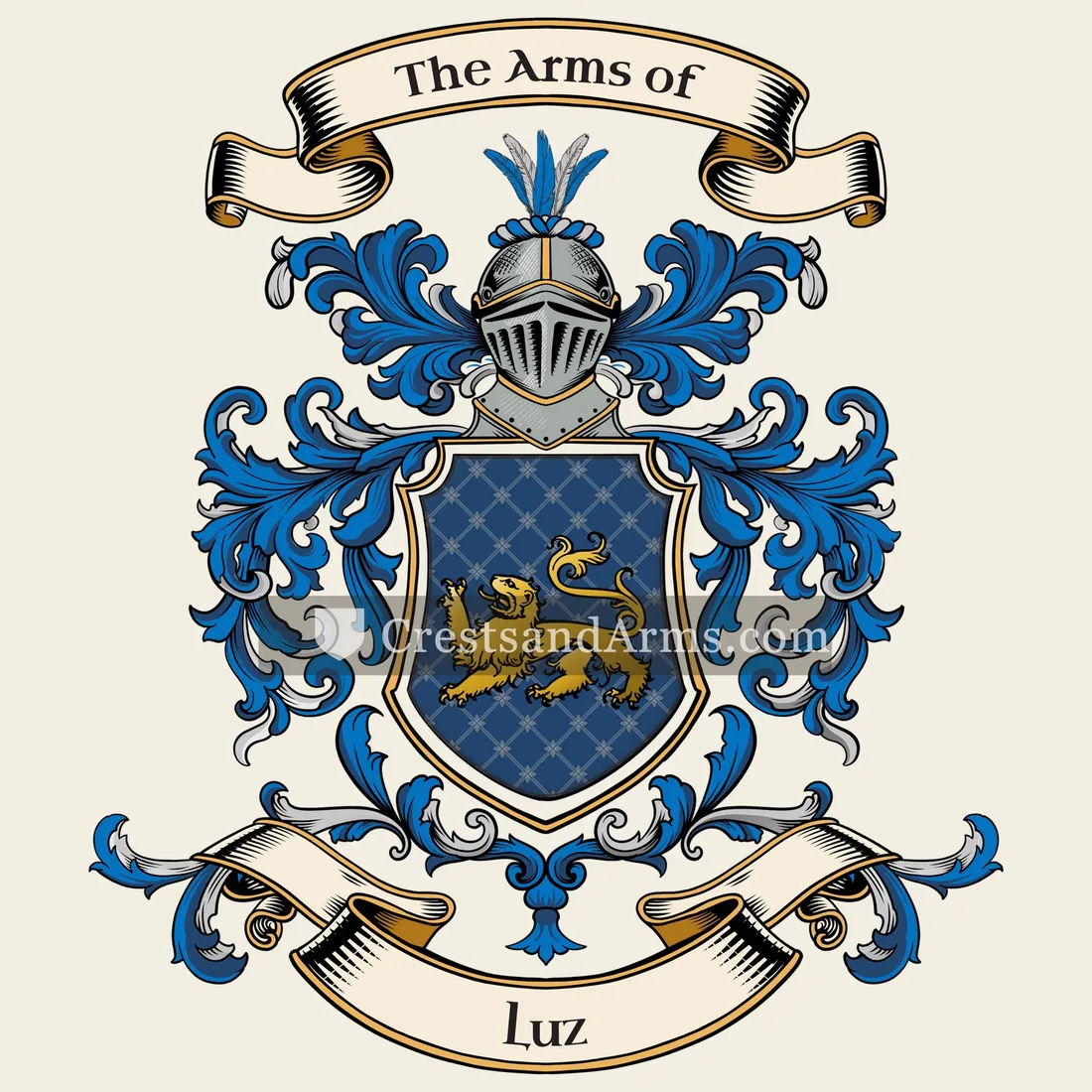
A record of documented arms, meaning and origin, researched for the Luz family lines. Documented in 2 countries.
Reg. 6070 · German, J–L
Meaning of the Luz family crest colors & symbols
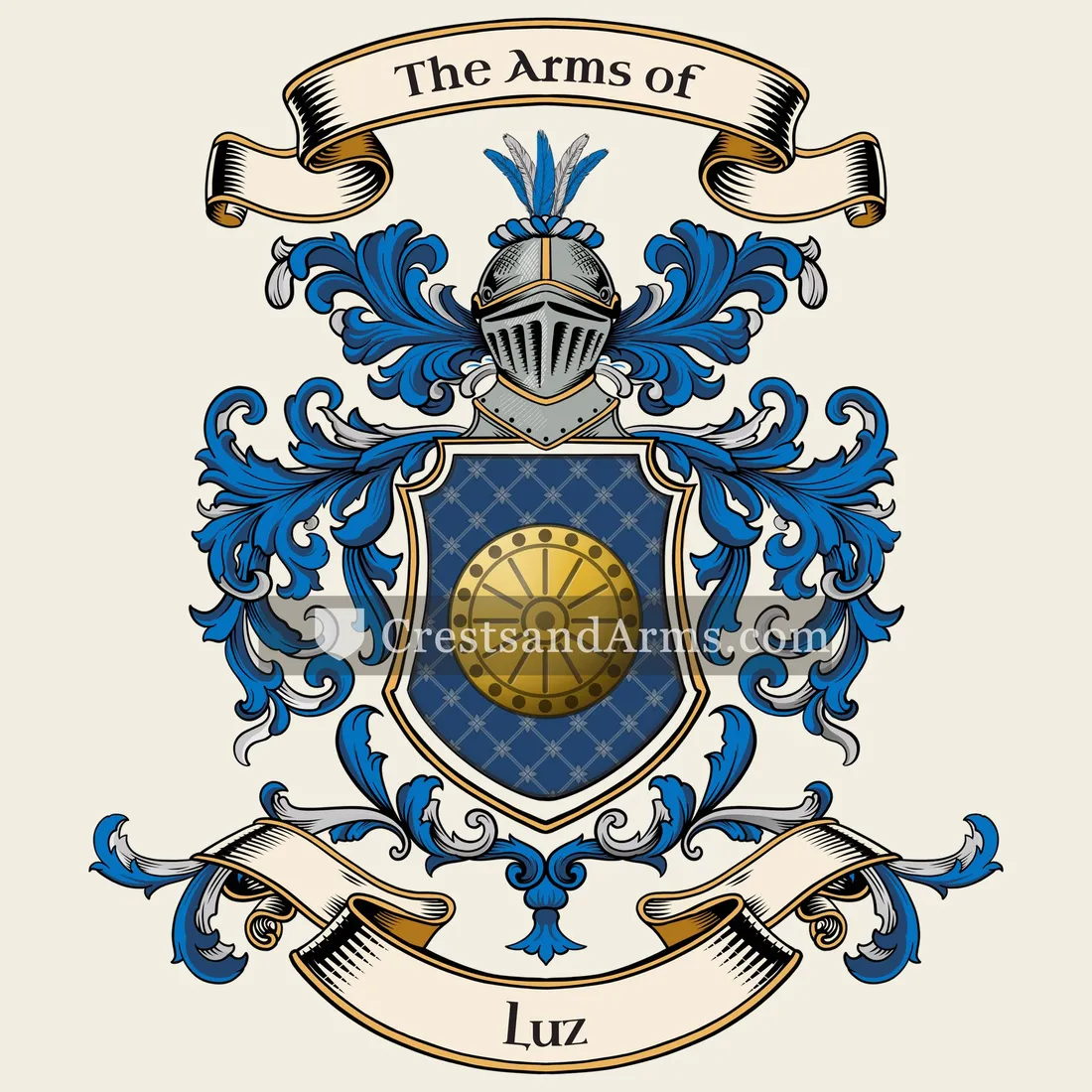
Symbols on this shield
roundelA coin, and one who has been to the crusades
Colours
Blue (Azure)Means: Loyalty and truth
Gold (Or)Means: Generosity
Historical info
Source
J. B. Rietstap, Armorial Général, Gouda: G. B. van Goor Zonen, 1884–87
Blazon (the actual original written record)
“D'azur à une Fortune de carn., posée sur un globe ailé d'or, et tenant au-dessus de sa tête un voile de gu. C.: une mûre de gu., feuillée d'or, la tige en haut, entre deux prob. coupées, à dextre d'or sur azur, à sen. d'azur sur arg. L.: à dextre d'or et d'azur, à sen. de gu. et d'azur.”
BavariaBavaria, c. 1765
Digital archive packCoat of arms PNG, gold border print PDF, vector SVG and the certificate of authenticity. Sent to your email in minutes.
Map of Germany showing where the Luz arms are recorded
The Luz arms were recorded in Bavaria, c. 1765.
Bavaria was a country of old landed families and walled market towns. Estates passed down the same line for centuries, and both the landowners and the leading townsmen kept arms, which is why so many Bavarian names sit in the registers.
This is where the arms were entered in the register. Families often moved to other parts of the country, so the same name can turn up in more than one region.
The body that granted and recorded arms in Germany in this period.
Francis I, Holy Roman Emperor
Sovereign of the period
Francis I, Holy Roman Emperor
1745–1765
Reigning in Germany when the Luz arms are first recorded.
How Arms Worked in Germany
In the Holy Roman Empire, coats of arms were often granted to individuals by the Emperor or his representatives. These arms were then passed down through the generations to all legitimate descendants of the original holder. Younger branches of a family usually kept the same shield design without needing to change it, as the arms belonged to the entire lineage.
Granting authority
The Holy Roman Emperor held the sole power to grant new coats of arms throughout his vast imperial territories.
How they got arms
Families typically obtained their coats of arms through a formal imperial grant or by proving their noble status to the authorities.
Where arms were recorded
These grants were officially recorded in the Imperial Chancery registers, which began keeping formal records of such honors during the Middle Ages.
The family's standing
Recorded among the armigerous families of Bavaria.
Origin & History of the Luz Family in Germany
The surname Luz is a traditional German name that carries deep roots in the southern regions of the country. By the mid-18th century, the family was firmly established in Bavaria, a region known for its strong agricultural traditions and distinct local customs. The name itself is often linked to the Middle High German word "luz," which was used to describe someone who was small in stature or perhaps quiet in nature. During the 1700s, families like the Luz line were typically part of the rural working class, living in tight-knit village communities where life revolved around the church calendar and the seasonal harvest. These early ancestors likely worked as farmers or skilled tradespeople, contributing to the local economy of the Bavarian countryside. Because record-keeping in rural Germany during this era was managed primarily by parish priests, the history of the Luz family is preserved through baptismal and marriage registers that track their steady growth and movement through the region.
Meaning of the Luz family crest colors & symbols
Symbols on this shield
lionCourage, strength and royalty
Colours
Blue (Azure)Means: Loyalty and truth
Gold (Or)Means: Generosity
Historical info
Source
J. B. Rietstap, Armorial Général, Gouda: G. B. van Goor Zonen, 1884–87
Blazon (the actual original written record)
“D'azur au lion assis d'or, cour. du même.”
Spainc. 1722
Digital archive packCoat of arms PNG, gold border print PDF, vector SVG and the certificate of authenticity. Sent to your email in minutes.
Map of Spain showing where the Luz arms are recorded
The Luz arms were recorded in Spain, c. 1722.
Arms such as these were typically recorded in Castile.
Castile was the heart of Spain and the source of most of its noble families. Land won in the long wars against the Moors was granted out to fighting men, and a man granted land was granted arms along with it.
This is where the arms were entered in the register. Families often moved to other parts of the country, so the same name can turn up in more than one region.
The body that granted and recorded arms in Spain in this period.
Philip V of Spain
Sovereign of the period
Philip V of Spain
1714–1724
Reigning in Germany when the Luz arms are first recorded.
How Arms Worked in Spain
In Spain, a coat of arms was considered a form of property that belonged to the entire family line. These arms were passed down from a father to all his children equally. Younger branches of the family usually kept the original design without needing to add any special marks to distinguish their specific line.
Granting authority
The Cronista Rey de Armas was the official body that regulated and granted coats of arms throughout Spain.
How they got arms
Families often obtained their arms through royal grants or by proving their noble status to the official heraldic authority.
Where arms were recorded
Coats of arms were officially recorded in the registers of the Cronista Rey de Armas starting in 1496.
The family's standing
Recorded among the armigerous families of Spain.
Origin & History of the Luz Family in Spain
The surname Luz traces its roots to the historical landscape of the Iberian Peninsula, where it emerged as a name often associated with religious devotion and the concept of light. By the early 18th century, records confirm that members of the family were established in the region of Castile, a central territory that played a vital role in the political and cultural unification of Spain. During this period, families in Castile were often deeply connected to the local parish system and the agricultural life of the plateau. As the family settled into these communities, they became part of the social fabric of a region defined by its transition toward modern governance and administrative record-keeping. The presence of the name in 1722 suggests that the family was well-integrated into the local population, likely participating in the common trades and civic duties that characterized life in the Spanish interior during the Bourbon reforms.
Luz Meaning & Related Branches
Root word
Lux
Latin word meaning light or illumination.
This name
LuzA topographic name for someone who lived near a light source or a beacon.
Related arms
Benslerecorded with Luz, same area
Dolitschrecorded with Luz, same area
Engelrecorded with Luz, same area
Schafferrecorded with Luz, same area
Documented Sources
J. B. Rietstap, Armorial Général, Gouda: G. B. van Goor Zonen, 1884–87
Bavarian State Archives (Bayerisches Hauptstaatsarchiv), Kirchenbücher der Erzdiözese München und Freising
Heintze, Albert, Die deutschen Familiennamen: geschichtlich, geographisch, sprachlich, 1903
Kohlheim, Rosa and Volker Kohlheim, Duden Familiennamen: Herkunft und Bedeutung von 20.000 Nachnamen, 2005
Digital archive packCoat of arms PNG, gold border print PDF, vector SVG and the certificate of authenticity. Sent to your email in minutes.


 roundelA coin, and one who has been to the crusades
 roundelA coin, and one who has been to the crusades


 lionCourage, strength and royalty