Map of Belgium showing where the Mabra arms are recorded
The Mabra arms were recorded in Tournaisis, c. 1737.
This is where the arms were entered in the register. Families often moved to other parts of the country, so the same name can turn up in more than one region.
The body that granted and recorded arms in Belgium in this period.
Charles VI, Holy Roman Emperor
Sovereign of the period
Charles VI, Holy Roman Emperor
1711–1740
Reigning in Belgium when the Mabra arms are first recorded.
How Arms Worked in Belgium
In Belgium, a coat of arms is considered personal property that is passed down through the male line to legitimate descendants. Families often use the same shield design across generations to show their shared heritage. If a branch of the family wants to change the design, they must apply for an official update to their specific version of the arms.
Granting authority
The Conseil héraldique is the official body that regulates and approves all coats of arms in Belgium.
How they got arms
Families obtain their coats of arms through formal royal grants or by confirming their historical right to use existing designs.
Where arms were recorded
All approved coats of arms are officially recorded in the public registers of the Conseil héraldique since 1844.
The family's standing
Recorded among the armigerous families of Belgium.
Origin & History of the Mabra Family in Belgium
The history of the Mabra family in Belgium is deeply rooted in the region of Tournaisis, where records confirm their presence as early as 1737. During the eighteenth century, this area was a vital crossroads for trade and agriculture located near the border of modern-day France. Families living in the Tournaisis region at this time were often involved in the local cloth industry or small-scale farming, which defined the daily lives of those in the rural parishes. The name itself likely evolved from local dialects spoken in the Low Countries, reflecting the linguistic blend of French and Dutch influences common in the province of Hainaut. By settling in this specific territory, the early members of the Mabra family became part of a resilient community that navigated the complex political shifts between the Austrian Netherlands and neighboring powers. Their presence in the official parish registers of the time serves as a testament to their integration into the social and economic fabric of the region during the late Enlightenment period.
Meaning of the Mabra family crest colors & symbols
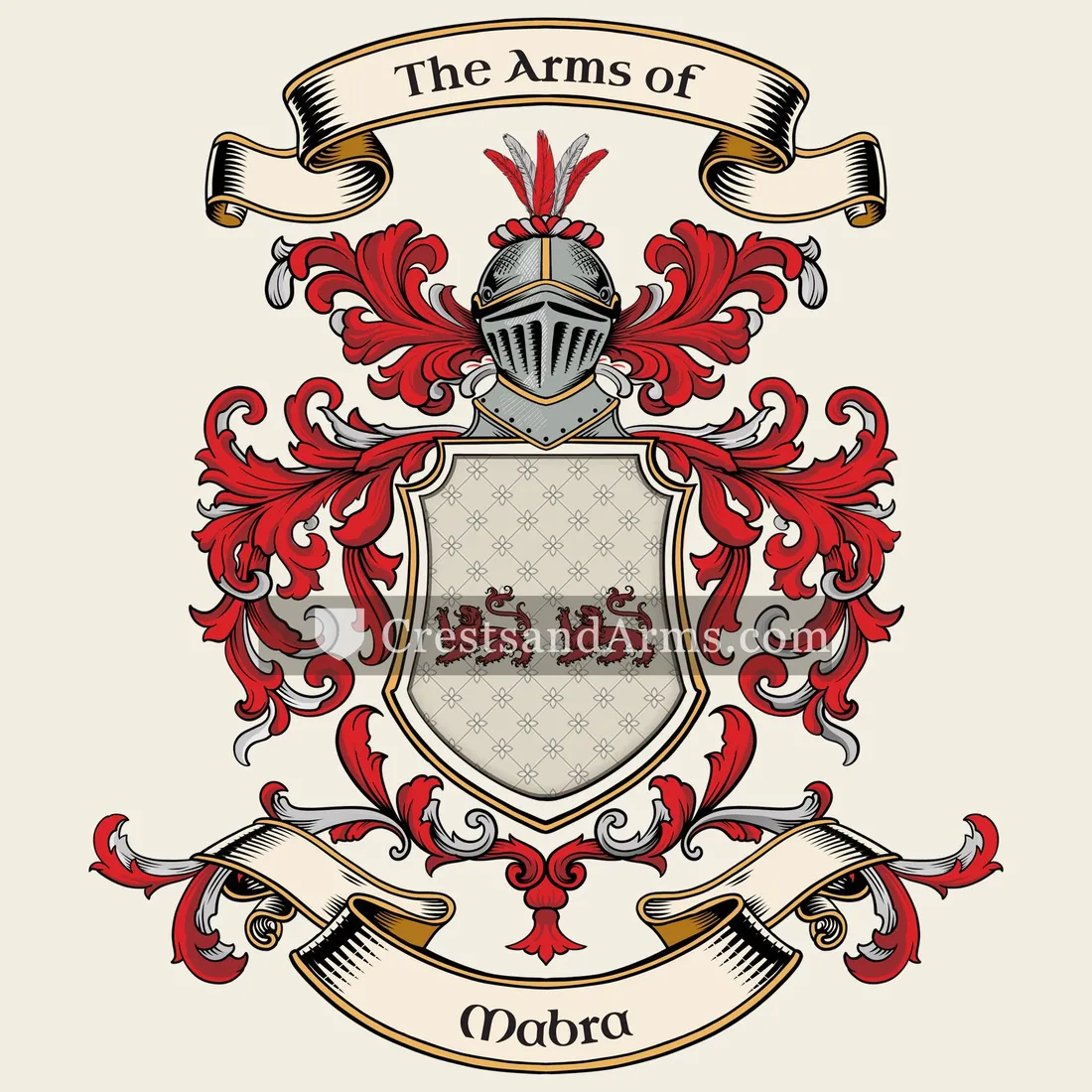
Symbols on this shield
lionCourage, strength and royalty
Colours
Silver (Argent)Means: Peace and sincerity
Red (Gules)Means: Military strength
Historical info
Source
J. B. Rietstap, Armorial Général, Gouda: G. B. van Goor Zonen, 1884–87
Blazon (the actual original written record)
“D'arg. à deux léopards de gu.”
MaineMaine, c. 1663
Digital archive packCoat of arms PNG, gold border print PDF, vector SVG and the certificate of authenticity. Sent to your email in minutes.
Map of France showing where the Mabra arms are recorded
The Mabra arms were recorded in Maine, c. 1663.
Maine was quiet farming country in western France, held in small manors by families who stayed for generations. Nothing about it was grand, but steady landholding is exactly what puts a name in the registers.
This is where the arms were entered in the register. Families often moved to other parts of the country, so the same name can turn up in more than one region.
The body that granted and recorded arms in France in this period.
Louis XIV of France
Sovereign of the period
Louis XIV of France
1643–1715
Reigning in Belgium when the Mabra arms are first recorded.
How Arms Worked in France
In France, a coat of arms was a mark of honor that passed down through the male line to all legitimate descendants. Families often used the same shield without changes to show their shared heritage. If a branch wanted to stand out, they could add a small mark to their shield to show their specific place in the family tree.
Granting authority
The Juge d'armes de France acted as the official authority that regulated and verified coats of arms across the country.
How they got arms
Families typically inherited their arms from ancestors, though they could also receive them through royal grants or by proving their noble status.
Where arms were recorded
Coats of arms were officially recorded in the Armorial Général de France, which began its main collection in the year 1696.
The family's standing
Recorded among the armigerous families of Maine.
Origin & History of the Mabra Family in France
The family name Mabra likely traces its linguistic roots to the western regions of France, where regional dialects often influenced the spelling of surnames based on local pronunciation. While specific records from France remain elusive, the presence of family members in the Maine province of France by 1663 suggests that the lineage was established in a rural, agricultural society during the seventeenth century. Families in this area often lived in small, tight-knit communities where names were passed down through oral tradition before being formally recorded in parish registers. By the mid-1600s, the Mabra name was already documented in the historical landscape of Maine, indicating that the family was part of the local social fabric long before the era of mass migration. This early presence in the French province provides a clear starting point for understanding how the family name was preserved and carried forward by ancestors who lived through the transition from feudal traditions to the early modern period.
Mabra Meaning & Related Branches
Root word
Mabert
A Germanic personal name derived from elements meaning strength and bright.
This name
MabraA patronymic surname indicating descent from a person named Mabert or Lambert.
also spelled
Maubrai
Maubraie
Maubraye
Mobray
Documented Sources
J. B. Rietstap, Armorial Général, Gouda: G. B. van Goor Zonen, 1884–87
Archives de l'État à Tournai, Registres paroissiaux de l'ancien régime, 1737
Hocquet, Jean-Claude, Tournai et le Tournaisis au XVIIIe siècle, 1985
Lefebvre, Georges, Les paysans du Nord pendant la Révolution française, 1924
Digital archive packCoat of arms PNG, gold border print PDF, vector SVG and the certificate of authenticity. Sent to your email in minutes.


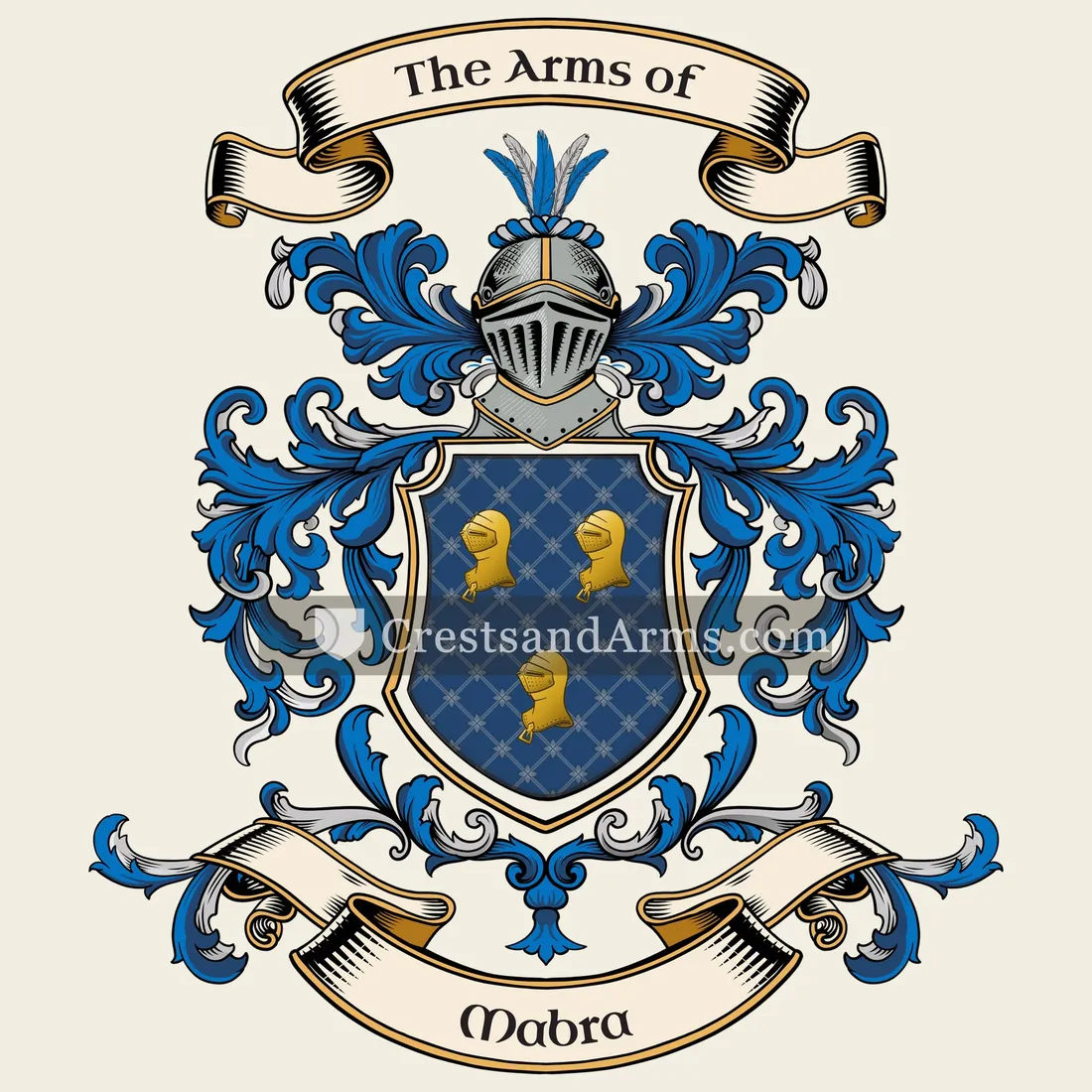
 helmetWisdom and security in defence
 helmetWisdom and security in defence


 lionCourage, strength and royalty