Map of Scotland showing where the Macera arms are recorded
The Macera arms were recorded in Scotland, c. 1748.
Arms such as these were typically recorded in Edinburgh.
Edinburgh was the seat of Scotland's government, its courts and its heralds. Families with business there settled nearby, and being close to where arms were recorded is exactly why so many of them appear.
This is where the arms were entered in the register. Families often moved to other parts of the country, so the same name can turn up in more than one region.
The body that granted and recorded arms in Scotland in this period.
George II of Great Britain
Sovereign of the period
George II of Great Britain
1727–1760
Reigning in Scotland when the Macera arms are first recorded.
How Arms Worked in Scotland
Scottish heraldry is unique because it treats a coat of arms as a piece of personal property protected by law. Only one person can own a specific design at any given time. When a family grows, the head keeps the original shield while other relatives must apply for their own distinct version with slight changes to prove their specific identity.
Granting authority
The Court of the Lord Lyon acts as the official body that regulates and controls all heraldic matters throughout Scotland.
How they got arms
Individuals obtain a legal right to their arms through a formal petition process that confirms their identity and family connection.
Where arms were recorded
All valid coats of arms are officially entered into the Public Register of All Arms and Bearings starting from 1672.
The family's standing
Recorded among the armigerous families of Scotland.
Origin & History of the Macera Family in Scotland
The family name Macera has deep roots in the urban landscape of eighteenth-century Scotland, particularly within the bustling city of Edinburgh. By 1748, records indicate that members of the Macera family were firmly established in the capital, living during a time of significant social and economic change. During this era, Edinburgh was a center for trade and professional growth, and families like the Maceras were often involved in the skilled crafts or mercantile activities that defined the city’s rising middle class. While the name is sometimes associated with broader European origins, its presence in Scotland reflects the movement of people who settled in the Lowlands to seek new opportunities. These early residents contributed to the local community, leaving behind traces in official registers that document their daily lives, marriages, and business dealings in the heart of the Scottish Enlightenment.
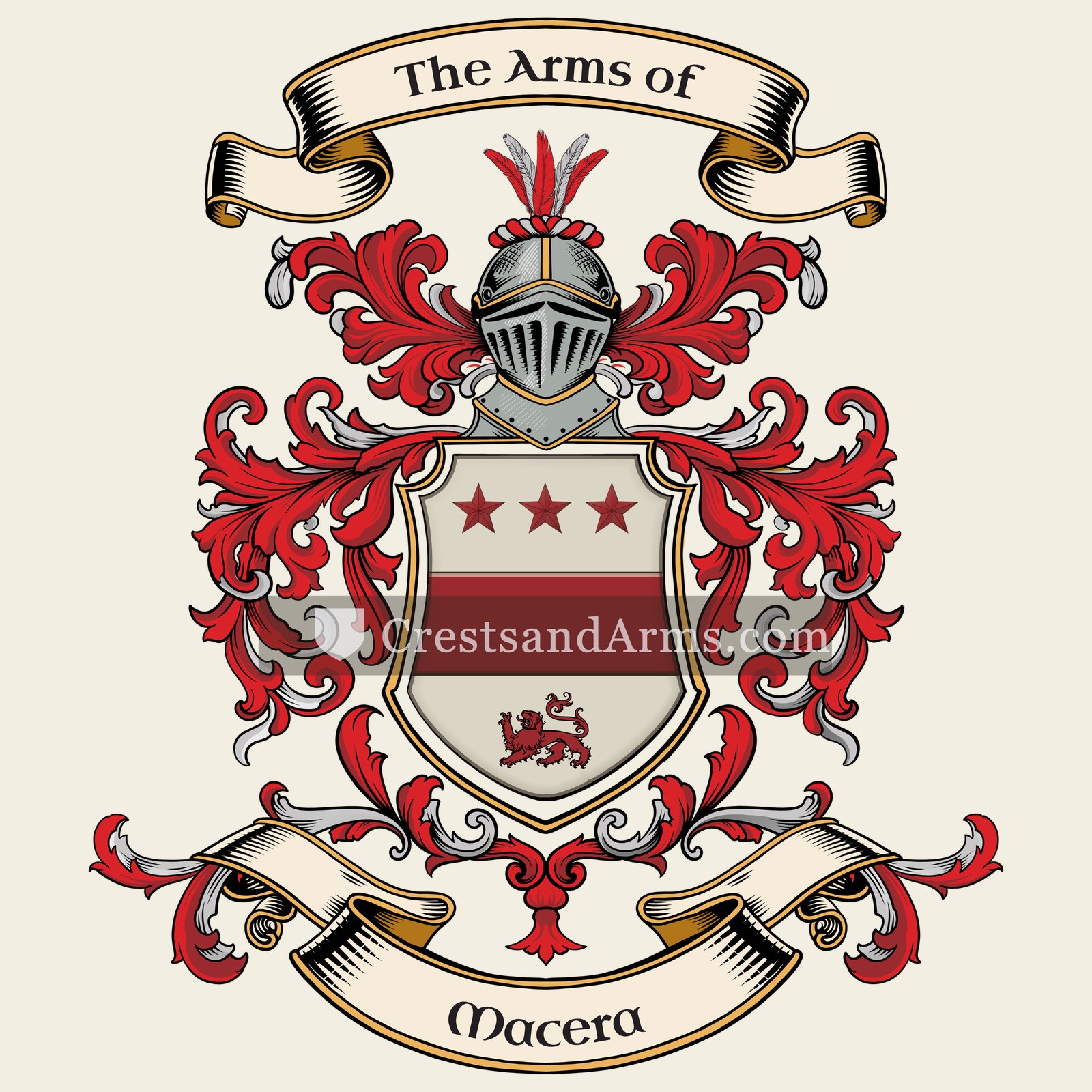
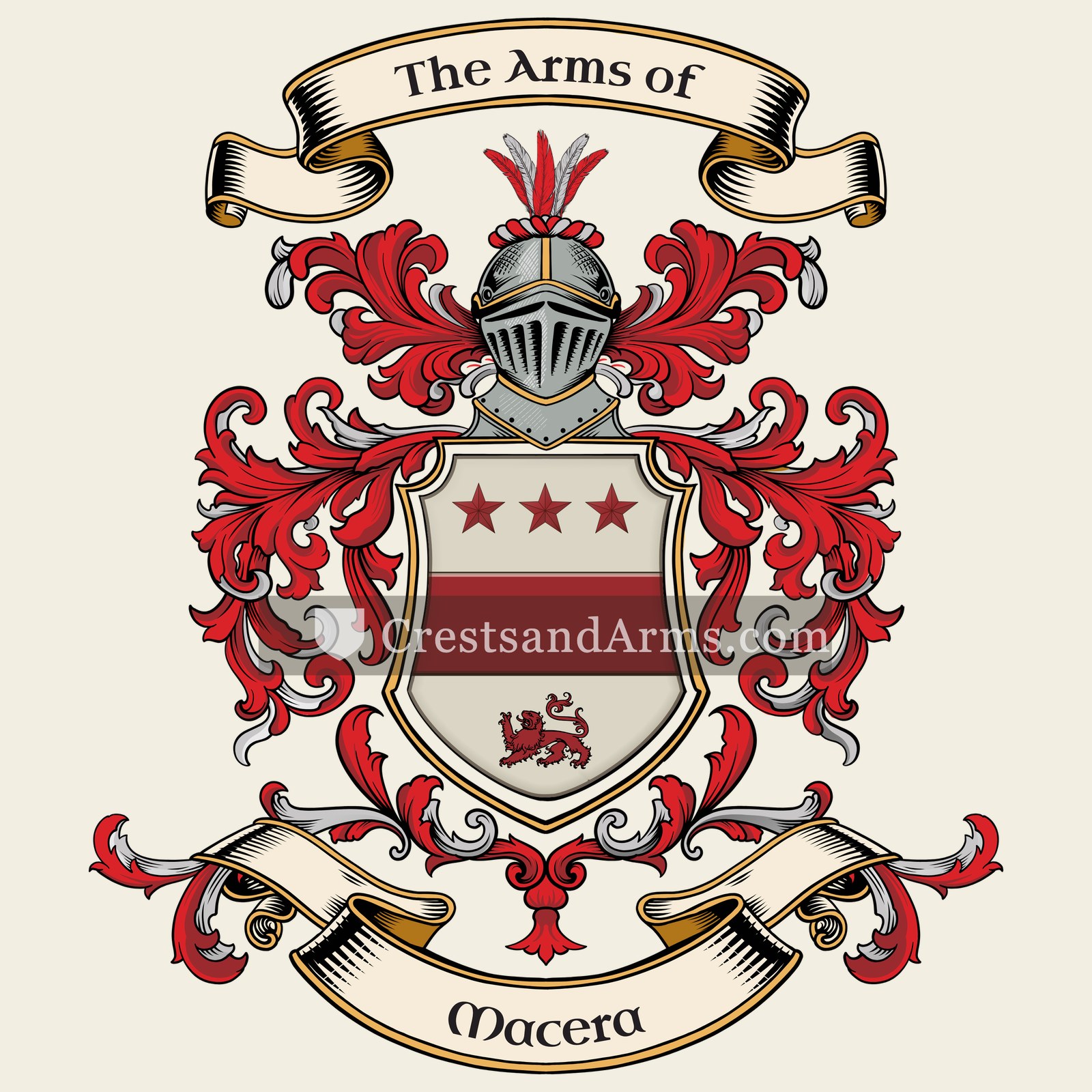
Coat of Arms & Family Crest Details
Symbols on this shield
fessThe military belt, and readiness to serve
mulletThe third son, and a divine quality from above
lionCourage, strength and royalty
Colours
Silver (Argent)Means: Peace and sincerity
Red (Gules)Means: Military strength
Historical info
Source
Sir Bernard Burke, The General Armory of England, Scotland, Ireland and Wales, London: Harrison & Sons, 1884
Blazon (the actual original written record)
“Ar. a fess betw. three mullets in chief and a lion ramp. in base gu”
IrelandOrangefield, c. 1736
Digital archive packCoat of arms PNG, gold border print PDF, vector SVG and the certificate of authenticity. Sent to your email in minutes.
Map of Ireland showing where the Macera arms are recorded
The Macera arms were recorded in Orangefield, c. 1736.
Arms such as these were typically recorded in Dublin.
Dublin was the seat of government in Ireland and the place where grants were sought and recorded. Families with business at the castle or the courts settled nearby, and settling there put their arms on record.
This is where the arms were entered in the register. Families often moved to other parts of the country, so the same name can turn up in more than one region.
The body that granted and recorded arms in Ireland in this period.
George II of Great Britain
Sovereign of the period
George II of Great Britain
1727–1760
Reigning in Scotland when the Macera arms are first recorded.
How Arms Worked in Ireland
The Ulster King of Arms granted coats of arms to individuals who proved their social standing and good character. These symbols were typically inherited by all legitimate descendants of the original holder. If a family branch wanted a unique look, they could apply for a specific change to their design through the office to ensure their identity remained distinct.
Granting authority
The Ulster King of Arms acted as the official body that regulated and issued all coats of arms throughout Ireland.
How they got arms
Families obtained their arms through formal grants issued by the office after proving their eligibility and paying the required fees.
Where arms were recorded
All official grants were recorded in the registers held by the Ulster King of Arms starting from the year 1552.
The family's standing
Recorded among the armigerous families of Ireland.
Origin & History of the Macera Family in Ireland
The history of the Macera family in Ireland is deeply connected to the urban landscape of eighteenth-century Dublin. While the name is often associated with Mediterranean origins, records confirm that members of the family were firmly established in the Irish capital by 1736. During this period, Dublin was a bustling center of trade and craftsmanship, and families like the Maceras likely integrated into the city’s growing mercantile class. Living in a city defined by rapid expansion and social change, these early residents navigated a society shaped by complex religious and political shifts. By settling in Dublin, the family participated in the unique cultural exchange that defined the city as a hub for both local Irish residents and those arriving from across Europe. Their presence in the city archives during the mid-1700s suggests they were part of the steady stream of families who contributed to the diverse social fabric of Dublin during the Georgian era.
Related Branches & Arms
Root word
Macer
A Latin term meaning lean, thin, or emaciated.
This name
MaceraA habitational or descriptive surname likely referring to a person of thin or slender physical build.
also spelled
McRae
MacRay
Documented Sources
Sir Bernard Burke, The General Armory of England, Scotland, Ireland and Wales, London: Harrison & Sons, 1884
National Records of Scotland, Edinburgh Register of Marriages, 1748
National Records of Scotland, Commissariot Record of Edinburgh, Register of Testaments
Digital archive packCoat of arms PNG, gold border print PDF, vector SVG and the certificate of authenticity. Sent to your email in minutes.


 fessThe military belt, and readiness to serve
 mulletThe third son, and a divine quality from above
 lionCourage, strength and royalty
 fessThe military belt, and readiness to serve
 mulletThe third son, and a divine quality from above
 lionCourage, strength and royalty