Map of Belgium showing where the Macon arms are recorded
The Macon arms were recorded in Belgium, c. 1609.
Arms such as these were typically recorded in Brabant.
Brabant lay at the heart of the Low Countries, where the trade routes met. Its towns were wealthy and its landowners many, and both kinds of family kept arms, which is why the region is so heavily represented.
This is where the arms were entered in the register. Families often moved to other parts of the country, so the same name can turn up in more than one region.
The body that granted and recorded arms in Belgium in this period.
Philip III of Spain
Sovereign of the period
Philip III of Spain
1598–1621
Reigning in Belgium when the Macon arms are first recorded.
How Arms Worked in Belgium
In Belgium, a coat of arms is considered personal property that is passed down through the male line to legitimate descendants. Families often use the same shield design across generations to show their shared heritage. If a branch of the family wants to change the design, they must apply for an official update to their specific version of the arms.
Granting authority
The Conseil héraldique is the official body that regulates and approves all coats of arms in Belgium.
How they got arms
Families obtain their coats of arms through formal royal grants or by confirming their historical right to use existing designs.
Where arms were recorded
All approved coats of arms are officially recorded in the public registers of the Conseil héraldique since 1844.
The family's standing
Recorded among the armigerous families of Belgium.
Origin & History of the Macon Family in Belgium
The history of the Macon family in Belgium is rooted in the historic Duchy of Brabant, where records confirm their presence as early as 1609. During this period, the region was a center of European trade and cultural exchange under the rule of the Spanish Netherlands. Families like the Macons often lived in growing urban areas or rural estates, navigating a society defined by local guilds, religious shifts, and the complex legal systems of the time. The name itself likely evolved from regional dialects and naming customs common to the Low Countries, reflecting the family's integration into the social fabric of Brabant. By settling in this fertile and strategically important territory, the early Macons participated in the local agricultural and economic life that defined the region before the major political upheavals of the seventeenth century.
Coat of Arms & Family Crest Details
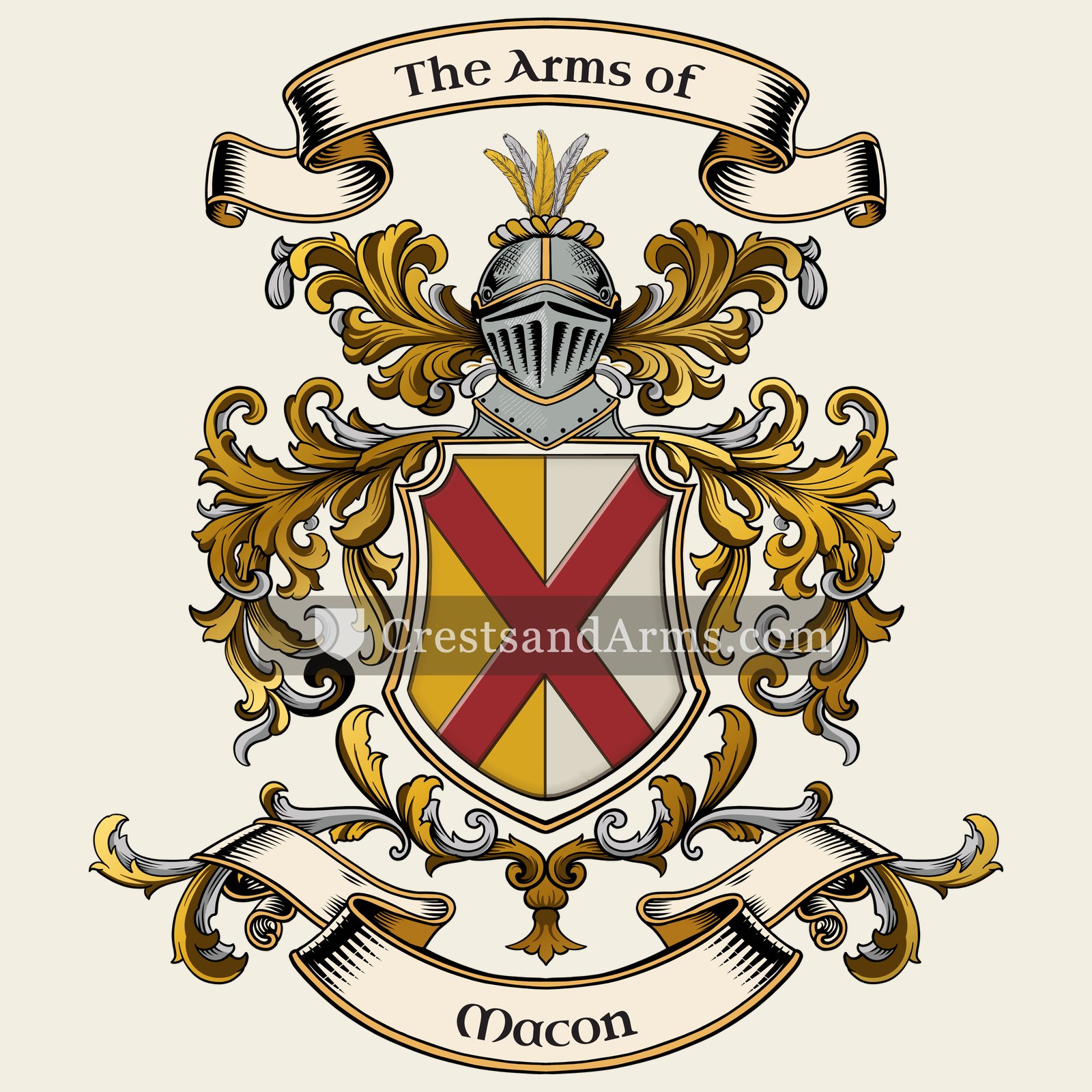
Symbols on this shield
saltireResolution, and St Andrew's cross
Colours
Gold (Or)Means: Generosity
Silver (Argent)Means: Peace and sincerity
Red (Gules)Means: Military strength
Historical info
Source
J. B. Rietstap, Armorial Général, Gouda: G. B. van Goor Zonen, 1884–87
Blazon (the actual original written record)
“Parti d'or et d'arg.; au saut. engr. de gu., br. sur le parti.”
Franche-ComteFranche-Comte, c. 1474
Digital archive packCoat of arms PNG, gold border print PDF, vector SVG and the certificate of authenticity. Sent to your email in minutes.
Map of France showing where the Macon arms are recorded
The Macon arms were recorded in Franche-Comte, c. 1474.
Franche-Comte sat between France and the Empire and changed hands more than once. Border families held their land under arms and expected to defend it, so a shield was a practical thing rather than an ornament.
This is where the arms were entered in the register. Families often moved to other parts of the country, so the same name can turn up in more than one region.
The body that granted and recorded arms in France in this period.
Louis XI of France
Sovereign of the period
Louis XI of France
1461–1483
Reigning in Belgium when the Macon arms are first recorded.
How Arms Worked in France
In France, a coat of arms was a mark of honor that passed down through the male line to all legitimate descendants. Families often used the same shield without changes to show their shared heritage. If a branch wanted to stand out, they could add a small mark to their shield to show their specific place in the family tree.
Granting authority
The Juge d'armes de France acted as the official authority that regulated and verified coats of arms across the country.
How they got arms
Families typically inherited their arms from ancestors, though they could also receive them through royal grants or by proving their noble status.
Where arms were recorded
Coats of arms were officially recorded in the Armorial Général de France, which began its main collection in the year 1696.
The family's standing
Recorded among the armigerous families of Franche-Comte.
Origin & History of the Macon Family in France
The history of the Macon family name is deeply rooted in the historical region of Franche-Comté, where records confirm the presence of family members as early as 1474. During this period, the area was a complex territory caught between the influence of the Holy Roman Empire and the expanding French kingdom. Families like the Macons often served as local administrators or landowners who helped manage the agricultural and legal affairs of their villages. Because Franche-Comté was a frontier region, the people living there developed a strong sense of local identity and resilience. The name likely evolved from the occupational title of a mason or builder, reflecting the practical trade skills that helped these early ancestors establish their place within the community. Over time, the family became integrated into the social fabric of the region, participating in the daily life and governance of their towns long before the area was fully incorporated into France.
Related Branches & Arms
Root word
Matthaeus
Derived from the Hebrew name Matityahu meaning gift of God.
This name
MaconA patronymic surname originating from a diminutive form of Matthew, signifying descendant of Matthew.
Related arms
Chavannessame arms
Vesvresame arms
Alixanssimilar arms
Gulelmisimilar arms
Documented Sources
J. B. Rietstap, Armorial Général, Gouda: G. B. van Goor Zonen, 1884–87
Archives: Algemeen Rijksarchief (General State Archives of Belgium), Raad van Brabant (Council of Brabant), series Processen
Book: Cuvelier, Joseph, Les dénombrements de foyers en Brabant (XIVe-XVIe siècle), 1912
Book: Van der Essen, Léon, La Belgique sous la domination espagnole, 1925
Digital archive packCoat of arms PNG, gold border print PDF, vector SVG and the certificate of authenticity. Sent to your email in minutes.


 fireZeal and purification
 fireZeal and purification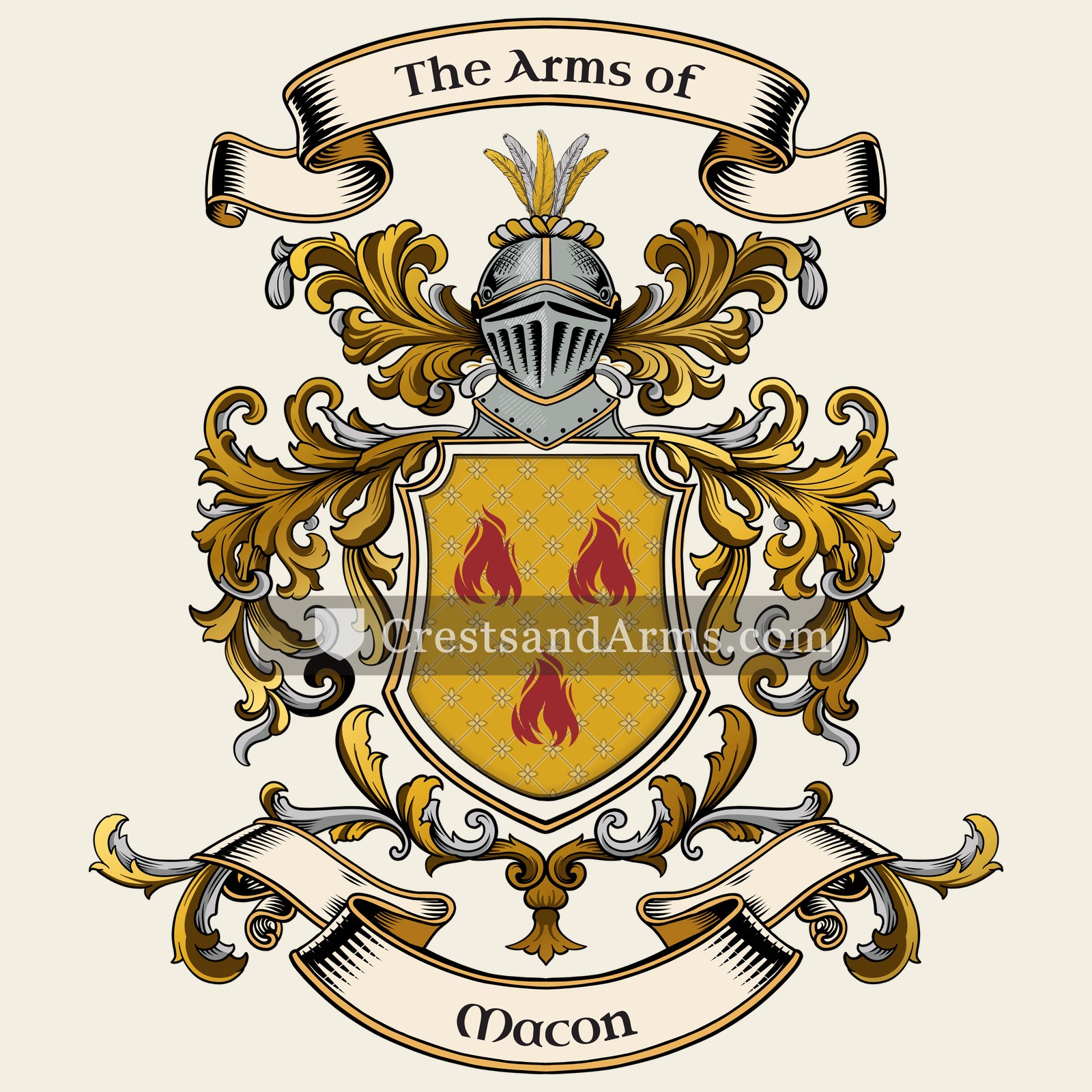


 saltireResolution, and St Andrew's cross