Map of France showing where the Maile arms are recorded
The Maile arms were recorded in Ile-de-France, c. 1663.
Ile-de-France is the country around Paris, and proximity to the court mattered. Families who served the crown were rewarded with land near it, and land near the capital carried arms almost as a matter of course.
This is where the arms were entered in the register. Families often moved to other parts of the country, so the same name can turn up in more than one region.
The body that granted and recorded arms in France in this period.
Louis XIV of France
Sovereign of the period
Louis XIV of France
1643–1715
Reigning in France when the Maile arms are first recorded.
How Arms Worked in France
In France, a coat of arms was a mark of honor that passed down through the male line to all legitimate descendants. Families often used the same shield without changes to show their shared heritage. If a branch wanted to stand out, they could add a small mark to their shield to show their specific place in the family tree.
Granting authority
The Juge d'armes de France acted as the official authority that regulated and verified coats of arms across the country.
How they got arms
Families typically inherited their arms from ancestors, though they could also receive them through royal grants or by proving their noble status.
Where arms were recorded
Coats of arms were officially recorded in the Armorial Général de France, which began its main collection in the year 1696.
The family's standing
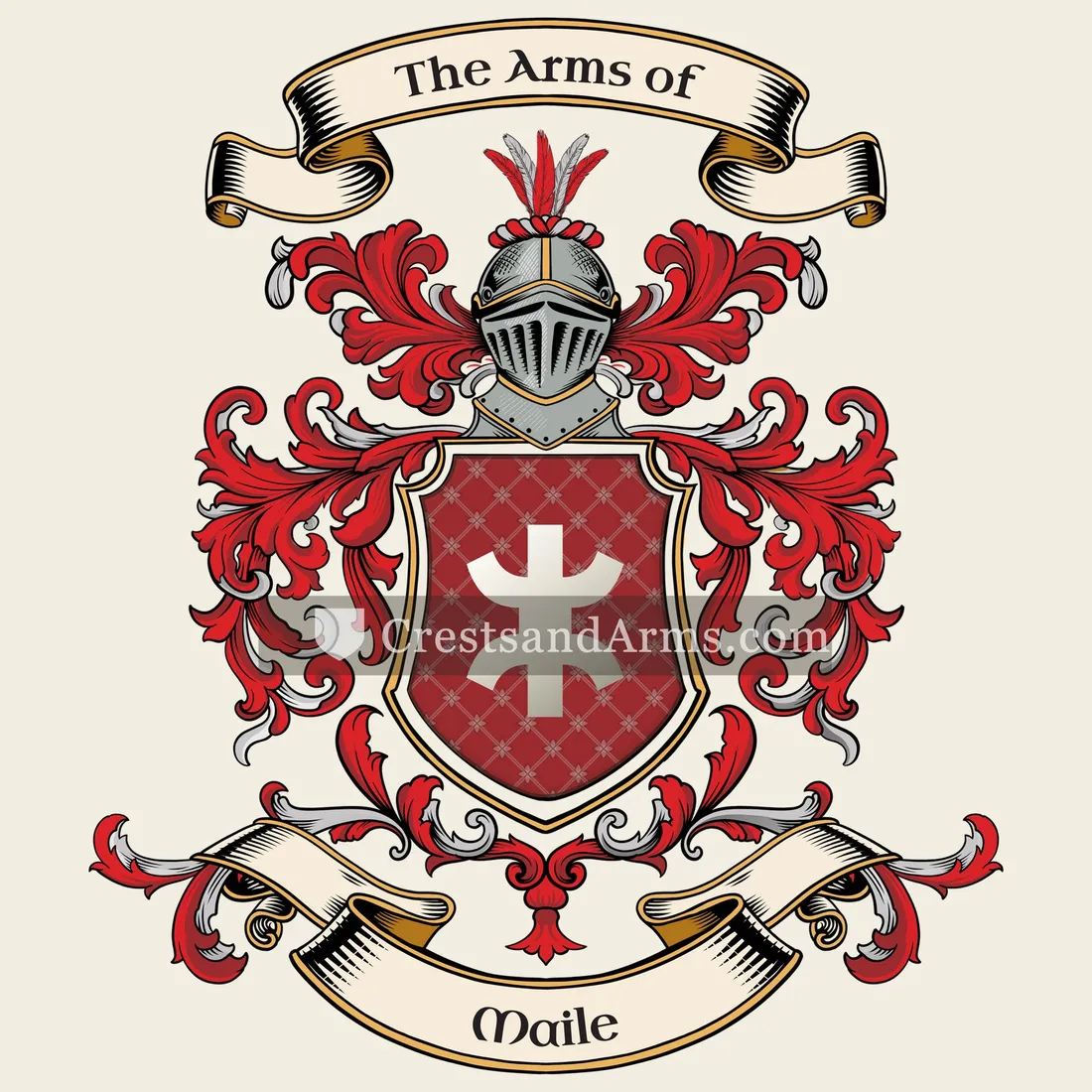
Recorded among the armigerous families of Ile-de-France.
Origin & History of the Maile Family in France
The family name Maile traces its roots back to the historic region of Île-de-France, where members of the family were firmly established by the year 1663. During the seventeenth century, this area served as the political and cultural heart of France, centered around the growing influence of Paris and the royal court at Versailles. Families living in this region during this period were often involved in the agricultural development of the fertile Seine basin or served in the administrative roles that supported the expanding French state. As the name appears in local records from this era, it suggests that the family was part of the common social fabric of the time, likely living in small rural parishes or growing towns. These early ancestors lived through a time of significant transition as France moved toward absolute monarchy, and their presence in the historical record provides a clear link to the traditional life and society of the seventeenth-century French countryside.
Maile Meaning & Related Branches
Root word
Maille
Derived from the Old French word for a mesh or link.
This name
MaileRefers to a maker of chainmail armor or a person living near a specific landmark.
also spelled
Maill
Maile
Mayl
Mal
Documented Sources
J. B. Rietstap, Armorial Général, Gouda: G. B. van Goor Zonen, 1884–87
Archives départementales des Yvelines, État civil et registres paroissiaux
Boudon, Françoise, Système de la ville de Paris, 1977
Foisil, Madeleine, Le Siècle de Louis XIV, 1995
Digital archive packCoat of arms PNG, gold border print PDF, vector SVG and the certificate of authenticity. Sent to your email in minutes.


 millrind / fer de molineThe mill's iron, and the grinding of grain
 millrind / fer de molineThe mill's iron, and the grinding of grain