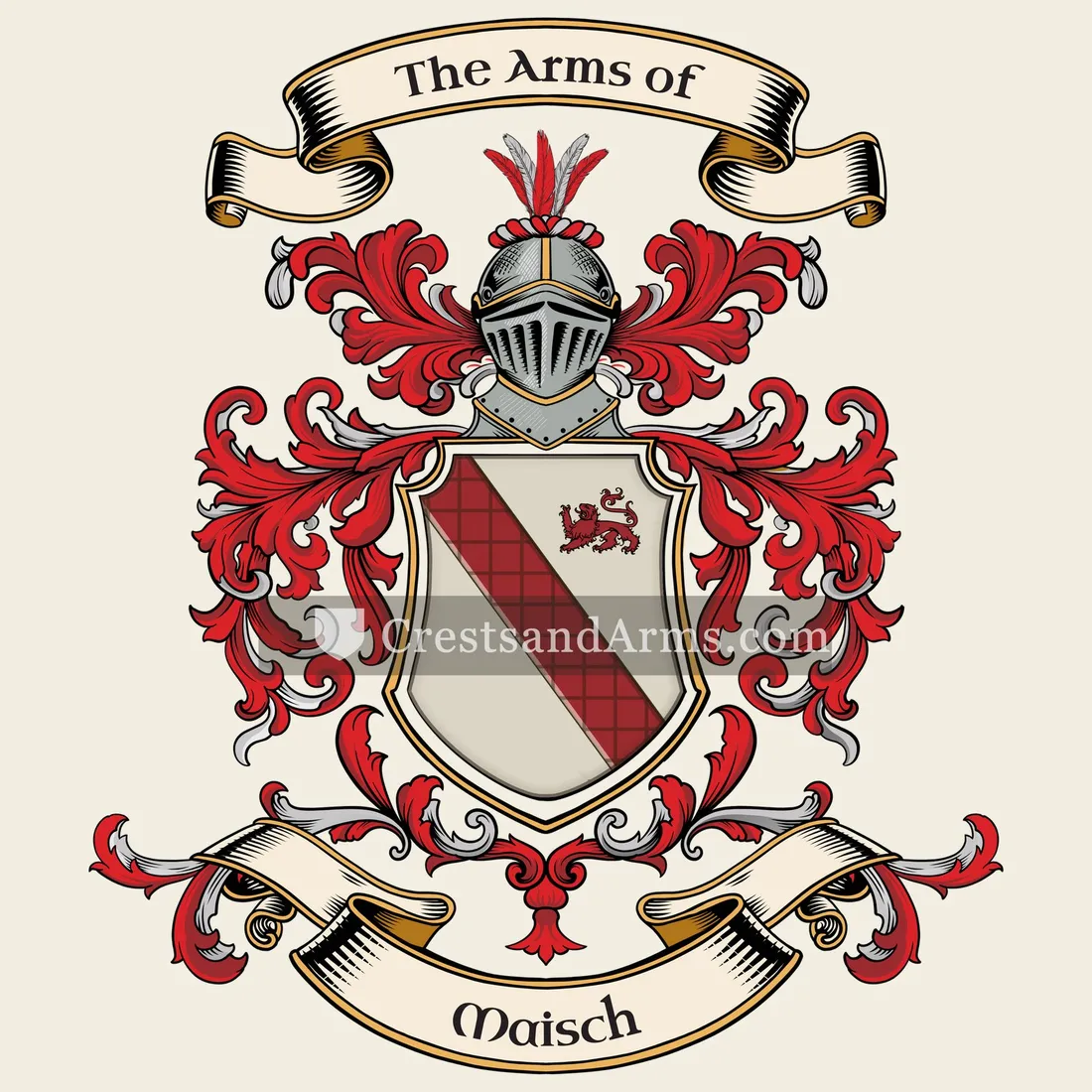
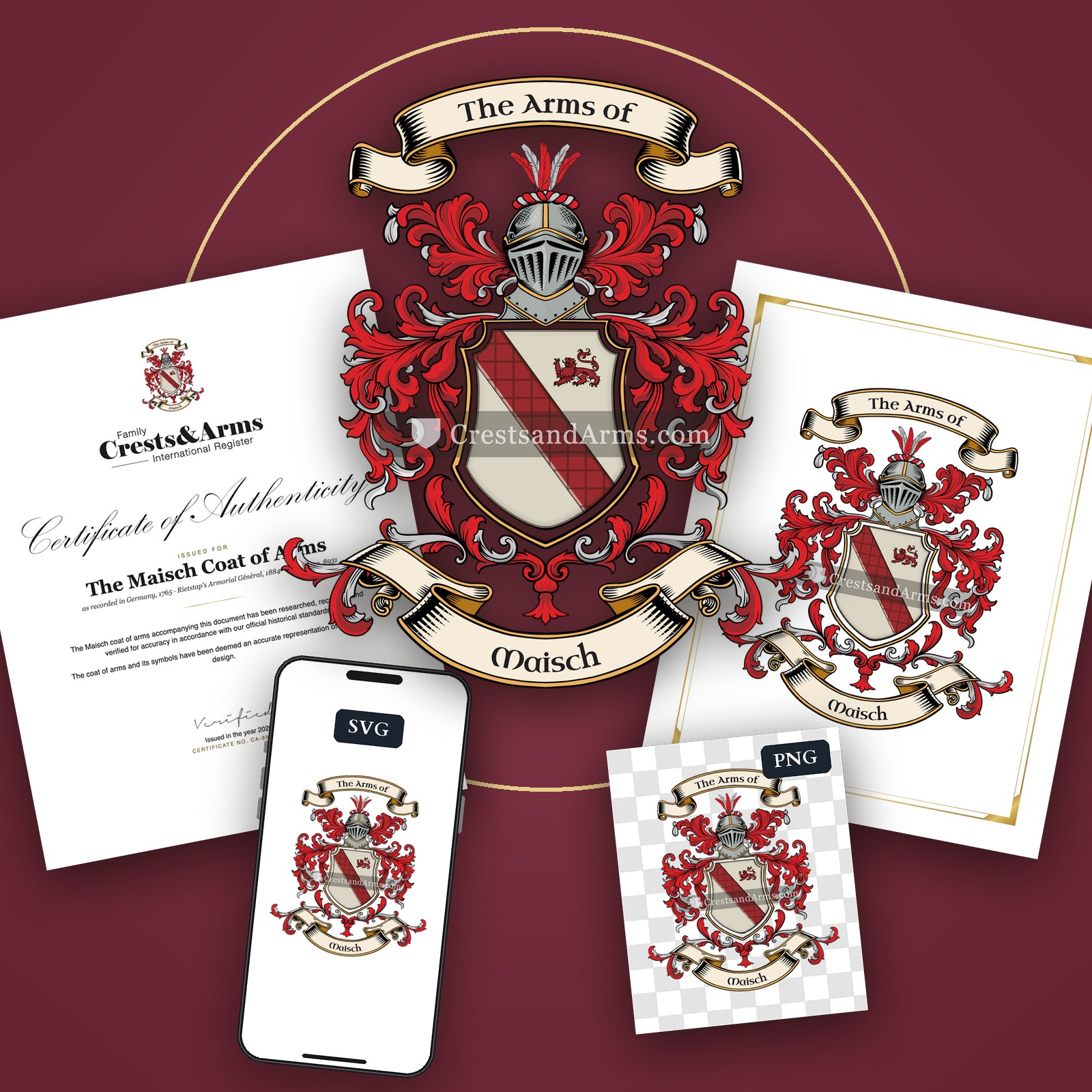
A record of documented arms, meaning and origin, researched for the Maisch family lines. Documented in 2 countries.
Reg. 8931 · German, M–O
Meaning of the Maisch family crest colors & symbols
Symbols on this shield
lionCourage, strength and royalty
Colours
Silver (Argent)Means: Peace and sincerity
Red (Gules)Means: Military strength
Historical info
Source
J. B. Rietstap, Armorial Général, Gouda: G. B. van Goor Zonen, 1884–87
Blazon (the actual original written record)
“D'arg. à deux cotices en barres abaissées de gu., acc. en chef d'un lion léopardé cont. du même, soutenu de la première cotice. Cq. cour. C.: un vol, coupé alt. de gu. et d'arg.”
GermanyNuremberg, c. 1765
Digital archive packCoat of arms PNG, gold border print PDF, vector SVG and the certificate of authenticity. Sent to your email in minutes.
Map of Germany showing where the Maisch arms are recorded
The Maisch arms were recorded in Nuremberg, c. 1765.
This is where the arms were entered in the register. Families often moved to other parts of the country, so the same name can turn up in more than one region.
The body that granted and recorded arms in Germany in this period.
Francis I, Holy Roman Emperor
Sovereign of the period
Francis I, Holy Roman Emperor
1745–1765
Reigning in Germany when the Maisch arms are first recorded.
How Arms Worked in Germany
In the Holy Roman Empire, coats of arms were often granted to individuals by the Emperor or his representatives. These arms were then passed down through the generations to all legitimate descendants of the original holder. Younger branches of a family usually kept the same shield design without needing to change it, as the arms belonged to the entire lineage.
Granting authority
The Holy Roman Emperor held the sole power to grant new coats of arms throughout his vast imperial territories.
How they got arms
Families typically obtained their coats of arms through a formal imperial grant or by proving their noble status to the authorities.
Where arms were recorded
These grants were officially recorded in the Imperial Chancery registers, which began keeping formal records of such honors during the Middle Ages.
The family's standing
Recorded among the armigerous families of Germany.
Origin & History of the Maisch Family in Germany
The family name Maisch has deep roots in the southern regions of Germany, particularly within the bustling trade hub of Nuremberg. By the middle of the eighteenth century, the name was already well-established in this city, which served as a major center for craftsmanship and commerce. The name likely originated as a descriptive nickname or a reference to a person’s occupation, as was common for German surnames during the Middle Ages. In the context of Nuremberg in 1765, families like the Maischs often participated in the city’s specialized guilds, contributing to the reputation of German metalwork and fine manufacturing. As the family navigated the social and economic landscape of the Holy Roman Empire, they became part of the steady growth of urban middle-class life that defined the era. Through their presence in city records, we can see how the family integrated into the local community, helping to shape the historical identity of the region.
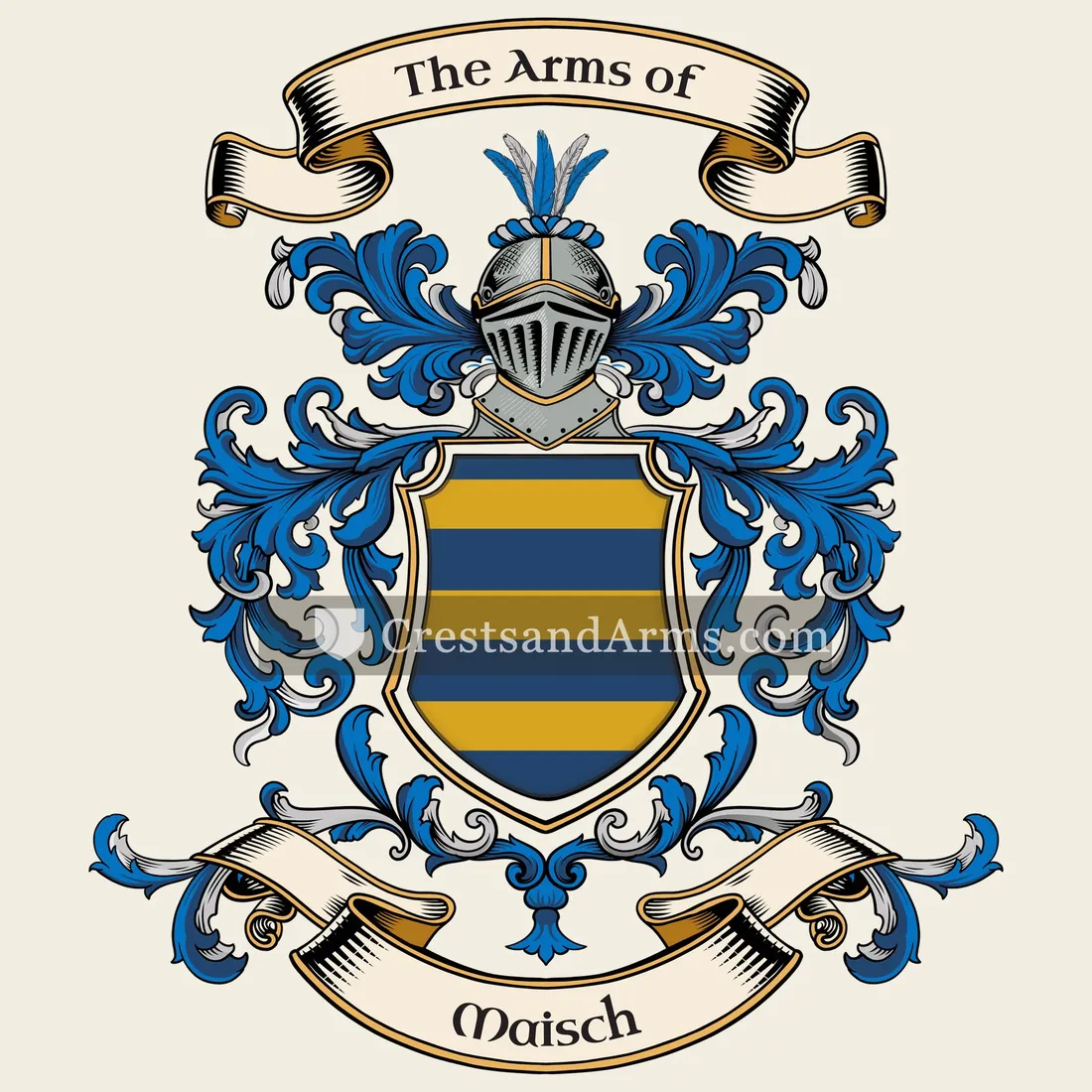
Meaning of the Maisch family crest colors & symbols
Colours
Blue (Azure)Means: Loyalty and truth
Gold (Or)Means: Generosity
Historical info
Source
J. B. Rietstap, Armorial Général, Gouda: G. B. van Goor Zonen, 1884–87
Blazon (the actual original written record)
“D'azur à trois jumelles d'or.”
FlandreFlandre, c. 1663
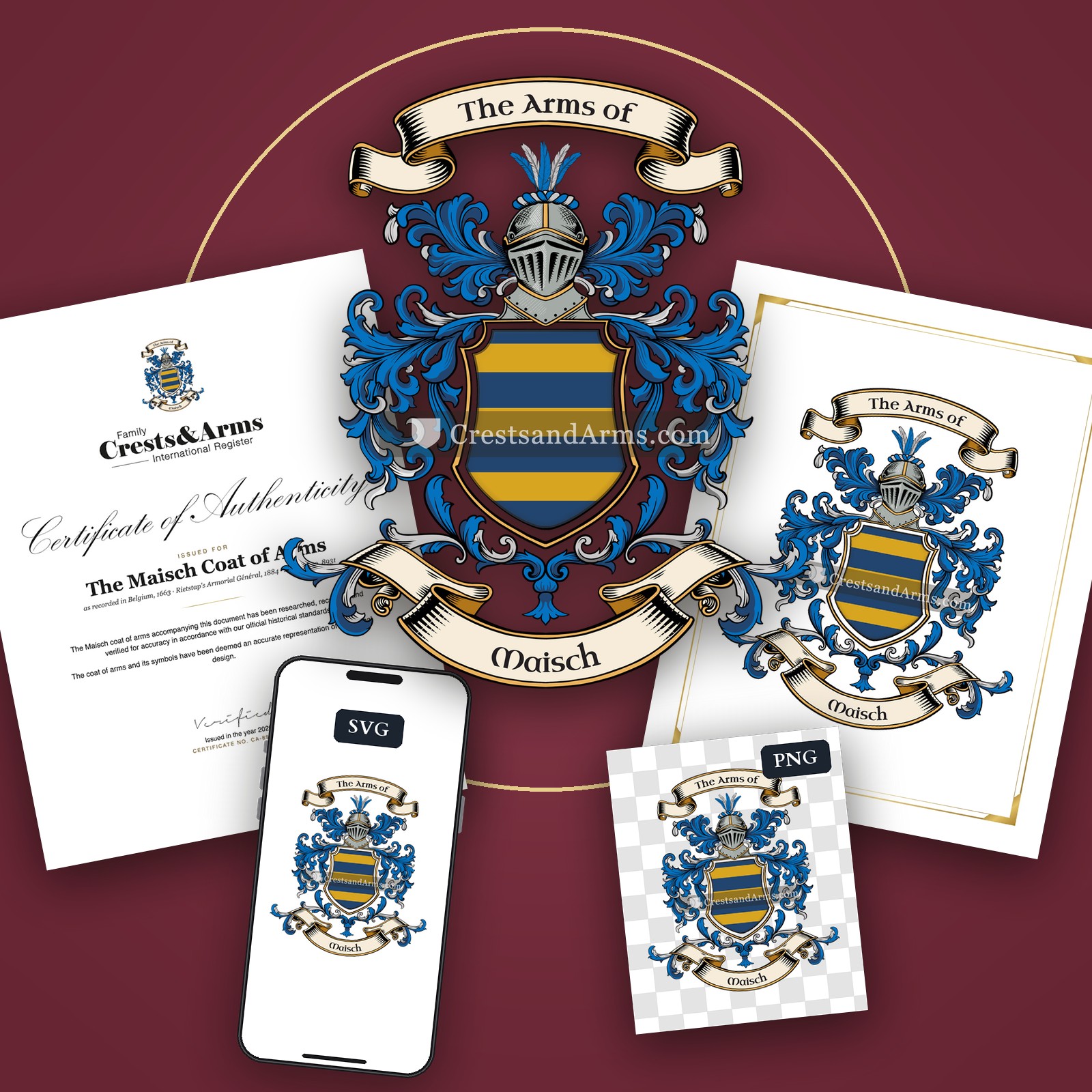
Digital archive packCoat of arms PNG, gold border print PDF, vector SVG and the certificate of authenticity. Sent to your email in minutes.
Map of Belgium showing where the Maisch arms are recorded
The Maisch arms were recorded in Flandre, c. 1663.
Flandre grew rich on cloth, and its towns were among the busiest in Europe. Merchant families bought land with their profits and took arms to go with it, so trade put as many names in the registers here as land did.
This is where the arms were entered in the register. Families often moved to other parts of the country, so the same name can turn up in more than one region.
The body that granted and recorded arms in Belgium in this period.
Philip IV of Spain
Sovereign of the period
Philip IV of Spain
1621–1665
Reigning in Germany when the Maisch arms are first recorded.
How Arms Worked in Belgium
In Belgium, a coat of arms is considered personal property that is passed down through the male line to legitimate descendants. Families often use the same shield design across generations to show their shared heritage. If a branch of the family wants to change the design, they must apply for an official update to their specific version of the arms.
Granting authority
The Conseil héraldique is the official body that regulates and approves all coats of arms in Belgium.
How they got arms
Families obtain their coats of arms through formal royal grants or by confirming their historical right to use existing designs.
Where arms were recorded
All approved coats of arms are officially recorded in the public registers of the Conseil héraldique since 1844.
The family's standing
Recorded among the armigerous families of Flandre.
Origin & History of the Maisch Family in Belgium
The history of the Maisch family in Belgium is rooted in the fertile landscape of the Flanders region during the seventeenth century. Records confirm that members of the family were established in this area by 1663, a time when the region was a center for trade and agricultural development. The name itself likely evolved from regional dialects, reflecting the linguistic blend of Dutch and French influences that defined Flemish society at the time. Families like the Maischs often played a role in the local economy, potentially working as skilled craftsmen or landholders who helped shape the rural communities of the Low Countries. By settling in Flanders, these early ancestors became part of a complex social fabric that survived the political shifts and conflicts of the era. Their presence in the historical record provides a glimpse into the lives of ordinary people who helped build the foundations of modern Belgian society through their labor and community ties.
Maisch Meaning & Related Branches
Root word
Mais
A Middle High German term referring to the month of May.
This name
MaischA nickname for someone born in May or associated with spring festivities.
also spelled
Masche
Mash
Documented Sources
J. B. Rietstap, Armorial Général, Gouda: G. B. van Goor Zonen, 1884–87
Heintze, Albert. Die deutschen Familiennamen, geschichtlich, geographisch, sprachlich. 1903


 lionCourage, strength and royalty
 lionCourage, strength and royalty