A record of documented arms, meaning and origin, researched for the Maish family lines. Documented in 2 countries.
Reg. 1990 · German, M–O
Coat of Arms & Family Crest Details
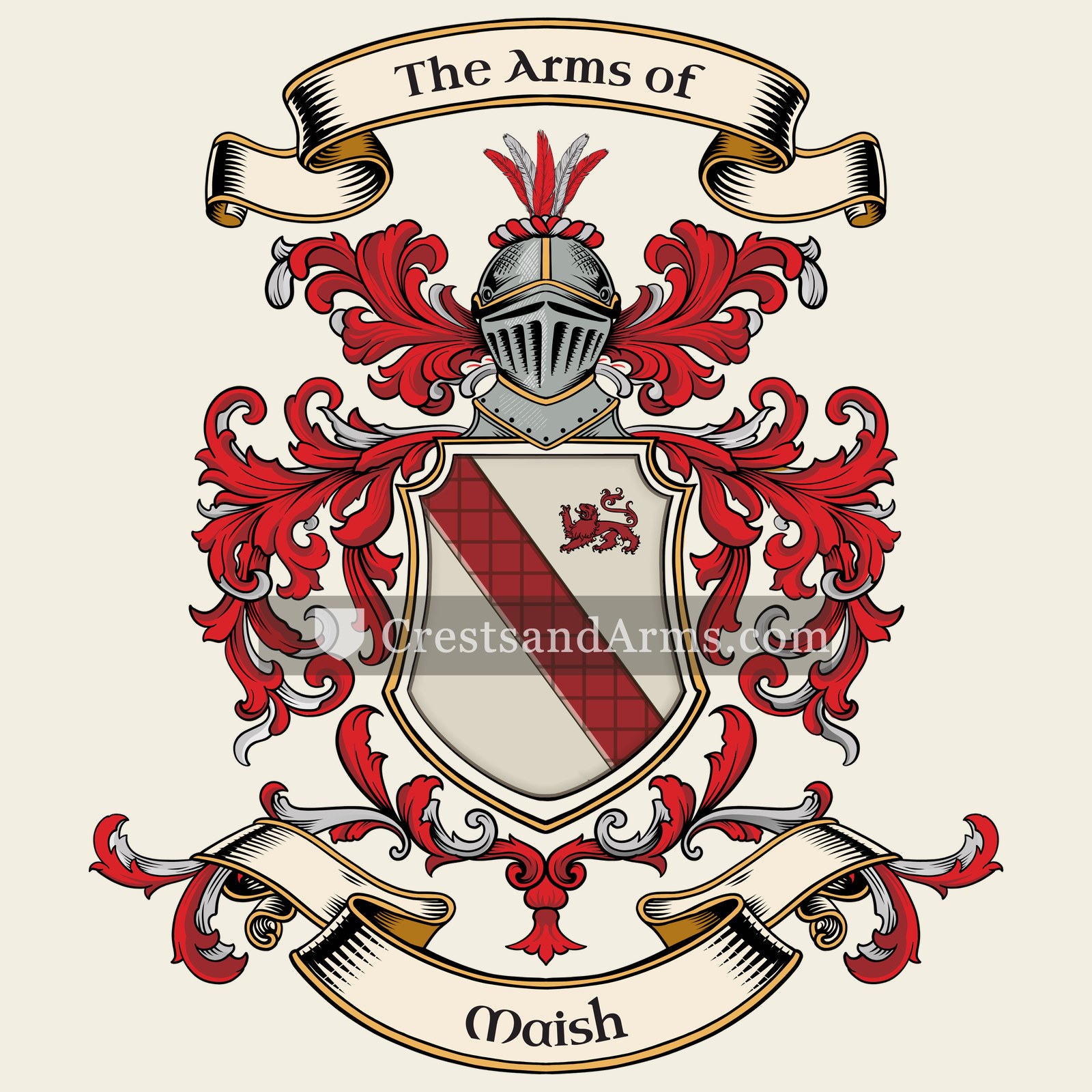
Symbols on this shield
lionCourage, strength and royalty
Colours
Silver (Argent)Means: Peace and sincerity
Red (Gules)Means: Military strength
Historical info
Source
J. B. Rietstap, Armorial Général, Gouda: G. B. van Goor Zonen, 1884–87
Blazon (the actual original written record)
“D'arg. à deux cotices en barres abaissées de gu., acc. en chef d'un lion léopardé cont. du même, soutenu de la première cotice. Cq. cour. C.: un vol, coupé alt. de gu. et d'arg.”
GermanyNuremberg, c. 1765
Digital archive packCoat of arms PNG, gold border print PDF, vector SVG and the certificate of authenticity. Sent to your email in minutes.
Map of Germany showing where the Maish arms are recorded
The Maish arms were recorded in Nuremberg, c. 1765.
This is where the arms were entered in the register. Families often moved to other parts of the country, so the same name can turn up in more than one region.
The body that granted and recorded arms in Germany in this period.
Francis I, Holy Roman Emperor
Sovereign of the period
Francis I, Holy Roman Emperor
1745–1765
Reigning in Germany when the Maish arms are first recorded.
How Arms Worked in Germany
In the Holy Roman Empire, coats of arms were often granted to individuals by the Emperor or his representatives. These arms were then passed down through the generations to all legitimate descendants of the original holder. Younger branches of a family usually kept the same shield design without needing to change it, as the arms belonged to the entire lineage.
Granting authority
The Holy Roman Emperor held the sole power to grant new coats of arms throughout his vast imperial territories.
How they got arms
Families typically obtained their coats of arms through a formal imperial grant or by proving their noble status to the authorities.
Where arms were recorded
These grants were officially recorded in the Imperial Chancery registers, which began keeping formal records of such honors during the Middle Ages.
The family's standing
Recorded among the armigerous families of Germany.
Origin & History of the Maish Family in Germany
The history of the Maish family in Germany is deeply rooted in the bustling urban environment of Nuremberg during the mid-eighteenth century. By 1765, records confirm that members of the family were established residents of this city, which was then a major center for trade, skilled craftsmanship, and intellectual growth. The name itself likely evolved from regional dialects or occupational descriptions common to the Franconian area, reflecting the way families were identified by their neighbors or their specific roles within the local guilds. Living in a city known for its metalworking and clockmaking industries, the Maish family would have been part of a society that valued precision and hard work. As the family navigated the social and economic changes of the Enlightenment era, their presence in Nuremberg suggests they were integrated into the fabric of a city that served as a vital crossroads for commerce and culture in the Holy Roman Empire.
Coat of Arms & Family Crest Details
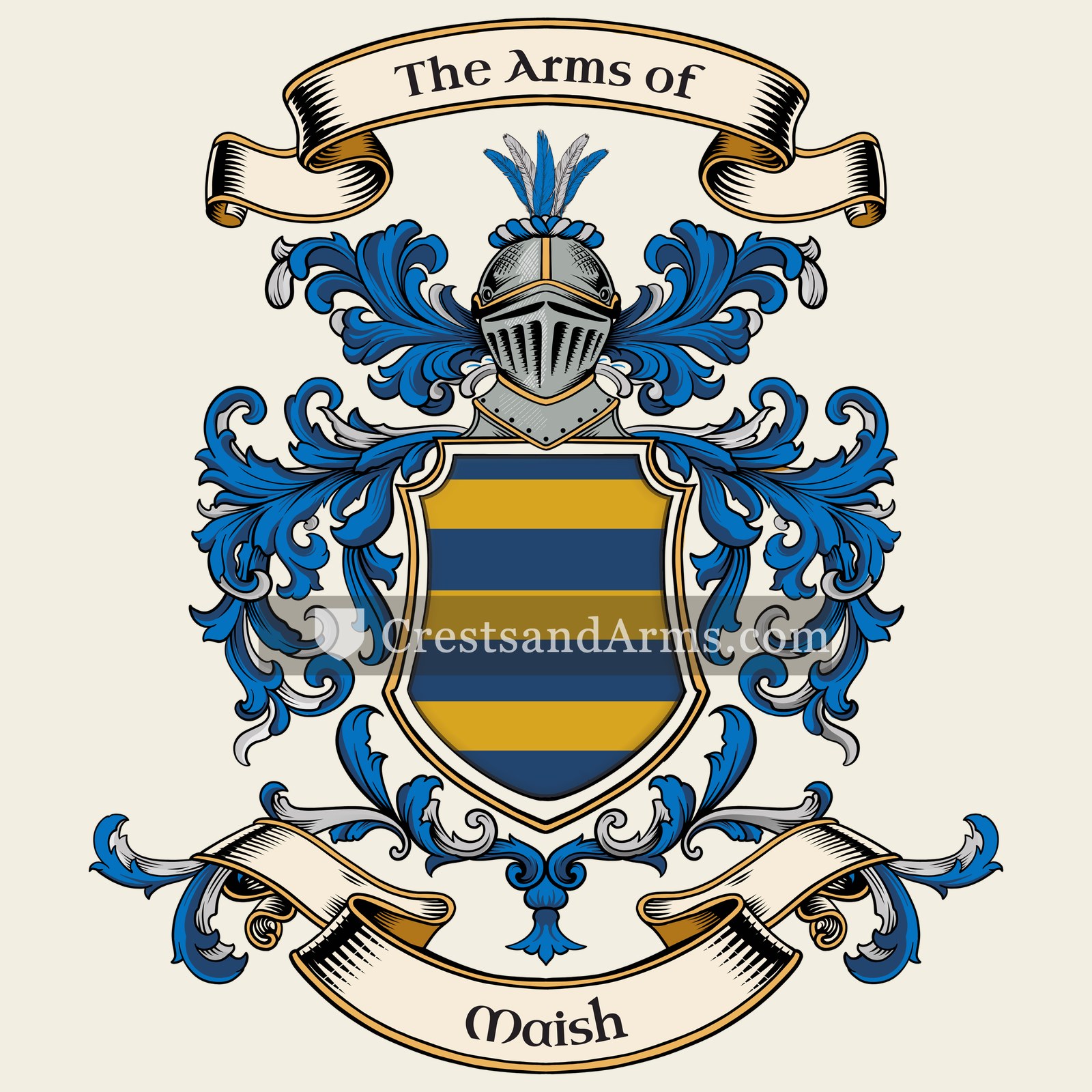
Colours
Blue (Azure)Means: Loyalty and truth
Gold (Or)Means: Generosity
Historical info
Source
J. B. Rietstap, Armorial Général, Gouda: G. B. van Goor Zonen, 1884–87
Blazon (the actual original written record)
“D'azur à trois jumelles d'or.”
FlandreFlandre, c. 1663
Digital archive packCoat of arms PNG, gold border print PDF, vector SVG and the certificate of authenticity. Sent to your email in minutes.
Map of Belgium showing where the Maish arms are recorded
The Maish arms were recorded in Flandre, c. 1663.
Flandre grew rich on cloth, and its towns were among the busiest in Europe. Merchant families bought land with their profits and took arms to go with it, so trade put as many names in the registers here as land did.
This is where the arms were entered in the register. Families often moved to other parts of the country, so the same name can turn up in more than one region.
The body that granted and recorded arms in Belgium in this period.
Philip IV of Spain
Sovereign of the period
Philip IV of Spain
1621–1665
Reigning in Germany when the Maish arms are first recorded.
How Arms Worked in Belgium
In Belgium, a coat of arms is considered personal property that is passed down through the male line to legitimate descendants. Families often use the same shield design across generations to show their shared heritage. If a branch of the family wants to change the design, they must apply for an official update to their specific version of the arms.
Granting authority
The Conseil héraldique is the official body that regulates and approves all coats of arms in Belgium.
How they got arms
Families obtain their coats of arms through formal royal grants or by confirming their historical right to use existing designs.
Where arms were recorded
All approved coats of arms are officially recorded in the public registers of the Conseil héraldique since 1844.
The family's standing
Recorded among the armigerous families of Flandre.
Origin & History of the Maish Family in Belgium
The history of the Maish family in Belgium begins in the seventeenth century, specifically within the historic region of Flanders. By 1663, records confirm that members of the family were established in this area, which was then a center of trade and agriculture under the influence of the Spanish Netherlands. During this period, the name likely functioned as a geographic or occupational identifier, reflecting the linguistic shifts occurring in the Low Countries as local dialects evolved into standardized forms of Dutch and French. Families in this region often lived in small, tightly knit communities where they contributed to the local economy through farming or craftsmanship. As the population grew, the Maish name became anchored in the local parish records, which served as the primary way for officials to track births, marriages, and deaths. These early ancestors lived through a time of significant political transition, witnessing the shifting borders and religious changes that defined the seventeenth-century Flemish landscape.
Related Branches & Arms
Root word
Matthias
Derived from the Hebrew name Mattityahu meaning gift of God.
This name
MaishA German patronymic surname originating as a diminutive or variant form of the name Matthias.
also spelled
Masche
Mash
Documented Sources
J. B. Rietstap, Armorial Général, Gouda: G. B. van Goor Zonen, 1884–87
Stadtarchiv Nürnberg, Bürgerbücher der Stadt Nürnberg, 1765
Bayerisches Staatsarchiv Nürnberg, Reichsstädtische Akten: Handwerks- und Zunftwesen, 1765
Digital archive packCoat of arms PNG, gold border print PDF, vector SVG and the certificate of authenticity. Sent to your email in minutes.


 lionCourage, strength and royalty
 lionCourage, strength and royalty