Map of France showing where the Malay arms are recorded
The Malay arms were recorded in Languedoc, c. 1663.
Languedoc stretched across the south of France, a country of small towns, vineyards and old local families. Its gentry were numerous rather than grand, and a great many of them held arms even where their estates were modest.
This is where the arms were entered in the register. Families often moved to other parts of the country, so the same name can turn up in more than one region.
The body that granted and recorded arms in France in this period.
Louis XIV of France
Sovereign of the period
Louis XIV of France
1643–1715
Reigning in France when the Malay arms are first recorded.
How Arms Worked in France
In France, a coat of arms was a mark of honor that passed down through the male line to all legitimate descendants. Families often used the same shield without changes to show their shared heritage. If a branch wanted to stand out, they could add a small mark to their shield to show their specific place in the family tree.
Granting authority
The Juge d'armes de France acted as the official authority that regulated and verified coats of arms across the country.
How they got arms
Families typically inherited their arms from ancestors, though they could also receive them through royal grants or by proving their noble status.
Where arms were recorded
Coats of arms were officially recorded in the Armorial Général de France, which began its main collection in the year 1696.
The family's standing
Recorded among the armigerous families of Languedoc.
Origin & History of the Malay Family in France
The history of the Malay family in France is deeply rooted in the Languedoc region, where records confirm their presence as early as 1663. During the seventeenth century, this area was a vibrant center of agricultural and social life in southern France. Families like the Malays often lived in rural communities where they were closely tied to the land and local parish administration. Because the name appears in regional documentation during this period, it is likely that the family was part of the local social fabric that navigated the complex religious and political changes occurring under the reign of King Louis XIV. By maintaining a steady presence in Languedoc, the family became part of the long history of families who helped shape the culture and traditions of the French south through generations of farming, trade, and community involvement.
Meaning of the Malay family crest colors & symbols
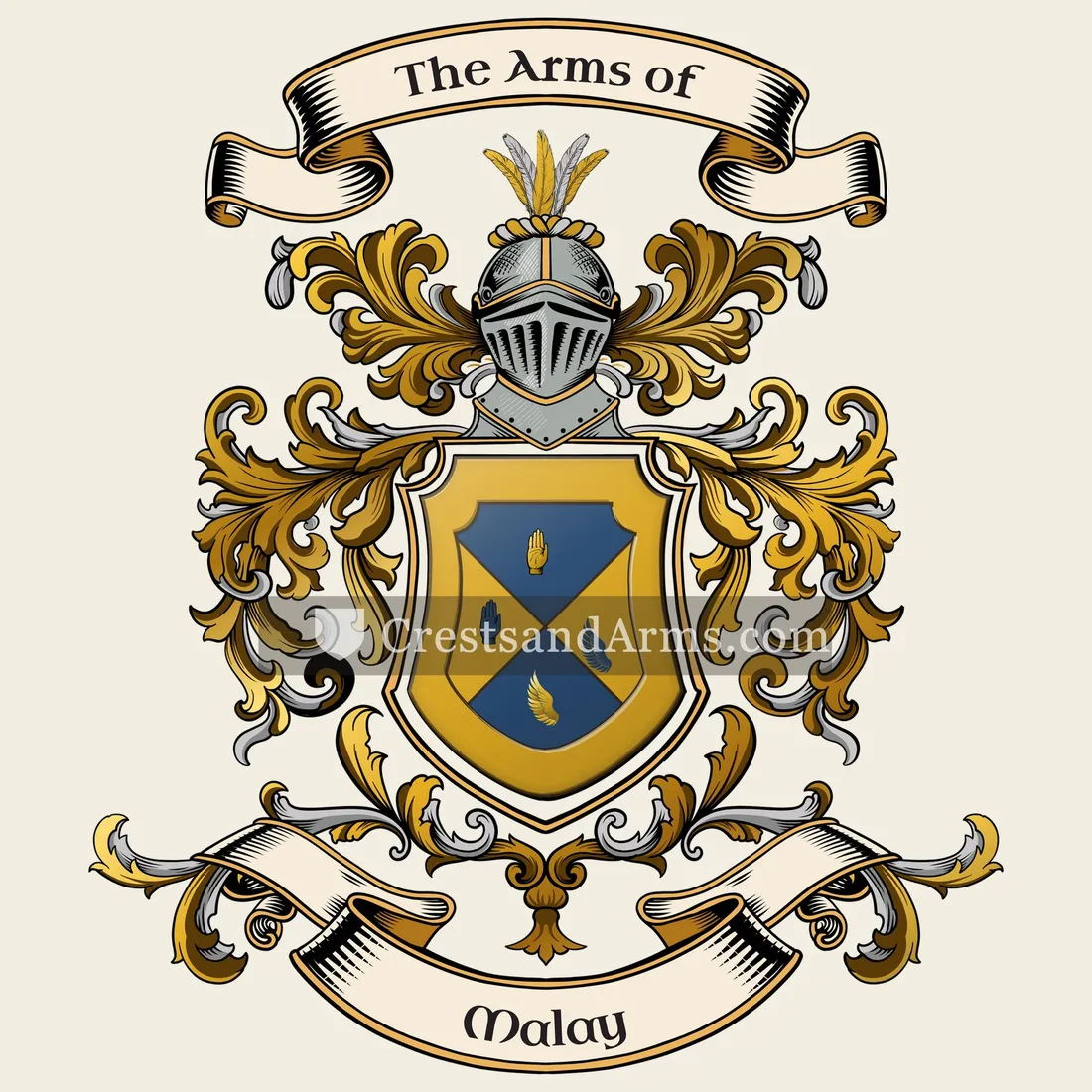
Symbols on this shield
handFaith, sincerity and justice
wingSwiftness, and protection under a raised wing
Colours
Gold (Or)Means: Generosity
Blue (Azure)Means: Loyalty and truth
Historical info
Source
J. B. Rietstap, Armorial Général, Gouda: G. B. van Goor Zonen, 1884–87
Blazon (the actual original written record)
“Ec. en saut.: en chef et en p. d'or à une main dextre appaumée de carn.; à dextre et à sen. d'azur à un demi-vol abaissé d'or, celui à dextre cont. L'écu entouré d'une bord. denchée de l'un en l'autre.”
CastileCastile, c. 1722
Digital archive packCoat of arms PNG, gold border print PDF, vector SVG and the certificate of authenticity. Sent to your email in minutes.
Map of Spain showing where the Malay arms are recorded
The Malay arms were recorded in Castile, c. 1722.
Castile was the heart of Spain and the source of most of its noble families. Land won in the long wars against the Moors was granted out to fighting men, and a man granted land was granted arms along with it.
This is where the arms were entered in the register. Families often moved to other parts of the country, so the same name can turn up in more than one region.
The body that granted and recorded arms in Spain in this period.
Philip V of Spain
Sovereign of the period
Philip V of Spain
1714–1724
Reigning in France when the Malay arms are first recorded.
How Arms Worked in Spain
In Spain, a coat of arms was considered a form of property that belonged to the entire family line. These arms were passed down from a father to all his children equally. Younger branches of the family usually kept the original design without needing to add any special marks to distinguish their specific line.
Granting authority
The Cronista Rey de Armas was the official body that regulated and granted coats of arms throughout Spain.
How they got arms
Families often obtained their arms through royal grants or by proving their noble status to the official heraldic authority.
Where arms were recorded
Coats of arms were officially recorded in the registers of the Cronista Rey de Armas starting in 1496.
The family's standing
Recorded among the armigerous families of Castile.
Origin & History of the Malay Family in Spain
The family name Malay has roots that trace back to the rugged landscapes of Castile during the early eighteenth century. By 1722, records confirm that members of this family were established residents within the Spanish heartland. During this era, Castile was a region defined by its agricultural traditions and its role as the political center of the Spanish Empire. Families living in this area often moved between rural villages and growing administrative hubs to find work in trade or local government. The name Malay likely emerged as a way to identify these specific individuals within their local parish communities. As they settled into their lives in Castile, these early ancestors helped shape the social fabric of their towns through their daily labor and community involvement. Their presence in the historical record during this time suggests a family that was well-integrated into the local life of the Spanish interior.
Malay Meaning & Related Branches
Root word
Mala
Latin term for bad or evil, often denoting a difficult location.
This name
MalayA topographic surname referring to someone living near a bad or infertile piece of land.
also spelled
Mallet
Malle
Mallett
Malay
Maletts
Documented Sources
J. B. Rietstap, Armorial Général, Gouda: G. B. van Goor Zonen, 1884–87
Archives départementales de l'Hérault, Registres paroissiaux et d'état civil
Le Roy Ladurie, Emmanuel, Les Paysans de Languedoc, 1966
Digital archive packCoat of arms PNG, gold border print PDF, vector SVG and the certificate of authenticity. Sent to your email in minutes.


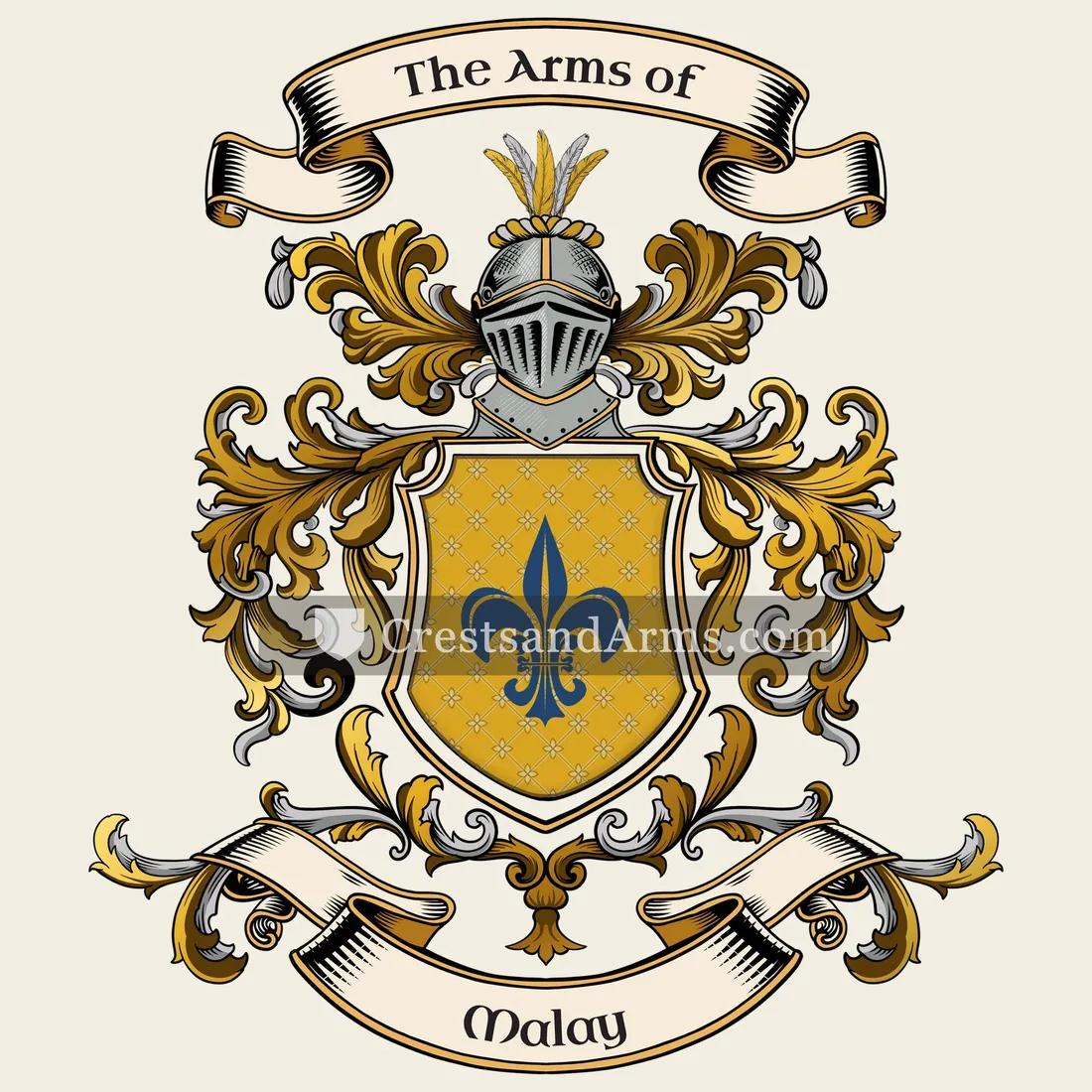
 fleur de lisPurity, light, and the sixth son
 fleur de lisPurity, light, and the sixth son


 handFaith, sincerity and justice
 wingSwiftness, and protection under a raised wing