A record of documented arms, meaning and origin, researched for the Malin family lines. Documented in 2 countries.
Reg. 3994 · Belgian, M–O
Coat of Arms & Family Crest Details
Symbols on this shield
paleMilitary strength, and a fortified defence
Colours
Gold (Or)Means: Generosity
Red (Gules)Means: Military strength
Historical info
Source
J. B. Rietstap, Armorial Général, Gouda: G. B. van Goor Zonen, 1884–87
Blazon (the actual original written record)
“D'or à trois pals de gu. C.: une tête et col d'âne au nat.; ou, un buste de femme, posé de profil, hab. de gu., cour. et chevelé d'or, les cheveux tressés. Cri: BERTHOUT!”
BrabantBrabant, c. 1737
Digital archive packCoat of arms PNG, gold border print PDF, vector SVG and the certificate of authenticity. Sent to your email in minutes.
Map of Belgium showing where the Malin arms are recorded
The Malin arms were recorded in Brabant, c. 1737.
Brabant lay at the heart of the Low Countries, where the trade routes met. Its towns were wealthy and its landowners many, and both kinds of family kept arms, which is why the region is so heavily represented.
This is where the arms were entered in the register. Families often moved to other parts of the country, so the same name can turn up in more than one region.
The body that granted and recorded arms in Belgium in this period.
Charles VI, Holy Roman Emperor
Sovereign of the period
Charles VI, Holy Roman Emperor
1711–1740
Reigning in Belgium when the Malin arms are first recorded.
How Arms Worked in Belgium
In Belgium, a coat of arms is considered personal property that is passed down through the male line to legitimate descendants. Families often use the same shield design across generations to show their shared heritage. If a branch of the family wants to change the design, they must apply for an official update to their specific version of the arms.
Granting authority
The Conseil héraldique is the official body that regulates and approves all coats of arms in Belgium.
How they got arms
Families obtain their coats of arms through formal royal grants or by confirming their historical right to use existing designs.
Where arms were recorded
All approved coats of arms are officially recorded in the public registers of the Conseil héraldique since 1844.
The family's standing
Recorded among the armigerous families of Brabant.
Origin & History of the Malin Family in Belgium
The history of the Malin family in Belgium is deeply rooted in the historical region of Brabant, where records confirm their presence as early as 1737. During the eighteenth century, Brabant was a bustling center of trade and agriculture under the rule of the Austrian Netherlands. Families like the Malins often lived in rural or semi-urban communities where they contributed to the local economy through farming or skilled craftsmanship. Because the name appears in parish registers and local administrative documents from this era, it suggests that the family was well-integrated into the social fabric of their village. Over the following decades, the family likely navigated the significant political shifts of the region, including the transition from Austrian rule to the eventual formation of the modern Belgian state. By maintaining a steady presence in Brabant, the Malin family became part of the long-standing demographic history that defines the central provinces of Belgium today.
Coat of Arms & Family Crest Details
Symbols on this shield
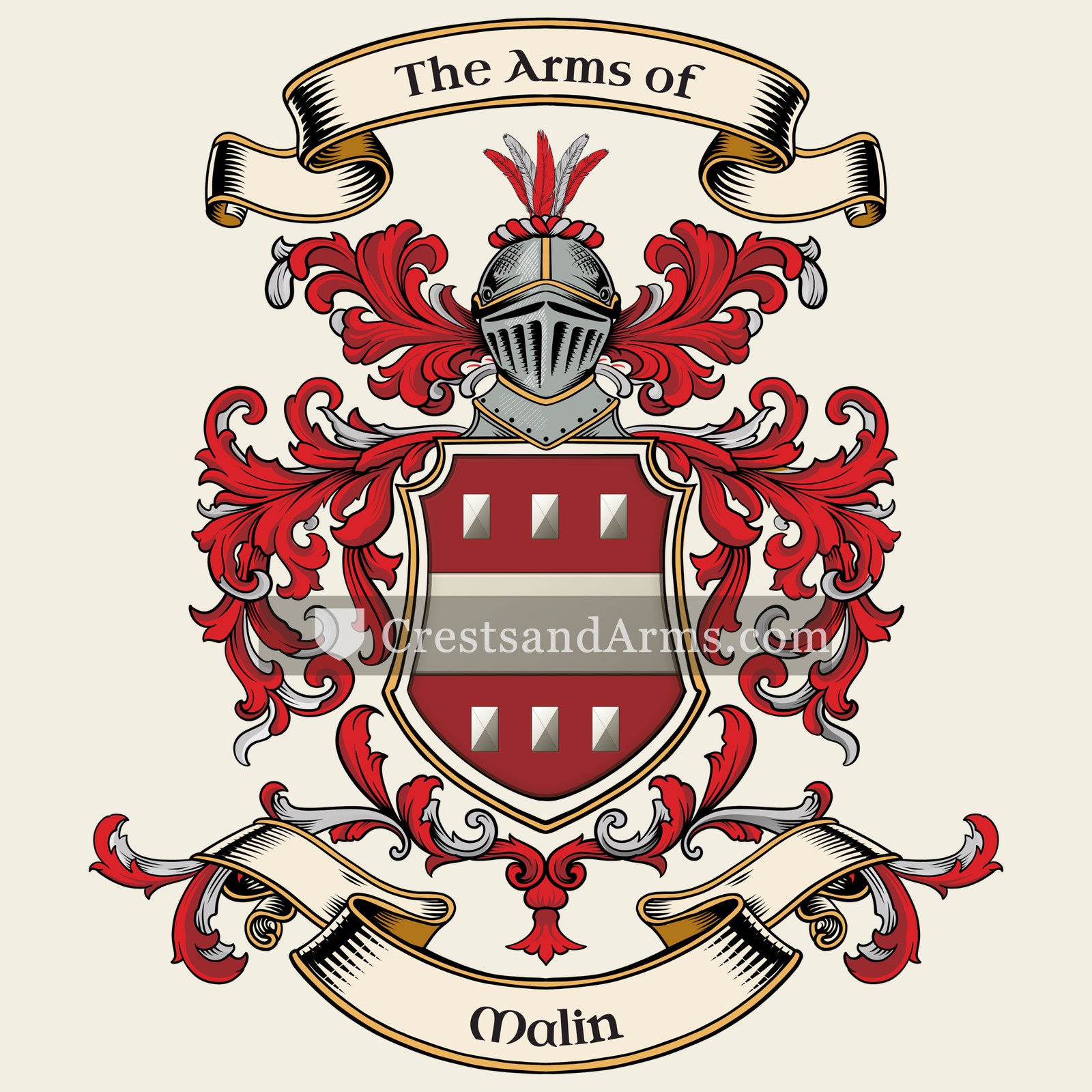
fessThe military belt, and readiness to serve
billetThe sealed letter, and a message delivered
Colours
Red (Gules)Means: Military strength
Silver (Argent)Means: Peace and sincerity
Historical info
Source
Sir Bernard Burke, The General Armory of England, Scotland, Ireland and Wales, London: Harrison & Sons, 1884
Blazon (the actual original written record)
“Gu. a fess cotised ar. betw. six billets of the second”
Englandc. 1620
Digital archive packCoat of arms PNG, gold border print PDF, vector SVG and the certificate of authenticity. Sent to your email in minutes.
Map of England showing where the Malin arms are recorded
The Malin arms were recorded in England, c. 1620.
Arms such as these were typically recorded in York.
Yorkshire is the largest of the English counties, and it held more gentry families than any other. Land there was split among a great many households rather than a few, so a great many of them carried arms.
This is where the arms were entered in the register. Families often moved to other parts of the country, so the same name can turn up in more than one region.
The body that granted and recorded arms in England in this period.
James VI and I
Sovereign of the period
James VI and I
1603–1625
Reigning in Belgium when the Malin arms are first recorded.
How Arms Worked in England
English heraldry allowed arms to be shared by all legitimate descendants of the original owner. These symbols were treated as personal property that moved through the generations to all children. While the eldest son kept the original design, other family members could use the same shield without needing to change it or register their own unique versions.
Granting authority
The College of Arms in London has regulated the use of coats of arms throughout England and Wales since 1484.
How they got arms
Families typically obtained their coats of arms through a formal grant from the Crown or by proving their ancient right to them.
Where arms were recorded
All official coats of arms are recorded in the registers kept at the College of Arms, which date back to the fifteenth century.
The family's standing
Recorded among the armigerous families of England.
Origin & History of the Malin Family in England
The family name Malin has deep roots in northern England, with documented evidence placing members of the family in the historic city of York by the year 1620. During the early seventeenth century, York served as a vital center of commerce and administration, and families like the Malins were often integrated into the local trades or civic life of the region. The name itself is thought to be a variation of medieval personal names, possibly derived from the Old French name Maline or linked to local topographic features. As the family established their presence in York, they became part of the social fabric of a city defined by its ancient walls and its role as a northern capital. This early period was a time of significant change in England, and the presence of the Malin name in city records suggests a family that was settled, active, and connected to the evolving landscape of northern English society.
Related Branches & Arms
Root word
Malle
Old French term for a trunk, chest, or piece of luggage.
This name
MalinOccupational name for a maker or seller of trunks and chests.
also spelled
Maline
Malinnes
Malin
Maleen
Documented Sources
J. B. Rietstap, Armorial Général, Gouda: G. B. van Goor Zonen, 1884–87
State Archives in Belgium (Rijksarchief), Parochieregisters van de provincie Brabant
State Archives in Belgium (Rijksarchief), Registers van de Burgerlijke Stand van de provincie Brabant
Verbeemen, J., De geschiedenis van Brabant, 1975
Willems, J., Demografische evolutie in de Zuidelijke Nederlanden, 1982
Digital archive packCoat of arms PNG, gold border print PDF, vector SVG and the certificate of authenticity. Sent to your email in minutes.


 paleMilitary strength, and a fortified defence
 paleMilitary strength, and a fortified defence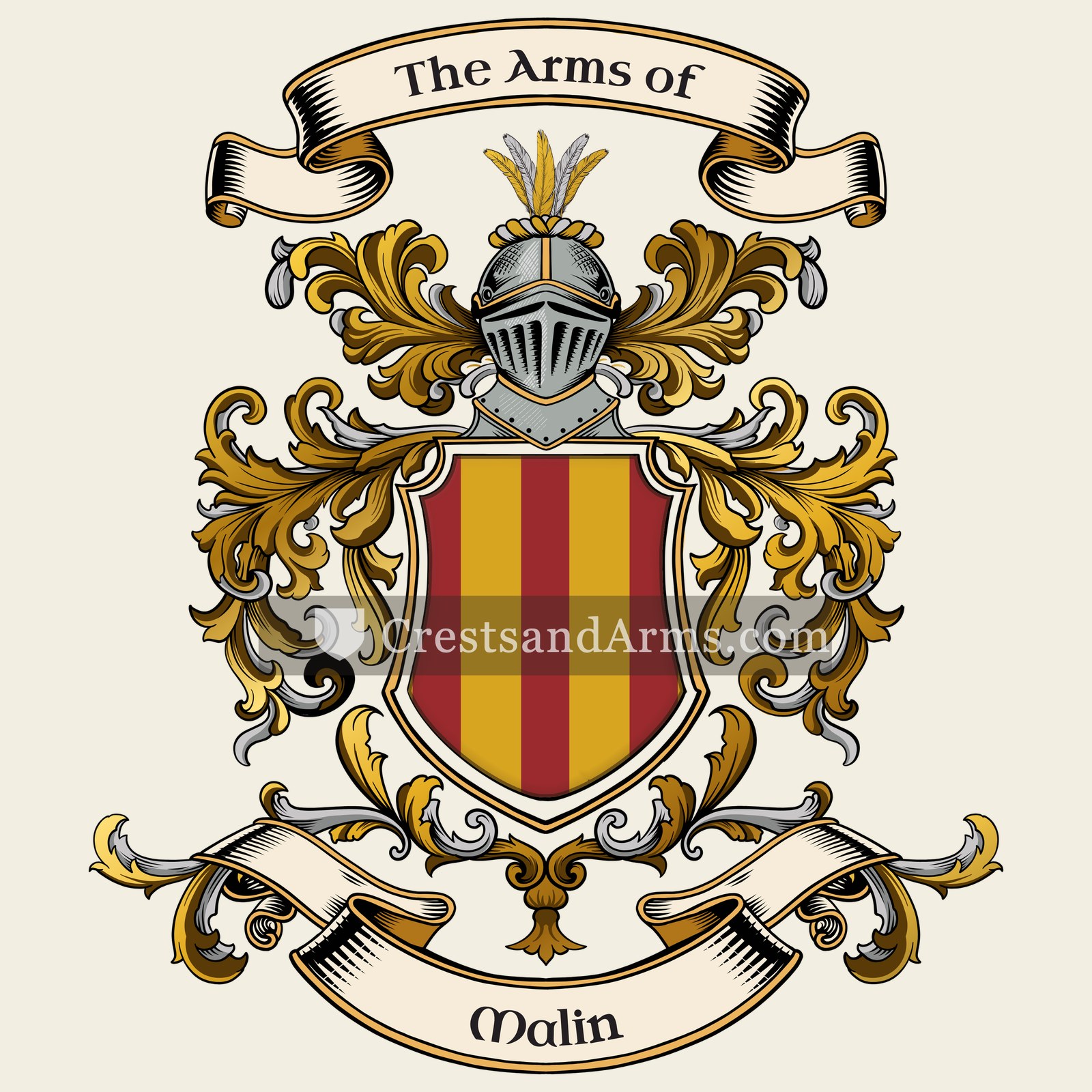


 fessThe military belt, and readiness to serve
 billetThe sealed letter, and a message delivered