Map of France showing where the Manger arms are recorded
The Manger arms were recorded in France, c. 1787.
Arms such as these were typically recorded in Bretagne.
More families held coats of arms in Bretagne than anywhere else in France. The land was divided into many small estates rather than a few large ones, so far more households counted as gentry, and each needed a shield of its own to be told apart.
This is where the arms were entered in the register. Families often moved to other parts of the country, so the same name can turn up in more than one region.
The body that granted and recorded arms in France in this period.
Louis XVI of France
Sovereign of the period
Louis XVI of France
1774–1791
Reigning in France when the Manger arms are first recorded.
How Arms Worked in France
In France, a coat of arms was a mark of honor that passed down through the male line to all legitimate descendants. Families often used the same shield without changes to show their shared heritage. If a branch wanted to stand out, they could add a small mark to their shield to show their specific place in the family tree.
Granting authority
The Juge d'armes de France acted as the official authority that regulated and verified coats of arms across the country.
How they got arms
Families typically inherited their arms from ancestors, though they could also receive them through royal grants or by proving their noble status.
Where arms were recorded
Coats of arms were officially recorded in the Armorial Général de France, which began its main collection in the year 1696.
The family's standing
Recorded among the armigerous families of France.
Origin & History of the Manger Family in France
The family name Manger has deep roots in the Brittany region of France, where records confirm the presence of family members as early as 1787. The name itself is likely derived from the Old French word *mangier*, which translates to "to eat." In the context of medieval naming customs, this was often a descriptive nickname used to identify someone who worked as a food provider, a caterer, or perhaps a person known for their hospitality at a communal table. During the late 18th century, families in Brittany often lived in tight-knit rural communities where such occupational names helped distinguish individuals within local parish registers. As the family established their life in this coastal province, they became part of the social fabric of a region defined by its unique Celtic heritage and strong maritime traditions. By the time of the French Revolution, the Manger family was already well-integrated into the local administrative life of their district, leaving behind a clear paper trail in the regional archives that documents their daily existence and community standing.
Meaning of the Manger family crest colors & symbols
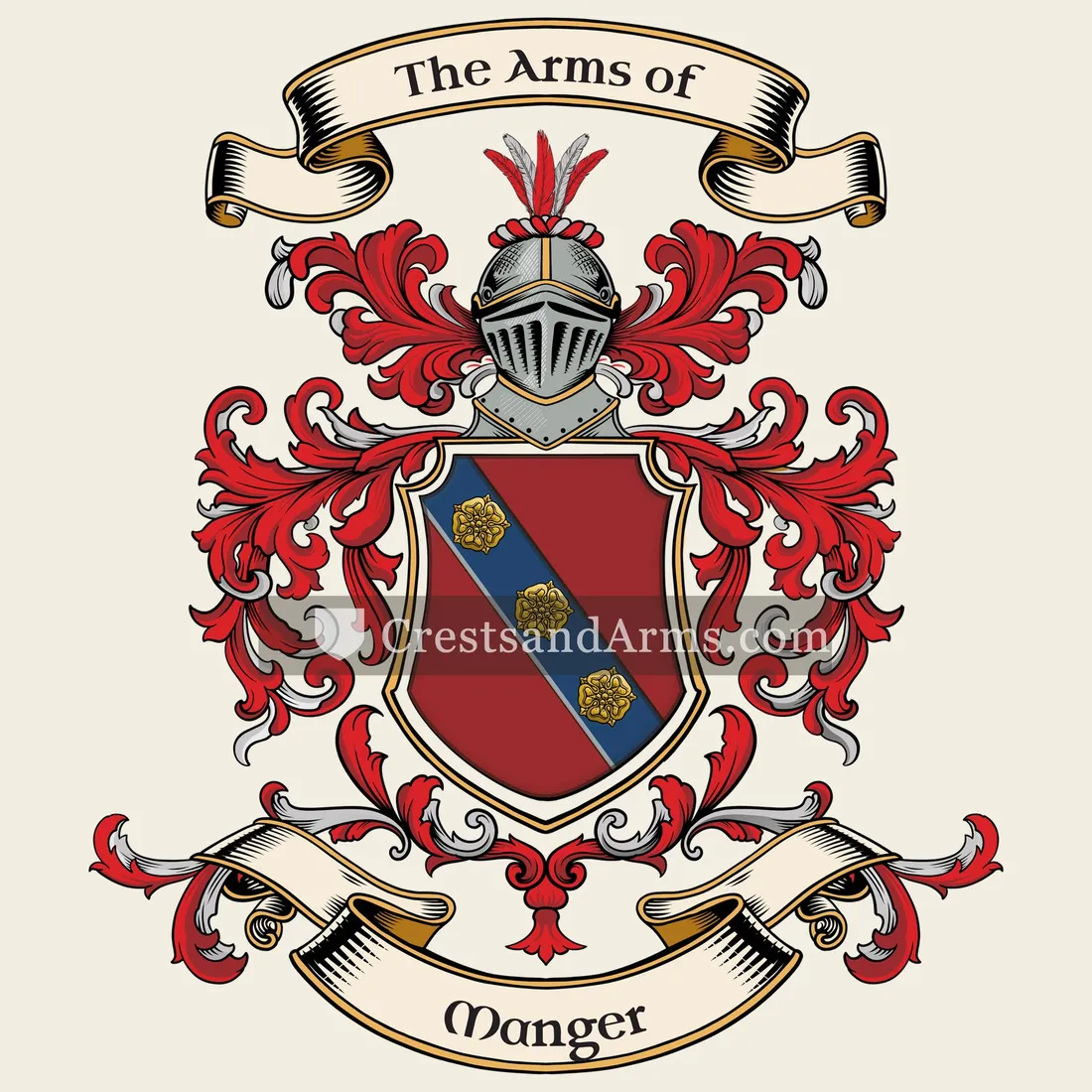
Symbols on this shield
bendDefence, and the scarf of a commander
roseThe seventh son, and beauty with grace
Colours
Red (Gules)Means: Military strength
Blue (Azure)Means: Loyalty and truth
Gold (Or)Means: Generosity
Historical info
Source
J. B. Rietstap, Armorial Général, Gouda: G. B. van Goor Zonen, 1884–87
Blazon (the actual original written record)
“De gu. à la bande d'azur, ch. de trois roses d'or. C.: un vol à l'antique, aux armes de l'écu. L. d'or et de gu.”
GermanyNuremberg, c. 1765
Digital archive packCoat of arms PNG, gold border print PDF, vector SVG and the certificate of authenticity. Sent to your email in minutes.
Map of Germany showing where the Manger arms are recorded
The Manger arms were recorded in Nuremberg, c. 1765.
This is where the arms were entered in the register. Families often moved to other parts of the country, so the same name can turn up in more than one region.
The body that granted and recorded arms in Germany in this period.
Francis I, Holy Roman Emperor
Sovereign of the period
Francis I, Holy Roman Emperor
1745–1765
Reigning in France when the Manger arms are first recorded.
How Arms Worked in Germany
In the Holy Roman Empire, coats of arms were often granted to individuals by the Emperor or his representatives. These arms were then passed down through the generations to all legitimate descendants of the original holder. Younger branches of a family usually kept the same shield design without needing to change it, as the arms belonged to the entire lineage.
Granting authority
The Holy Roman Emperor held the sole power to grant new coats of arms throughout his vast imperial territories.
How they got arms
Families typically obtained their coats of arms through a formal imperial grant or by proving their noble status to the authorities.
Where arms were recorded
These grants were officially recorded in the Imperial Chancery registers, which began keeping formal records of such honors during the Middle Ages.
The family's standing
Recorded among the armigerous families of Germany.
Origin & History of the Manger Family in Germany
The surname Manger has deep roots in the German language, originating as an occupational name for a merchant or a trader. During the Middle Ages, the term was often used to describe someone who dealt in goods at a market or a store. By the mid-18th century, the family was well-established in the bustling city of Nuremberg, which was a major hub for trade and craftsmanship in the Holy Roman Empire. Records from 1765 confirm that members of the Manger family were active participants in the economic life of this city. At that time, Nuremberg was famous for its skilled metalworkers and merchants, and the Manger name likely reflected a family tradition of commerce that had been passed down through several generations. As the family grew, they became part of the urban fabric of the region, contributing to the steady growth of the local economy during a period of significant industrial change.
Meaning of the Manger family crest colors & symbols
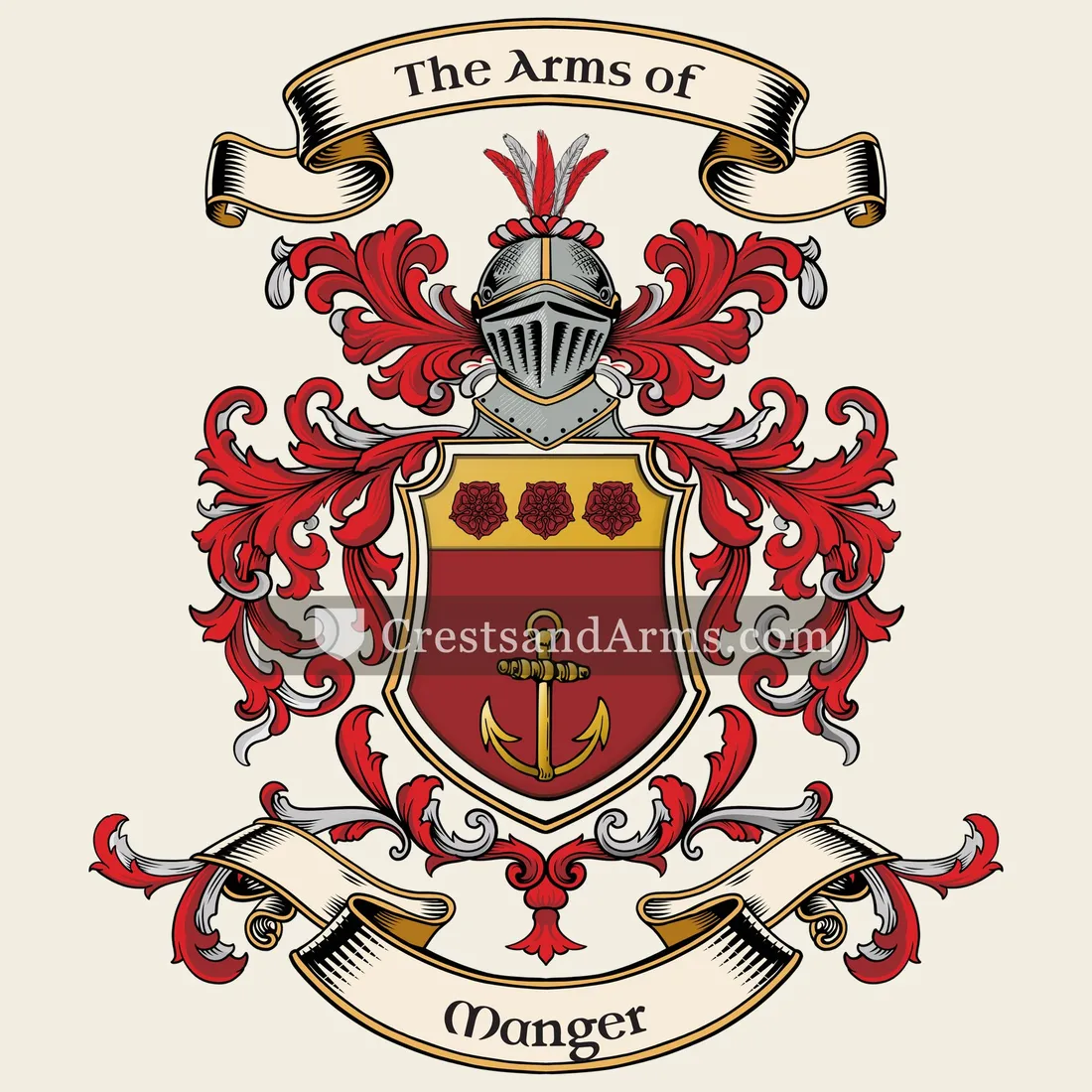
Symbols on this shield
chiefAuthority, wisdom and dominion
anchorHope, and steadfastness in trouble
roseThe seventh son, and beauty with grace
Colours
Red (Gules)Means: Military strength
Gold (Or)Means: Generosity
Historical info
Source
Sir Bernard Burke, The General Armory of England, Scotland, Ireland and Wales, London: Harrison & Sons, 1884
Blazon (the actual original written record)
“Gu. an anchor erect in pale or, on a chief of the second three roses of the first”
JerseyJersey, c. 1688
Digital archive packCoat of arms PNG, gold border print PDF, vector SVG and the certificate of authenticity. Sent to your email in minutes.
The body that granted and recorded arms in Jersey in this period.
James II of England
Sovereign of the period
James II of England
1685–1688
Reigning in France when the Manger arms are first recorded.
How Arms Worked in Jersey
Arms in the Channel Islands were granted and recorded by the College of Arms in London, under the same law of arms as England. They could be used by all legitimate descendants of the original owner: the eldest son kept the original design, and other family members used the same shield without registering a version of their own.
Granting authority
The College of Arms in London has regulated the use of coats of arms for Jersey and the other Channel Islands since 1484.
How they got arms
Families typically obtained their coats of arms through a formal grant from the Crown or by proving their ancient right to them.
Where arms were recorded
All official coats of arms are recorded in the registers kept at the College of Arms, which date back to the fifteenth century.
The family's standing
Recorded among the armigerous families of Jersey.
Origin & History of the Manger Family in Jersey
The Manger family established a notable presence on the island of Jersey by 1688, embedding themselves into the local community during a period of significant social and political transition. The name likely originated as an occupational descriptor, referring to someone who worked in a manger or stable, or perhaps as a variation of names linked to the trade of a merchant. In the context of Jersey, families often integrated into the island’s unique legal and cultural framework, which blended Norman traditions with British administrative influences. Early members of the Manger family were likely involved in the island’s maritime trade or agricultural life, as these were the primary industries that sustained Jersey families during the late seventeenth century. By settling in this strategic location between England and France, the family became part of the resilient island population that navigated the complexities of island governance and the constant threat of regional conflict. Their presence in the historical record from this time suggests they were well-established inhabitants who contributed to the distinct identity of the Channel Islands.
Manger Meaning & Related Branches
Root word
manducare
Latin verb meaning to chew or to eat.
This name
MangerAn occupational surname for a person who provided food or worked as a caterer.
also spelled
Mangerr
Mangere
Mangeir
Mangier
Related arms
Mayersimilar arms
Documented Sources
J. B. Rietstap, Armorial Général, Gouda: G. B. van Goor Zonen, 1884–87
Archives départementales d'Ille-et-Vilaine, Registres paroissiaux et d'état civil
Archives départementales du Finistère, Série E, État civil et registres paroissiaux
Dauzat, Albert, Dictionnaire étymologique des noms de famille et prénoms de France, 1951
Digital archive packCoat of arms PNG, gold border print PDF, vector SVG and the certificate of authenticity. Sent to your email in minutes.


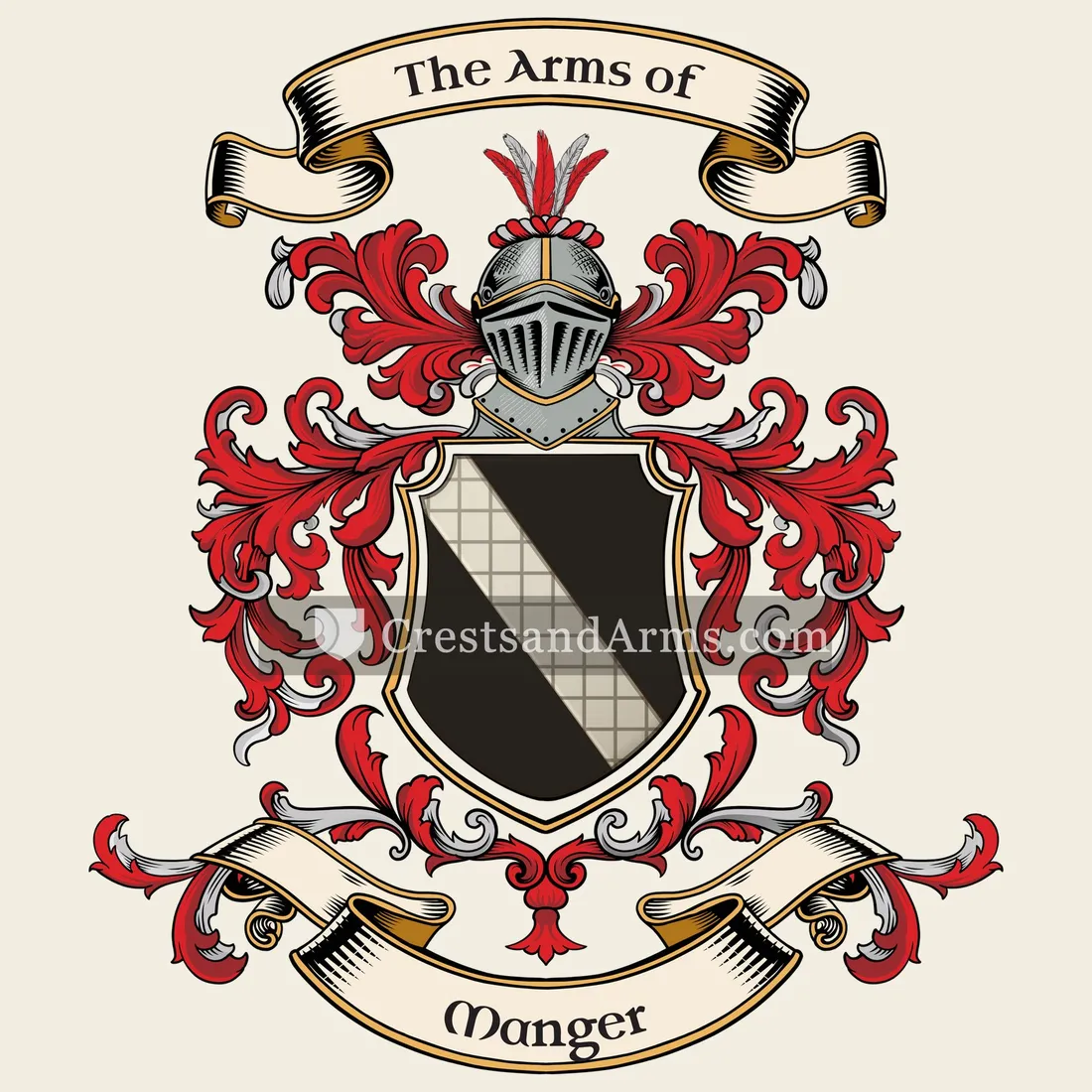
 bendDefence, and the scarf of a commander
 bendDefence, and the scarf of a commander


 roseThe seventh son, and beauty with grace


 chiefAuthority, wisdom and dominion
 anchorHope, and steadfastness in trouble