Map of Switzerland showing where the Manuel arms are recorded
The Manuel arms were recorded in Berne, c. 1745.
This is where the arms were entered in the register. Families often moved to other parts of the country, so the same name can turn up in more than one region.
The body that granted and recorded arms in Switzerland in this period.
How Arms Worked in Switzerland
In Switzerland, coats of arms were not restricted to the nobility and were often adopted by common citizens and families. These symbols were passed down through generations to show family identity. When branches of a family grew, they often changed small details of the design to distinguish their own line from the original group.
Granting authority
Cantonal and civic authorities managed the use of coats of arms within their specific regions and local jurisdictions.
How they got arms
Families typically assumed their own coats of arms based on local custom rather than receiving them from a central monarch.
Where arms were recorded
Arms were recorded in various cantonal and civic registers starting from the fourteenth century throughout the Swiss region.
The family's standing
Recorded among the armigerous families of Switzerland.
Origin & History of the Manuel Family in Switzerland
The Manuel family established a significant presence in the city of Berne by the mid-18th century, becoming deeply integrated into the social and political fabric of the region. While the name itself carries roots that stretch back to ancient linguistic traditions, its Swiss iteration is defined by the family’s transition into the urban professional class of the Old Swiss Confederacy. By 1745, members of the Manuel line were already active participants in Bernese civic life, often serving in administrative or military roles that were essential to the stability of the city-state. They were part of a broader movement of families who helped shape the governance and cultural identity of the canton during a period of relative peace and economic growth. This era allowed the family to solidify their status as established citizens, ensuring that their name would remain a recognized part of the historical record in Switzerland for generations to come.
Coat of Arms & Family Crest Details
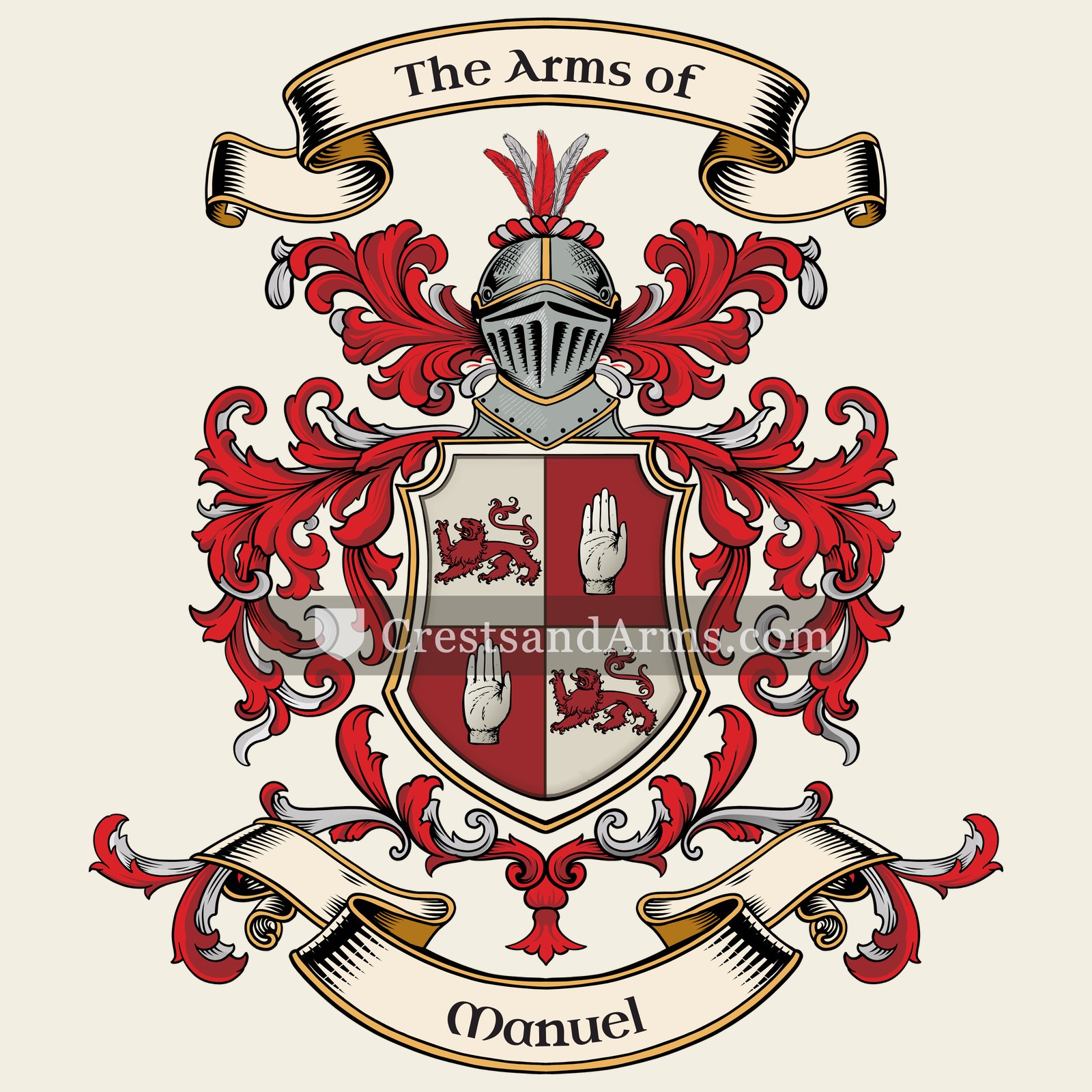
Symbols on this shield
lionCourage, strength and royalty
handFaith, sincerity and justice
Colours
Silver (Argent)Means: Peace and sincerity
Red (Gules)Means: Military strength
Historical info
Source
J. B. Rietstap, Armorial Général, Gouda: G. B. van Goor Zonen, 1884–87
Blazon (the actual original written record)
“Ec.: aux 1 et 4 d'arg. au lion de gu.; aux 2 et 3 de gu. à une main de carn., ailée d'or, posée en fasce, tenant une épée d'arg., garnie d'or, en pal.”
CastileCastile, c. 1722
Digital archive packCoat of arms PNG, gold border print PDF, vector SVG and the certificate of authenticity. Sent to your email in minutes.
Map of Spain showing where the Manuel arms are recorded
The Manuel arms were recorded in Castile, c. 1722.
Castile was the heart of Spain and the source of most of its noble families. Land won in the long wars against the Moors was granted out to fighting men, and a man granted land was granted arms along with it.
This is where the arms were entered in the register. Families often moved to other parts of the country, so the same name can turn up in more than one region.
The body that granted and recorded arms in Spain in this period.
Philip V of Spain
Sovereign of the period
Philip V of Spain
1714–1724
Reigning in Switzerland when the Manuel arms are first recorded.
How Arms Worked in Spain
In Spain, a coat of arms was considered a form of property that belonged to the entire family line. These arms were passed down from a father to all his children equally. Younger branches of the family usually kept the original design without needing to add any special marks to distinguish their specific line.
Granting authority
The Cronista Rey de Armas was the official body that regulated and granted coats of arms throughout Spain.
How they got arms
Families often obtained their arms through royal grants or by proving their noble status to the official heraldic authority.
Where arms were recorded
Coats of arms were officially recorded in the registers of the Cronista Rey de Armas starting in 1496.
The family's standing
Recorded among the armigerous families of Castile.
Origin & History of the Manuel Family in Spain
The family name Manuel has deep roots in the Iberian Peninsula, originating as a given name that eventually evolved into a hereditary surname. Derived from the Hebrew name Immanuel, which means God is with us, the name gained significant popularity in Spain during the Middle Ages due to its religious significance. By the time the family was firmly established in the region of Castile in 1722, the name had transitioned from a personal identifier to a stable family designation passed down through generations. During this period, families named Manuel were often integrated into the social and administrative structures of the Castilian heartland. They lived through a time of transition as Spain moved toward a more centralized government, and their presence in official records from the early eighteenth century suggests they were part of the local community life that defined the rural and urban landscapes of the era.
Related Branches & Arms
Root word
Immanuel
Hebrew for God is with us.
This name
ManuelA derivative of the biblical name signifying divine presence and protection.
also spelled
Manuelle
Manuello
Manuele
Documented Sources
J. B. Rietstap, Armorial Général, Gouda: G. B. van Goor Zonen, 1884–87
Haller, Beat. Die Berner Geschlechter: Ein Beitrag zur Geschichte der Stadt Bern. 1920
Historisches Lexikon der Schweiz. Manuel (Familie). 2008
Staatsarchiv des Kantons Bern, Bürgerrodel der Stadt Bern
Digital archive packCoat of arms PNG, gold border print PDF, vector SVG and the certificate of authenticity. Sent to your email in minutes.


 paleMilitary strength, and a fortified defence
 chiefAuthority, wisdom and dominion
 fleur de lisPurity, light, and the sixth son
 paleMilitary strength, and a fortified defence
 chiefAuthority, wisdom and dominion
 fleur de lisPurity, light, and the sixth son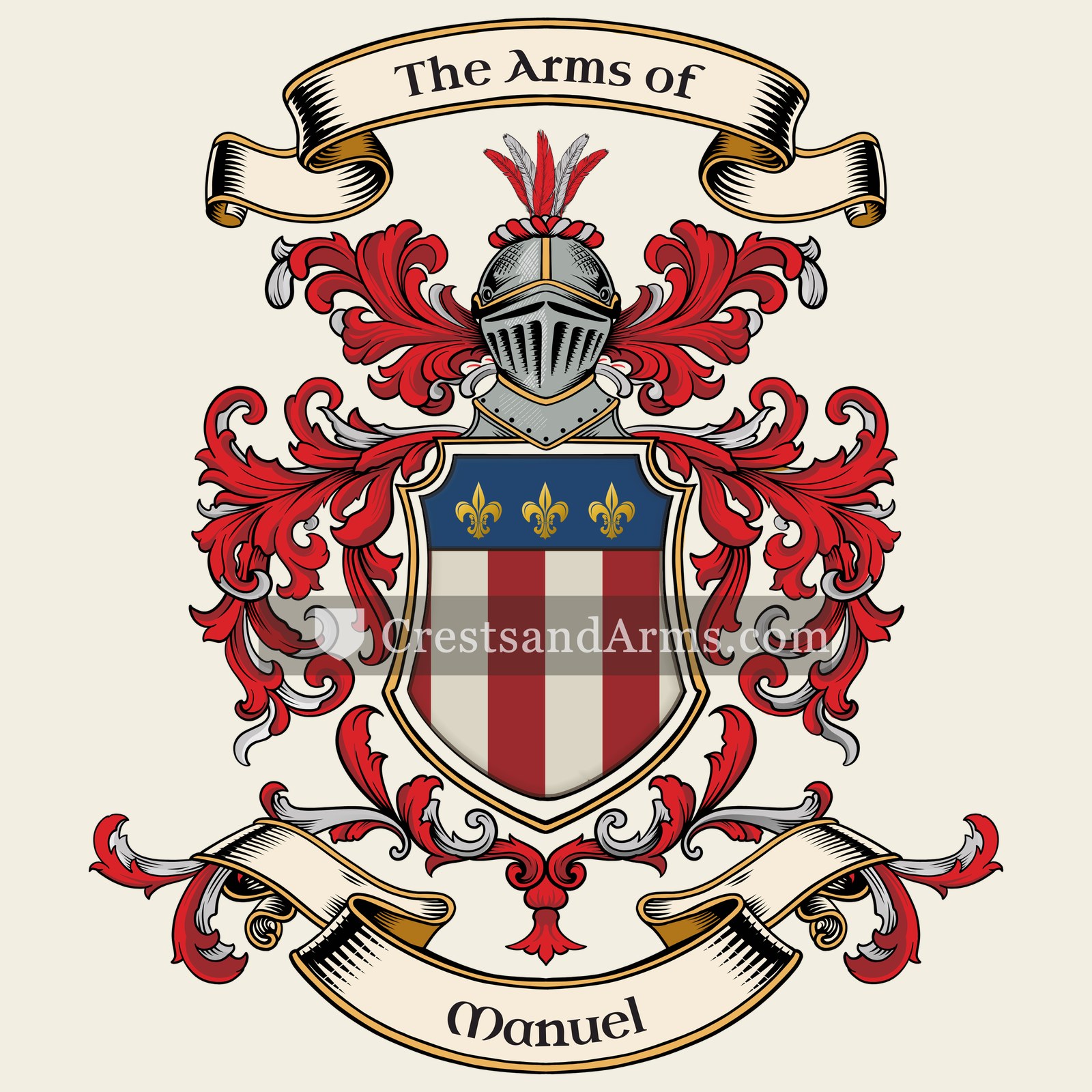

 lionCourage, strength and royalty
 handFaith, sincerity and justice