Map of Italy showing where the Manus arms are recorded
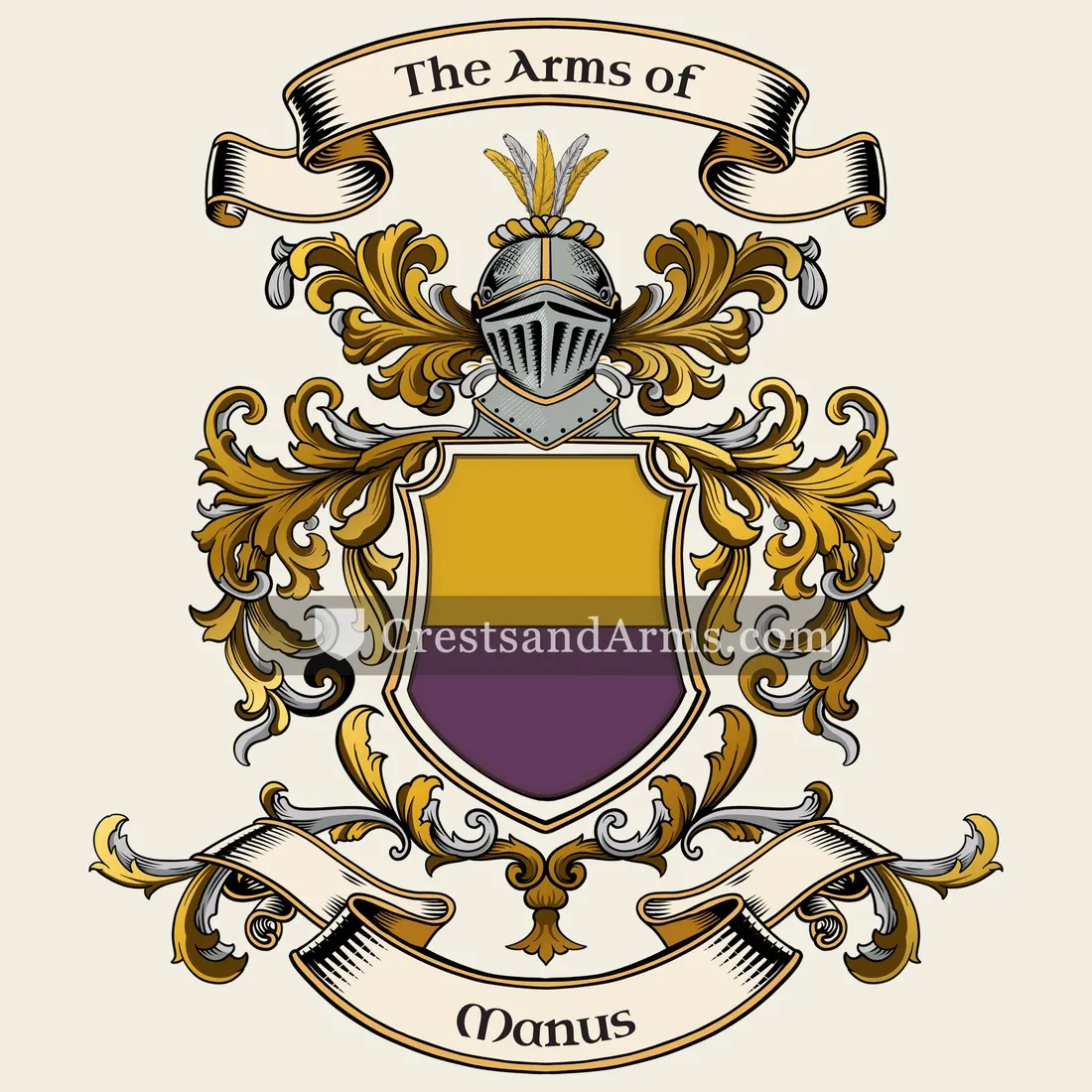
The Manus arms were recorded in Livourne, c. 1725.
This is where the arms were entered in the register. Families often moved to other parts of the country, so the same name can turn up in more than one region.
The body that granted and recorded arms in Italy in this period.
Victor Amadeus II of Savoy
Sovereign of the period
Victor Amadeus II of Savoy
1675–1730
Reigning in Italy when the Manus arms are first recorded.
How Arms Worked in Italy
In the Italian states, coats of arms were often used by noble families to show their status and history. These symbols were passed down through the generations to all legitimate male descendants. Younger branches of a family usually kept the original design but sometimes added small changes to distinguish their specific line from the main branch.
Granting authority
Various local rulers and city governments controlled the use of coats of arms across the different Italian states.
How they got arms
Families often assumed their own arms or received them as official grants from local lords, popes, or city councils.
Where arms were recorded
Arms were recorded in local city archives or private family books rather than in one single national register.
The family's standing
Recorded among the armigerous families of Italy.
Origin & History of the Manus Family in Italy
The family name Manus has deep roots tied to the vibrant port city of Livorno, Italy, where records confirm members of the family were well-established by 1725. During this period, Livorno served as a unique hub of international trade and cultural exchange, known for its policy of religious and economic tolerance that attracted merchants and families from across the Mediterranean. The name itself likely shares linguistic ties to the Latin word for hand, which often symbolized strength, craftsmanship, or a pledge of loyalty in historical naming conventions. As residents of a bustling maritime center, early members of the Manus family were likely involved in the active merchant networks that defined the city’s economy. Their presence in such a cosmopolitan environment suggests they were part of a mobile and industrious class that helped shape the growth of the region throughout the eighteenth century.
Manus Meaning & Related Branches
Root word
Manus
Latin word meaning hand or power.
This name
ManusA surname derived from the Latin word for hand, often indicating a person of manual skill or strength.
also spelled
Manuso
Manusse
Documented Sources
J. B. Rietstap, Armorial Général, Gouda: G. B. van Goor Zonen, 1884–87
Archives: Archivio di Stato di Livorno, Stato Civile della Comunità di Livorno
Archives: Archivio Storico Diocesano di Livorno, Libri dei Battezzati
Book: Volpi, G., Della utilità del porto di Livorno, 1785
Digital archive packCoat of arms PNG, gold border print PDF, vector SVG and the certificate of authenticity. Sent to your email in minutes.