Map of Switzerland showing where the Mardi arms are recorded
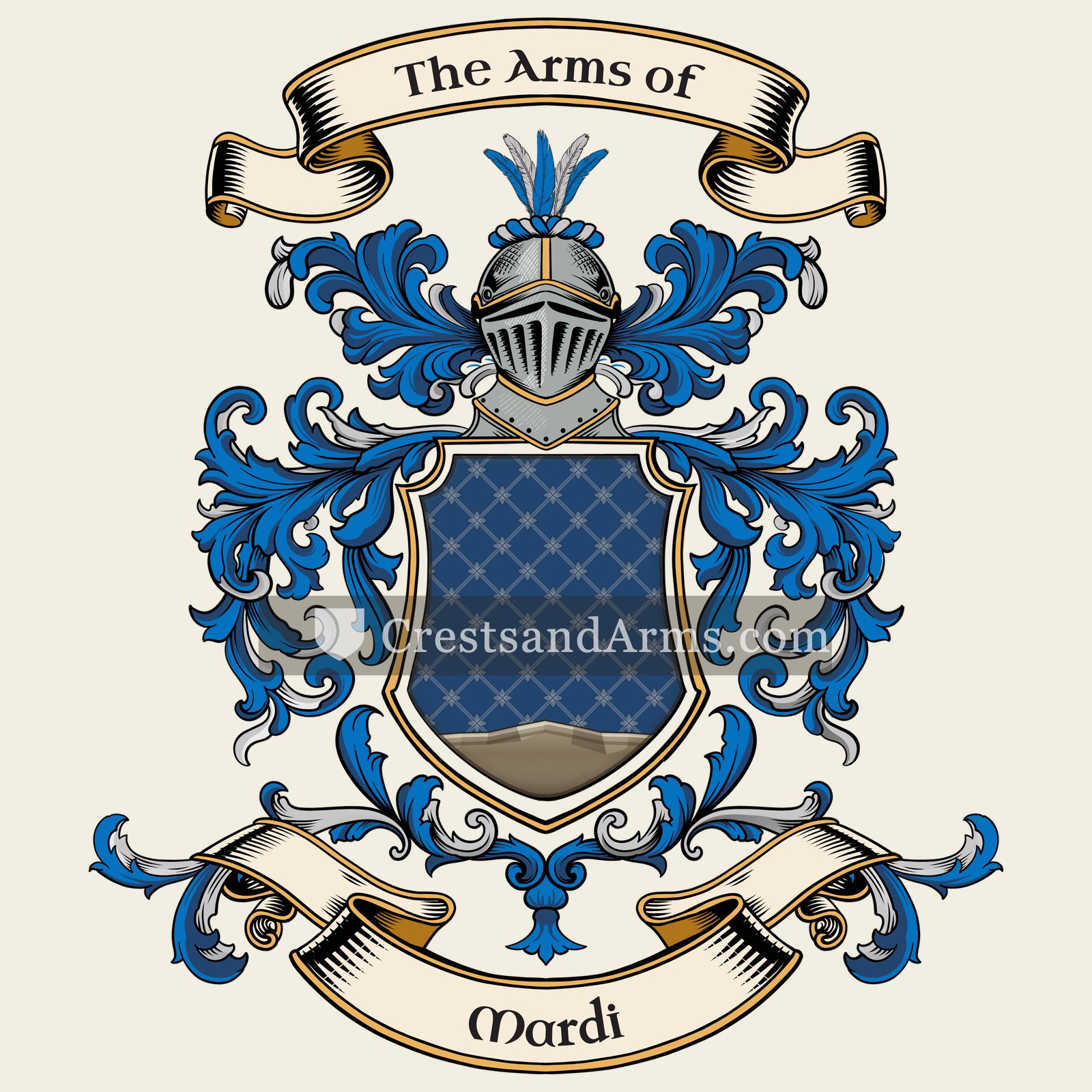
The Mardi arms were recorded in Switzerland, c. 1705.
Arms such as these were typically recorded in Bern.
Bern was the largest of the Swiss cantons and ran itself, with its own council and its own courts. Its governing families held office for generations, and office of that kind carried a shield with it.
This is where the arms were entered in the register. Families often moved to other parts of the country, so the same name can turn up in more than one region.
The body that granted and recorded arms in Switzerland in this period.
How Arms Worked in Switzerland
In Switzerland, coats of arms were not restricted to the nobility and were often adopted by common citizens and families. These symbols were passed down through generations to show family identity. When branches of a family grew, they often changed small details of the design to distinguish their own line from the original group.
Granting authority
Cantonal and civic authorities managed the use of coats of arms within their specific regions and local jurisdictions.
How they got arms
Families typically assumed their own coats of arms based on local custom rather than receiving them from a central monarch.
Where arms were recorded
Arms were recorded in various cantonal and civic registers starting from the fourteenth century throughout the Swiss region.
The family's standing
Recorded among the armigerous families of Switzerland.
Origin & History of the Mardi Family in Switzerland
The history of the Mardi family name is rooted in the cultural landscape of eighteenth-century Switzerland. Records confirm that members of the family were established residents of Bern by 1705, a time when the city was a powerful center of trade and political influence. The name likely evolved from local linguistic traditions, potentially serving as a descriptive identifier for individuals who lived near specific landmarks or held particular roles within the community. During this period, Bern was a strictly organized society, and families were often deeply integrated into the local guilds or civic administration. By settling in this region, the early Mardi ancestors became part of a stable urban environment that prioritized detailed record-keeping, which allowed their presence to be documented in official registers for generations to come.
Related Branches & Arms
Root word
Martis
Latin for belonging to the Roman god of war Mars.
This name
MardiA patronymic surname derived from the name Martin, signifying a descendant of someone dedicated to Mars.
also spelled
Marty
Documented Sources
J. B. Rietstap, Armorial Général, Gouda: G. B. van Goor Zonen, 1884–87
Staatsarchiv des Kantons Bern, Kirchenbücher der Stadt Bern (Church records of the city of Bern)
Staatsarchiv des Kantons Bern, Bürgerrodel der Stadt Bern (Citizen registers of the city of Bern)
Dubler, Anne-Marie, Stadt und Land in der Schweiz des 18. Jahrhunderts (1990)
Wirz, Hans Georg, Die Geschichte der Stadt Bern (1953)
Digital archive packCoat of arms PNG, gold border print PDF, vector SVG and the certificate of authenticity. Sent to your email in minutes.


 mountThe ground held, and steadfastness upon it
 mountThe ground held, and steadfastness upon it