Map of France showing where the Marin arms are recorded
The Marin arms were recorded in Provence, c. 1663.
Provence was old country, with towns dating to the Romans and families who traced their land back nearly as far. Its gentry were many and long-settled, and long settlement is what fills a register.
This is where the arms were entered in the register. Families often moved to other parts of the country, so the same name can turn up in more than one region.
The body that granted and recorded arms in France in this period.
Louis XIV of France
Sovereign of the period
Louis XIV of France
1643–1715
Reigning in France when the Marin arms are first recorded.
How Arms Worked in France
In France, a coat of arms was a mark of honor that passed down through the male line to all legitimate descendants. Families often used the same shield without changes to show their shared heritage. If a branch wanted to stand out, they could add a small mark to their shield to show their specific place in the family tree.
Granting authority
The Juge d'armes de France acted as the official authority that regulated and verified coats of arms across the country.
How they got arms
Families typically inherited their arms from ancestors, though they could also receive them through royal grants or by proving their noble status.
Where arms were recorded
Coats of arms were officially recorded in the Armorial Général de France, which began its main collection in the year 1696.
The family's standing
Recorded among the armigerous families of Provence.
Origin & History of the Marin Family in France
The family name Marin has deep roots in the sun-drenched region of Provence, where records confirm the family was well-established by the year 1663. The name itself is derived from the Latin word *marinus*, which means of the sea, suggesting that the earliest ancestors likely lived near the Mediterranean coast or worked in maritime trades. During the seventeenth century, Provence was a vibrant hub of trade and culture, and families like the Marins often played vital roles in local community life, agriculture, or regional administration. As the family grew, they became part of the social fabric of southern France, witnessing the transition from the feudal traditions of the past to the more centralized power of the French monarchy. By settling in this historic landscape, the early Marins helped shape the local identity of the region, leaving behind a legacy that is still tied to the geography and history of the French Mediterranean.
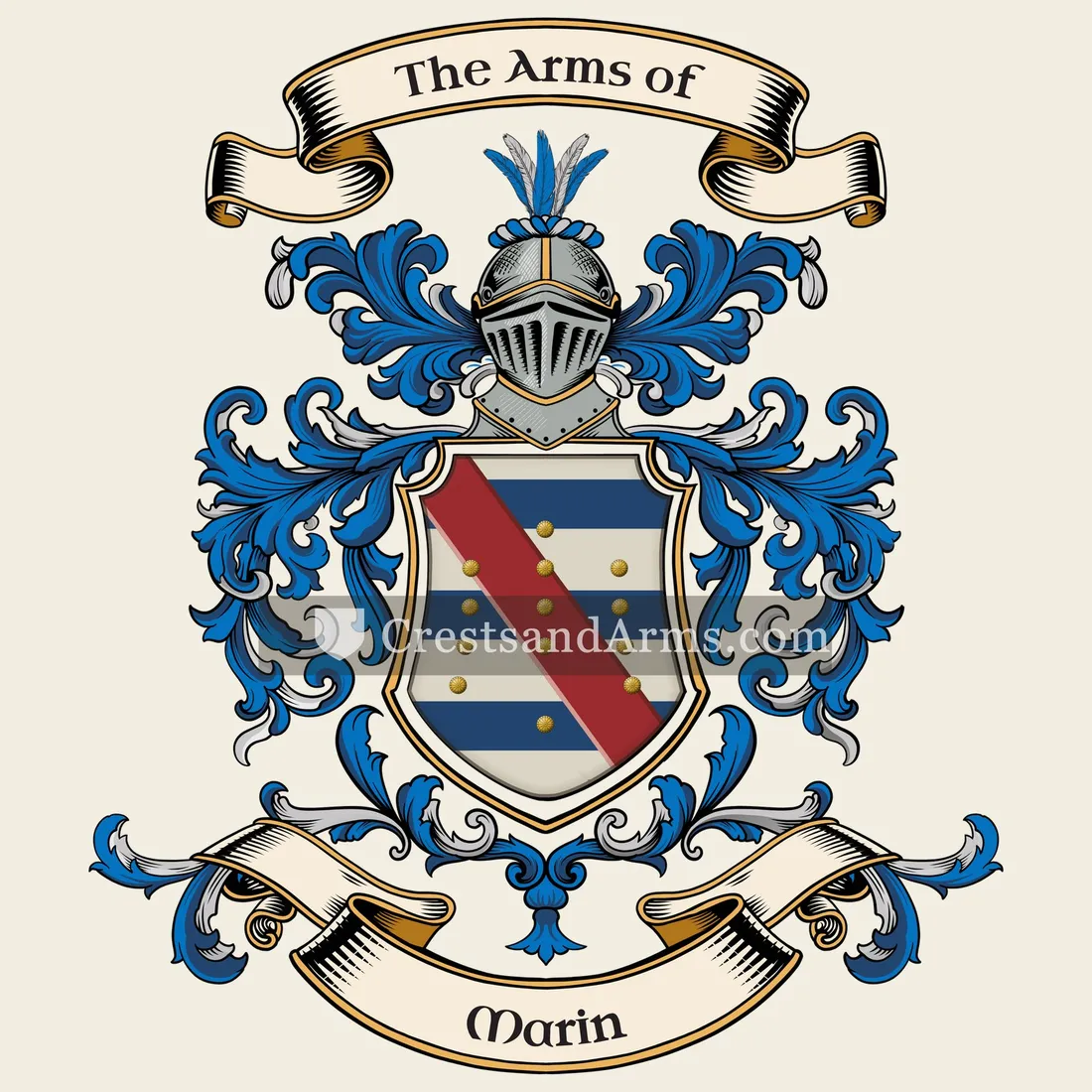
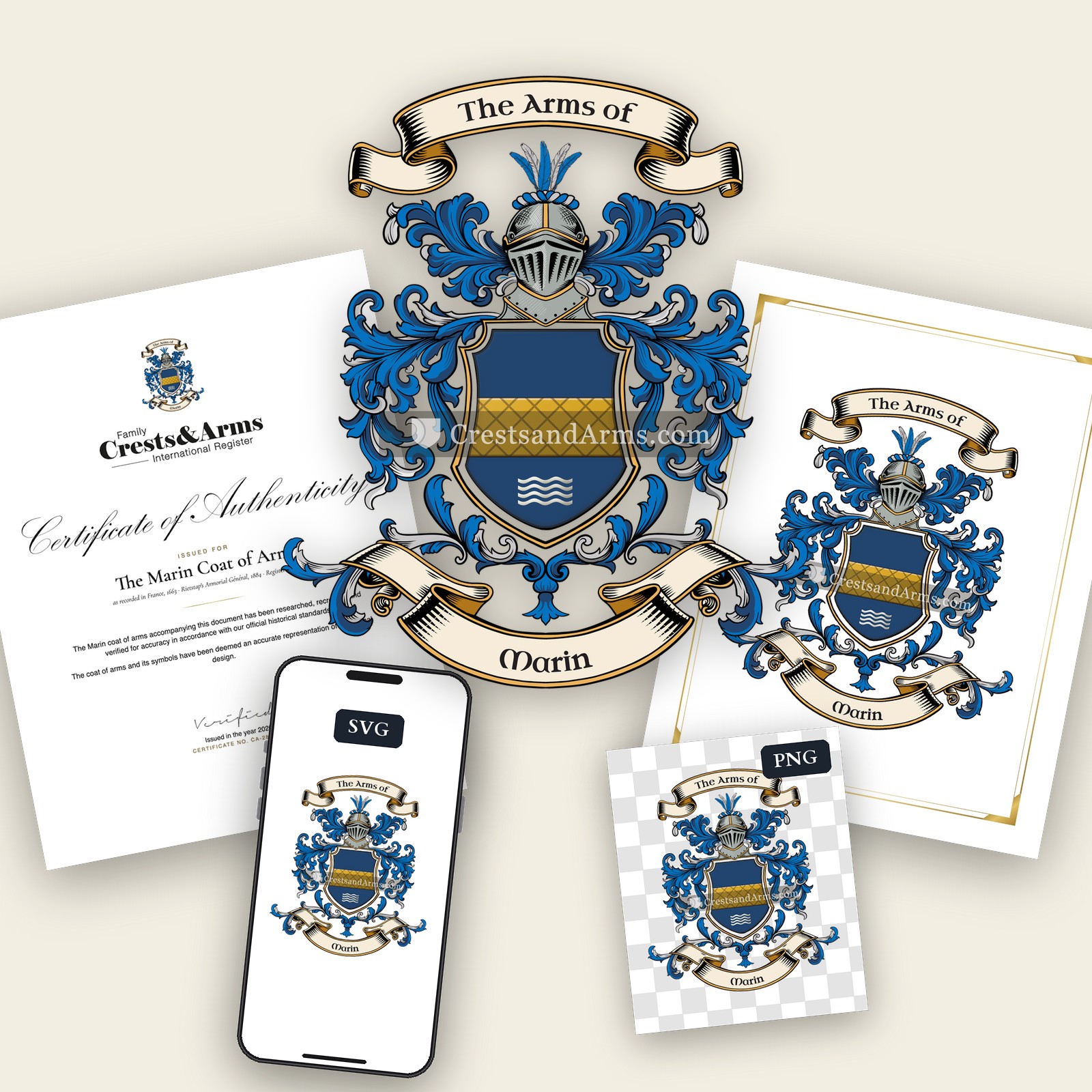
Meaning of the Marin family crest colors & symbols
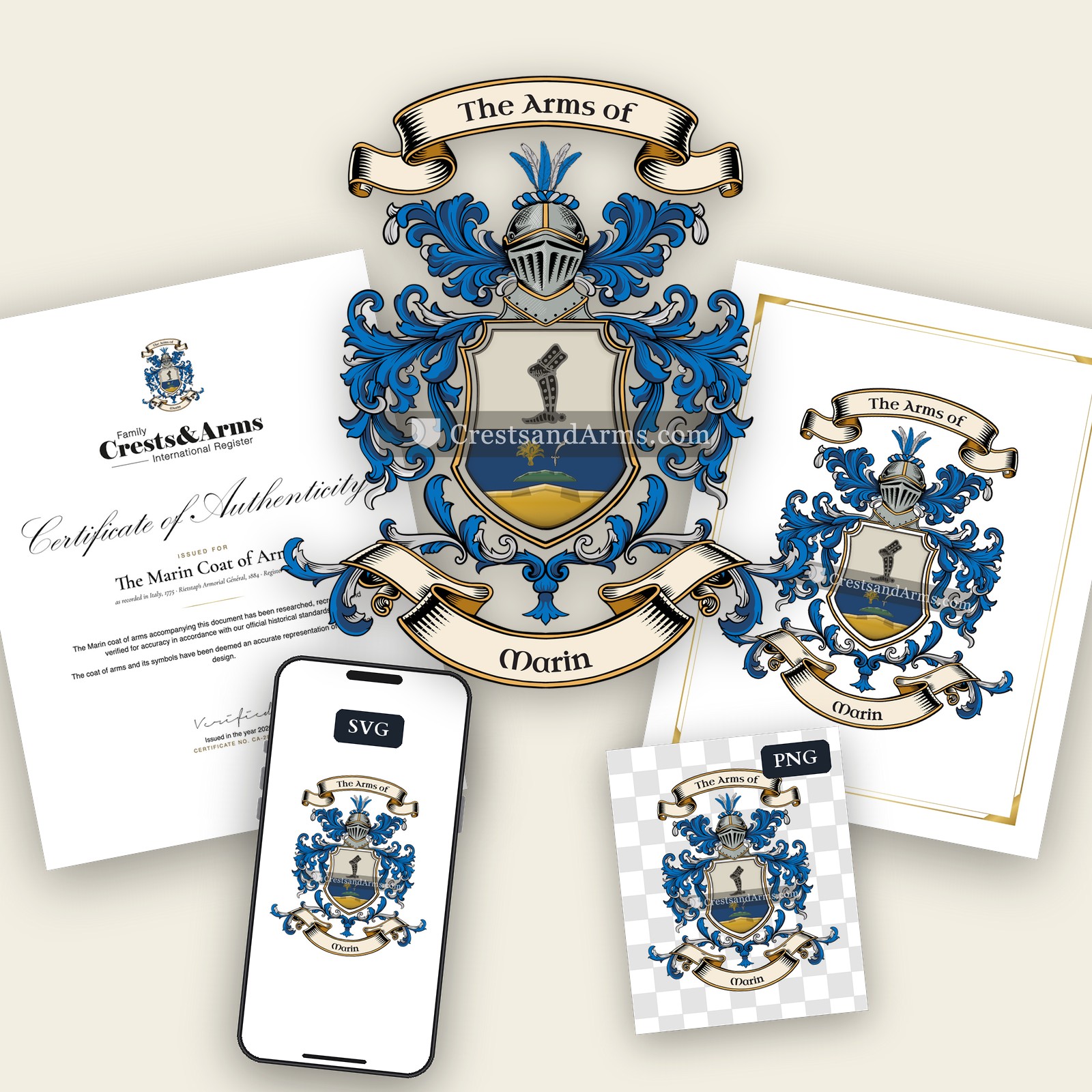
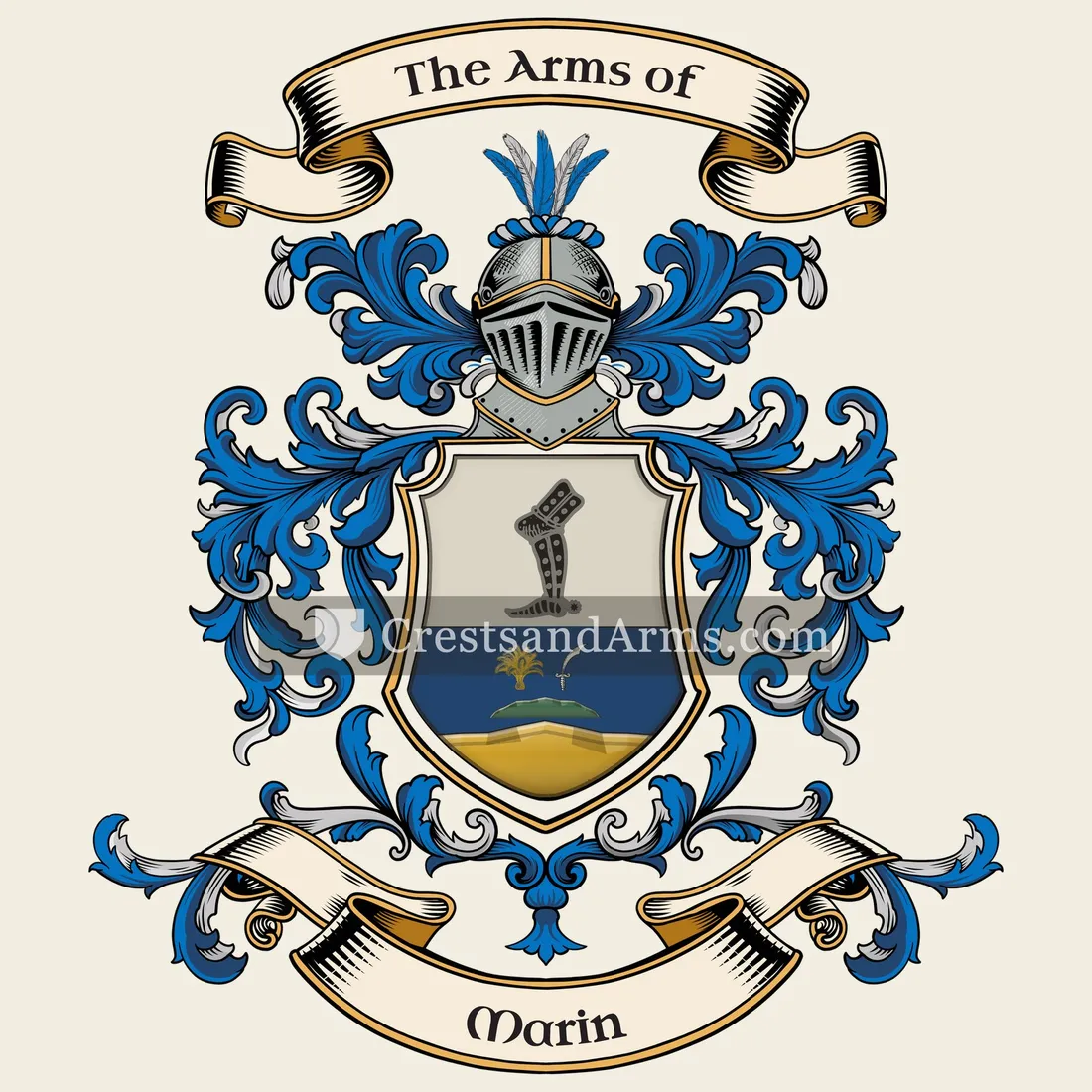
Symbols on this shield
mountThe ground held, and steadfastness upon it
legStrength and swiftness
palm treeVictory, and righteousness that flourishes
swordJustice, and military honour
Colours
Silver (Argent)Means: Peace and sincerity
Blue (Azure)Means: Loyalty and truth
Gold (Or)Means: Generosity
Green (Vert)Means: Hope
Black (Sable)Means: Constancy
Historical info
Source
J. B. Rietstap, Armorial Général, Gouda: G. B. van Goor Zonen, 1884–87
Blazon (the actual original written record)
“Coupé: au 1 d'arg. à une jambe humaine de sa., coupée à la cuisse, le pied en bas; au 2 d'azur à une mosquée d'arg., sommée d'un croiss. du même et senestrée d'un palmier d'or, le tout soutenu d'une terrasse du même; la mosquée adextrée d'un sabre d'arg., garni d'or, en pal.”
Italyc. 1775
Digital archive packCoat of arms PNG, gold border print PDF, vector SVG and the certificate of authenticity. Sent to your email in minutes.
Map of Italy showing where the Marin arms are recorded
The Marin arms were recorded in Italy, c. 1775.
Arms such as these were typically recorded in Venice.
Venice ran on trade, and its great families were merchants before they were anything else. The city kept a formal list of its noble houses, and a name on that list carried arms as a matter of record.
This is where the arms were entered in the register. Families often moved to other parts of the country, so the same name can turn up in more than one region.
The body that granted and recorded arms in Italy in this period.
Alvise Giovanni Mocenigo
Sovereign of the period
Alvise Giovanni Mocenigo
1763–1778
Reigning in France when the Marin arms are first recorded.
How Arms Worked in Italy
In the Italian states, coats of arms were often used by noble families to show their status and history. These symbols were passed down through the generations to all legitimate male descendants. Younger branches of a family usually kept the original design but sometimes added small changes to distinguish their specific line from the main branch.
Granting authority
Various local rulers and city governments controlled the use of coats of arms across the different Italian states.
How they got arms
Families often assumed their own arms or received them as official grants from local lords, popes, or city councils.
Where arms were recorded
Arms were recorded in local city archives or private family books rather than in one single national register.
The family's standing
Recorded among the armigerous families of Italy.
Origin & History of the Marin Family in Italy
The history of the Marin family in Italy is deeply connected to the maritime traditions and social structure of the Venetian Republic. By the late eighteenth century, the name was well-established within the city, reflecting a lineage that navigated the complex political and economic landscape of Venice. During this era, families like the Marins often played vital roles in the city's trade networks and civic administration. The name itself is derived from the Latin term for the sea, which suggests that the earliest ancestors of the family may have been involved in seafaring, shipbuilding, or coastal commerce. As Venice served as a bridge between Europe and the East, the Marin family benefited from the city's unique position as a hub for international exchange. Their presence in the city by 1775 highlights a long-standing integration into the urban fabric, where they contributed to the enduring legacy of one of history’s most influential maritime powers.
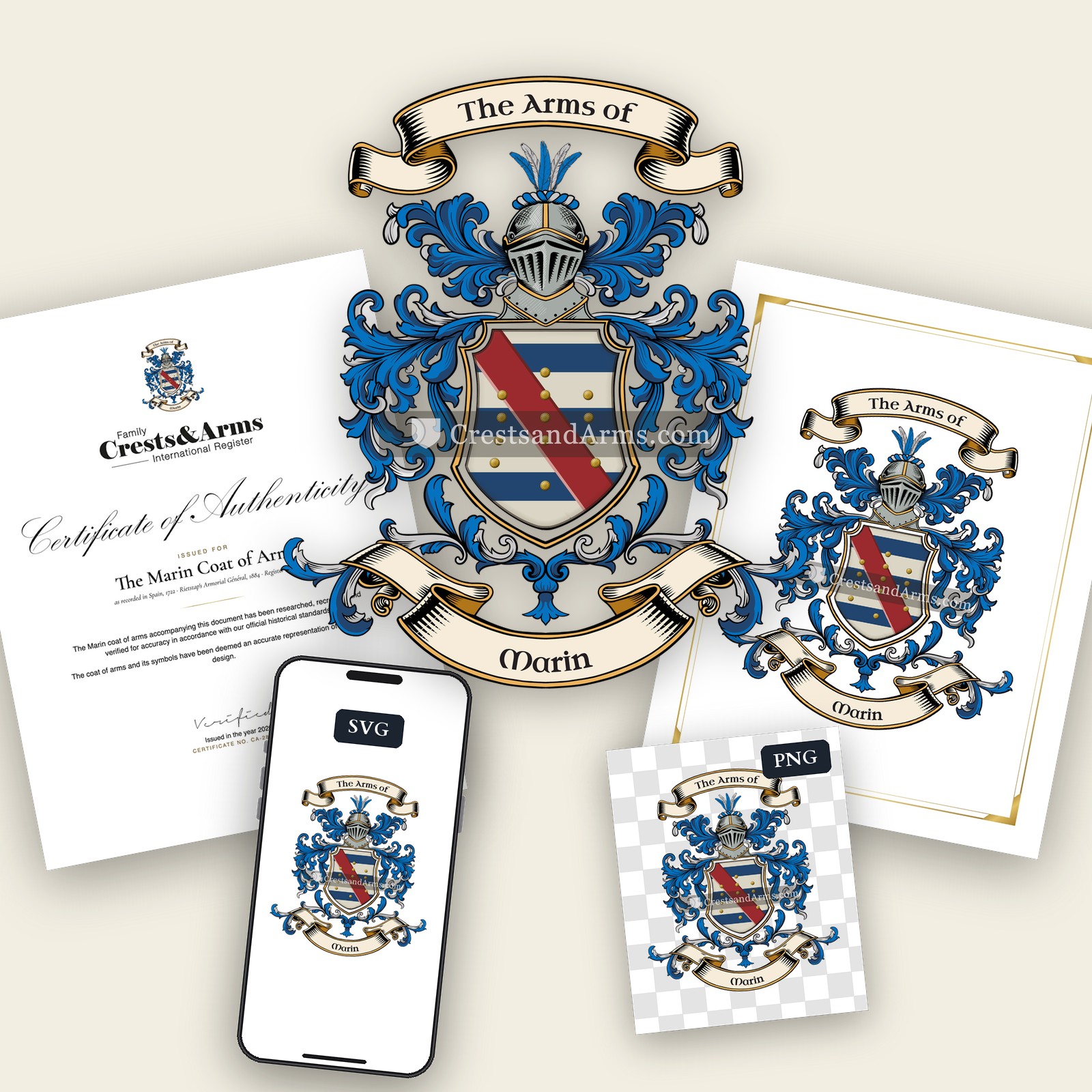
Meaning of the Marin family crest colors & symbols
Symbols on this shield
bendDefence, and the scarf of a commander
roundelA coin, and one who has been to the crusades
Colours
Silver (Argent)Means: Peace and sincerity
Blue (Azure)Means: Loyalty and truth
Red (Gules)Means: Military strength
Gold (Or)Means: Generosity
Historical info
Source
J. B. Rietstap, Armorial Général, Gouda: G. B. van Goor Zonen, 1884–87
Blazon (the actual original written record)
“Coupé: au 1 d'arg. à trois fasses ondées d'azur; au 2 d'arg. à la bande de gu., acc. de treize bes. d'or bordés de gu., en chef 1, 3 et 3 en bandes, et en p. 3, 2 et 1 en bandes.”
SpainAsturies, c. 1722
Digital archive packCoat of arms PNG, gold border print PDF, vector SVG and the certificate of authenticity. Sent to your email in minutes.
Map of Spain showing where the Marin arms are recorded
The Marin arms were recorded in Asturies, c. 1722.
This is where the arms were entered in the register. Families often moved to other parts of the country, so the same name can turn up in more than one region.
The body that granted and recorded arms in Spain in this period.
Philip V of Spain
Sovereign of the period
Philip V of Spain
1714–1724
Reigning in France when the Marin arms are first recorded.
How Arms Worked in Spain
In Spain, a coat of arms was considered a form of property that belonged to the entire family line. These arms were passed down from a father to all his children equally. Younger branches of the family usually kept the original design without needing to add any special marks to distinguish their specific line.
Granting authority
The Cronista Rey de Armas was the official body that regulated and granted coats of arms throughout Spain.
How they got arms
Families often obtained their arms through royal grants or by proving their noble status to the official heraldic authority.
Where arms were recorded
Coats of arms were officially recorded in the registers of the Cronista Rey de Armas starting in 1496.
The family's standing
Recorded among the armigerous families of Spain.
Origin & History of the Marin Family in Spain
The surname Marin holds deep roots in the northern regions of Spain, particularly within the rugged landscapes of Asturias. By the early 18th century, families bearing this name were well-established in the area, often living as farmers or local landowners who helped shape the rural economy of the region. The name itself is likely derived from the Latin word marinus, which means of the sea, suggesting that the earliest ancestors may have lived near the coast or worked as sailors before settling into the mountainous terrain of Asturias. As these families grew, they became integrated into the local parish systems, which recorded their births, marriages, and deaths in official church registers. These records from 1722 and the following decades show that the Marin family was a stable part of the community, contributing to the development of the local villages through their daily labor and social connections. Over time, the family name spread from these northern strongholds into other parts of the Iberian Peninsula, carried by descendants who sought new opportunities in trade and agriculture.
Marin Meaning & Related Branches
Root word
Marinus
Derived from the Latin word for of the sea.
This name
MarinA French surname indicating a person who lived near the sea or was a sailor.
also spelled
Maryn
Related arms
Albertinirecorded with Marin, same area
Curtirecorded with Marin, same area
Tavernarecorded with Marin, same area
Documented Sources
J. B. Rietstap, Armorial Général, Gouda: G. B. van Goor Zonen, 1884–87
Archives départementales des Bouches-du-Rhône, Registres paroissiaux et d'état civil
Archives départementales du Var, Série E, État civil et registres paroissiaux
Dauzat, Albert, Dictionnaire étymologique des noms et prénoms de France, 1951
Morlet, Marie-Thérèse, Dictionnaire étymologique des noms de famille, 1991
Digital archive packCoat of arms PNG, gold border print PDF, vector SVG and the certificate of authenticity. Sent to your email in minutes.


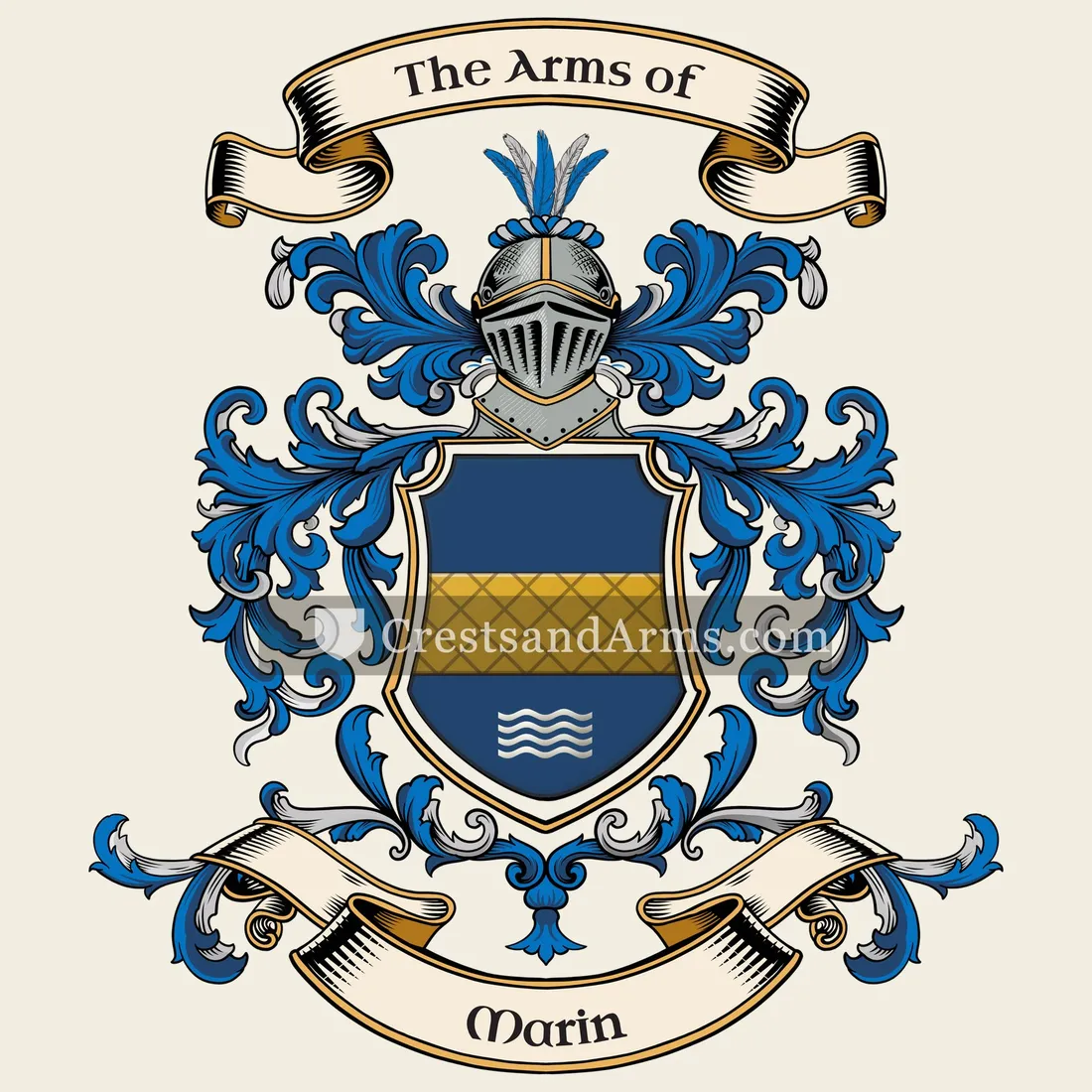
 fessThe military belt, and readiness to serve
 riverThe bounds of a land, and life carried through it
 fessThe military belt, and readiness to serve
 riverThe bounds of a land, and life carried through it


 mountThe ground held, and steadfastness upon it
 legStrength and swiftness
 palm treeVictory, and righteousness that flourishes
 swordJustice, and military honour


 bendDefence, and the scarf of a commander
 roundelA coin, and one who has been to the crusades