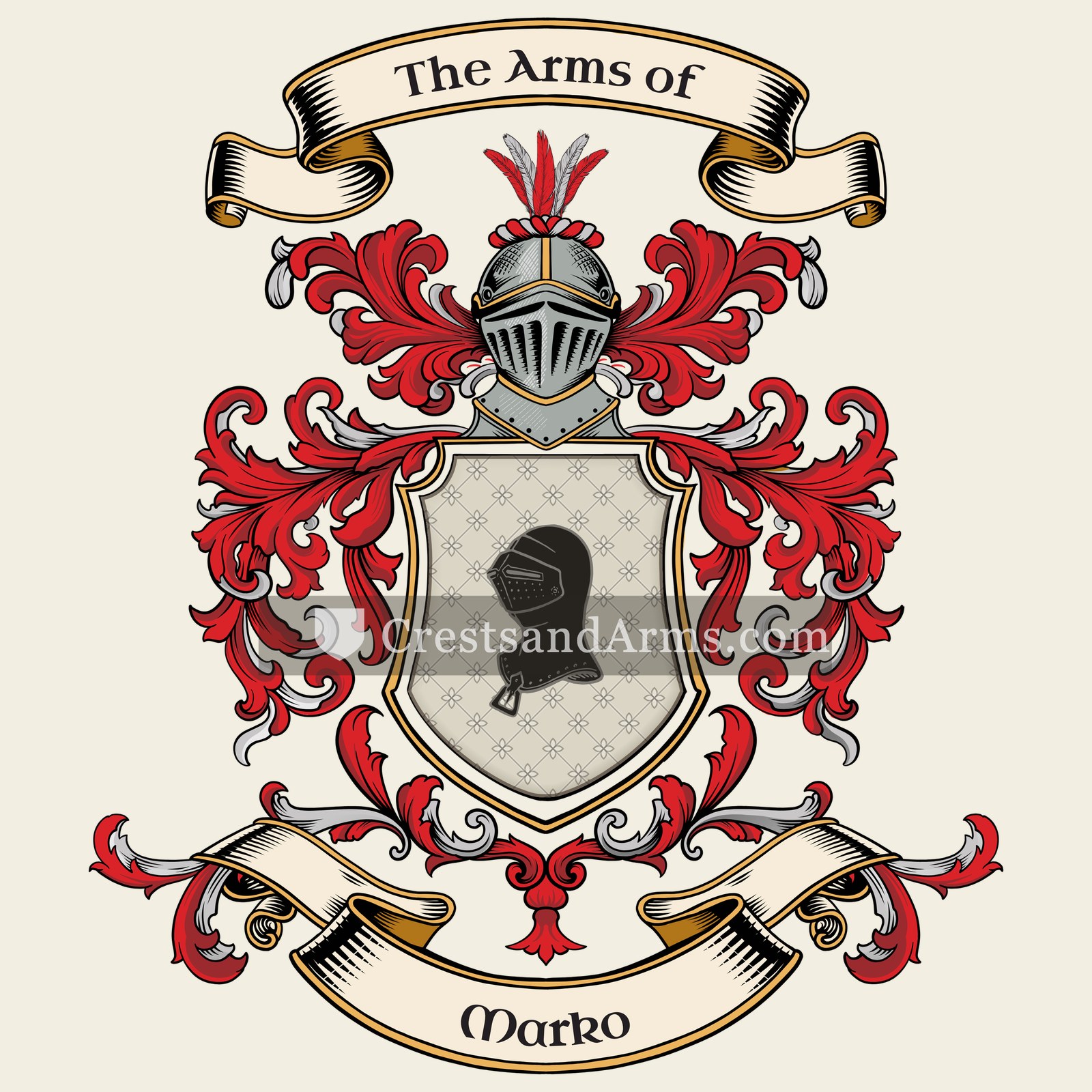
Map of Germany showing where the Marko arms are recorded
The Marko arms were recorded in Germany, c. 1765.
Arms such as these were typically recorded in Bavaria.
Bavaria was a country of old landed families and walled market towns. Estates passed down the same line for centuries, and both the landowners and the leading townsmen kept arms, which is why so many Bavarian names sit in the registers.
This is where the arms were entered in the register. Families often moved to other parts of the country, so the same name can turn up in more than one region.
The body that granted and recorded arms in Germany in this period.
Francis I, Holy Roman Emperor
Sovereign of the period
Francis I, Holy Roman Emperor
1745–1765
Reigning in Germany when the Marko arms are first recorded.
How Arms Worked in Germany
In the Holy Roman Empire, coats of arms were often granted to individuals by the Emperor or his representatives. These arms were then passed down through the generations to all legitimate descendants of the original holder. Younger branches of a family usually kept the same shield design without needing to change it, as the arms belonged to the entire lineage.
Granting authority
The Holy Roman Emperor held the sole power to grant new coats of arms throughout his vast imperial territories.
How they got arms
Families typically obtained their coats of arms through a formal imperial grant or by proving their noble status to the authorities.
Where arms were recorded
These grants were officially recorded in the Imperial Chancery registers, which began keeping formal records of such honors during the Middle Ages.
The family's standing
Recorded among the armigerous families of Germany.
Origin & History of the Marko Family in Germany
The name Marko is a variation of the Latin name Marcus, which became popular across Europe due to the influence of Saint Mark the Evangelist. In the German-speaking regions, particularly in Bavaria, the name evolved as people began adopting fixed surnames to distinguish themselves in growing communities. By the mid-18th century, families carrying this name were well-established in the Bavarian countryside. These early ancestors were likely part of the agrarian society that defined the region during the 1700s. They lived through a period of significant social change as the Holy Roman Empire began to shift toward more centralized administration. Because the name was tied to a common saint, it served as a way for families to signal their cultural and religious identity within their local parishes. Records from 1765 confirm that the Marko family was already integrated into the social fabric of Bavaria, likely working as farmers or tradespeople who contributed to the local economy of the era.
Coat of Arms & Family Crest Details
Colours
Silver (Argent)Means: Peace and sincerity
Historical info
Source
J. B. Rietstap, Armorial Général, Gouda: G. B. van Goor Zonen, 1884–87
Blazon (the actual original written record)
“D'arg. à une tête de Sarasin, posée de profil, coiffée d'un turban d'arg. rayé de gu., le tout recouvert d'un voile en forme de réseau de sa.”
AragonAragon, c. 1722
Digital archive packCoat of arms PNG, gold border print PDF, vector SVG and the certificate of authenticity. Sent to your email in minutes.
Map of Spain showing where the Marko arms are recorded
The Marko arms were recorded in Aragon, c. 1722.
Aragon was mountain and river country in north-eastern Spain, with a strong tradition of small independent landholders. A great many families counted as gentry there, and each one needed a shield to be told apart.
This is where the arms were entered in the register. Families often moved to other parts of the country, so the same name can turn up in more than one region.
The body that granted and recorded arms in Spain in this period.
Philip V of Spain
Sovereign of the period
Philip V of Spain
1714–1724
Reigning in Germany when the Marko arms are first recorded.
How Arms Worked in Spain
In Spain, a coat of arms was considered a form of property that belonged to the entire family line. These arms were passed down from a father to all his children equally. Younger branches of the family usually kept the original design without needing to add any special marks to distinguish their specific line.
Granting authority
The Cronista Rey de Armas was the official body that regulated and granted coats of arms throughout Spain.
How they got arms
Families often obtained their arms through royal grants or by proving their noble status to the official heraldic authority.
Where arms were recorded
Coats of arms were officially recorded in the registers of the Cronista Rey de Armas starting in 1496.
The family's standing
Recorded among the armigerous families of Aragon.
Origin & History of the Marko Family in Spain
The name Marko has deep roots in the historical landscape of the Aragon region, where records confirm the presence of the family as early as 1722. During this period, the Kingdom of Aragon was a place of significant social transition, and families like the Markos were often integrated into the local agricultural or merchant classes that sustained the regional economy. The name itself is a variant of the Latin name Marcus, which gained widespread popularity across the Iberian Peninsula due to the influence of the Catholic Church and the veneration of Saint Mark. As the family established their lives in Aragon, they likely participated in the local customs and legal structures of the time, such as parish record-keeping and land management. By living in this specific part of Spain, the early members of the Marko family were part of a long tradition of families who helped shape the cultural identity of the Ebro River valley through their daily work and community involvement.
Related Branches & Arms
Root word
Marcus
Derived from the Roman god Mars, meaning dedicated to Mars.
This name
MarkoA German variant of Mark, signifying a person who is warlike or devoted to the god of war.
also spelled
Marko
Marck
Documented Sources
J. B. Rietstap, Armorial Général, Gouda: G. B. van Goor Zonen, 1884–87
Bahlow, Hans, Deutsches Namenlexikon: Familien- und Vornamen nach Ursprung und Sinn erklärt, 1967
Bayerisches Hauptstaatsarchiv, Kurbayern Hofkammer, Steuer- und Rechnungsunterlagen, 1765
Heintze, Albert, Die deutschen Familiennamen: geschichtlich, geographisch, sprachlich, 1903
Digital archive packCoat of arms PNG, gold border print PDF, vector SVG and the certificate of authenticity. Sent to your email in minutes.


 helmetWisdom and security in defence
 helmetWisdom and security in defence