A record of documented arms, meaning and origin, researched for the Martinucci family lines. Documented in 3 countries.
Reg. 0801 · Belgian, M–O
Coat of Arms & Family Crest Details
Symbols on this shield
cross symbolChristian faith and service
chevronProtection, and faithful service completed
lionCourage, strength and royalty
Colours
Silver (Argent)Means: Peace and sincerity
Red (Gules)Means: Military strength
Historical info
Source
J. B. Rietstap, Armorial Général, Gouda: G. B. van Goor Zonen, 1884–87
Blazon (the actual original written record)
“Coupé: au 1 d'arg. au lion de gu.; au 2 de gu. à un écusson d'arg. en abîme, ch. d'une croix ancrée de gu. C.: un lion iss. d'or, arm. et lamp. de gu., accosté de deux chicots au nat., posés en chev. renv. S.: deux panthères reg., au nat.”
BelgiumAnvers, c. 1737
Digital archive packCoat of arms PNG, gold border print PDF, vector SVG and the certificate of authenticity. Sent to your email in minutes.
Map of Belgium showing where the Martinucci arms are recorded
The Martinucci arms were recorded in Anvers, c. 1737.
This is where the arms were entered in the register. Families often moved to other parts of the country, so the same name can turn up in more than one region.
The body that granted and recorded arms in Belgium in this period.
Charles VI, Holy Roman Emperor
Sovereign of the period
Charles VI, Holy Roman Emperor
1711–1740
Reigning in Belgium when the Martinucci arms are first recorded.
How Arms Worked in Belgium
In Belgium, a coat of arms is considered personal property that is passed down through the male line to legitimate descendants. Families often use the same shield design across generations to show their shared heritage. If a branch of the family wants to change the design, they must apply for an official update to their specific version of the arms.
Granting authority
The Conseil héraldique is the official body that regulates and approves all coats of arms in Belgium.
How they got arms
Families obtain their coats of arms through formal royal grants or by confirming their historical right to use existing designs.
Where arms were recorded
All approved coats of arms are officially recorded in the public registers of the Conseil héraldique since 1844.
The family's standing
Recorded among the armigerous families of Belgium.
Origin & History of the Martinucci Family in Belgium
The history of the Martinucci family in Belgium begins with their arrival in the bustling port city of Antwerp during the early eighteenth century. By 1737, records confirm that members of the family were already established within the city, likely drawn to the region by the thriving trade networks and economic opportunities that defined the Austrian Netherlands at the time. While the name itself carries clear roots in the Italian peninsula, the family integrated into the local urban environment by participating in the merchant and artisan classes that kept Antwerp a vital hub of European commerce. Over the following decades, these early settlers adapted to the local customs and legal systems of the Low Countries, transitioning from newcomers into a recognized part of the city’s social fabric. Their presence in Antwerp serves as a testament to the long history of migration between Southern and Northern Europe, highlighting how families moved across borders to build new lives in major trade centers.
Coat of Arms & Family Crest Details
Symbols on this shield
saltireResolution, and St Andrew's cross
lionCourage, strength and royalty
Colours
Gold (Or)Means: Generosity
Red (Gules)Means: Military strength
Blue (Azure)Means: Loyalty and truth
Historical info
Source
J. B. Rietstap, Armorial Général, Gouda: G. B. van Goor Zonen, 1884–87
Blazon (the actual original written record)
“D'or au saut. de gu., acc. aux 1 et 4 d'une tête de lion d'azur et aux 2 et 3 d'une tête de léopard d'azur. C.: un sautoir de gu. L. d'or, d'azur et de gu.”
Germanyc. 1765
Digital archive packCoat of arms PNG, gold border print PDF, vector SVG and the certificate of authenticity. Sent to your email in minutes.
Map of Germany showing where the Martinucci arms are recorded
The Martinucci arms were recorded in Germany, c. 1765.
Arms such as these were typically recorded in Bavaria.
Bavaria was a country of old landed families and walled market towns. Estates passed down the same line for centuries, and both the landowners and the leading townsmen kept arms, which is why so many Bavarian names sit in the registers.
This is where the arms were entered in the register. Families often moved to other parts of the country, so the same name can turn up in more than one region.
The body that granted and recorded arms in Germany in this period.
Francis I, Holy Roman Emperor
Sovereign of the period
Francis I, Holy Roman Emperor
1745–1765
Reigning in Belgium when the Martinucci arms are first recorded.
How Arms Worked in Germany
In the Holy Roman Empire, coats of arms were often granted to individuals by the Emperor or his representatives. These arms were then passed down through the generations to all legitimate descendants of the original holder. Younger branches of a family usually kept the same shield design without needing to change it, as the arms belonged to the entire lineage.
Granting authority
The Holy Roman Emperor held the sole power to grant new coats of arms throughout his vast imperial territories.
How they got arms
Families typically obtained their coats of arms through a formal imperial grant or by proving their noble status to the authorities.
Where arms were recorded
These grants were officially recorded in the Imperial Chancery registers, which began keeping formal records of such honors during the Middle Ages.
The family's standing
Recorded among the armigerous families of Germany.
Origin & History of the Martinucci Family in Germany
The Martinucci family name carries a distinct history that reflects the movement of people across European borders during the eighteenth century. While the name possesses clear roots in the Romance-speaking regions of the south, by 1765, members of the family had established a notable presence in the southern German region of Bavaria. During this era, Bavaria was a hub of trade and craftsmanship that attracted skilled workers from neighboring lands. The Martinucci family likely integrated into the local economy by adapting to the social and linguistic landscape of the Holy Roman Empire. Their transition into German society suggests they were part of a broader trend of migration where families moved to find new opportunities in the growing towns of the Bavarian countryside. By settling in this region, they became part of the diverse cultural fabric that defined central Europe before the modern era.
Coat of Arms & Family Crest Details
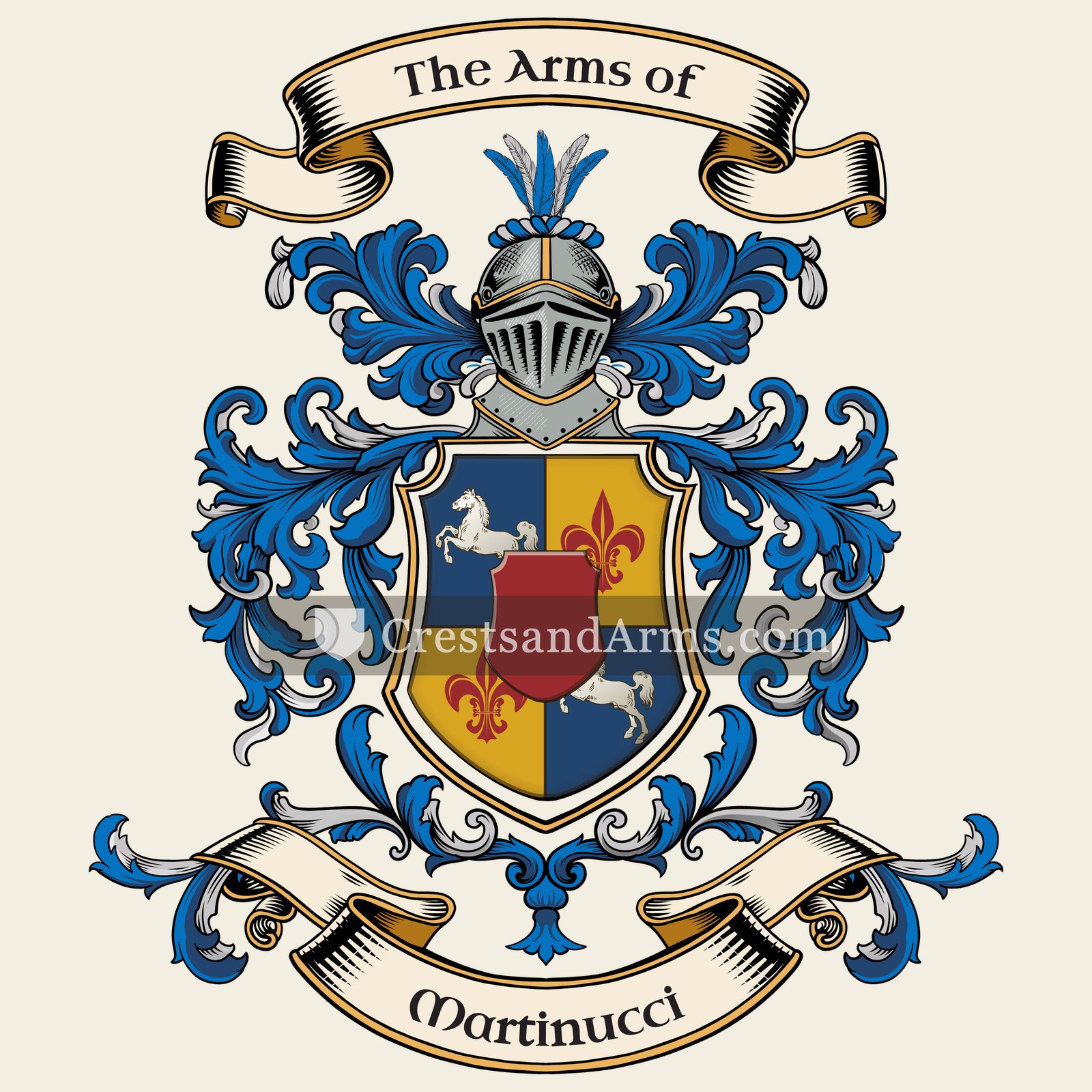
Symbols on this shield
horseReadiness to serve king and country
fleur de lisPurity, light, and the sixth son
Colours
Blue (Azure)Means: Loyalty and truth
Gold (Or)Means: Generosity
Red (Gules)Means: Military strength
Silver (Argent)Means: Peace and sincerity
Historical info
Source
J. B. Rietstap, Armorial Général, Gouda: G. B. van Goor Zonen, 1884–87
Blazon (the actual original written record)
“Ec.: aux 1 et 4 d'azur à un cheval cabré d'arg., la queue levée; aux 2 et 3 d'or à une fleur-de-lis de gu. Sur le tout de gu. à un 5 d'arg. Trois cq. cour. C.: 1° un ange iss. de profil et cont. de carn., supp. de sa main dextre une fleur-de-lis de gu.; 2° un 5 d'arg. entre un vol de sa., les plumes ext. d'arg.; 3° le cheval du 1, iss. L. d'arg. et d'azur. S.: deux lévriers reg. d'arg., coll. de gu.”
TyrolTyrol, c. 1772
Digital archive packCoat of arms PNG, gold border print PDF, vector SVG and the certificate of authenticity. Sent to your email in minutes.
Map of Austria showing where the Martinucci arms are recorded
The Martinucci arms were recorded in Tyrol, c. 1772.
Tyrol was mountain country in western Austria, where the valleys were held by families who had been there a very long time. Old tenure counted for more than money, and old families carried arms.
This is where the arms were entered in the register. Families often moved to other parts of the country, so the same name can turn up in more than one region.
Region
Tyrol
First recorded
1772
Granting Authority for the Martinucci Arms
Imperial and Royal chancery
Sodacan · CC BY-SA 3.0
The body that granted and recorded arms in Austria in this period.
Joseph II, Holy Roman Emperor
Sovereign of the period
Joseph II, Holy Roman Emperor
1765–1790
Reigning in Belgium when the Martinucci arms are first recorded.
How Arms Worked in Austria
Austrian coats of arms were often linked directly to noble titles granted by the Emperor. These symbols belonged to the entire family line rather than just one individual. When a family grew, new branches kept the original design without needing to change it. This system allowed all members of a noble house to share the same identity across many generations.
Granting authority
The Imperial and Royal chancery managed all heraldic matters and controlled the official granting of arms throughout the Austrian lands.
How they got arms
Families typically received their arms through a formal imperial decree that often accompanied the elevation of a person to noble status.
Where arms were recorded
Official records of these grants were kept in the Imperial Register of Nobility which began its formal documentation process in 1453.
The family's standing
Recorded among the armigerous families of Tyrol.
Origin & History of the Martinucci Family in Austria
The Martinucci family name carries a distinct history rooted in the mountainous landscape of the Tyrol region. By 1772, records confirm that members of the family were already established in this area, which was then part of the Habsburg Monarchy. The name itself suggests an Italian origin, likely derived from the personal name Martino, which reflects the historical movement of people across the Alpine passes between modern-day Italy and Austria. During the eighteenth century, families in Tyrol often worked in trade, agriculture, or specialized crafts that supported the local economy. The presence of the Martinucci name in these early records indicates that the family was integrated into the social and administrative structures of the Austrian Empire. As they settled in the region, they became part of the unique cultural blend that defined the Tyrol borderlands, where Germanic and Romance influences met and shaped the lives of local residents.
Related Branches & Arms
Root word
Martinus
Derived from Mars, the Roman god of war.
This name
MartinucciA diminutive form indicating a descendant or follower of someone named Martin.
also spelled
Martiny
Martinee
Documented Sources
J. B. Rietstap, Armorial Général, Gouda: G. B. van Goor Zonen, 1884–87
Van der Wee, Herman, The Growth of the Antwerp Market and the European Economy (fourteenth-sixteenth centuries), 1963. (Note: While this covers an earlier period, it provides the essential historical context for the economic environment of Antwerp that persisted through the 1700s)
Digital archive packCoat of arms PNG, gold border print PDF, vector SVG and the certificate of authenticity. Sent to your email in minutes.


 cross symbolChristian faith and service
 chevronProtection, and faithful service completed
 lionCourage, strength and royalty
 cross symbolChristian faith and service
 chevronProtection, and faithful service completed
 lionCourage, strength and royalty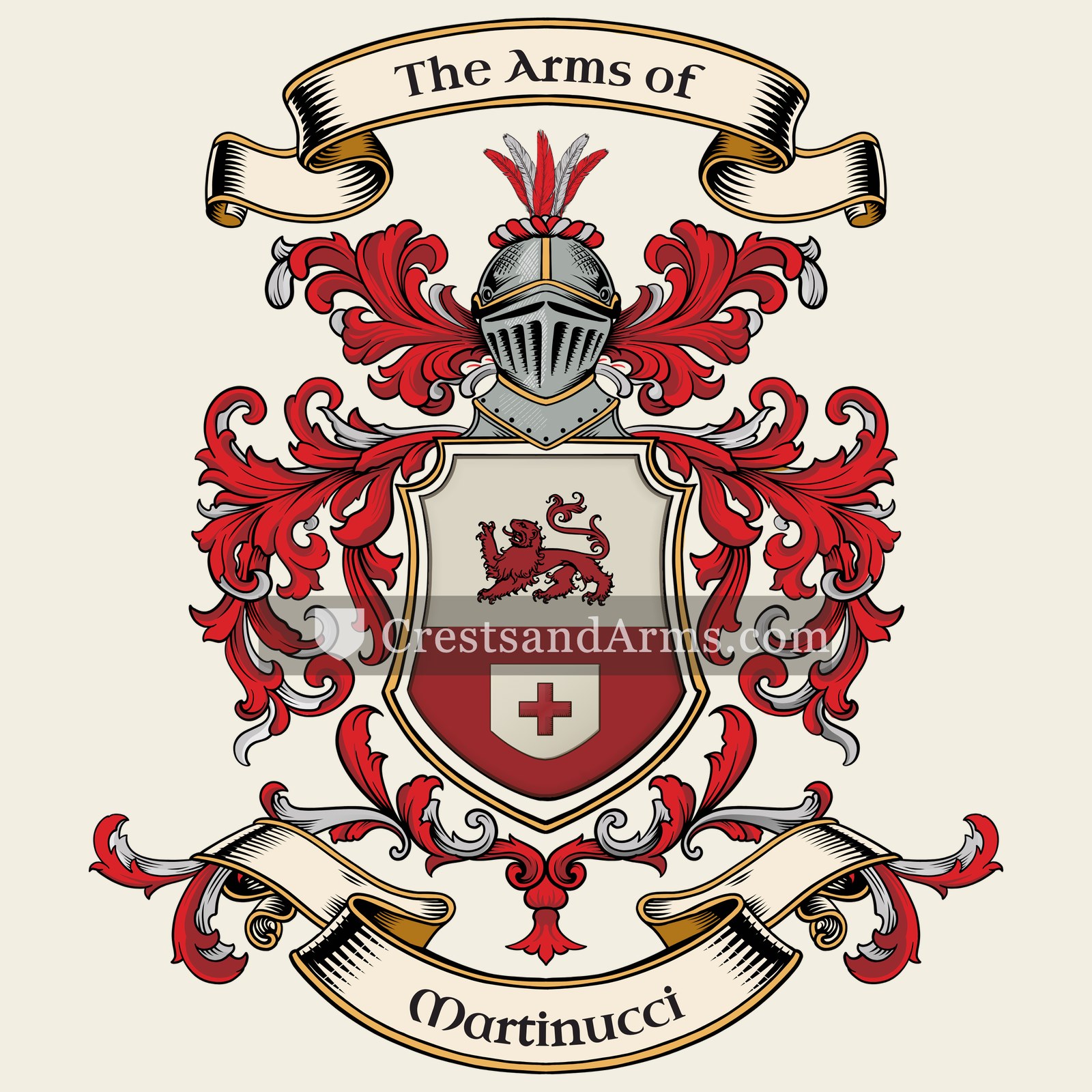


 saltireResolution, and St Andrew's cross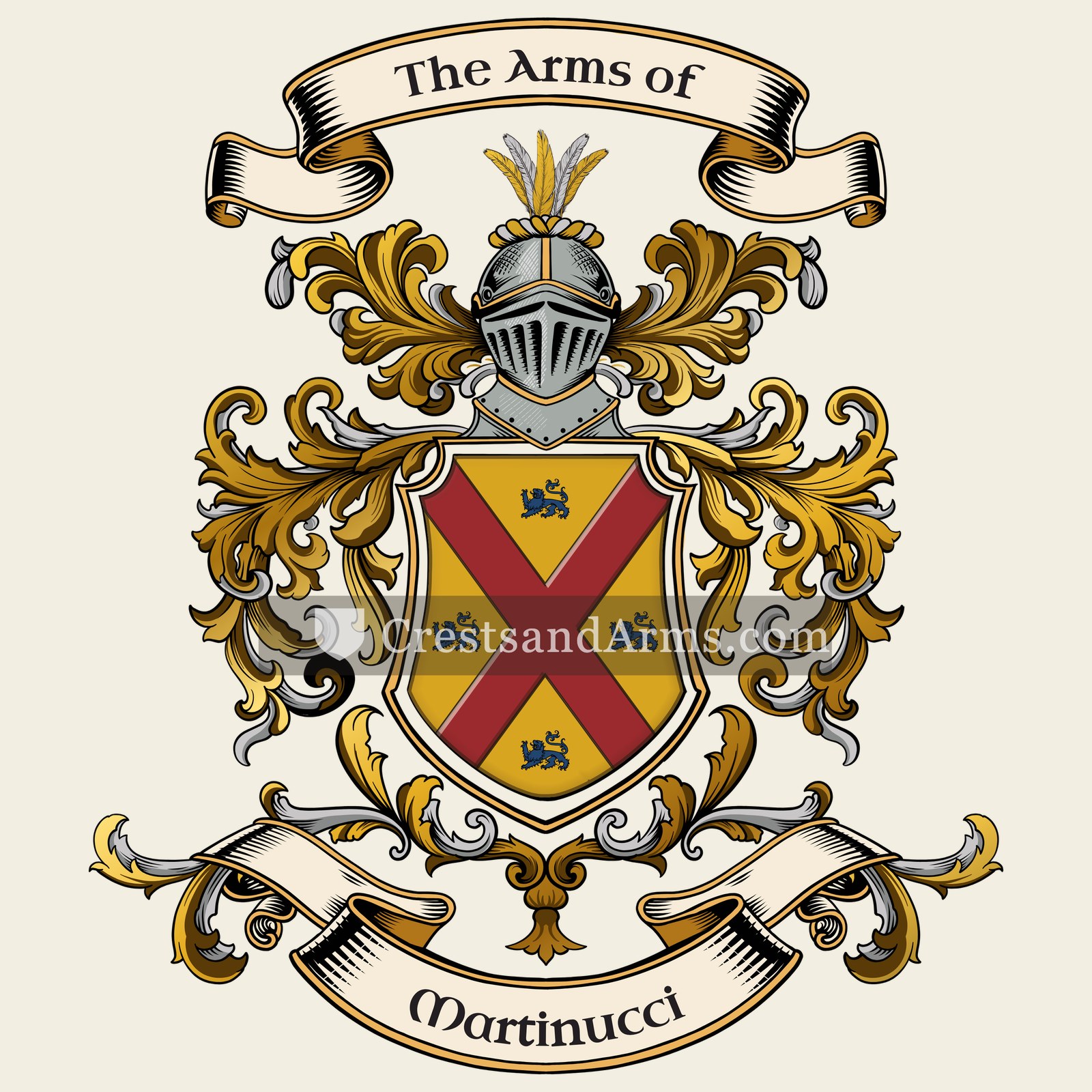


 horseReadiness to serve king and country
 fleur de lisPurity, light, and the sixth son