Map of Netherlands showing where the Mas arms are recorded
The Mas arms were recorded in Gouda, c. 1815.
This is where the arms were entered in the register. Families often moved to other parts of the country, so the same name can turn up in more than one region.
Region
Gouda
Town
Gouda
First recorded
1815
Granting Authority for the Mas Arms
Hoge Raad van Adel
Photograph made by me · CC BY-SA 3.0
The body that granted and recorded arms in Netherlands in this period.
William I of the Netherlands
Sovereign of the period
William I of the Netherlands
1815–1840
Reigning in Netherlands when the Mas arms are first recorded.
How Arms Worked in Netherlands
In the Netherlands, coats of arms were often used by noble families and those who held specific public offices. These arms were passed down through the generations to legitimate descendants. Younger branches of a family usually kept the original design without needing to add special marks. This system ensured that the family identity remained clear and consistent over many years.
Granting authority
The Hoge Raad van Adel is the official body that regulates and manages noble titles and coats of arms in the Netherlands.
How they got arms
Families typically obtained their coats of arms through official royal grants or by proving their long-standing historical use of the symbols.
Where arms were recorded
Coats of arms are officially recorded in the registers held by the Hoge Raad van Adel, which began its work in 1814.
The family's standing
Recorded among the armigerous families of Netherlands.
Origin & History of the Mas Family in Netherlands
The surname Mas has deep roots in the Dutch landscape, appearing in official records as early as the nineteenth century. By 1815, members of the family were firmly established in the city of Gouda, a location famous for its historic trade in cheese and clay pipes. During this period, the Netherlands was transitioning into a new kingdom following the Napoleonic era, and the government began requiring citizens to formally register their surnames for census and tax purposes. The name likely originated as a shortened form of names like Thomas or as a descriptive term related to local geography or land use. As the family lived in Gouda, they were part of a bustling urban center that connected inland provinces to the wider world through its canal networks. Over time, the family name became a permanent fixture in the region, reflecting the steady growth and movement of Dutch families who helped build the nation’s identity during the nineteenth century.
Meaning of the Mas family crest colors & symbols
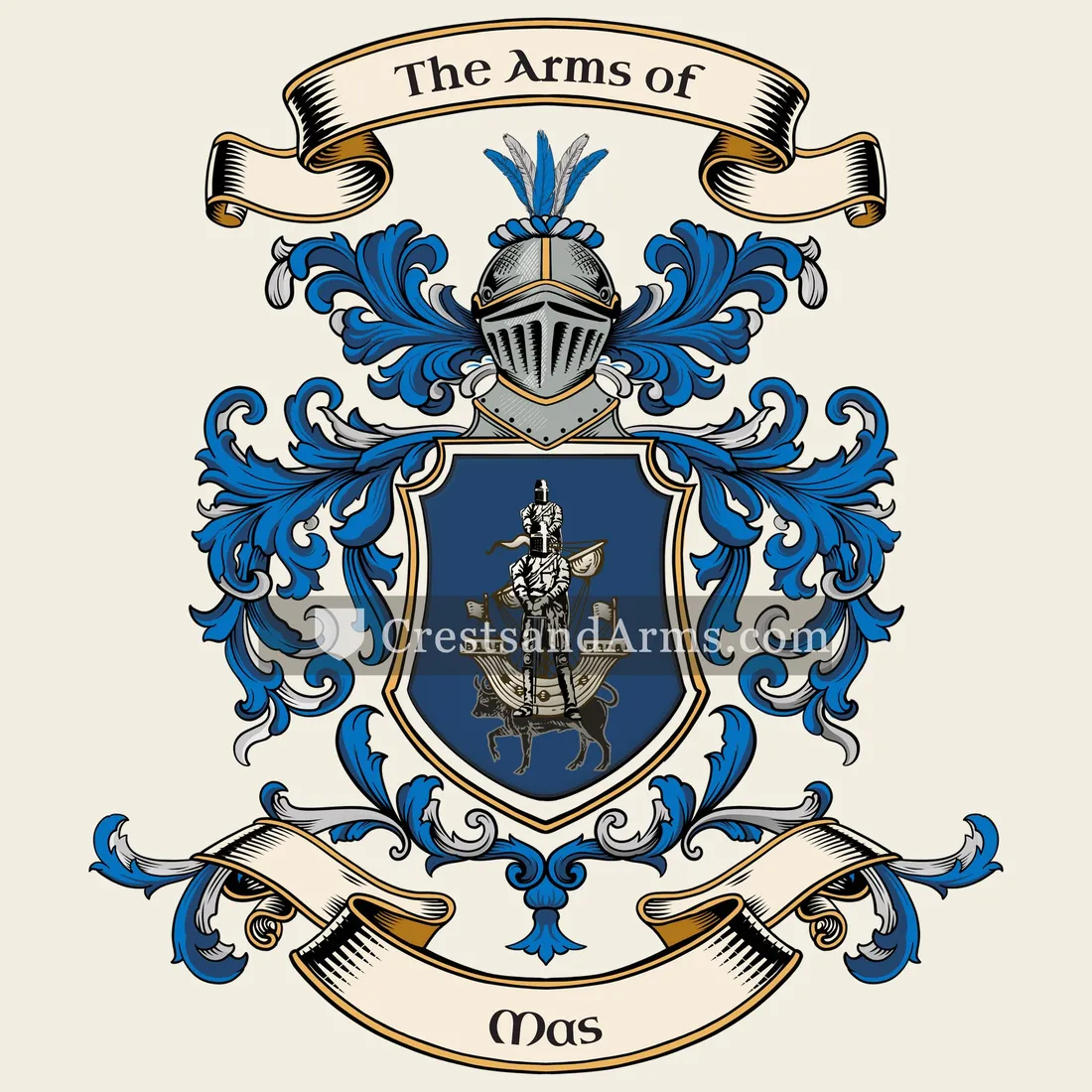
Symbols on this shield
shipEnterprise, and a great voyage undertaken
knightChivalry and service in arms
bullValour and generosity
Colours
Blue (Azure)Means: Loyalty and truth
Black (Sable)Means: Constancy
Historical info
Source
J. B. Rietstap, Armorial Général, Gouda: G. B. van Goor Zonen, 1884–87
Blazon (the actual original written record)
“Coupé: au 1 parti: a. d'azur à un garçon iss. et cont. de carn., tenant de sa main dextre une équerre d'or; b. d'or à un boeuf pass. de sa.; au 2 d'azur à une barque à un seul mât, dans laquelle est assis un homme hab. au nat., ladite barque portant sur la proue une banderole d'or et voguante sur une mer au nat. Brl. d'or et d'azur. C.: le garçon iss., tourné à dextre, tenant l'équerre de sa main dextre, la sen. appuyée sur sa hanche. L. d'or et d'azur.”
SwitzerlandBâle, c. 1745
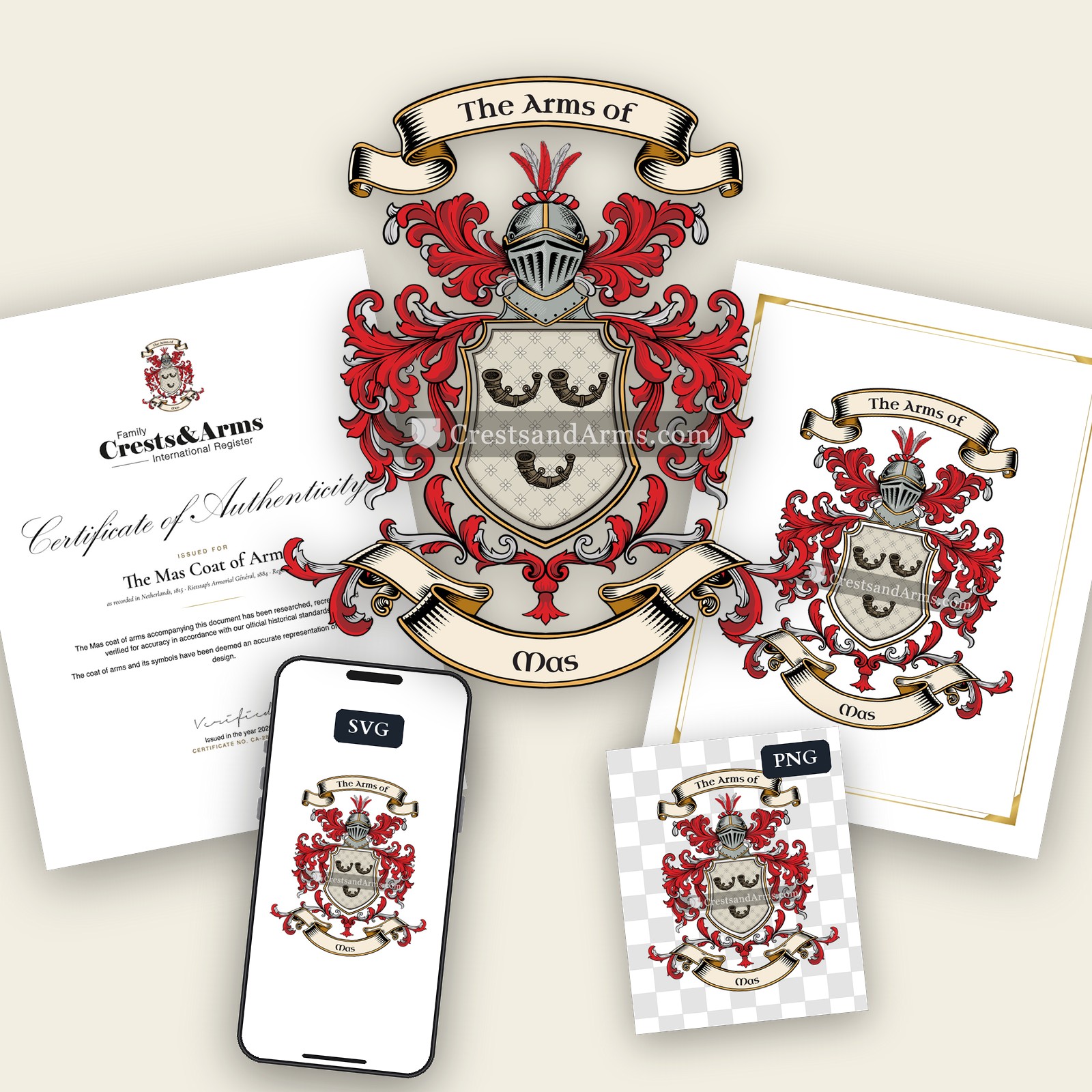
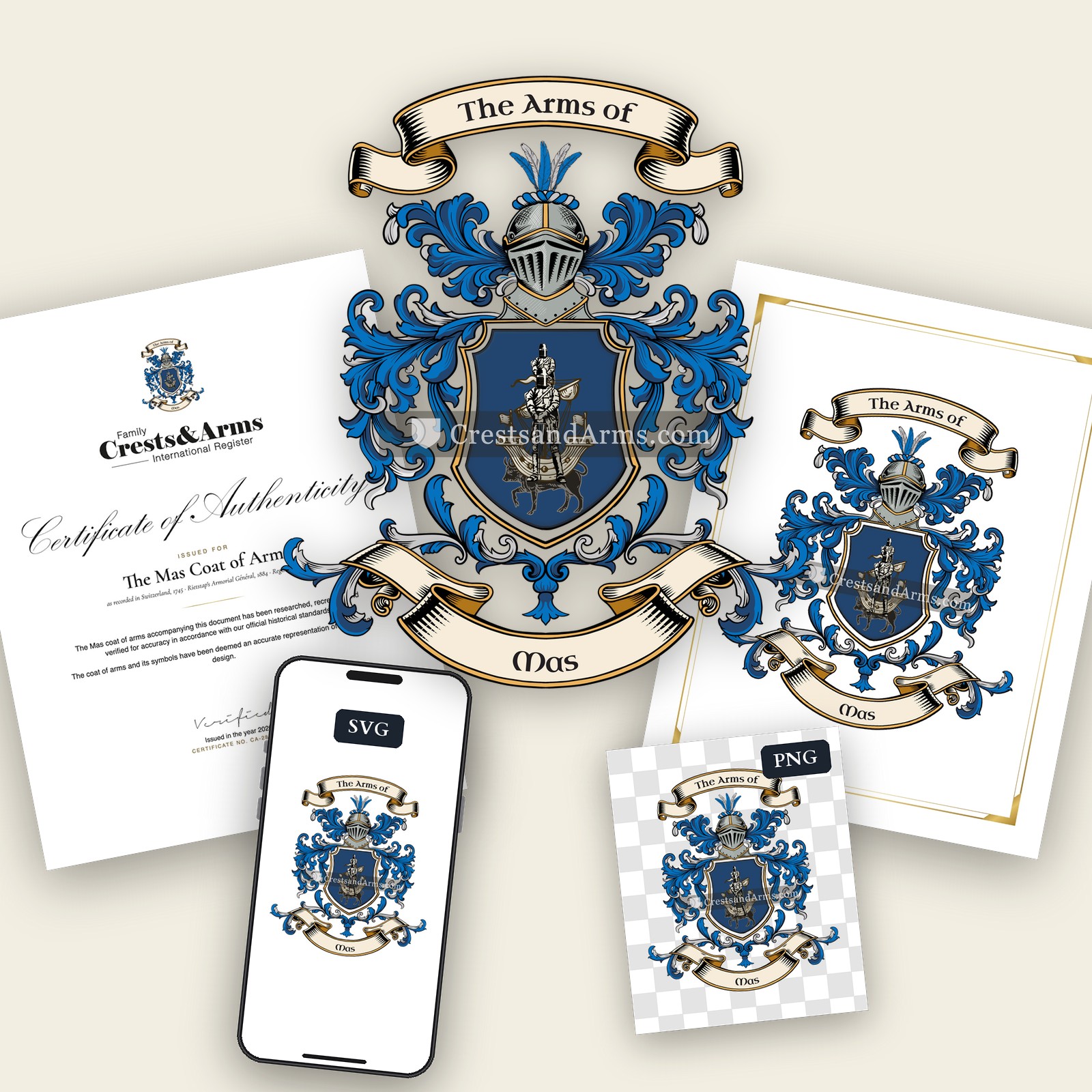
Digital archive packCoat of arms PNG, gold border print PDF, vector SVG and the certificate of authenticity. Sent to your email in minutes.
Map of Switzerland showing where the Mas arms are recorded
The Mas arms were recorded in Bâle, c. 1745.
This is where the arms were entered in the register. Families often moved to other parts of the country, so the same name can turn up in more than one region.
The body that granted and recorded arms in Switzerland in this period.
How Arms Worked in Switzerland
In Switzerland, coats of arms were not restricted to the nobility and were often adopted by common citizens and families. These symbols were passed down through generations to show family identity. When branches of a family grew, they often changed small details of the design to distinguish their own line from the original group.
Granting authority
Cantonal and civic authorities managed the use of coats of arms within their specific regions and local jurisdictions.
How they got arms
Families typically assumed their own coats of arms based on local custom rather than receiving them from a central monarch.
Where arms were recorded
Arms were recorded in various cantonal and civic registers starting from the fourteenth century throughout the Swiss region.
The family's standing
Recorded among the armigerous families of Switzerland.
Origin & History of the Mas Family in Switzerland
The family name Mas has deep roots in the Swiss city of Basel, where records confirm members of the family were established by 1745. During this period, Basel served as a major hub for trade and craftsmanship, attracting families who sought to contribute to the city’s growing economy. The name itself is thought to have origins linked to the occupation of a farmer or a person who lived near a specific land plot, as the term often relates to small rural holdings in various European languages. Families like the Mas clan in Basel were typically integrated into the local guild system, which played a vital role in the social and political life of the city. By the mid-18th century, these individuals were likely involved in the active merchant culture that defined Basel, helping to shape the urban landscape during a time of significant transition for the Swiss cantons.
Mas Meaning & Related Branches
Root word
Thomas
Aramaic for twin
This name
MasA patronymic surname derived from a shortened form of the given name Thomas.
also spelled
Mas
Documented Sources
J. B. Rietstap, Armorial Général, Gouda: G. B. van Goor Zonen, 1884–87
Nationaal Archief, Bevolkingsregister van Gouda (1815)
Regionaal Historisch Centrum Midden-Holland, Burgerlijke Stand van Gouda (1811–1820)
Meertens, P.J., De betekenis van Nederlandse familienamen (1960)
Van der Schaar, J., Woordenboek van voornamen (1964)
Digital archive packCoat of arms PNG, gold border print PDF, vector SVG and the certificate of authenticity. Sent to your email in minutes.


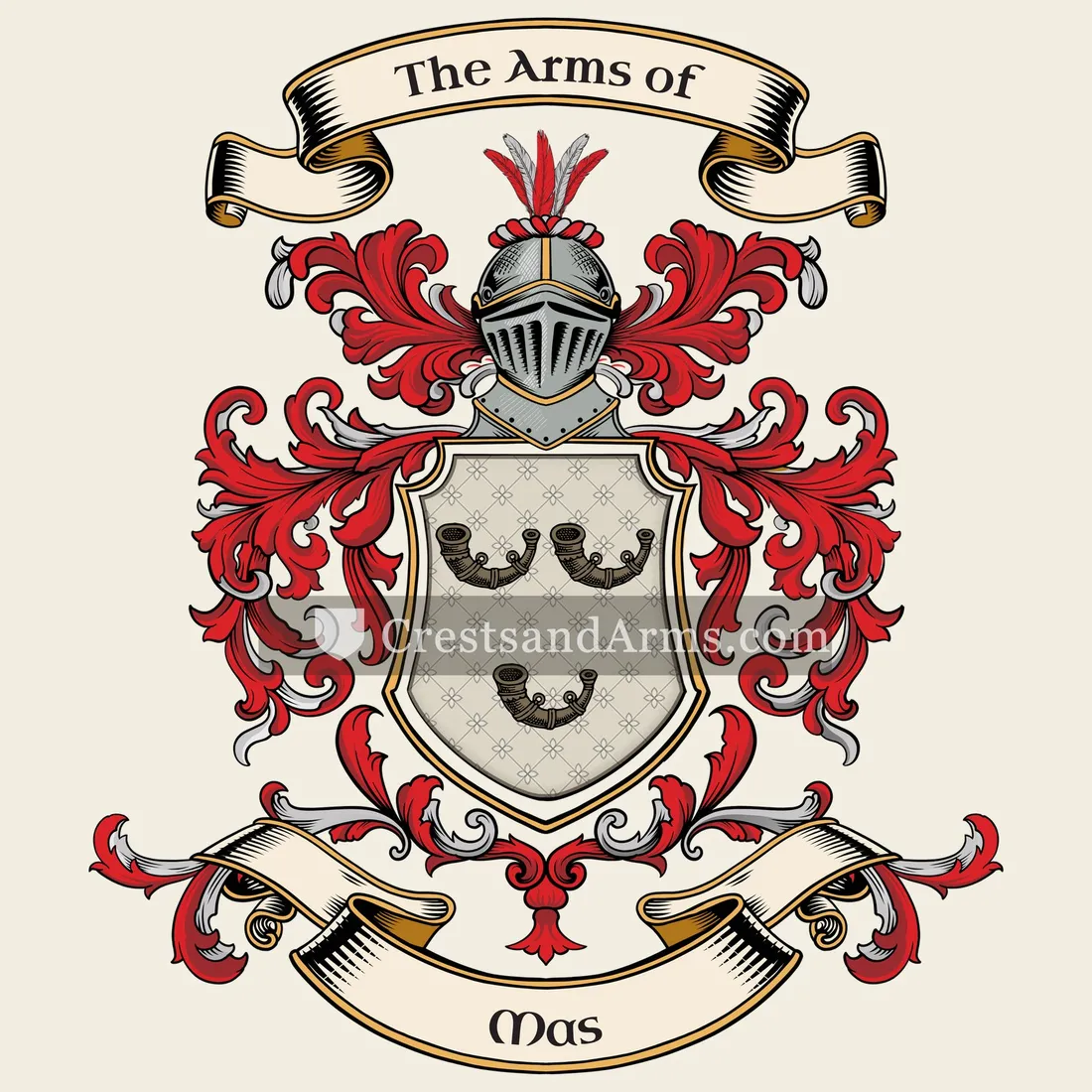
 hunting horn stringedOne who delights in the chase
 hunting horn stringedOne who delights in the chase


 shipEnterprise, and a great voyage undertaken
 knightChivalry and service in arms
 bullValour and generosity