Map of Portugal showing where the Mascarenhas arms are recorded
The Mascarenhas arms were recorded in Portugal, c. 1706.
Arms such as these were typically recorded in Lisboa.
Lisbon was the seat of the Portuguese crown and the port its wealth came through. Families made rich by trade and by service to the king took arms, and the crown's heralds recorded them there.
This is where the arms were entered in the register. Families often moved to other parts of the country, so the same name can turn up in more than one region.
The body that granted and recorded arms in Portugal in this period.
Peter II of Portugal
Sovereign of the period
Peter II of Portugal
1683–1706
Reigning in Portugal when the Mascarenhas arms are first recorded.
How Arms Worked in Portugal
In Portugal, a coat of arms was a family possession that passed from a father to his children. Every legitimate descendant had the right to use the family shield without needing to change it. Younger branches of the family kept the original design, though they sometimes added small symbols to distinguish their specific line from the main branch.
Granting authority
The Cartório da Nobreza acted as the official body that managed and regulated noble titles and coats of arms in Portugal.
How they got arms
Families typically inherited their arms through bloodline, though they could also receive new grants from the crown for distinguished service.
Where arms were recorded
Coats of arms were officially recorded in the books of the Cartório da Nobreza starting in the year 1512.
The family's standing
Recorded among the armigerous families of Portugal.
Origin & History of the Mascarenhas Family in Portugal
The Mascarenhas family name holds a significant place in the history of Portugal, with deep roots that trace back to the noble circles of the kingdom. By the early 18th century, the family was firmly established in Lisboa, where they played active roles in the social and administrative life of the capital. The name itself is thought to have originated from a geographical location, reflecting the common practice of families adopting the names of the lands they held or managed. As the family grew in influence, they became closely connected to the royal court and the expansion of the Portuguese empire. Their presence in Lisboa by 1706 highlights their status as a family that helped shape the urban and political landscape of the city during a time of great transition for the nation. Through their service and local involvement, the Mascarenhas family became a lasting part of the historical fabric of Portugal.
Coat of Arms & Family Crest Details
Colours
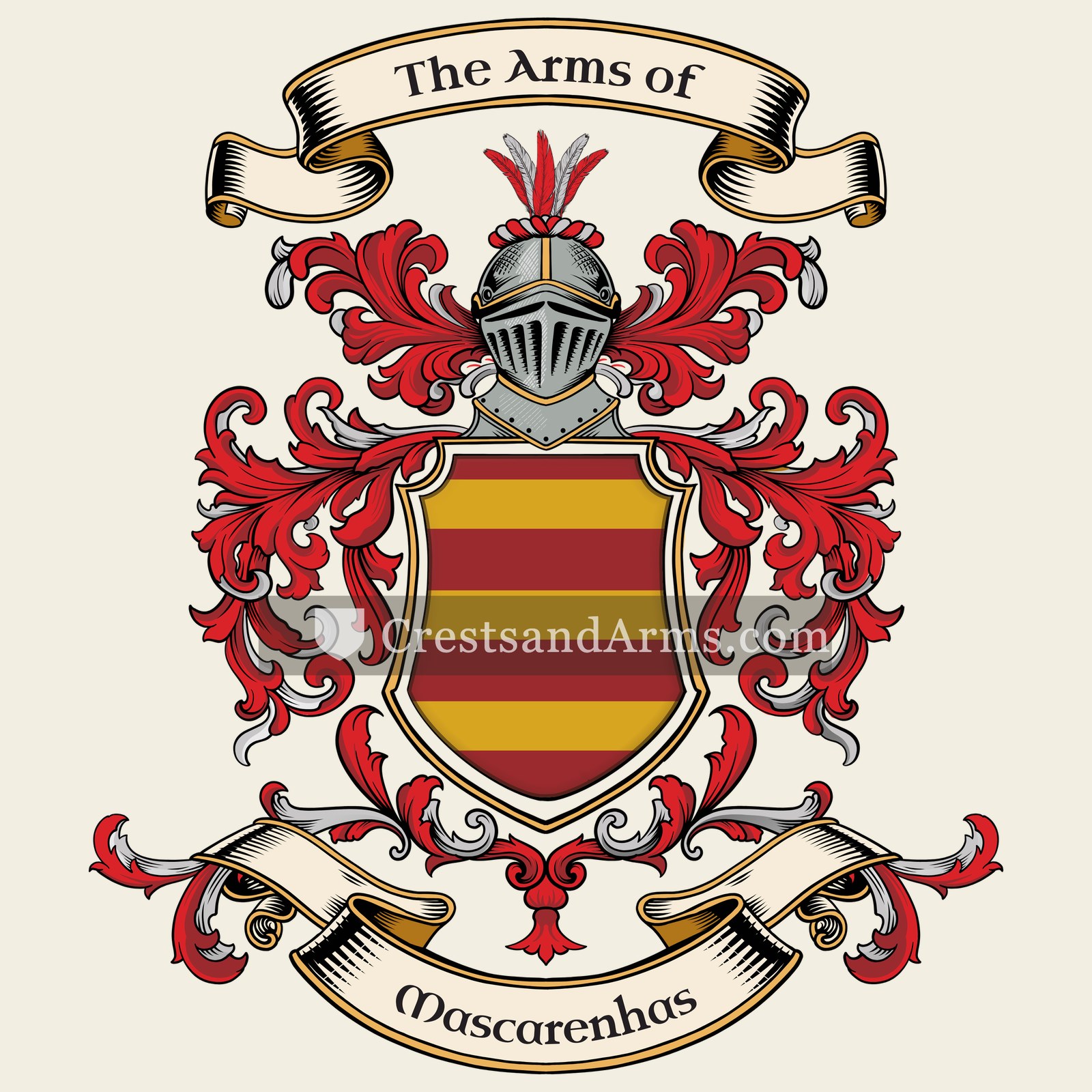
Red (Gules)Means: Military strength
Historical info
Source
J. B. Rietstap, Armorial Général, Gouda: G. B. van Goor Zonen, 1884–87
Blazon (the actual original written record)
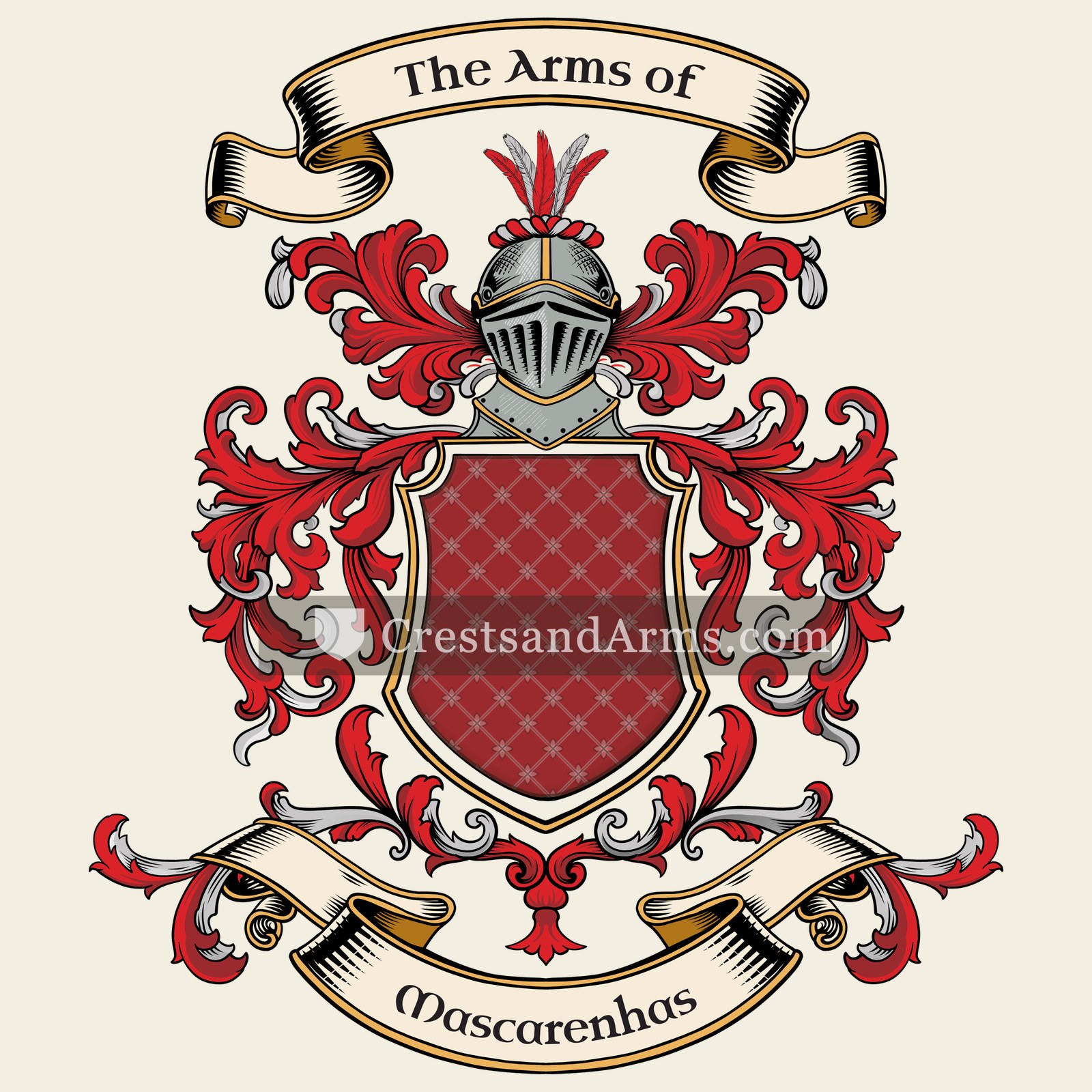
“De gu. à six houppes de gu., 3, 2 et 1.”
GaliciaGalicia, c. 1722
Digital archive packCoat of arms PNG, gold border print PDF, vector SVG and the certificate of authenticity. Sent to your email in minutes.
Map of Spain showing where the Mascarenhas arms are recorded
The Mascarenhas arms were recorded in Galicia, c. 1722.
Galicia was eastern country of large estates and small farming villages, held by families who had been there for a very long time. Land was what entitled a family to arms, and land there rarely changed hands.
This is where the arms were entered in the register. Families often moved to other parts of the country, so the same name can turn up in more than one region.
The body that granted and recorded arms in Spain in this period.
Philip V of Spain
Sovereign of the period
Philip V of Spain
1714–1724
Reigning in Portugal when the Mascarenhas arms are first recorded.
How Arms Worked in Spain
In Spain, a coat of arms was considered a form of property that belonged to the entire family line. These arms were passed down from a father to all his children equally. Younger branches of the family usually kept the original design without needing to add any special marks to distinguish their specific line.
Granting authority
The Cronista Rey de Armas was the official body that regulated and granted coats of arms throughout Spain.
How they got arms
Families often obtained their arms through royal grants or by proving their noble status to the official heraldic authority.
Where arms were recorded
Coats of arms were officially recorded in the registers of the Cronista Rey de Armas starting in 1496.
The family's standing
Recorded among the armigerous families of Galicia.
Origin & History of the Mascarenhas Family in Spain
The history of the Mascarenhas name in Spain is deeply rooted in the northwestern region of Galicia. While the family name is often associated with later influence in Portugal, records confirm that members of the Mascarenhas lineage were firmly established in Galicia by 1722. During this period, families of this status often held positions of local authority or managed significant landholdings within the rural landscape of the Iberian Peninsula. The name itself reflects the complex movement of people across the border between Spain and Portugal, as families frequently relocated to secure new opportunities or to manage ancestral estates. By the early 18th century, the Mascarenhas family had become a recognized part of the Galician social fabric, contributing to the agricultural and administrative life of their local communities. Their presence in the region highlights the long history of shared cultural and familial ties that defined the borderlands of Spain and Portugal during the Enlightenment era.
Related Branches & Arms
Root word
Mascar
Derived from the Old Occitan word for mask or sorcerer.
This name
MascarenhasA habitational surname referring to a person from a place associated with masks or witchcraft.
also spelled
Mascarenhaz
Maskarenyas
Documented Sources
J. B. Rietstap, Armorial Général, Gouda: G. B. van Goor Zonen, 1884–87
Freire, Anselmo Braamcamp. Brasões da Sala de Sintra. 1921
Sottomayor-Pizarro, José Augusto. Linhagens Medievais Portuguesas: Genealogias e Estratégias. 1999
Arquivo Nacional da Torre do Tombo. Chancelaria de D. João V. 1706–1750
Digital archive packCoat of arms PNG, gold border print PDF, vector SVG and the certificate of authenticity. Sent to your email in minutes.


 fessThe military belt, and readiness to serve
 fessThe military belt, and readiness to serve