Map of Spain showing where the Mascarò arms are recorded
The Mascarò arms were recorded in Spain, c. 1722.
Arms such as these were typically recorded in Castile.
Castile was the heart of Spain and the source of most of its noble families. Land won in the long wars against the Moors was granted out to fighting men, and a man granted land was granted arms along with it.
This is where the arms were entered in the register. Families often moved to other parts of the country, so the same name can turn up in more than one region.
The body that granted and recorded arms in Spain in this period.
Philip V of Spain
Sovereign of the period
Philip V of Spain
1714–1724
Reigning in Spain when the Mascarò arms are first recorded.
How Arms Worked in Spain
In Spain, a coat of arms was considered a form of property that belonged to the entire family line. These arms were passed down from a father to all his children equally. Younger branches of the family usually kept the original design without needing to add any special marks to distinguish their specific line.
Granting authority
The Cronista Rey de Armas was the official body that regulated and granted coats of arms throughout Spain.
How they got arms
Families often obtained their arms through royal grants or by proving their noble status to the official heraldic authority.
Where arms were recorded
Coats of arms were officially recorded in the registers of the Cronista Rey de Armas starting in 1496.
The family's standing
Recorded among the armigerous families of Spain.
Origin & History of the Mascarò Family in Spain
The surname Mascarò carries a rich history that likely finds its roots in the Mediterranean regions of Europe before spreading across the Iberian Peninsula. By the early 18th century, records confirm that members of the family were firmly established in the Kingdom of Castile by 1722. During this era, families with this name were often involved in local commerce or agricultural management, which allowed them to integrate into the social fabric of their new communities. The name itself is thought to be descriptive, possibly referring to a person who wore a mask or worked as a performer during traditional festivals. As these individuals settled in Castile, they contributed to the regional economy and helped shape the local culture of the time. Their presence in official documents from 1722 suggests that the family held a stable position within their society, allowing them to leave a lasting mark on the history of the region.
Mascarò Meaning & Related Branches
Root word
Mascara
A mask or a covering for the face.
This name
MascaròA nickname for a person who wore a mask or performed in theatrical disguises.
also spelled
Mascarro
Maskaro
Documented Sources
J. B. Rietstap, Armorial Général, Gouda: G. B. van Goor Zonen, 1884–87
Archivo de la Real Chancillería de Valladolid, Registro de Ejecutorias
Moll, Francesc de Borja, Els llinatges catalans, 1959
Pescador del Hoyo, María del Carmen, La población de Castilla en el siglo XVIII, 1964
Digital archive packCoat of arms PNG, gold border print PDF, vector SVG and the certificate of authenticity. Sent to your email in minutes.


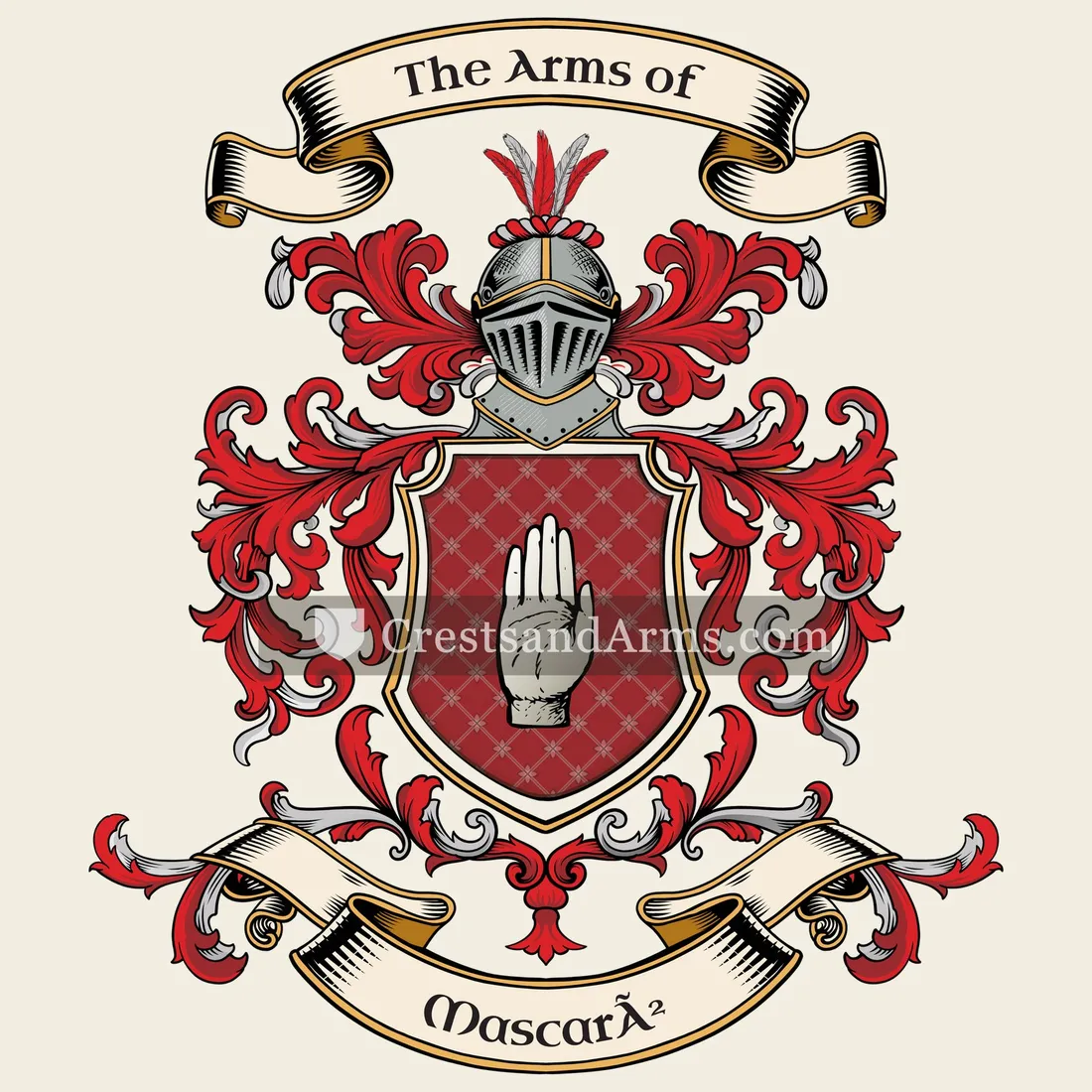
 handFaith, sincerity and justice
 handFaith, sincerity and justice