Map of France showing where the Matias arms are recorded
The Matias arms were recorded in Languedoc, c. 1663.
Languedoc stretched across the south of France, a country of small towns, vineyards and old local families. Its gentry were numerous rather than grand, and a great many of them held arms even where their estates were modest.
This is where the arms were entered in the register. Families often moved to other parts of the country, so the same name can turn up in more than one region.
The body that granted and recorded arms in France in this period.
Louis XIV of France
Sovereign of the period
Louis XIV of France
1643–1715
Reigning in France when the Matias arms are first recorded.
How Arms Worked in France
In France, a coat of arms was a mark of honor that passed down through the male line to all legitimate descendants. Families often used the same shield without changes to show their shared heritage. If a branch wanted to stand out, they could add a small mark to their shield to show their specific place in the family tree.
Granting authority
The Juge d'armes de France acted as the official authority that regulated and verified coats of arms across the country.
How they got arms
Families typically inherited their arms from ancestors, though they could also receive them through royal grants or by proving their noble status.
Where arms were recorded
Coats of arms were officially recorded in the Armorial Général de France, which began its main collection in the year 1696.
The family's standing
Recorded among the armigerous families of Languedoc.
Origin & History of the Matias Family in France
The family name Matias holds deep roots in the historical province of Languedoc, where records confirm the presence of family members as early as 1663. During this period, Languedoc was a region defined by its unique blend of Occitan culture and its strategic importance within the Kingdom of France. Families living in this area often navigated the complex social shifts following the Wars of Religion, which had left a lasting impact on the local population. The name Matias likely evolved from the ancient biblical name Matthias, reflecting a common tradition of adopting names that held religious significance. By the mid-17th century, those bearing the name were integrated into the local agricultural and artisanal communities that formed the backbone of the southern French economy. Living in Languedoc meant being part of a vibrant society that maintained its own distinct customs and legal traditions even as the central French state began to exert more influence over the provinces.
Coat of Arms & Family Crest Details
Symbols on this shield
fessThe military belt, and readiness to serve
fleur de lisPurity, light, and the sixth son
riverThe bounds of a land, and life carried through it
Colours
Red (Gules)Means: Military strength
Green (Vert)Means: Hope
Silver (Argent)Means: Peace and sincerity
Historical info
Source
J. B. Rietstap, Armorial Général, Gouda: G. B. van Goor Zonen, 1884–87
Blazon (the actual original written record)
“De gu. à une fleur-de-lis d'arg., acc. en p. d'une mer consistant en quatre fasces ondées de sin. Brl. d'arg. et de gu. C.: une fleur-de-lis d'arg., entre un vol du même.”
ZeelandZeeland, c. 1815
Digital archive packCoat of arms PNG, gold border print PDF, vector SVG and the certificate of authenticity. Sent to your email in minutes.
Map of Netherlands showing where the Matias arms are recorded
The Matias arms were recorded in Zeeland, c. 1815.
Zeeland was a scatter of islands in the south-west of the Netherlands, living on the sea and on land reclaimed from it. Families who drained and held that land were counted among the gentry, and gentry carried arms.
This is where the arms were entered in the register. Families often moved to other parts of the country, so the same name can turn up in more than one region.
Region
Zeeland
First recorded
1815
Granting Authority for the Matias Arms
Hoge Raad van Adel
Photograph made by me · CC BY-SA 3.0
The body that granted and recorded arms in Netherlands in this period.
William I of the Netherlands
Sovereign of the period
William I of the Netherlands
1815–1840
Reigning in France when the Matias arms are first recorded.
How Arms Worked in Netherlands
In the Netherlands, coats of arms were often used by noble families and those who held specific public offices. These arms were passed down through the generations to legitimate descendants. Younger branches of a family usually kept the original design without needing to add special marks. This system ensured that the family identity remained clear and consistent over many years.
Granting authority
The Hoge Raad van Adel is the official body that regulates and manages noble titles and coats of arms in the Netherlands.
How they got arms
Families typically obtained their coats of arms through official royal grants or by proving their long-standing historical use of the symbols.
Where arms were recorded
Coats of arms are officially recorded in the registers held by the Hoge Raad van Adel, which began its work in 1814.
The family's standing
Recorded among the armigerous families of Zeeland.
Origin & History of the Matias Family in Netherlands
The family name Matias in the Netherlands carries a history rooted in the personal name Matthias, which originates from the Hebrew name Mattityahu meaning gift of God. While the name was common throughout Europe due to its religious significance, its presence in the province of Zeeland by 1815 reflects the shifting social landscape of the early nineteenth century. During this period, the Netherlands underwent significant administrative changes following the end of the Napoleonic era, which required citizens to formalize their surnames in official civil registries. Families living in coastal regions like Zeeland often held deep ties to maritime trade and local agriculture, placing them at the center of a developing Dutch national identity. As these early ancestors established their lives in Zeeland, they contributed to the local community fabric that defined the province during the formation of the United Kingdom of the Netherlands.
Coat of Arms & Family Crest Details
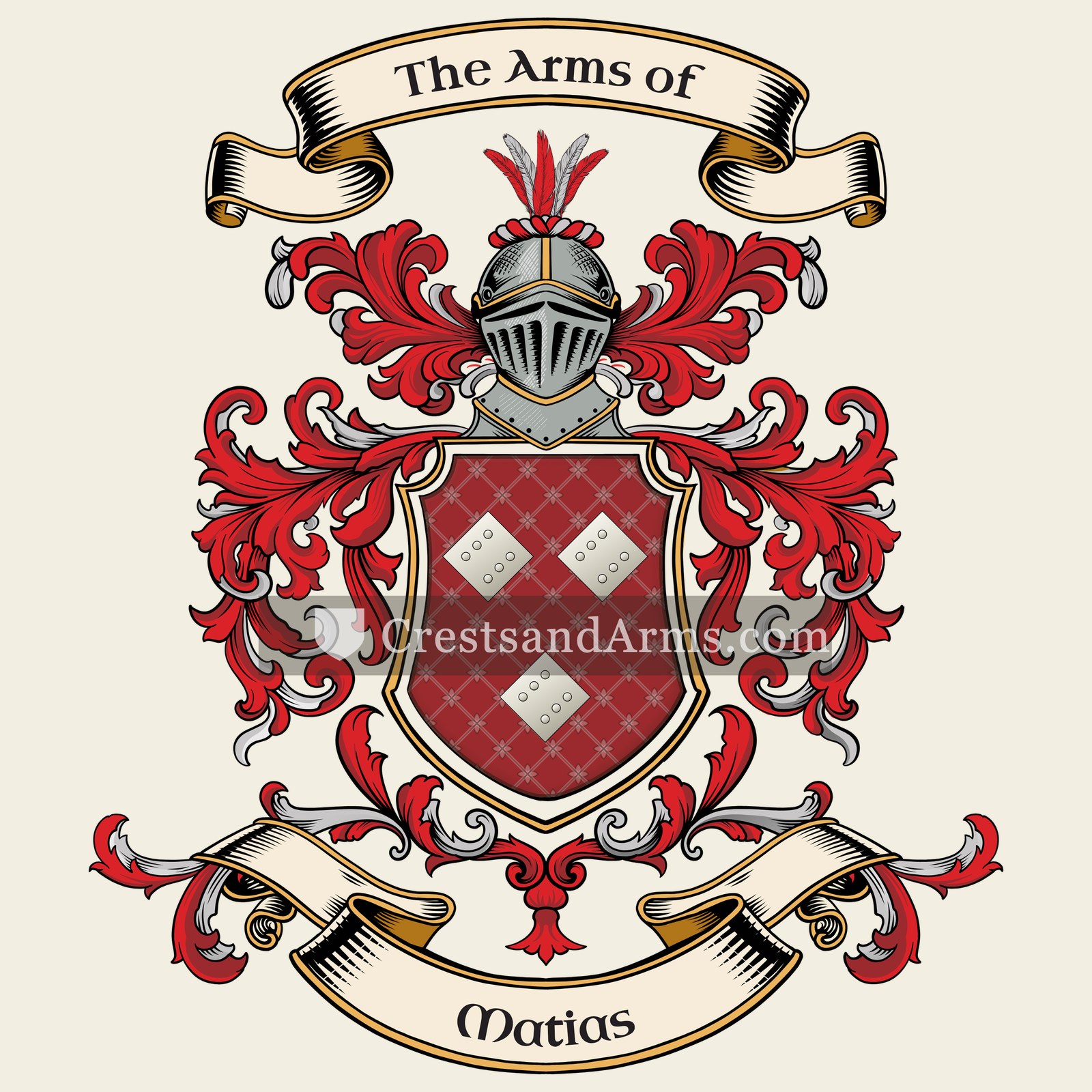
Symbols on this shield
ermineDignity and rank
dieFortune met with a steady hand
Colours
Red (Gules)Means: Military strength
Silver (Argent)Means: Peace and sincerity
Historical info
Source
Sir Bernard Burke, The General Armory of England, Scotland, Ireland and Wales, London: Harrison & Sons, 1884
Blazon (the actual original written record)
“Gu. three dice ar. two and one, on each die six spots in front, two at top, and three on the sinister side sa”
PembrokeLamphey Court · Pembroke, c. 1647
Digital archive packCoat of arms PNG, gold border print PDF, vector SVG and the certificate of authenticity. Sent to your email in minutes.
Map of Wales showing where the Matias arms are recorded
The Matias arms were recorded in Pembroke, c. 1647.
Pembrokeshire was settled from England early enough to be called Little England beyond Wales. Its landed families were Norman in origin and held their ground for centuries, which is what put them in the records.
This is where the arms were entered in the register. Families often moved to other parts of the country, so the same name can turn up in more than one region.
The body that granted and recorded arms in Wales in this period.
Charles I of England
Sovereign of the period
Charles I of England
1625–1649
Reigning in France when the Matias arms are first recorded.
How Arms Worked in Wales
English heraldry allowed arms to be shared by all legitimate descendants of the original owner. These symbols were treated as personal property that moved through the generations to all children. While the eldest son kept the original design, other family members could use the same shield without needing to change it or register their own unique versions.
Granting authority
The College of Arms in London has regulated the use of coats of arms throughout England and Wales since 1484.
How they got arms
Families typically obtained their coats of arms through a formal grant from the Crown or by proving their ancient right to them.
Where arms were recorded
All official coats of arms are recorded in the registers kept at the College of Arms, which date back to the fifteenth century.
The family's standing
Recorded among the armigerous families of Pembroke.
Origin & History of the Matias Family in Wales
The surname Matias, derived from the biblical name Matthias, established a notable presence in the coastal region of Pembrokeshire by the mid-seventeenth century. During this era, Pembrokeshire served as a vital maritime gateway, and the presence of the family in 1647 suggests they were likely integrated into the local agricultural or merchant communities that defined the Welsh landscape following the English Civil War. Because surnames in Wales were traditionally patronymic, meaning they were based on a father’s first name, the formal adoption of Matias as a fixed hereditary surname indicates a transition toward the English naming conventions that were becoming standard across the region. This shift reflects the broader social changes occurring in Wales during the seventeenth century as families began to solidify their identities within parish records and local legal documents. By settling in a strategic area like Pembroke, the early members of this family were positioned at the intersection of Welsh tradition and the evolving administrative systems of the British Isles.
Related Branches & Arms
Root word
Mattityahu
Hebrew for gift of Yahweh
This name
MatiasA French variant of Matthew signifying a divine gift or blessing from God.
also spelled
Mathis
Mathew
Documented Sources
J. B. Rietstap, Armorial Général, Gouda: G. B. van Goor Zonen, 1884–87
Archives départementales de l'Hérault, Registres paroissiaux et d'état civil
Emmanuel Le Roy Ladurie, Les Paysans de Languedoc, 1966
Jean-Louis Biget, Histoire du Languedoc, 2001
Digital archive packCoat of arms PNG, gold border print PDF, vector SVG and the certificate of authenticity. Sent to your email in minutes.


 dieFortune met with a steady hand
 dieFortune met with a steady hand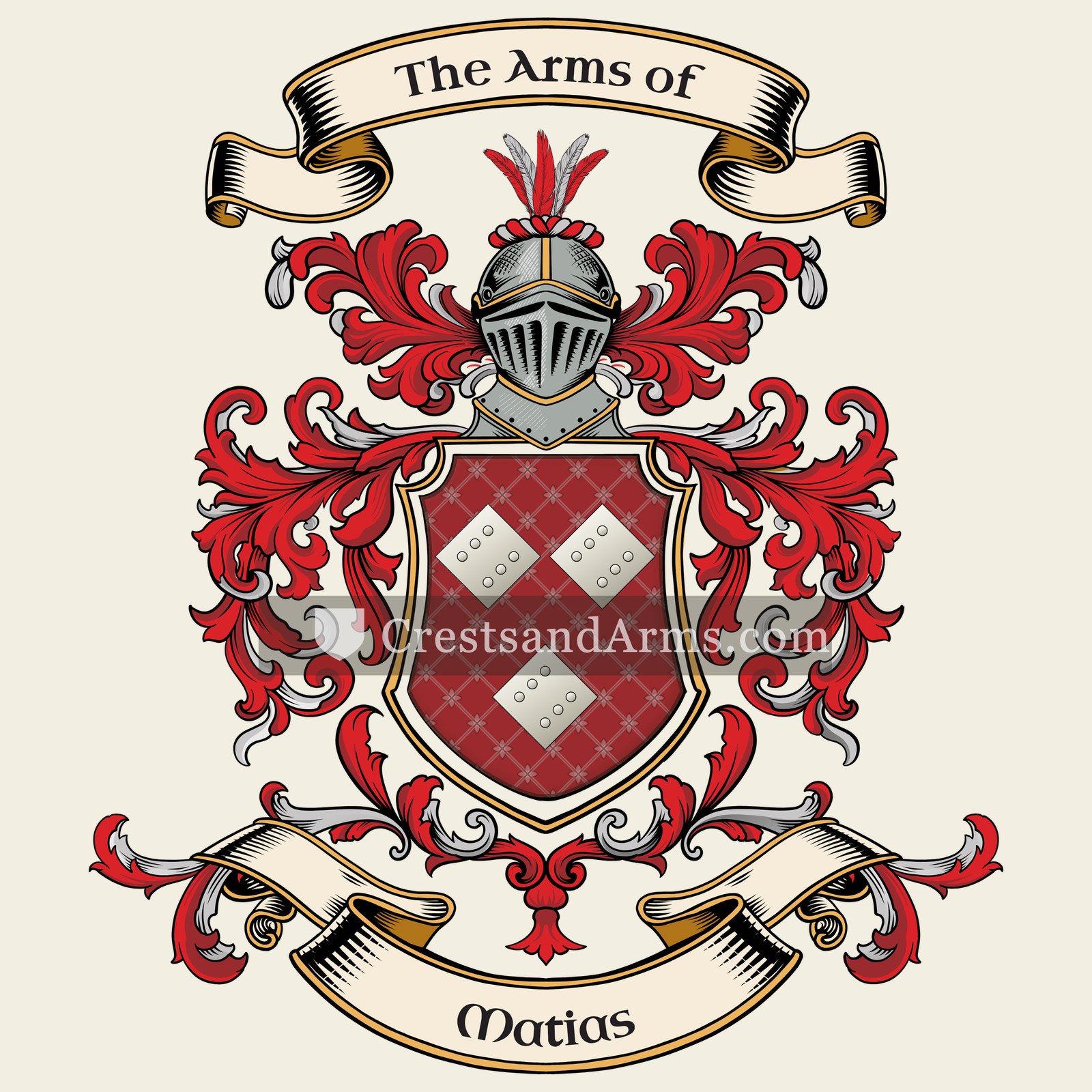


 fessThe military belt, and readiness to serve
 fleur de lisPurity, light, and the sixth son
 riverThe bounds of a land, and life carried through it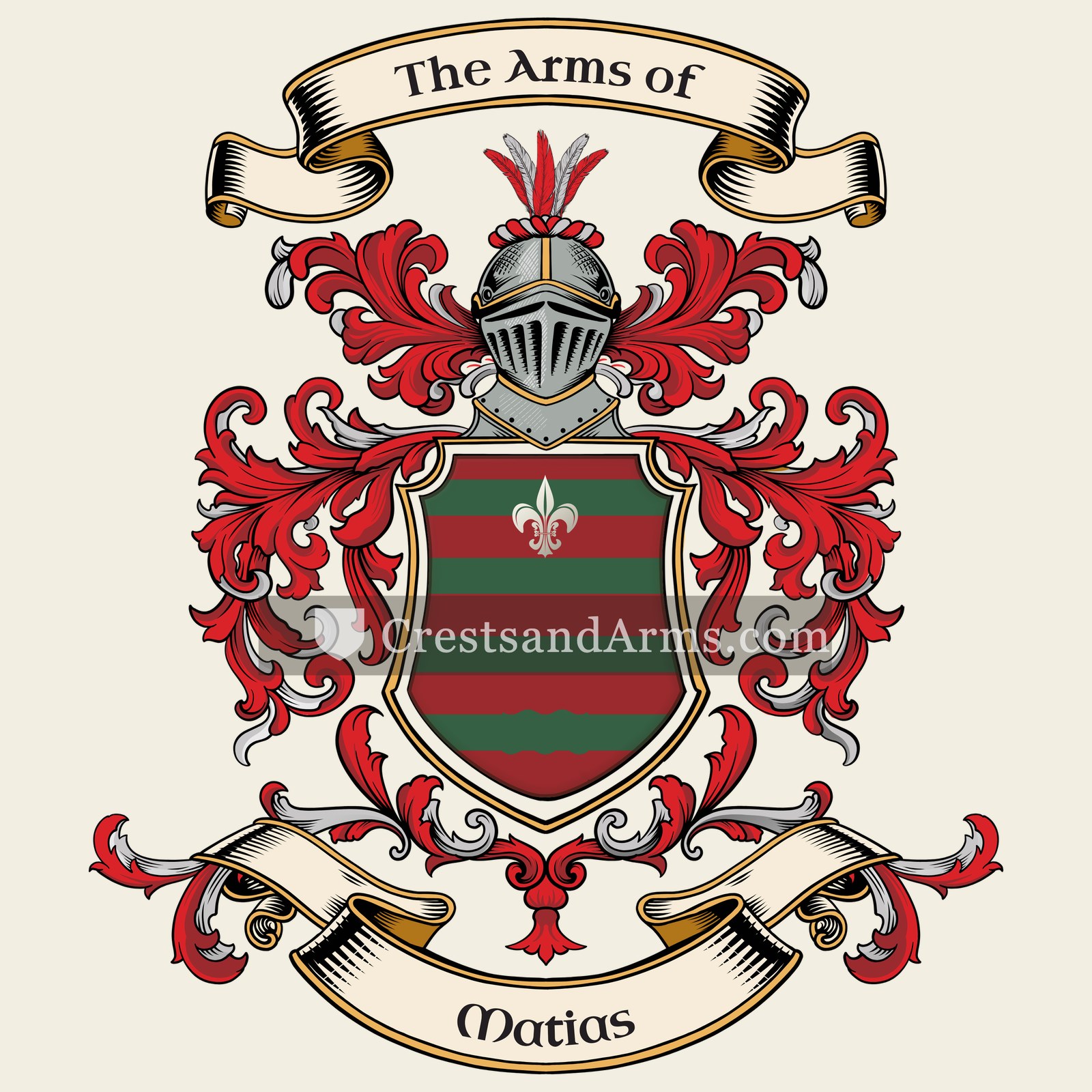


 ermineDignity and rank